Black tourmaline is the protection stone people reach for most. Known to mineralogists as schorl, it is traditionally kept for holding a boundary and for grounding when everything feels loose. It is the piece that ends up by a front door, beside a desk, or in the pocket of the coat you wear every day.
Key takeaways
- Black tourmaline is schorl, the iron rich and by far most common member of the tourmaline group.
- Hardness 7 to 7.5, so it takes daily wear, though raw pieces are brittle along their striations.
- Traditionally kept for boundaries, grounding and protection.
- Tourmaline is genuinely pyroelectric, developing a charge as its temperature shifts.
- Selenite is the classic partner: one holds the boundary, the other keeps things clear.
What black tourmaline is
Tourmaline is not a single mineral but a group of complex borosilicates, and the black variety is schorl, coloured by iron. It is the most abundant tourmaline in nature by a wide margin, which is why it is affordable enough to keep several pieces around a home while pink and green tourmalines sit in a different price bracket entirely.
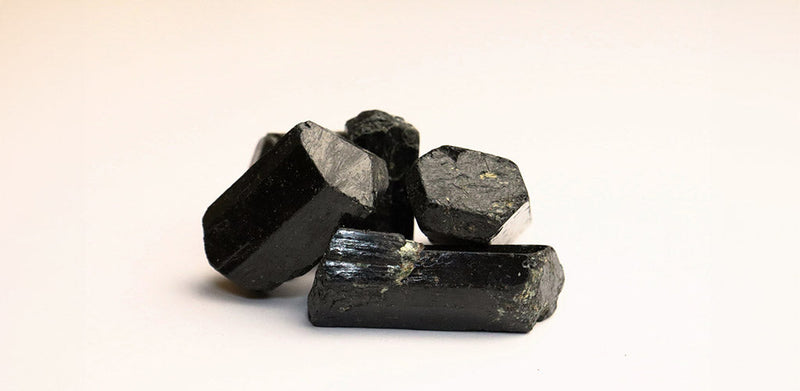
Two physical characteristics shape how it is used. It grows in long columns with deep parallel grooves running their length, so a raw piece looks almost machined. And it is pyroelectric and piezoelectric: it develops an electrical charge when heated or put under pressure. That property is real, measurable physics, and it is almost certainly why the stone gathered an energetic reputation centuries before anyone had the vocabulary to describe it.
On the Mohs scale it sits at 7 to 7.5, harder than quartz. That makes polished pieces excellent for everyday wear.
Where the name comes from
The name traces to the Sinhalese toramalli, meaning mixed or assorted gems, which Dutch traders applied to the parcels of colourful stones arriving from Sri Lanka in the eighteenth century. It was a merchant's word for a mixed shipment, and it stuck.
That origin fits the group rather well. Tourmaline spans a wider colour range than almost any other gem family, from schorl's black through pink, green, blue and the famous watermelon crystals that carry two colours in one piece.
What black tourmaline is traditionally kept for
Across modern crystal practice, black tourmaline occupies a specific role: it is the boundary stone. Where amethyst is kept for calm and citrine for drive, tourmaline is kept for the space between you and everything else.
People reach for it in a few recognisable situations. Coming home flattened after a day of other people's moods. Working in a demanding, customer facing or caring role. Moving into a new place and wanting to mark the threshold. Sitting down to meditate and finding the mind will not land.
It is also the stone most often kept beside a desk or a router, where screens are the drain and people want something solid in the room. Our black tourmaline benefits guide covers the full traditional list, and black tourmaline for negativity covers the boundary use in more depth.
Black tourmaline and the root chakra
Chakra practice places black tourmaline at muladhara, the root, at the base of the spine. That centre is described in yogic tradition as governing safety, belonging and the sense of having ground beneath you, which maps closely onto what the stone is kept for.
Practically it means placement goes low. A piece between the feet while seated, at the base of the spine lying down, or in a trouser pocket at hip height. Our root chakra crystal guide covers the full set of stones assigned there, and black tourmaline for meditation covers using it in a sitting practice.
Choosing a form
| Form | Suits |
|---|---|
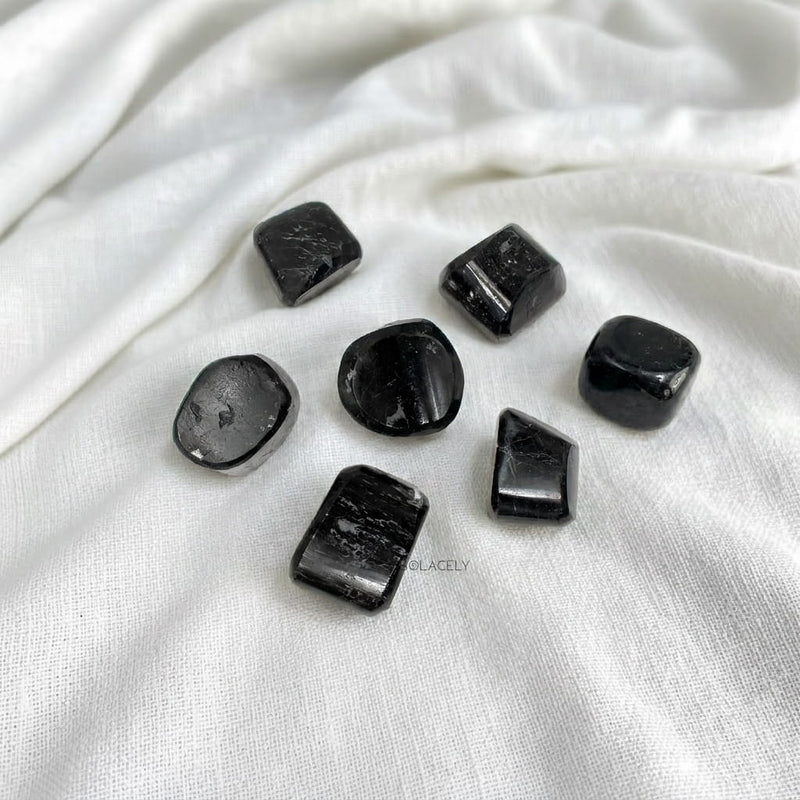
| Tumbled palm stone | Carrying and holding; smooth and pocket safe |
| Raw specimen | Placement on a shelf, desk or floor. Do not grip it |
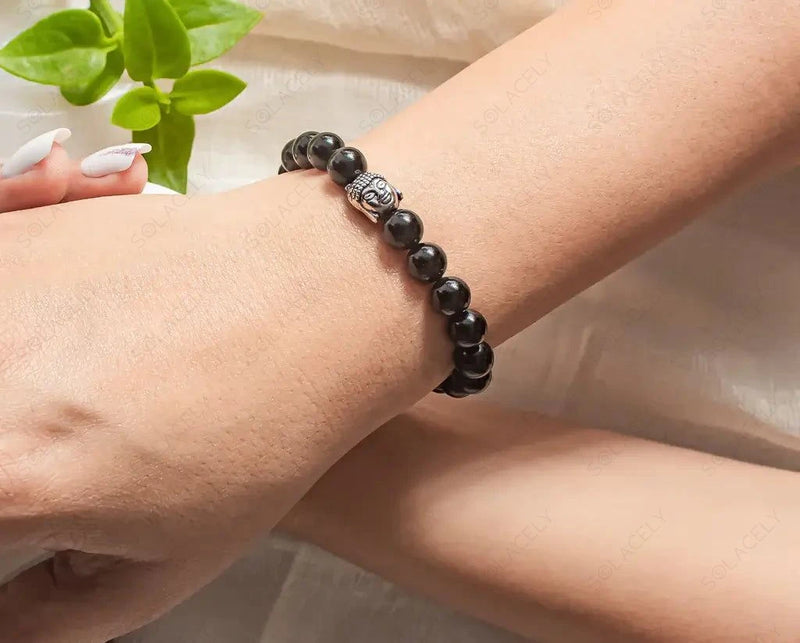
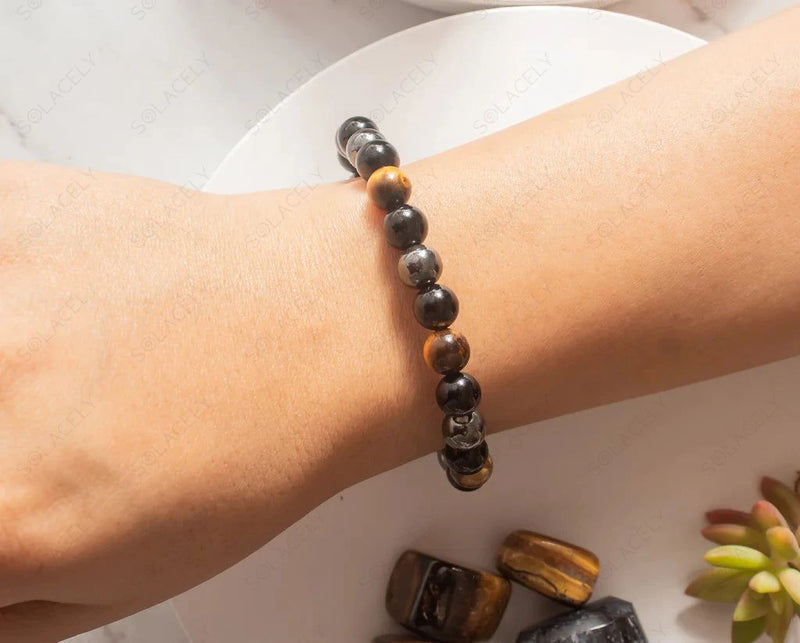
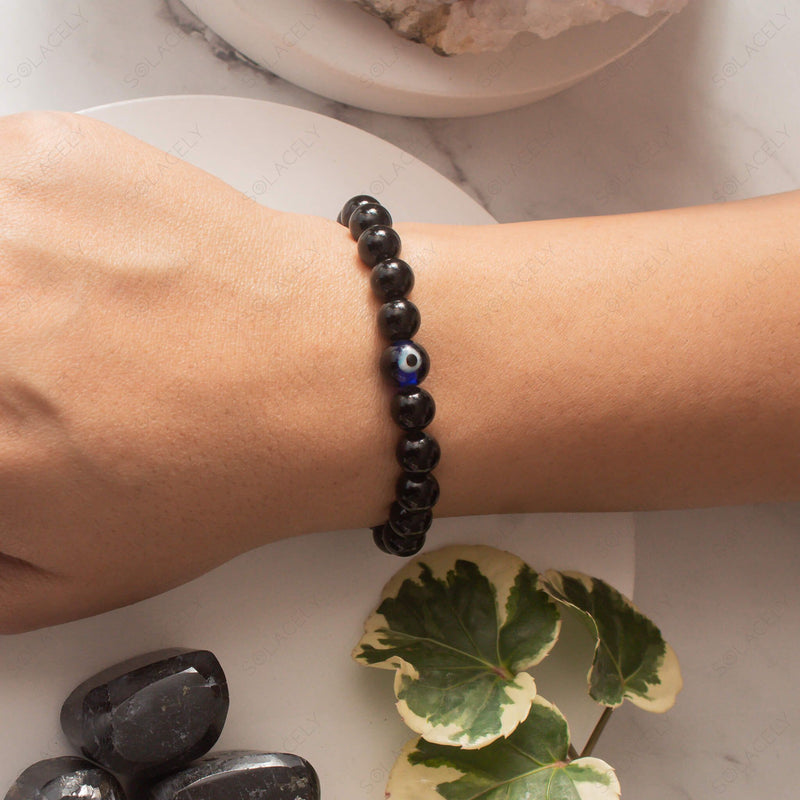
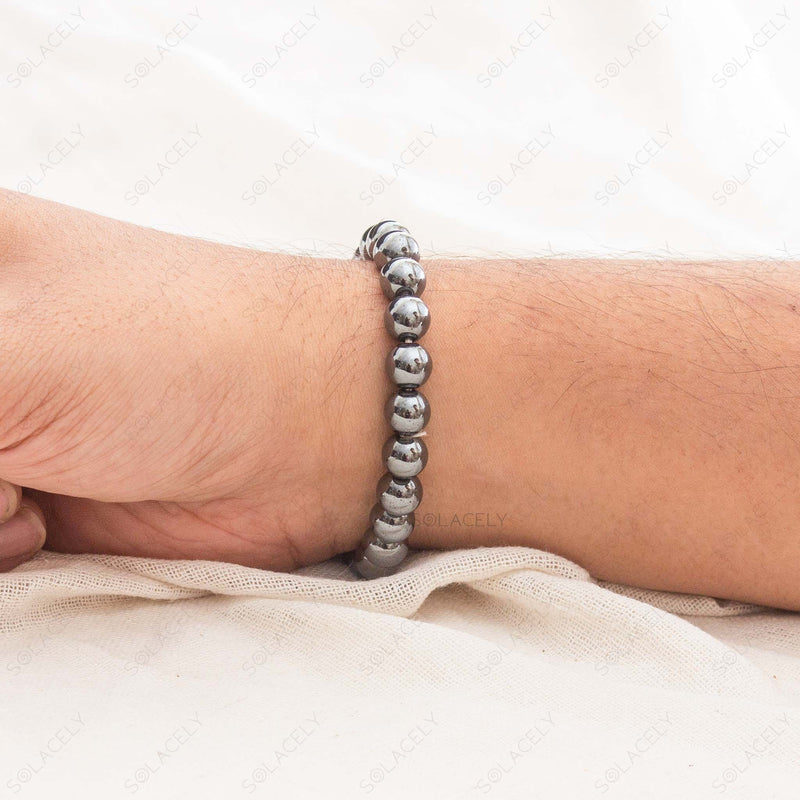
| Beaded bracelet | Daily wear; polished beads are durable |
| Tower or point | A room piece with presence, good near an entrance |
| Small tumbles, set of four | The four corners of a room, a common home layout |
The raw versus polished decision is the one that matters. Schorl is hard but brittle along those parallel grooves, and raw specimens shed genuinely sharp splinters. Buy polished if you intend to hold it, raw if you intend to place it. Our black tourmaline bracelet guide covers the wearable formats. If you would rather carry it than place it, wear it as a bracelet - the format most people reach for first.
Pairing it with other stones
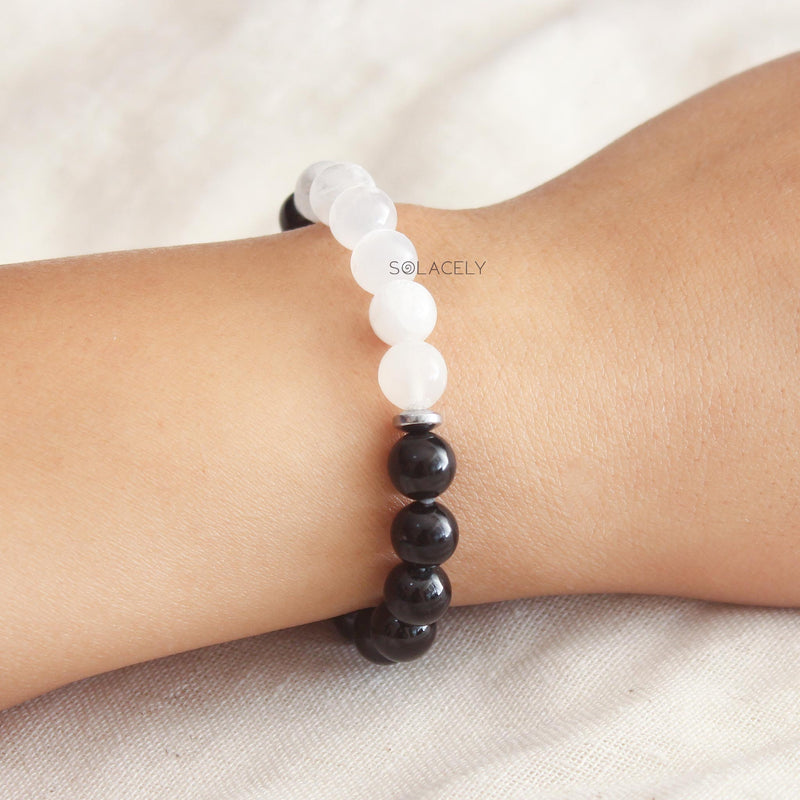
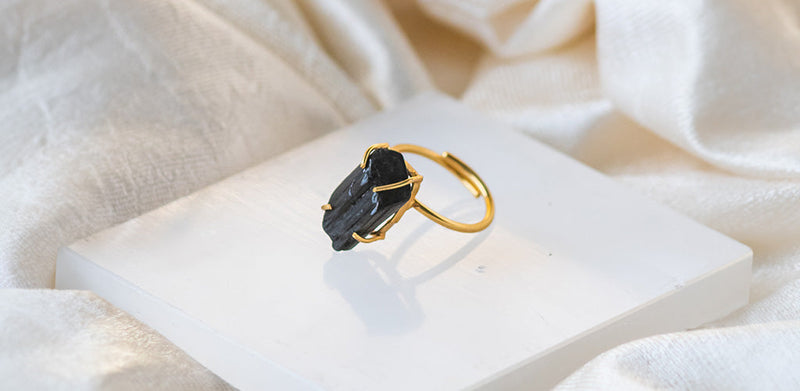
Black tourmaline and selenite is the pairing worth knowing, and it is everywhere in crystal practice for good reason. Tourmaline holds the boundary and selenite keeps things clear, so the two cover both halves of the same intention. Many people keep a tourmaline piece resting on a selenite plate, which doubles as a charging arrangement.
Beyond that: hematite when the aim is grounding weight, rose quartz when the protection is starting to feel severe and needs softening, and citrine when someone wants a boundary and drive in the same piece. Keep combinations to two or three stones with a clear relationship. A bracelet asking for protection, wealth, love and focus at once is asking for nothing in particular.
For the wider protective set, see crystals for protection.
Caring for black tourmaline
Polished pieces are easy. Warm water, a soft cloth, dry fully. At 7 to 7.5 they resist scratching from most things they will meet in a jewellery box.
Raw specimens want more care. Keep them out of long soaks, since water working into the natural lines along the striations encourages flaking over time. Handle them by the sides rather than running a thumb along the grooves, and keep them where they will not be knocked onto a hard floor.
For energetic cleansing, sound, incense smoke, moonlight or a rest on selenite all suit it. Protective stones are traditionally cleansed more often than others, and weekly is the usual rhythm for a piece in daily use. Doorway pieces are often done more frequently still.
Who black tourmaline suits
Anyone whose difficulty is other people rather than themselves. People in customer facing work, healthcare, teaching or any role where absorbing moods is part of the job. It is also the standard first protective stone, since it is inexpensive, durable and comes in every format from a bead to a tower.
It suits less well someone looking for lift and warmth. Black tourmaline is a quiet, weighted stone by tradition. For optimism and drive, citrine, carnelian or sunstone are the more natural choices, and tourmaline can hold the boundary while a warmer stone does the rest.
The properties described here reflect traditional and cultural belief around crystals. They are not medical claims, they are not claims about physical shielding, and they are not a substitute for professional healthcare. If you are managing a health concern, speak to a qualified practitioner. Raw schorl can shed sharp fragments, so keep raw specimens away from young children and handle them with care.
Sources
Written by Chetena Sharma. Reviewed by the Solacely editorial team.
Frequently asked questions
About the author


Written by Chetna Sharma, crystal healing practitioner and co-founder of Solacely. Chetna has worked with healing crystals for over a decade and curates Solacely's protective stone collection.