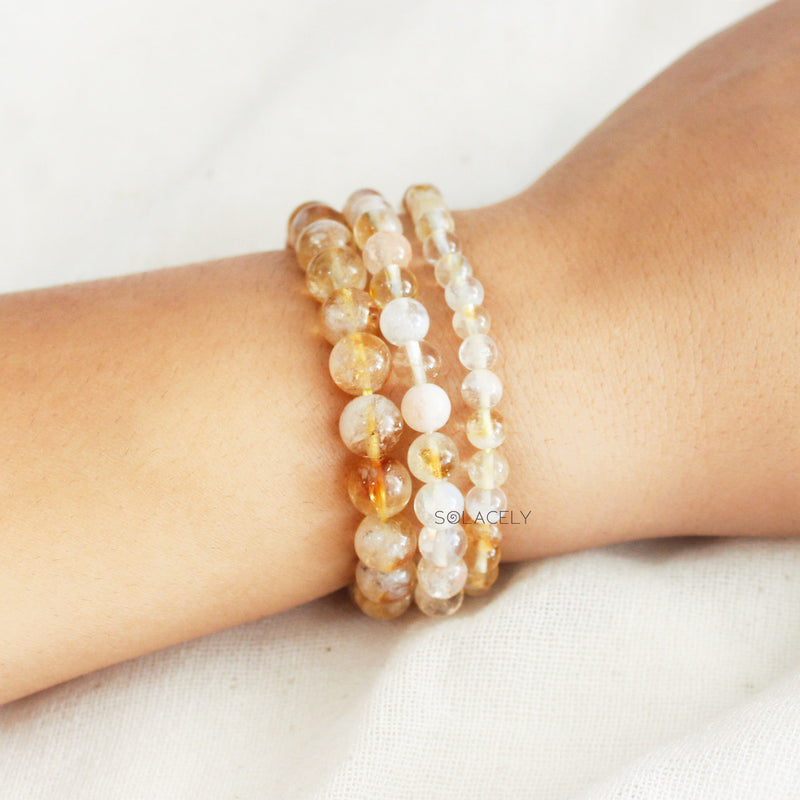
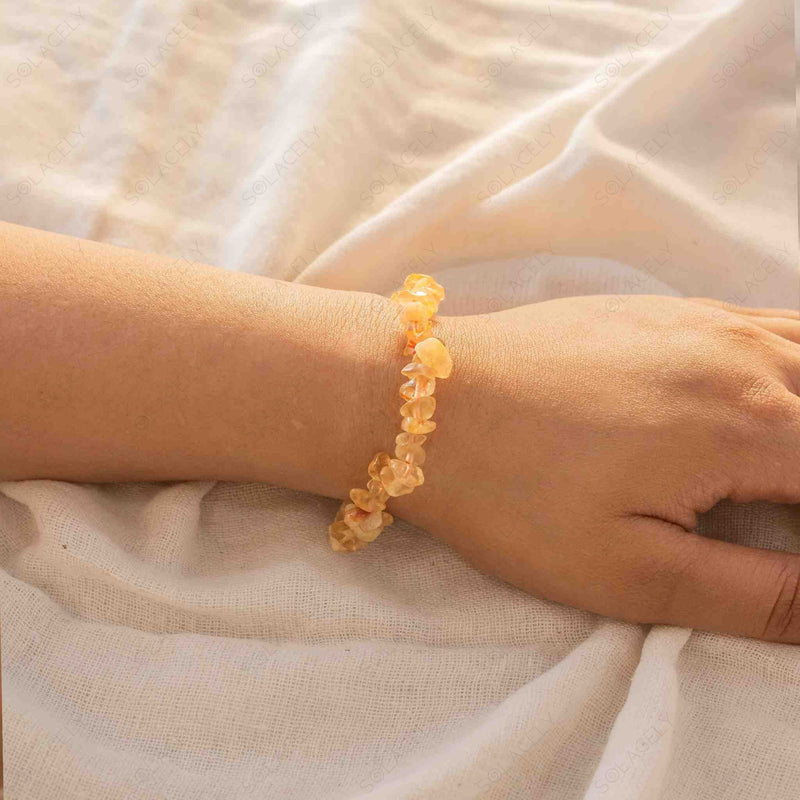
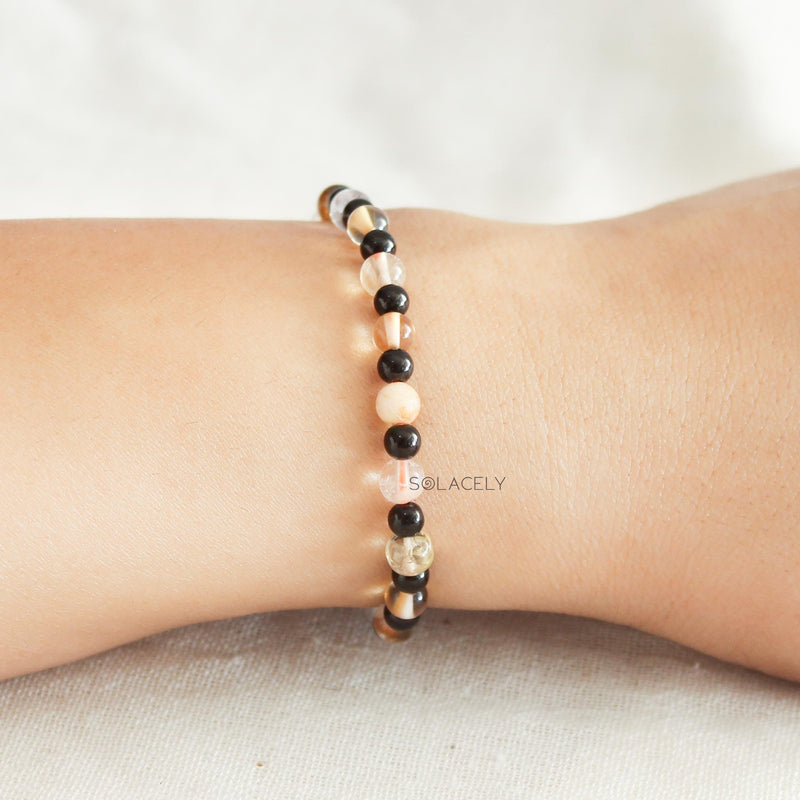
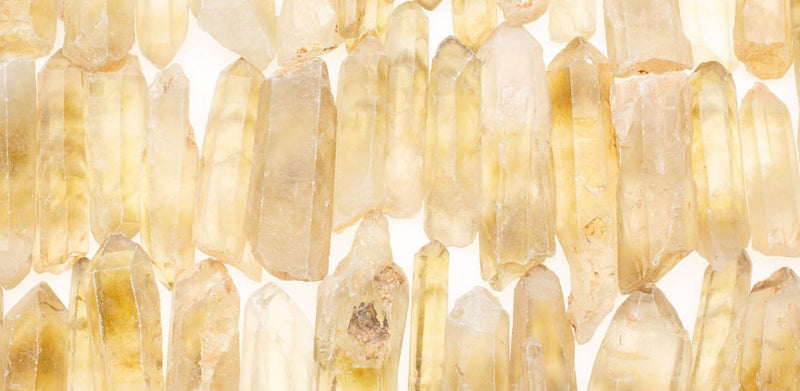
November has two birthstones: topaz and citrine. Topaz is the older of the pair and comes in a wide range of colours, while citrine brings the warm golden yellow most people picture for the month. Both are durable enough to wear every day, so the choice is genuinely yours.
Key takeaways
- November carries two birthstones, topaz and citrine, and either is a correct choice.
- Topaz is harder at 8 on the Mohs scale; citrine sits at 7. Both suit daily wear.
- Citrine is the warm golden quartz long known as the merchant's stone, kept for confidence and abundance.
- Topaz spans golden imperial shades through blue, pink and colourless, so it offers the wider palette.
- Keep both out of long direct sun to hold their colour, and off ultrasonic cleaners.
Why November has two stones
Several months carry more than one birthstone, and November is one of the happier examples because the two work so differently. Topaz is the traditional stone, carried in the older lists and valued for centuries across Europe and Asia. Citrine joined it as the modern companion, offering a similar warmth at a friendlier price.
The pairing suits the month. Both stones sit in the golden end of the spectrum, both are associated with warmth and confidence, and both are hard enough to be worn rather than kept in a box. If you want the full twelve month picture, the birthstones by month guide lays out the traditional and modern lists together.
In practice most people choose on colour and format. Citrine gives you an affordable stone in a generous size, and topaz gives you a jewel with more fire and a wider choice of shade.
Citrine: the merchant's stone
Citrine is the golden member of the quartz family, and it has carried a reputation for prosperity for centuries. It is often called the merchant's stone, from the old practice of keeping a piece in a till or a cash box, and that association with trade and abundance is still the reason most people reach for it.
Alongside prosperity it is traditionally kept for confidence, warmth and optimism. It is the stone people choose when the difficulty is not knowing what to do but finding the brightness to begin, which makes it a natural fit for anyone starting a business or stepping into something more visible.
The colour runs from a pale champagne through honey to a deep madeira brown-orange, and the shade is very much a matter of preference rather than ranking. At 7 on the Mohs scale it takes daily wear comfortably in a bracelet, a pendant or a ring. Our citrine meaning and properties guide covers it in full.
Topaz: the older November stone
Topaz is a silicate mineral, and the November association attaches especially to its golden and imperial shades: warm honey through a distinctive pinkish orange that remains the most prized colour in the species.
Historically topaz was carried for strength, clear thinking and steady judgement, and it appears in European lapidaries as a stone of loyalty and friendship. Those associations sit comfortably beside citrine's warmth, which is part of why the two share a month so well.
It is a hard stone at 8 on the Mohs scale, harder than quartz, so it holds a bright polish through years of wear. It does have one distinct cleavage direction, meaning a sharp knock in the wrong place can split it, so a protective setting is the sensible choice for a ring worn daily.
Choosing between them
| Citrine | Topaz | |
|---|---|---|
| Family | Quartz | Topaz, its own species |
| Hardness | 7 Mohs | 8 Mohs, with one cleavage direction |
| Colour range | Pale champagne to deep madeira | Golden, imperial pink-orange, blue, colourless |
| Traditionally kept for | Abundance, confidence, warmth | Strength, clear thinking, loyalty |
| Best for | Generous sizes at a friendly price | A jewel with more fire and sparkle |
| Care note | Keep out of long direct sun | Avoid ultrasonic cleaners |
If you want a stone to wear on the wrist alongside others, citrine is the easier companion. If you want a single piece to mark the birthday, imperial topaz is the more special object. Plenty of people end up with both, one worn daily and one kept for occasions.
How November stones are traditionally used
Both are warm, forward stones, so the practices attached to them are about visibility and confidence rather than calm.
- Worn daily. A citrine bracelet on the wrist you gesture with, so the colour catches your eye through the day.
- Kept at work. The merchant's stone tradition puts citrine near where money is handled, a till, a desk, a purse.
- Given as a birthday gift. A topaz pendant marks the month with something that will last decades.
- Paired. Citrine with green aventurine for growth, or topaz with a grounding stone for balance.
For a fuller prosperity set built around the golden stones, crystals for prosperity covers what else belongs alongside them.
Caring for topaz and citrine
Both are straightforward, with one shared caution and one each of their own. Warm water, mild soap and a soft brush suit both, followed by a full dry. Soap film is the usual reason a golden stone looks dull rather than any damage to it.
The shared caution is sunlight. Long exposure on a bright windowsill can soften the colour of golden stones over months, so a bedside table or a drawer is kinder than a sunny sill. This is a care habit worth keeping for amethyst too.
Topaz's own caution is vibration. Because of that single cleavage direction, ultrasonic and steam cleaners are best avoided entirely, and a bezel or protective setting is worth asking for on a ring. Citrine, being quartz, is more forgiving, though it is still happier away from harder stones in storage. For the neighbouring months, see the October birthstone guide.
Choosing a November stone as a gift
November birthdays fall in the run up to the winter holidays, which means a gift often has to work twice: as a birthday piece and as something that still feels special a few weeks later. Both stones handle that well, though in different ways.
Citrine gives you scale. Because the material is available in generous sizes, a citrine pendant or a substantial bracelet reads as a proper gift without a jeweller's price, and the warm colour suits the season it arrives in. It is also the safer choice if you do not know the recipient's taste in settings, since a bracelet needs no sizing.
Topaz gives you occasion. Imperial topaz in particular, with its pinkish orange glow, is the kind of stone somebody keeps for decades and passes on. If the birthday is a significant one, that is the piece worth stretching for. A pendant avoids the ring sizing problem while still showing the colour properly.
Colour, and what to look for
With citrine, the honest advice is to pick the shade you like rather than chase a particular one. Pale champagne suits people who wear silver and prefer something understated; deep madeira reads richer and pairs beautifully with gold. Both are properly citrine and both are correct for November.
With topaz, look for even colour across the face of the stone and a cut that keeps it lively rather than dark in the centre. Imperial shades carry the premium, and blue topaz offers the same durability in a completely different mood if the recipient simply prefers cool tones to warm.
The properties described here reflect traditional and cultural belief around crystals and gemstones. They are offered for reflection and wellbeing and are not medical advice, financial advice, or a treatment for any condition. If you are managing a health concern, please speak with a qualified healthcare professional. Keep small stones away from young children.
Sources
- Gemological Institute of America, Citrine Description
- Gemological Institute of America, Topaz Description
Written by Chetena Sharma. Reviewed by the Solacely editorial team.
Frequently asked questions
About the author


Written by Chetna Sharma, crystal healing practitioner and co-founder of Solacely. Chetna has worked with healing crystals for over a decade and curates Solacely's protective stone collection.