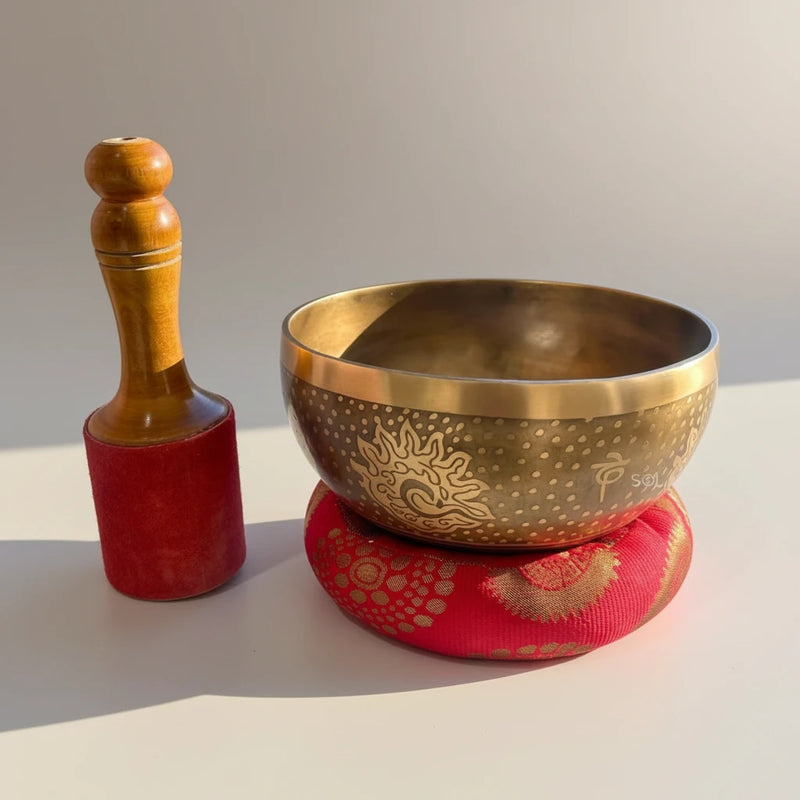
A singing bowl relates to the chakras through one simple idea: each of the seven energy centres is matched to a musical note, so a bowl tuned to that note is used to 'sound' that chakra. The common map runs up the scale, C for the root at the base of the spine to B for the crown at the top of the head. This is a tradition, not a medical fact.
Key Takeaways
- The seven chakras are matched to the seven notes of the musical scale: C = root, D = sacral, E = solar plexus, F = heart, G = throat, A = third eye, B = crown.
- Sound is used on the chakras because each centre is said to have its own vibration; a matching bowl tone is meant to resonate with it, from red and grounding at the base to violet and stillness at the crown.
- This note-to-chakra map is a modern convention, roughly a century old, not part of the ancient chakra texts, which used seed mantras (Lam, Vam, Ram) rather than Western notes.
- You can work with a single bowl for all seven centres or buy a graduated seven-bowl chakra set; a single beginner bowl is an entry-level to mid-range buy, while full sets are a premium commitment.
- Crystal bowls are often sold labelled by note (a 'C bowl,' an 'F bowl'), which makes them the easy choice for chakra work; metal bowls carry richer overtones but rarely a single clean pitch.
How do singing bowls relate to the seven chakras?
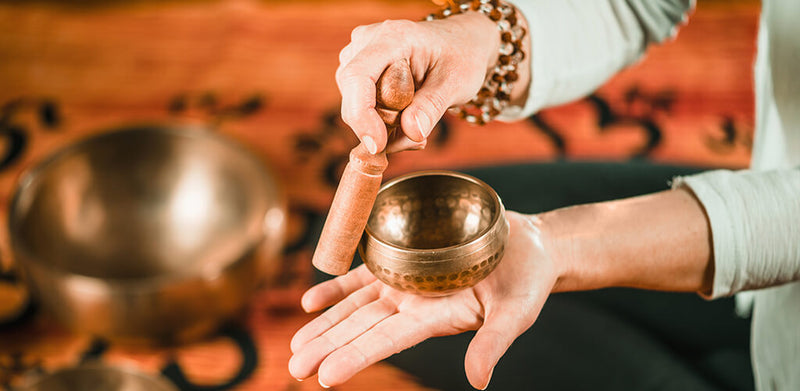
Singing bowls relate to the chakras through resonance: each chakra is said to hold a particular vibration, and a bowl whose tone matches that vibration is used to activate or settle it. In practice, that means pairing a bowl's musical note with a chakra's place on the spine, then playing it near that part of the body.
The seven chakras are the energy centres of yogic tradition, running from the base of the spine to the crown of the head. Each one governs a theme: safety, creativity, confidence, love, expression, insight, and awareness. Sound work simply adds an instrument to that map. Instead of only visualising a colour or chanting a seed mantra, you also give the centre a tone to rest on.
This is the conceptual layer, the 'why' and the 'which note.' It is different from the hands-on routine of playing bowls in sequence, which we cover step by step in our guide to singing bowl chakra balancing. Think of this article as the map and that one as the walk.
Why sound is used on the chakras
Sound is used on the chakras because the tradition treats every centre as a spinning wheel of vibration, and vibration is exactly what a singing bowl produces. A sustained tone gives the mind a single thing to rest on and gives the body a felt buzz, so the note becomes both a focus for meditation and a physical sensation you can locate.
There is a plausible, honest version of this. When you sit with a long, unbroken bowl tone, you are doing focused meditation. Attention narrows, the breath slows, and the shoulders drop. That is a well-understood relaxation response, and it is the same reason a temple bell or a chanted Om settles a room. The bowl is a hook for the mind, not a magic wand.
Then there is the overclaimed version, and it is worth naming plainly. You will read that a specific frequency 'retunes' a specific organ or 'unblocks' a chakra on contact. There is no solid clinical evidence for that. Different notes genuinely feel different, a low bowl lands in the chest, a high one in the head, but the strong frequency-cure claims outrun the science. For a grounded look at the actual pitches involved, our singing bowl frequencies chart lays out the numbers without the mysticism.
The note-to-chakra map: which bowl note fits which chakra
The standard map assigns one ascending note to each chakra, from root to crown. C is the root, and you move up a white-key scale, C, D, E, F, G, A, B, exactly as you would play up a piano. Below is the full reference: note, chakra, its Sanskrit name, colour, seed mantra, and the theme it governs.
| Bowl note | Chakra | Sanskrit name | Colour | Seed mantra | Theme it governs |
|---|---|---|---|---|---|
| C | Root | Muladhara | Red | Lam | Safety, stability, grounding |
| D | Sacral | Svadhisthana | Orange | Vam | Creativity, feeling, flow |
| E | Solar plexus | Manipura | Yellow | Ram | Confidence, will, drive |
| F | Heart | Anahata | Green | Yam | Love, compassion, connection |
| G | Throat | Vishuddha | Blue | Ham | Expression, truth, voice |
| A | Third eye | Ajna | Indigo | Om | Insight, intuition, clarity |
| B | Crown | Sahasrara | Violet / white | Silence (Aum) | Awareness, meaning, stillness |
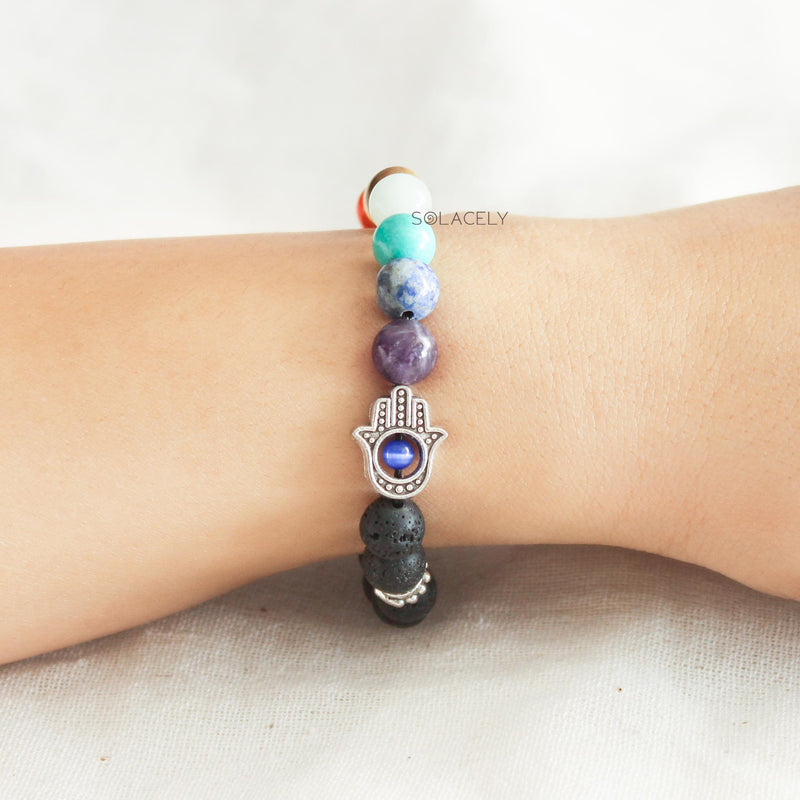
Read the table as a whole and the logic is easy to hold. Low notes sit low on the body and carry grounding, earthy themes. High notes sit high and carry lighter, more abstract ones. Colours run in rainbow order, exactly the way a seven-stone chakra bracelet is strung, so a 'C bowl' is the red, root bowl, and a 'B bowl' is the violet, crown bowl.
One caution before you shop by note. The letter names the pitch class, not a fixed frequency, because the same note exists in many octaves. A crystal bowl maker's 'F bowl' and another maker's 'F bowl' can sound noticeably higher or lower while still being an F. Use the note as a guide to which chakra a bowl is meant for, not as a precise Hz promise.
Where this note-to-chakra map came from
The seven-note map is a modern convention, roughly a century old, not a teaching from the ancient chakra texts. The classical sources describe each chakra with a colour, a number of petals, a presiding deity, and a bija (seed) sound like Lam or Vam, but they do not assign Western musical notes. The tidy C-to-B scale is a twentieth-century overlay.
That history matters for honesty, not to dismiss the practice. Matching seven chakras to the seven notes of the diatonic scale is elegant and easy to teach, which is exactly why it spread through modern sound-healing and crystal-bowl culture. It is a useful modern framework layered onto an old system, and it works fine as a focusing tool as long as you know what it is.
According to Encyclopaedia Britannica, the Sanskrit word chakra means 'wheel,' describing the spinning energy centres of yogic and tantric belief, centres that anatomy has never located or measured. So treat the whole map, notes included, as a spiritual and cultural language for paying attention, not as physics. If you want the underlying system first, our cross-cluster guide to the seven chakras explained covers each centre in depth.
One bowl or a seven-bowl chakra set?
You can do chakra sound work with a single bowl or with a graduated set of seven, one per note. A single bowl is the honest starting point: you use its one tone as a meditation anchor for whichever centre you are focusing on, regardless of its exact pitch. A seven-bowl set lets you play the precise note mapped to each chakra, root to crown.
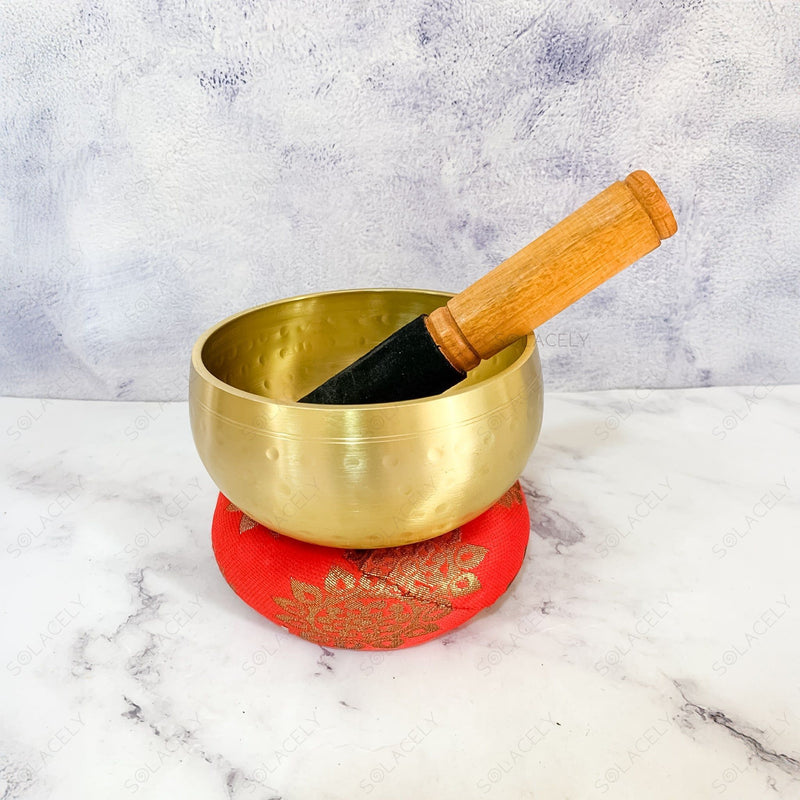
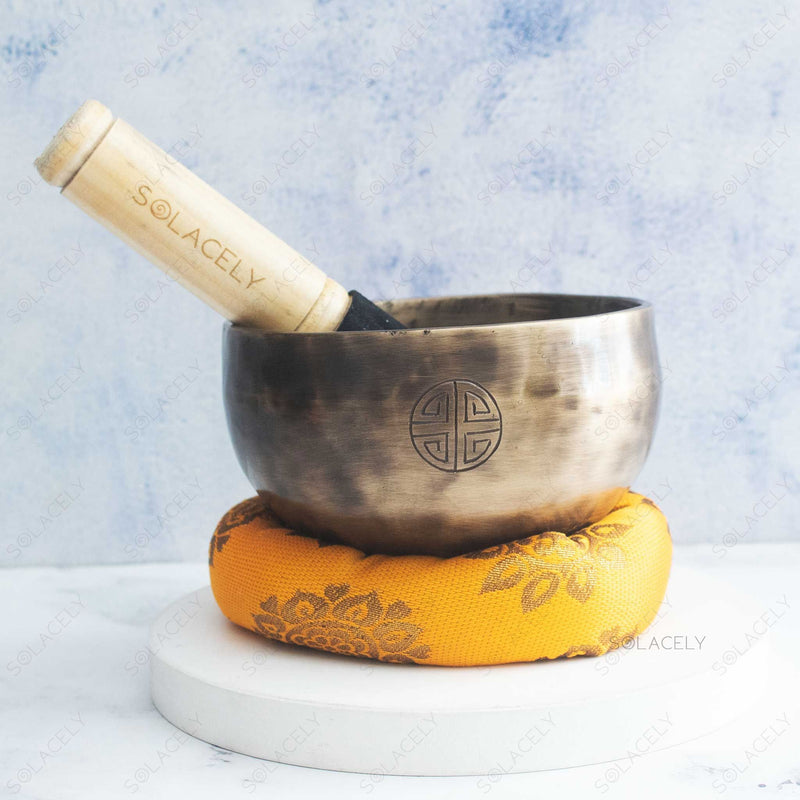
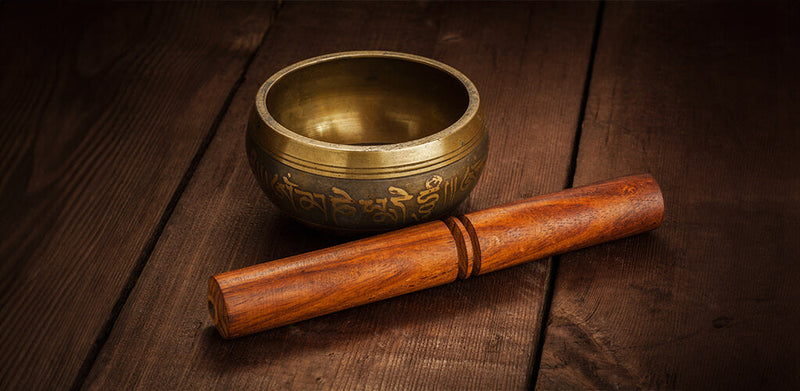
For most people at home, one good bowl is plenty. A decent beginner Tibetan singing bowl is an entry-level to mid-range buy, and it will serve you for years of daily practice. The very cheapest bowls tend to sound thin and fade fast, which defeats the purpose, since the whole practice depends on a long, clear ring.
A seven-bowl chakra set is a bigger commitment. Graduated metal sets and, especially, matched crystal sets are premium to collector purchases, and they are really for group facilitators or serious practitioners. Here is a simple way to weigh the two:
| Option | Best for | Rough price tier | Trade-off |
|---|---|---|---|
| Single metal bowl | Beginners, solo home practice | Entry level to mid range | One tone for all centres; not note-precise |
| Single crystal bowl (by note) | Focusing on one chakra you care about | Mid range to premium | Pure pitch, but you buy one chakra at a time |
| Seven-bowl chakra set | Facilitators, group sound baths | Premium to collector | Full note-to-chakra range; costly and bulky |
If a matched set feels like overkill, it usually is. Start with one bowl, learn the practice, and only scale up if chakra sound work becomes a regular part of your week.
Crystal or metal bowls for chakra work?
For note-precise chakra work, crystal bowls have the edge, because they are commonly made and sold by a single clear note, a 'C bowl,' an 'F bowl,' which maps straight onto a chakra. Metal Tibetan bowls carry a richer stack of overtones and rarely ring one pure pitch, so they are less about a named note and more about a warm, grounding wash of sound.
Neither is better in the abstract; they suit different aims. If you specifically want the D note for the sacral chakra or the G for the throat, a crystal bowl labelled with that note makes it simple. If you want an enveloping, meditative tone and do not care about pinning down a pitch, a metal bowl is forgiving, portable, and cheaper. Many practitioners keep both.
A quick honest note on the 'quartz amplifies energy' claims you will see attached to crystal bowls: that is metaphysical belief, not a measured property. Quartz makes a beautiful, sustained sound because of its material and shape, which is reason enough to love it. For a fuller comparison of the two families, see our guide to the crystal singing bowl and how it differs from metal.
What to realistically expect from chakra sound work
Expect calm, focus, and a sense of intention, the same gentle benefits that any good meditation gives. People who sit regularly with chakra bowls report lower stress, a quieter mind, and easier rest. Those are real and worth having. What you should not expect is a measurable 'unblocking' of an energy centre, because chakras have never been located or measured.
The research on singing-bowl sound is early and thin. The most cited study, Goldsby et al. (2017), found that 62 adults reported significantly less tension, anger, fatigue, and anxiety after a single 60-minute singing bowl meditation. It is a promising result, but the study had no control group, so it cannot separate the sound from the simple act of lying quietly for an hour. The National Center for Complementary and Integrative Health takes the same cautious line: relaxation practices help many people with stress and wellbeing, but they are not a treatment for disease.
So frame chakra bowl practice as tradition and self-care, and it delivers. Sit with the note for your chosen centre, breathe with the tone, and let the ritual settle you. For the wider evidence picture, our sound healing guide stays on the same honest footing.
Overview versus practice: where to go next
This article is the conceptual map, which note fits which chakra and why sound is used at all. The doing is covered elsewhere. For the hands-on routine of playing a bowl through each centre from root to crown, follow our step-by-step singing bowl chakra balancing guide, which turns this map into a fifteen-minute practice.
If your interest is specifically in clearing or resetting a centre that feels stuck, our guide to singing bowl chakra clearing walks through a focused clearing sequence and how to tell, in traditional terms, when a chakra feels 'off.' Between the three, you have the theory, the balancing method, and the clearing method.
A sensible order for a newcomer: read this page to learn the note-to-chakra map, buy one good bowl, then use the balancing guide for your daily practice and the clearing guide when you want to work on a single centre. Keep it short and regular. Five honest minutes most days beats an occasional long session.
Sources
- Encyclopaedia Britannica, 'Chakra'
- Goldsby TL, Goldsby ME, McWalters M, Mills PJ. Effects of Singing Bowl Sound Meditation on Mood, Tension, and Well-being: An Observational Study. Journal of Evidence-Based Complementary & Alternative Medicine, 2017
- National Center for Complementary and Integrative Health (NIH), 'Meditation and Mindfulness: What You Need To Know'
Frequently asked questions
About the author


Written by Chetna Sharma, crystal healing practitioner and co-founder of Solacely. Chetna has worked with healing crystals for over a decade and curates Solacely's protective stone collection.