A singing bowl marks the shape of a yoga practice with sound: one struck note calls students to stillness at the start, a soft tone can hold the room through savasana, and a long ring signals the close. In between, teachers use its steady hum to slow the breath, deepen restorative poses, and pull wandering attention back to the mat.
Key Takeaways
- The most common uses of a singing bowl in yoga are three: opening the practice, deepening savasana, and closing the session with a single sustained ring.
- A slow, steady tone naturally lengthens the exhale, which makes bowls a simple aid for pranayama and for restorative and yin yoga, where poses are held for minutes.
- In the yogic tradition this is nada yoga, the yoga of sound, and it runs back to OM (pranava), the seed syllable chanted at the edges of practice.
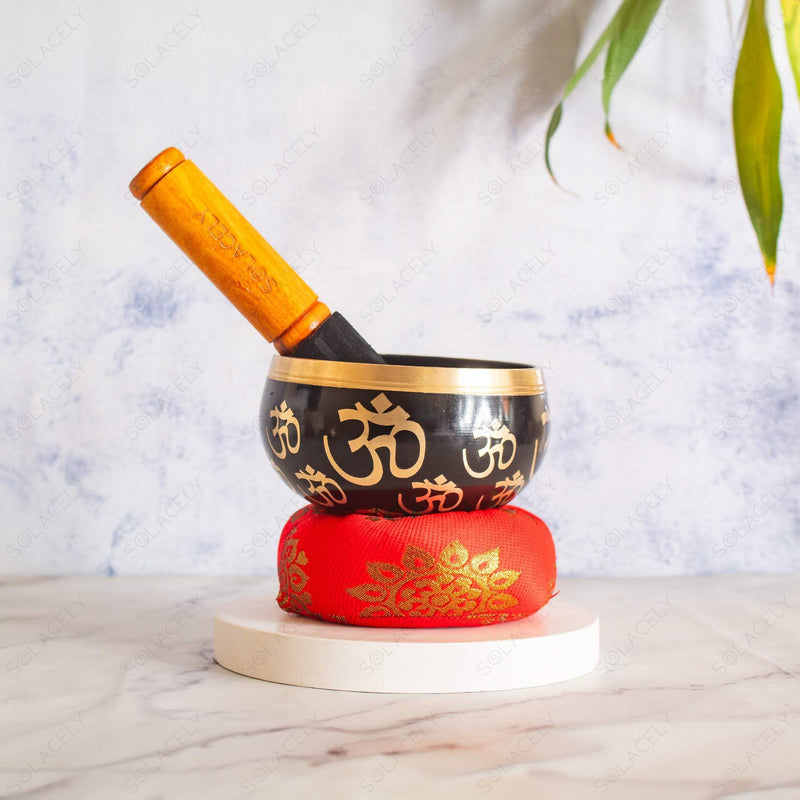
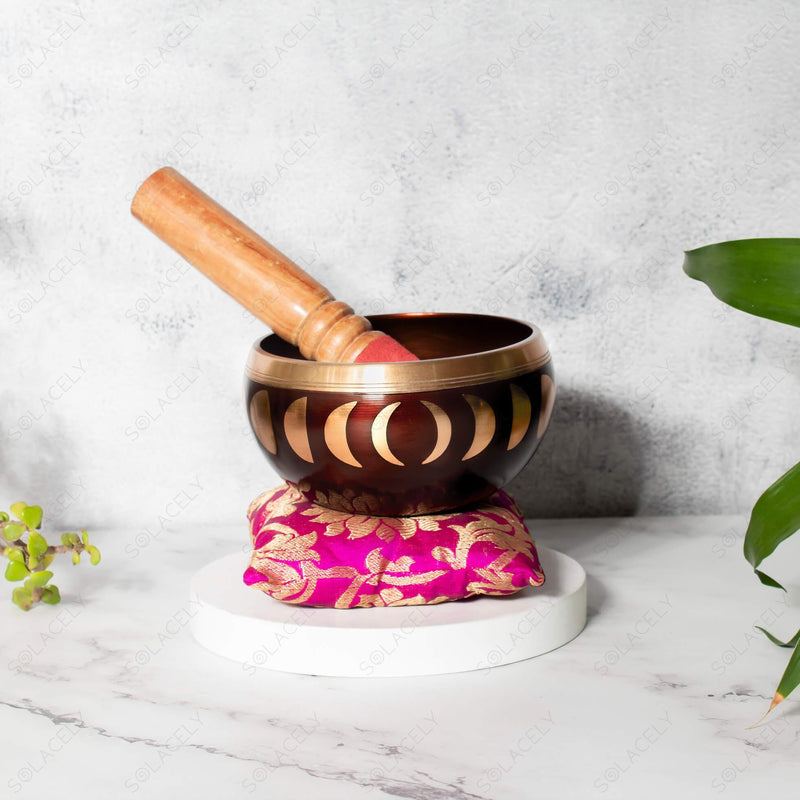
- Room size decides bowl size: a larger 7-9 inch bowl carries a deep tone across a studio, while a small 4-5 inch bowl suits a home mat. Tibetan metal bowls run from entry level up to premium.
- Sound in yoga is a supportive, traditional practice. The relaxation research is early and small-scale, so treat it as a calming ritual, not a medical treatment.
How to use a singing bowl in a yoga practice
A singing bowl works in yoga as an audible anchor: you strike or rim it to open the session, to deepen savasana, and to close, and you let its long decay carry the breath and attention. You don't need musical training. One clean strike, a steady hand, and a bowl matched to your room are enough to start.
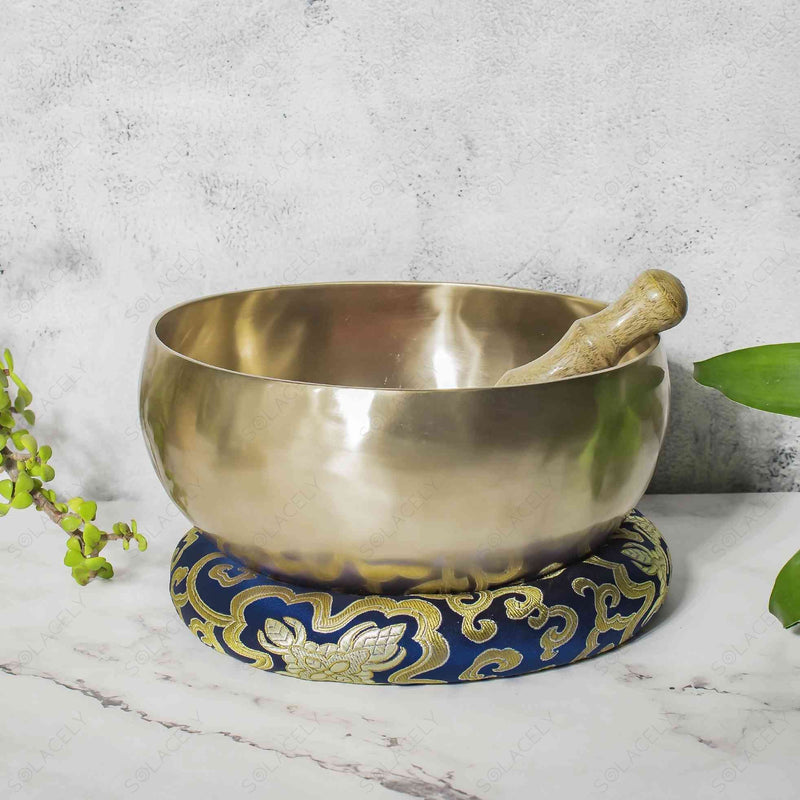
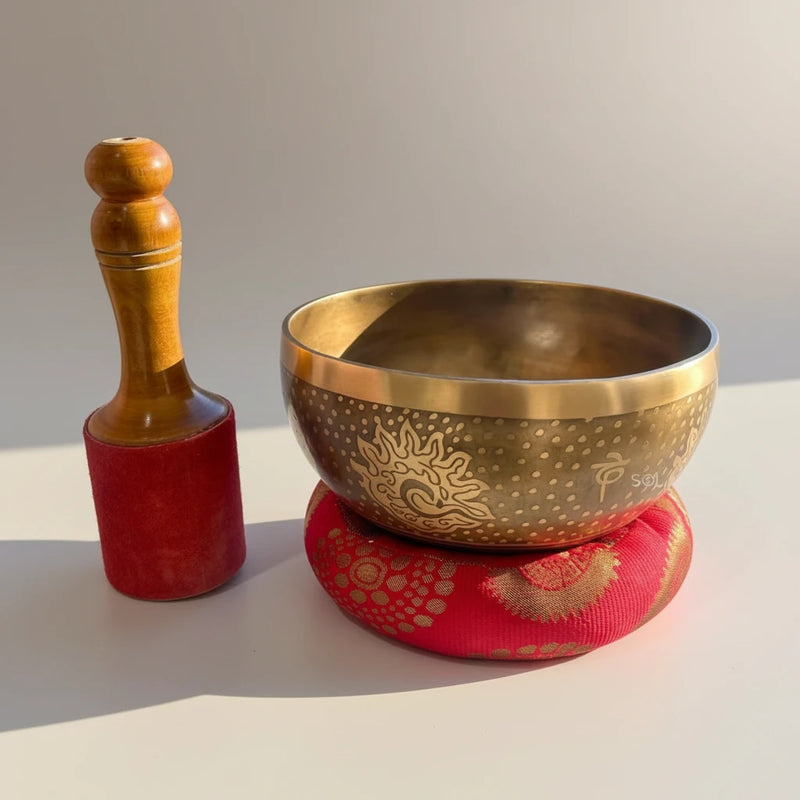
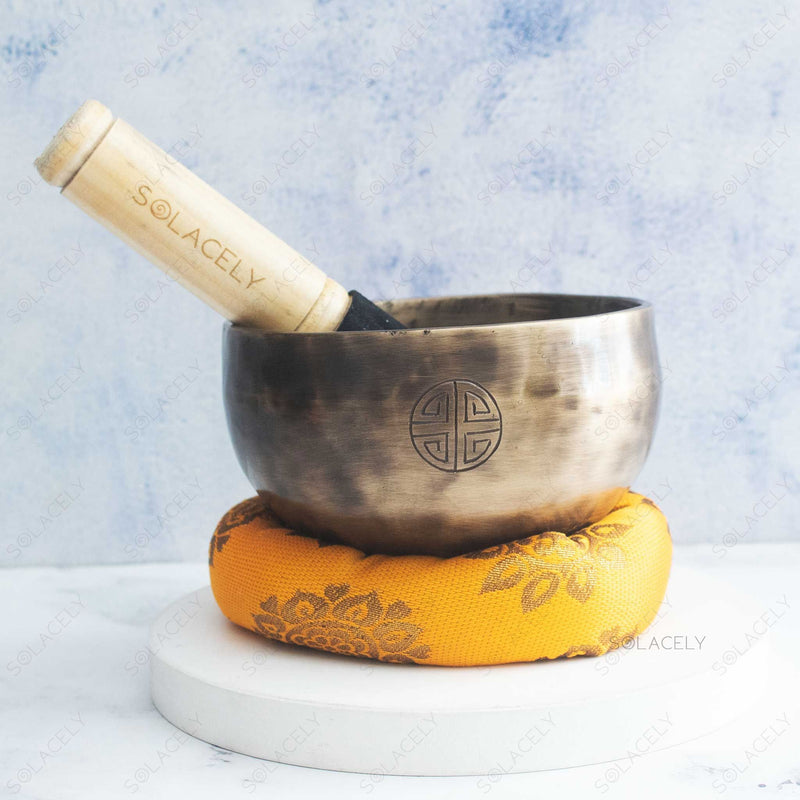
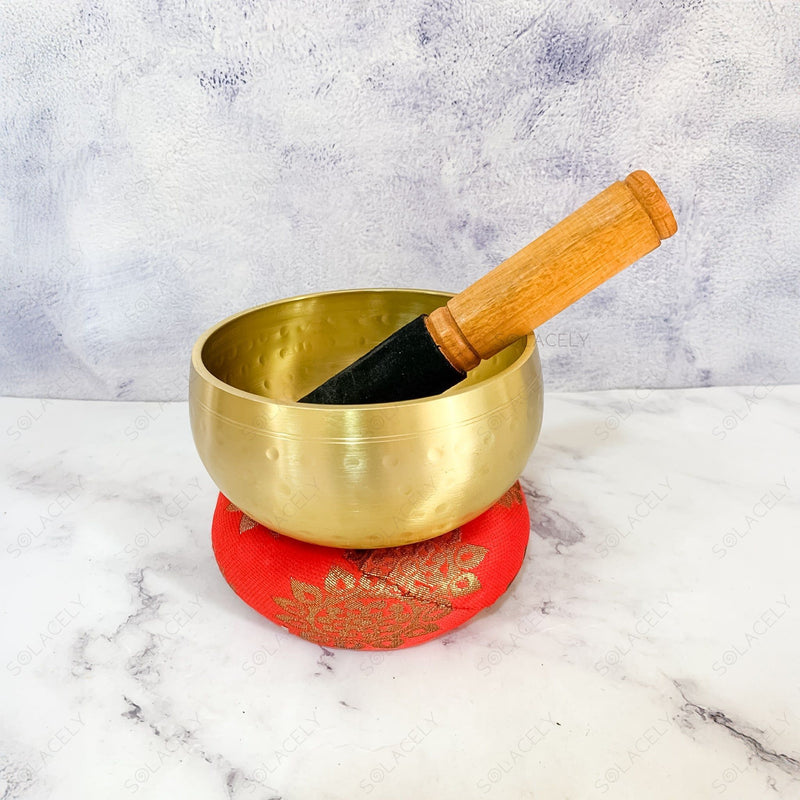
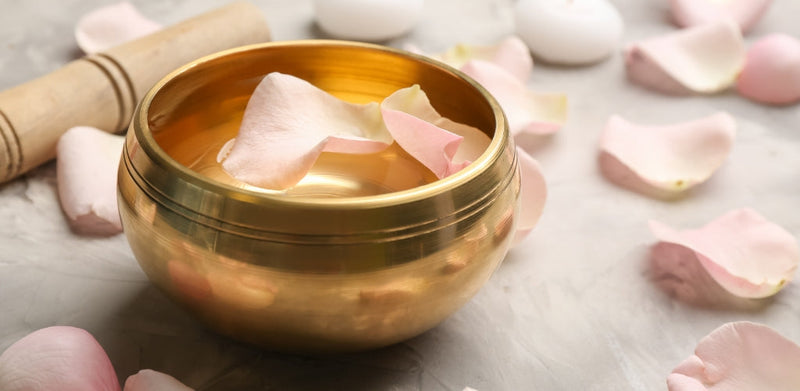
The instrument is simple. A metal Tibetan bowl or a frosted quartz crystal bowl sits on a cushion, and you either strike it once with a padded mallet or run the mallet around the rim to build a continuous tone. That decaying ring, sometimes fifteen or twenty seconds long, is the useful part. It gives students something to follow inward.
Most teachers use a bowl at just a few moments rather than throughout. Overusing it turns a cue into background noise. If you're new to the sound itself, our guide to Tibetan singing bowl meditation walks through striking and rimming technique before you bring it to a class.
Marking the start and end of practice
A single struck note is the classic way to open and close a yoga practice. At the start it draws a line between the busy day and the mat, telling the body it's time to settle. At the end, one long ring after savasana lifts students gently out of rest without a jolt.
This bracketing is why so many teachers keep a bowl by their seat. The opening tone works like a soft bell: chatter fades, phones go quiet, and the room's attention gathers around the sound as it fades. Many teachers pair that first strike with three rounds of OM, so the syllable and the bowl's overtones ring together.
At the close, timing matters more than volume. Strike once, softly, while students are still lying in savasana, and let the note fully decay before you invite them to wiggle fingers and toes. A loud or early ring undoes the calm you just built. The bowl should feel like a sunrise, not an alarm.
- Opening strike: one clean note to gather attention and signal the start.
- Optional OM: three rounds of OM over or after the tone, a traditional pairing.
- Closing ring: a soft single strike near the end of savasana, allowed to fade fully.
- Transition cue: an occasional gentle tap to move the room between long-held poses.
Deepening savasana with a singing bowl
Savasana, the final resting pose, is where a singing bowl earns its place. A slow, sustained tone held during those closing minutes gives a restless mind a single thread to follow, which helps students drop past fidgeting into genuine stillness. Keep it quiet and spacious, with long gaps of silence between tones.
The trick in savasana is restraint. You're not performing a sound bath here, you're offering an occasional anchor. Rim the bowl to raise one long tone, let it swell and fall, then leave ten or twenty seconds of silence before the next. That rhythm of sound and space is more calming than a constant drone.
Crystal bowls suit savasana especially well because their tone is pure and lingers. A single frosted quartz note can hold for half a minute. If you want to build a longer closing sequence, our sound healing guide covers layering tones without overwhelming the room, and crystal singing bowl explains how quartz bowls differ from metal ones in feel and sustain.
Guiding breath and pranayama
A singing bowl is a natural metronome for the breath. Because a struck tone fades slowly over many seconds, students can inhale as it rises and exhale as it falls, which stretches the out-breath without anyone counting. That longer exhale is exactly what pranayama, the yogic practice of breath control, is after.
Here's a simple way to pair the bowl with breath. Strike once and let the group breathe with the full arc of the tone. As the note decays, the exhale naturally lengthens, and a long, slow exhale is what calms the nervous system.
- Settle: sit tall, shoulders soft, and take a few normal breaths.
- Strike: ring the bowl once and let the tone build.
- Inhale smoothly through the first half of the sound.
- Exhale slowly as the tone fades, matching your breath to its decay.
- Pause in the silence, then repeat for five to ten rounds.
In classical pranayama the breath is often tied to sound and mantra, so using a tone this way sits comfortably inside the tradition rather than bolted onto it. According to Encyclopaedia Britannica, pranayama is the yogic regulation of breath, one of the eight limbs of yoga described by Patanjali. The bowl simply makes the slow exhale easier to feel.
Singing bowls in restorative and yin yoga
Restorative and yin yoga hold poses for two to five minutes, and long holds are where a singing bowl shines. A soft tone every few minutes marks the passage of time, tells students when to release a shape, and fills the silence of a slow class without words. It keeps a quiet room from feeling empty or awkward.
These slow styles ask the body to soften and stay, which can stir up restlessness. A gentle, recurring tone gives the mind a light task, following the sound, so it stops fighting the stillness. Many yin teachers ring the bowl once to enter a pose and once to leave it, so students never have to watch a clock.
The grounding quality of a low, resonant tone matters here too. A deep metal bowl's hum settles the body downward, which suits floor-based restorative work. If grounding is your main aim, our singing bowl for grounding guide goes deeper on choosing low-toned bowls, and singing bowl chakra balancing explains how teachers match bowl tones to the body's energy centres in slow practice.
Teacher tips for using a bowl in class
For teachers, the golden rule is less is more: a bowl should punctuate a class, not soundtrack it. Use it at clear moments, opening, transitions, and savasana, keep the volume gentle, and always let a tone fully decay before you speak. Test your striking so you never surprise a resting room.
A few practical habits separate a bowl that helps from one that distracts:
- Rehearse your strike. Practise at home until you can raise a clean, even tone every time. A clumsy clatter breaks the mood instantly.
- Position it within reach. Keep the bowl on a cushion beside your teaching seat so you can play it without breaking your flow.
- Mind the volume. In savasana, strike softer than feels natural. The room is quiet and every sound carries.
- Leave silence. Space between tones is where the calm lives. Don't rush to fill it.
- Watch the room. If students flinch, you're too loud or too sudden. Ease off.
One more thing on etiquette. Tell new students at the start that you'll be using a bowl, so an unexpected tone during savasana doesn't startle anyone. For the fuller landscape of practices a bowl supports, from meditation to sleep, our singing bowl hub is the place to browse.
Choosing the right bowl size and tone for your room
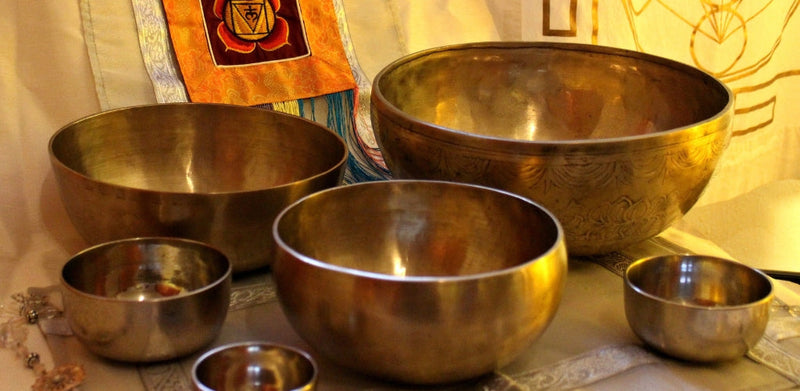
Match bowl size to room size. A small 4-5 inch bowl gives a bright, higher tone that carries across a home mat or a one-on-one session, while a larger 7-9 inch bowl produces a deep, room-filling tone better suited to a full studio. Larger bowls run lower and louder; smaller bowls run higher and gentler.
Tone follows size and metal. A big, heavy Tibetan bowl gives a low grounding hum you feel as much as hear, which works for grounding and closing. A small bowl's brighter ring cuts cleanly through a room to gather attention. Crystal bowls give a purer, more sustained tone than metal, but they're heavier to carry and easier to chip.
| Bowl size | Typical tone | Best for | Rough carry in a room |
|---|---|---|---|
| 4-5 inch | Bright, higher pitch | Home practice, one-to-one, opening cue | Small room, close range |
| 5-7 inch | Balanced mid tone | Small group, general studio use | Medium room |
| 7-9 inch | Deep, low, resonant | Studio savasana, grounding, sound baths | Large room |
| Crystal (quartz) | Pure, very sustained | Savasana, sound healing | Any, if the bowl is large enough |
On price, Tibetan metal bowls run from entry level up to premium, with small handmade bowls near the lower end and large studio bowls at the top. Quartz crystal bowls usually cost more. If you teach, one mid-size metal bowl around 6-7 inches is the most flexible first buy. To pick by pitch rather than size, our singing bowl frequencies chart maps tones to the notes and Hz teachers reach for.
Buy in person if you can, or from a seller who lets you hear the bowl, because the same size can ring very differently. Strike it, rim it, and trust the tone your body likes. A bowl you enjoy hearing is one you'll actually use.
The roots: nada yoga, OM and pranava
Using sound in yoga isn't a modern add-on. It comes from nada yoga, the classical yoga of sound, which treats tone and vibration as a path to inner stillness. Its heart is OM, also called pranava, the seed syllable traditionally chanted to open and close practice, the same bracketing role a bowl now plays.
Nada yoga divides sound into the audible, struck note you hear and a subtle, inner sound the practitioner listens for in meditation. A singing bowl sits on the audible side, but its long, fading overtones are meant to draw the ear toward that quieter inner listening. That's why a decaying tone, not a loud one, is the point.
OM carries this tradition. According to Encyclopaedia Britannica, Om (Aum) is a sacred syllable in Hinduism, Buddhism and Jainism, chanted at the beginning and end of prayers and considered the primordial sound from which the universe arises. When a teacher rings a bowl and leads three rounds of OM, the overtones of metal and voice blend, and the ancient practice and the modern instrument do the same job. For the wider story of the instrument itself, our singing bowl hub sets the history and uses side by side.
Sources
- Encyclopaedia Britannica — Om (Aum), the sacred syllable of Hinduism, Buddhism and Jainism
- Encyclopaedia Britannica — Pranayama, breath control in yoga
- Goldsby TL, et al. (2017) — Effects of Singing Bowl Sound Meditation on Mood, Tension, and Well-being, Journal of Evidence-Based Integrative Medicine (PMC)
- National Center for Complementary and Integrative Health (NIH) — Meditation and mindfulness, evidence overview
Frequently asked questions
About the author


Written by Chetna Sharma, crystal healing practitioner and co-founder of Solacely. Chetna has worked with healing crystals for over a decade and curates Solacely's protective stone collection.