Grounding with a singing bowl means using a slow, deep, low tone to settle your nervous system, pull your attention out of a racing mind and back into the present, and steady the body's sense of being rooted, what yoga tradition ties to the root chakra (Muladhara). In practice you strike or rim a heavy, low-pitched bowl, follow the sound and the long fade with slow breathing, and let each cycle bring you a little more into your body. It's a simple, calming ritual, and the small amount of research we have on sound meditation is encouraging but still preliminary.
Key Takeaways
- Grounding with a singing bowl is about coming back into your body and the present moment: the low, sustained tone gives your attention something steady to rest on, which the tradition links to the root chakra and a calmer nervous system.
- For grounding you want deep, low-frequency sound. Larger, heavier bowls with a thick wall produce the long, bass-heavy note that feels the most settling, unlike the bright high tones used for clarity.
- The core practice is short: sound the bowl, exhale long as the tone fades, feel your feet and sit-bones, and repeat for five to ten minutes.
- Pairing the bowl with slow 'longer-exhale' breathing and grounding stones, black tourmaline, hematite and red jasper, is a traditional way to deepen the settling effect.
- Evidence for relaxation is real but early and small-scale. Treat this as a complementary wellbeing ritual, not a medical treatment. Grounding bowls usually sit in the entry-level to premium range.
What 'grounding' with a singing bowl actually means
Grounding is the felt shift from scattered and up-in-your-head to settled and present in your body. A singing bowl helps because its long, low tone is a single steady thing to rest your attention on. As the note fades, your breathing naturally slows, your shoulders drop, and you come back down into your feet, seat and belly. That's the whole aim.
There are three threads worth separating. The first is the nervous system: a slow, predictable sound paired with long exhales nudges the body out of a fight-or-flight state toward 'rest and digest.' The second is attention: following one tone from strike to silence is a form of present-moment focus, close to a mindfulness anchor. The third is the traditional layer, in yoga and tantric thought, grounding is the work of the root chakra (Muladhara), the base centre tied to safety, stability and the earth element.
According to Encyclopaedia Britannica, chakras are centres of psychic energy described in tantric and yogic texts, arranged along the spine. Muladhara is the lowest and the most earthbound, which is why 'grounding' and 'root chakra' are used almost interchangeably. This is a framework from centuries of contemplative practice, not a claim from modern medicine. If the whole singing-bowl world is new to you, start with our singing bowl hub, which links out to every use and technique.
Is there real evidence? An honest look
The honest answer is that the evidence is preliminary. A handful of small studies suggest sound meditation with singing bowls is associated with lower tension and better mood, and slow-breathing relaxation is well supported in general. But sample sizes are tiny, control groups are often missing, and no serious researcher claims a bowl 'heals' anything. Treat it as a calming ritual, not medicine.
To be specific: a small 2017 study published in the Journal of Evidence-Based Complementary & Alternative Medicine found that people reported less tension, anger and fatigue after a singing-bowl sound meditation. That's promising, but it's one small study with obvious limits. The broader, sturdier evidence is for the mechanism underneath, slow, extended-exhale breathing and focused attention. The US National Center for Complementary and Integrative Health notes that relaxation techniques can help reduce stress and support wellbeing when practised regularly.
So the grounded (pun intended) way to hold this: the bowl is a tool that makes slow breathing and present-moment attention easier and more pleasant to sustain. That's a reasonable, evidence-friendly reason to use one, without overselling it. For a fuller picture of how sound is used in wellbeing practice, see our overview of sound healing.
A step-by-step grounding practice with a singing bowl
Here is the core routine. It takes five to ten minutes and needs only a low-pitched bowl, a cushion or chair, and a quiet few minutes. The pattern is always the same: sound the bowl, breathe out long as it fades, feel your body's contact with the ground, repeat. Consistency matters more than length.
- Sit so you feel supported. Sit cross-legged on a cushion or upright in a chair with both feet flat on the floor. Let your hands rest on your thighs. Feel the parts of you touching the ground, feet, sit-bones, the weight of your hands.
- Settle the bowl. Rest a low, heavy bowl on a cushion in front of you or in your open palm (not gripped). Take three slow breaths before you make any sound.
- Strike once, gently. Tap the outer rim with a padded mallet to release a single deep note. Don't force it. You want a full, round tone, not a clang.
- Ride the fade with your exhale. As the sound rings out and slowly disappears, breathe out slowly and completely. Let the exhale last as long as the tone. This longer-exhale breathing is the part that signals your body to relax.
- Rest in the silence. When the note is gone, stay with the quiet for two or three natural breaths. Notice your feet and seat again. This gap is where grounding actually lands.
- Repeat, and drop lower each time. Sound the bowl again and repeat for five to ten cycles. With each round, imagine your weight sinking a little further into the floor.
- Close without the bowl. Set the mallet down, keep your eyes soft or closed, and take five ordinary breaths before you stand. Notice how your body feels compared to when you started.
If your mind wanders, that's normal, just come back to the next tone. Many people fold this into a wider mindfulness habit; our guide to Tibetan singing bowl meditation covers the rimming technique and longer sits if you want to go deeper.
The best deep, low-frequency bowls for grounding
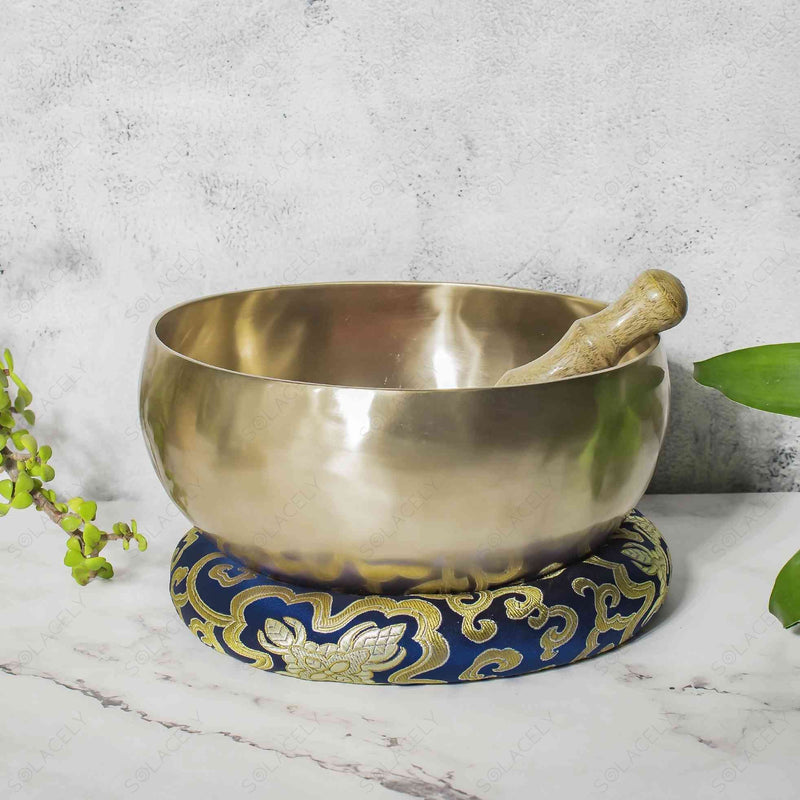
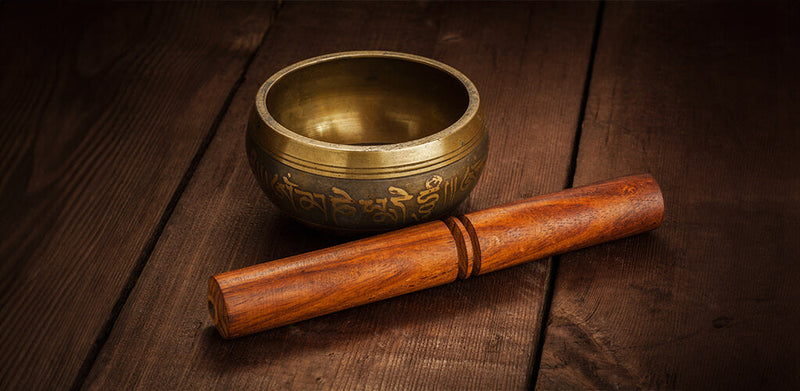
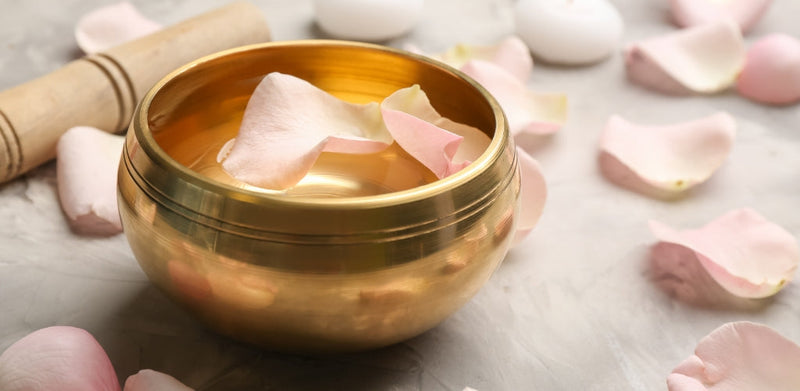
For grounding, choose a bowl that gives you a deep, low, long-sustaining note. As a rule, bigger and heavier means lower and longer. A large bowl with a thick wall produces the bass-heavy fundamental tone that feels settling in the body, while small, thin bowls ring high and bright, which is lovely for clarity but the opposite of grounding.
Frequency matters here. Low notes, roughly in the range traditionally linked to the root and sacral centres, are the ones people describe as 'felt in the belly and legs.' You don't need to obsess over an exact hertz number, but if you like the detail, our singing bowl frequencies chart maps which pitches are traditionally paired with which chakra. For grounding, aim low.
| What to look for | Why it grounds | Typical price tier |
|---|---|---|
| Large diameter (18-25 cm+) | Bigger bowl = lower fundamental note | Premium |
| Thick, heavy wall | Longer sustain, deeper bass tone | Mid range |
| Hand-hammered Himalayan bronze | Rich, complex low overtones | Mid range to premium |
| A note in the low (root/sacral) range | Felt in the body, not just heard | Varies by size |
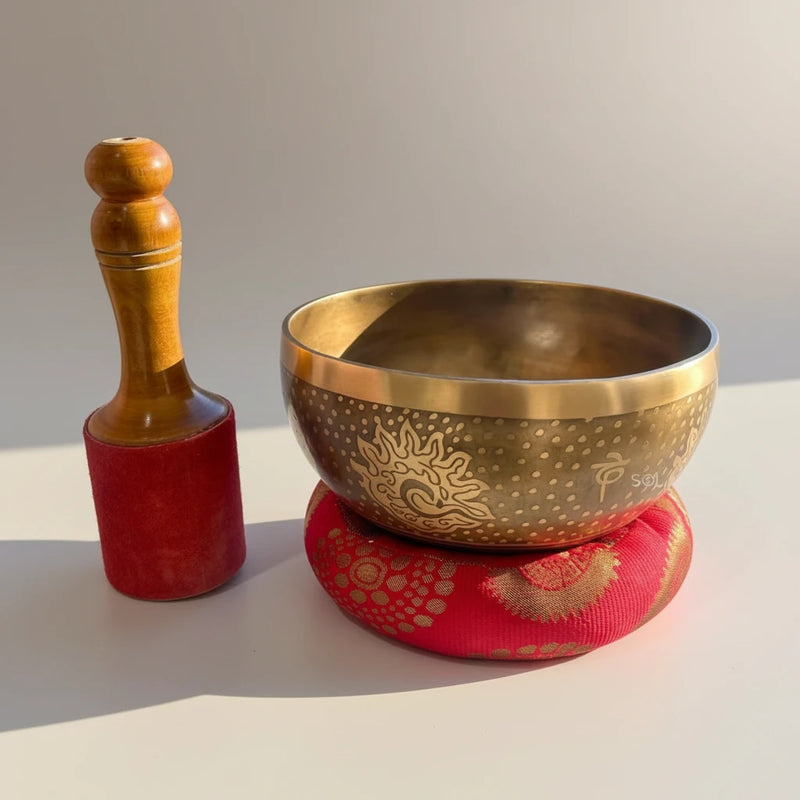
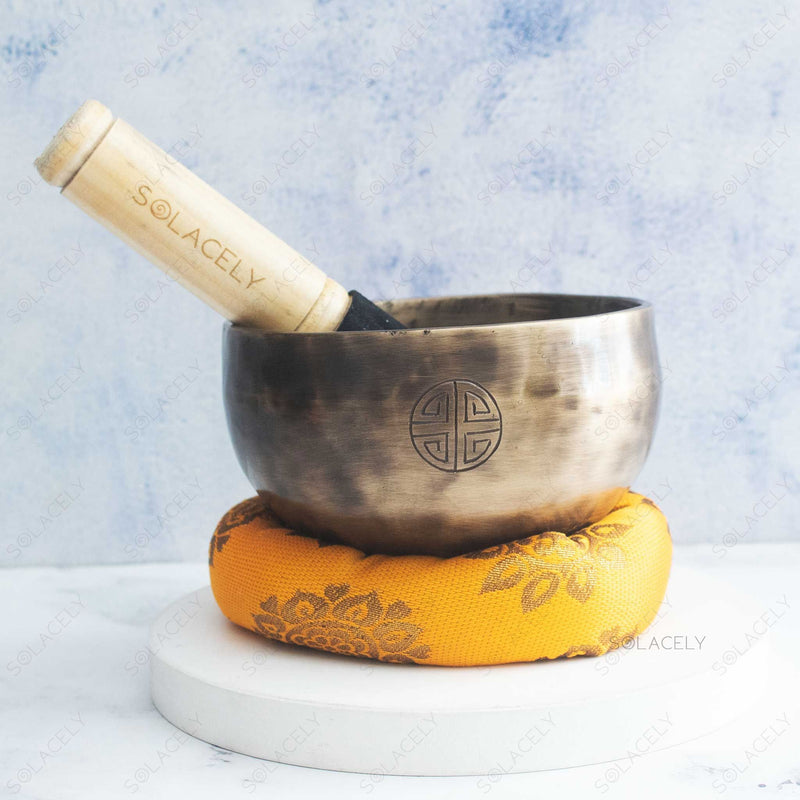
A few practical notes. Play it before you buy if you can, or ask for a sound sample, your body knows a grounding tone when it hears one. A padded or suede-wrapped mallet brings out the low fundamental better than a hard stick. And you truly only need one good low bowl to begin; a matched singing bowl set is a later luxury, not a starting requirement. For the wider list of what bowls are used for, see our roundup of singing bowl benefits.
Pairing the bowl with breath
Breath is what turns pleasant sound into genuine grounding. The single most effective move is to make your exhale longer than your inhale, because a slow, extended out-breath is the clearest signal your body has for 'you're safe, stand down.' The bowl simply gives that exhale a rhythm to follow. Sound out, breathe out.
A simple pairing to try:
- Sit tall, one hand on your lower belly.
- Inhale slowly through the nose for a count of four, letting the belly expand.
- Strike the bowl as you begin to breathe out.
- Exhale for a count of six or more, riding the fade of the tone all the way down.
- Pause in the silence for two counts, then repeat.
Keep it unforced, this should feel calming, not like a breath-holding test. If counting distracts you, just make each exhale a bit longer than feels automatic. Slow-breathing practice is one of the better-supported relaxation methods, which is part of why the bowl-plus-breath combination works as well as it does. This same breath-and-sound pairing is the backbone of using a bowl for rest; if winding down at night is your goal, our guide to a singing bowl for sleep adapts it into an evening routine.
Pairing with grounding stones
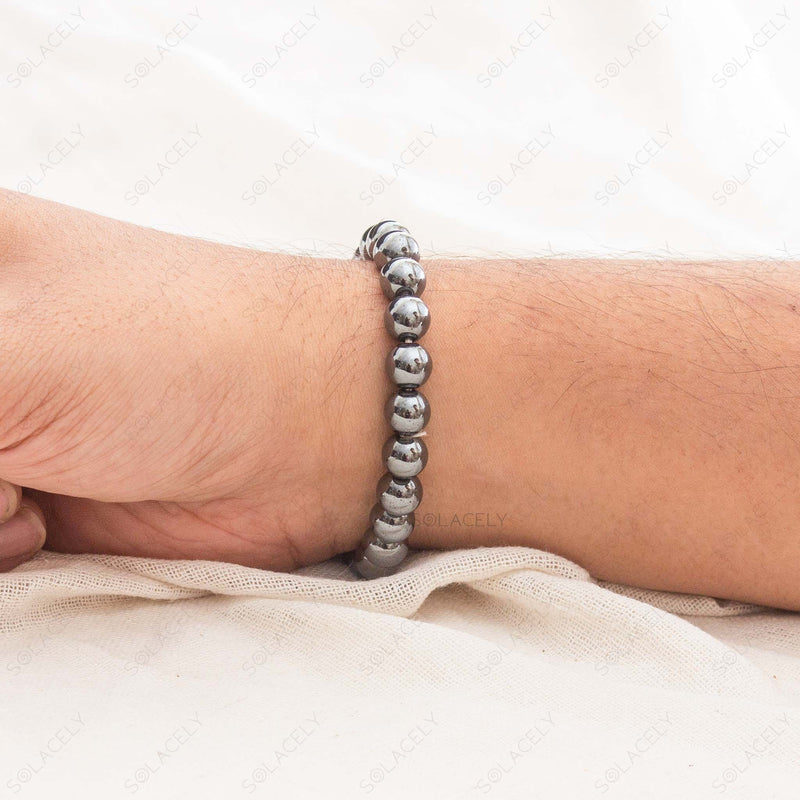
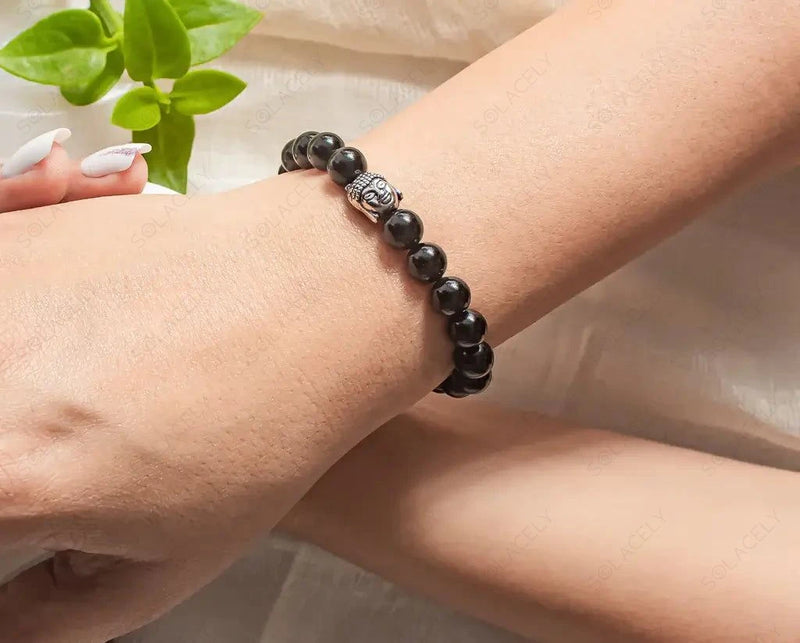
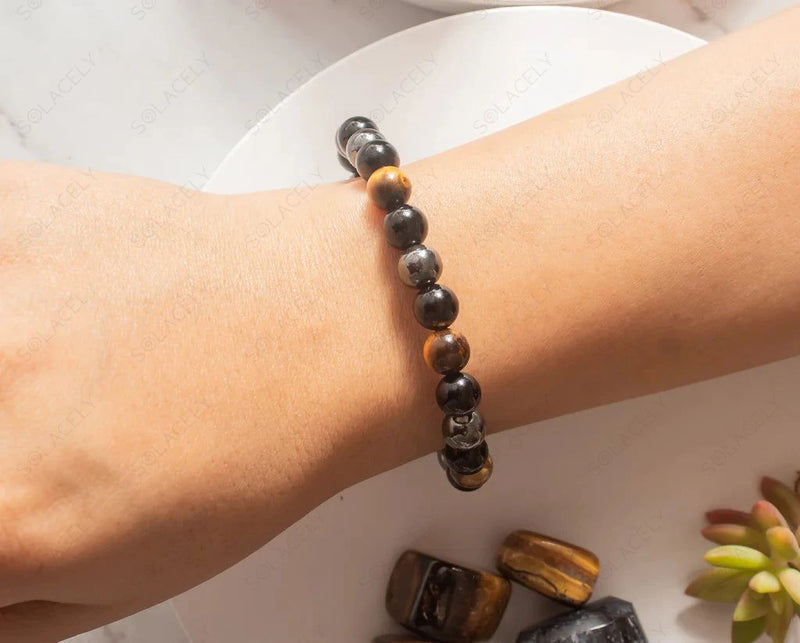
In this tradition, grounding crystals are the classic companion to a grounding sound practice. Dark, heavy, earthy stones, black tourmaline, hematite and red jasper, are chosen because their colour and dense quality match the root chakra's earth element. You hold one during the practice or keep it near the bowl as a physical anchor. This is a belief-based tradition, not a proven remedy, so treat it as a meaningful ritual rather than a cure.
| Stone | Traditional association | How to use it while you sound the bowl |
|---|---|---|
| Black tourmaline | Protection, releasing fear, feeling anchored | Hold in the non-dominant hand, or place at your feet |
| Hematite | Stability, focus, a heavy 'grounded' feeling | Rest in the palm; its weight is part of the point |
| Red jasper | Strength, endurance, steady grounding | Hold at the lower belly during long exhales |
| Smoky quartz | Calm, letting go of stress and overthinking | Place between the feet or at the base of the spine |
To use them, simply hold a stone in your palm as you run the step-by-step practice above, and let its weight and coolness be a second anchor alongside the sound. Feel the stone, feel your feet, feel the tone fade. Cleanse the stone now and then under running water or in morning light. Grounding tumbles and bracelets sit at the affordable end of the range, so a small starter set costs little. The same stones show up across chakra work, our guide to singing bowl chakra balancing shows how sound and stones combine across all seven centres, and the chakras explained primer covers the wider system.
When to practise, and common mistakes
The best time to ground is whenever you feel scattered, wired or anxious, first thing in the morning to set a steady tone for the day, or in the evening to come down from it. Even three to five minutes counts. Grounding is a 'little and often' practice, so a short daily sit beats a rare long one. Give it a couple of weeks before you judge whether it's helping.
A few common mistakes worth avoiding:
- Choosing a bright, high bowl. High tones energise and sharpen; they don't ground. Go low and heavy.
- Striking too hard. A clang pulls you out of the body. Aim for a soft, full note.
- Cutting the exhale short. The long out-breath is where the grounding happens. Let it stretch.
- Rushing the silence. The pause after the tone is not dead time; it's the moment you actually land.
- Expecting a dramatic result. Grounding is quiet by nature. A slightly slower pulse and a clearer head is the win.
Fold it into a rhythm you already have, a bowl by your meditation cushion, a stone in your pocket, five minutes before your morning coffee or tea. Over weeks, the practice itself becomes a cue that tells your body it's safe to settle. For the full range of ways people use these bowls, from focus to sleep to manifestation, the singing bowl hub is the place to browse.
Sources
Frequently asked questions
About the author


Written by Chetna Sharma, crystal healing practitioner and co-founder of Solacely. Chetna has worked with healing crystals for over a decade and curates Solacely's protective stone collection.