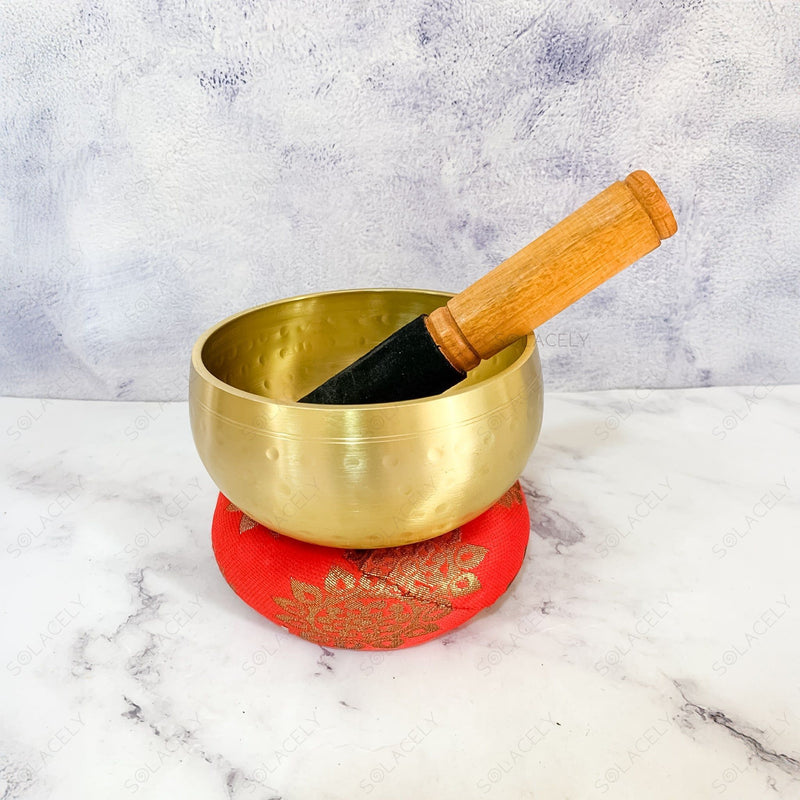
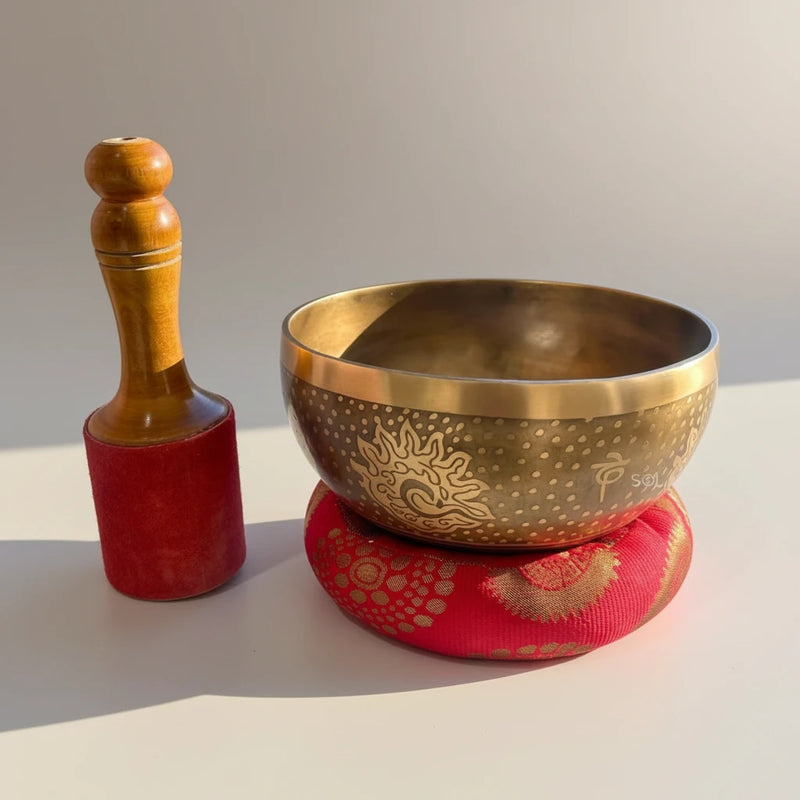
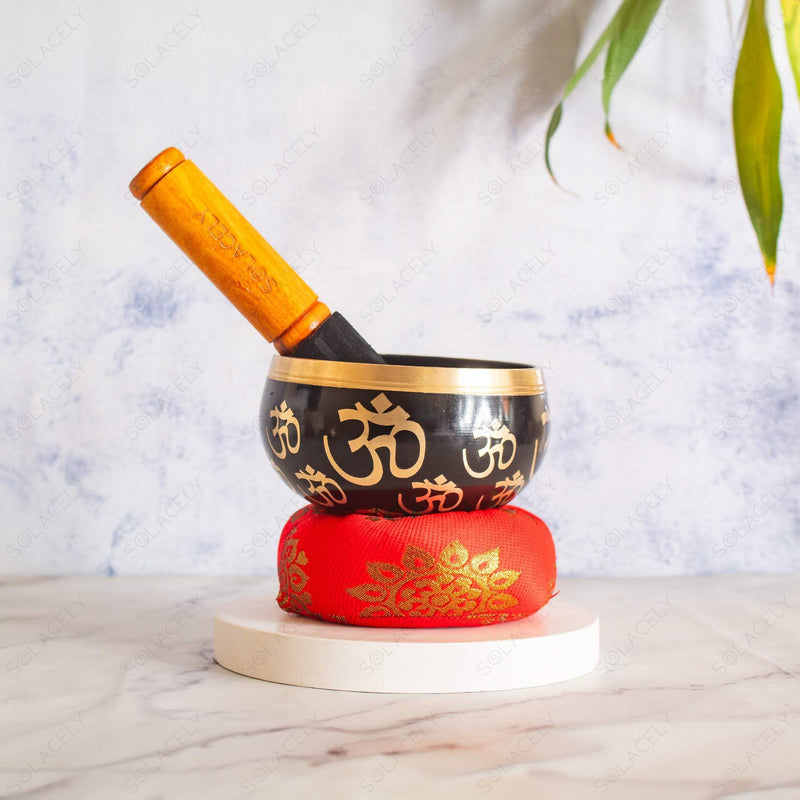
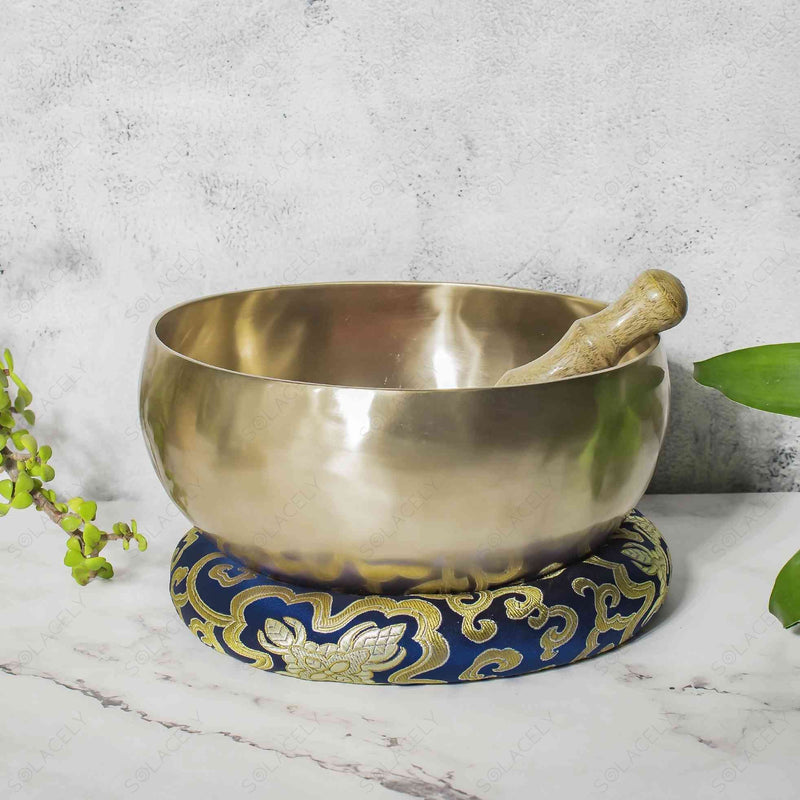
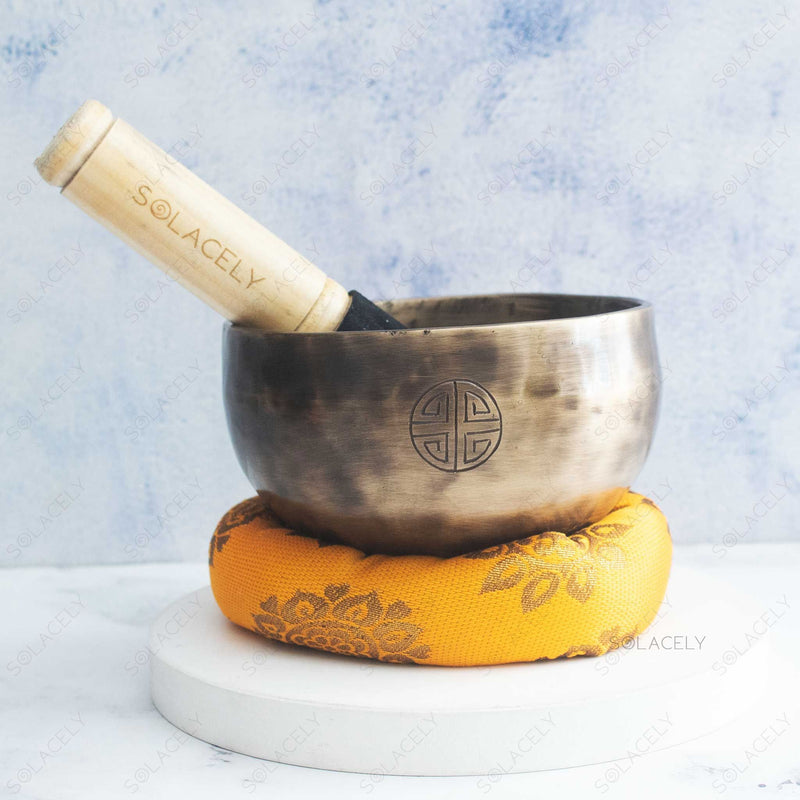
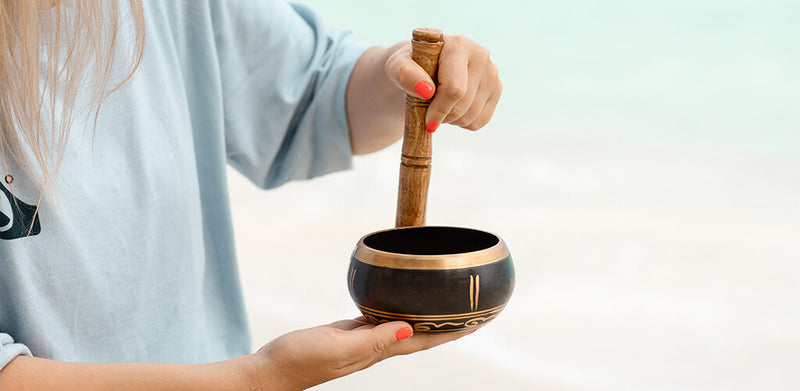
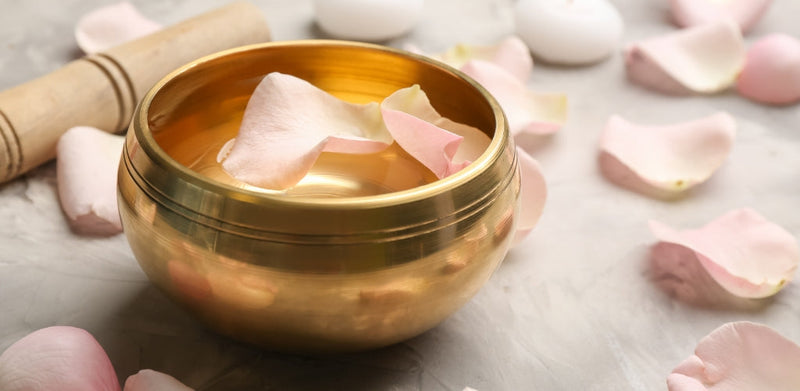
The main benefit of a singing bowl is deep relaxation: its long, steady tone gives your mind one calm thing to rest on, which tends to slow the breath, ease tension, and settle a busy head. People also use a singing bowl as a focus aid for meditation, a wind-down cue before sleep, and a marker to open or close a yoga session. It's a soothing ritual, not a medical cure.
Key Takeaways
- The most reliable, best-supported benefit of a singing bowl is relaxation: less felt stress and tension, a quieter mind, and a body that downshifts when you stop and listen.
- Common everyday uses are meditation focus, a bedtime wind-down cue, marking the start and end of yoga, and clearing the mood in a room, all low-risk and easy to try at home.
- The research is early and thin. The most-cited study, Goldsby et al. 2017 (62 people, no control group), found less tension, anger, fatigue, and anxiety after one session, but it stays preliminary.
- Be honest about limits: a bowl does not cure anxiety, depression, pain, or disease, and specific 'healing frequency' cure claims are not backed by solid evidence.
- A good beginner Tibetan bowl is an entry-level to mid-range buy. Treat sound work as complementary self-care that pairs well with, never replaces, medical care.
The benefits at a glance
Here's the honest short list of what a singing bowl actually does for most people. These are the reasonable, low-risk benefits worth expecting, drawn from what relaxation and meditation generally do rather than from big medical claims:
- Deep relaxation. A sustained tone triggers the same calm response as slow breathing or quiet meditation.
- Lower felt stress and tension. Shoulders drop, jaw unclenches, and mental chatter tends to quiet.
- A focus anchor for meditation. The ring gives a wandering mind something simple to return to.
- A sleep wind-down cue. Used before bed, it signals your body to stop and settle for the night.
- A yoga and sound-bath opener. One strike marks the shift from doing to being at the start or end of practice.
- A mood reset for a room. That bright, clean note is a nice way to break a tense or scattered afternoon.
- A shared calm ritual. Families and groups use it to open a meditation, a prayer, or a quiet evening together.
Notice what's not on that list: curing illness, 'detoxing' the body, or retuning your cells. Keep the two apart and you'll get the real value without the disappointment. Here's the same picture as a quick reference table.
| Benefit | What it helps with | How strong the case is |
|---|---|---|
| Deep relaxation | Winding down, calming the nervous system | Strongest; matches known relaxation response |
| Lower stress and tension | Everyday stress, a racing mind | Good, early studies point this way |
| Meditation focus | Staying present, fewer distractions | Good; the tone is a natural anchor |
| Sleep wind-down | Signalling the body it's time to rest | Reasonable; helps as a bedtime cue, not a cure for insomnia |
| Yoga and sound baths | Marking the start and end of practice | Practical and traditional, widely used |
| Mood and focus in a space | Resetting a tense or scattered mood | Anecdotal but common and harmless |
| 'Cures' disease or anxiety | Nothing; avoid this claim | Not supported by evidence |
Stress relief and relaxation (the main benefit)
The clearest benefit of a singing bowl is relaxation. When you strike the bowl and listen to the tone fade, attention narrows to a single sound, the breath slows on its own, and the body's stress response eases. This is the same well-understood relaxation effect behind slow breathing and quiet meditation, and it needs no special claim about the metal.
Why does one simple tone do so much? Because most of our stress runs on mental noise, the loop of to-do lists and worries. A long, unbroken sound is easy to rest on, and while you follow it, the loop goes quiet. That's the whole mechanism, and it's a real one. In a busy household, five minutes with a bowl after work or before dinner can act like a small full stop in the day.
The early evidence leans this way too. In the most-cited study, Goldsby et al. 2017, 62 adults reported significantly less tension, anger, and fatigue after a single 60-minute singing bowl session. That's encouraging, but read the caveat in the honest-limits section below before you treat it as proof. For the wider practice this sits inside, our guide to sound healing covers how sustained tones are used to relax the body.
A focus aid for meditation
A singing bowl helps meditation by giving your attention a clear object to hold. Strike it once and follow the ring until it fully fades, and you've done a complete round of focused attention without straining. When the mind wanders, the next strike calls it back. That gentle return, over and over, is the core skill meditation builds.
This is why bowls suit beginners so well. Many people quit meditation because sitting with nothing feels boring or frustrating. A bowl removes that hurdle. You're not fighting silence, you're listening to something, and the 'success' of each round is just noticing when the sound ends. Teachers often open and close a sit with a bowl for exactly this reason, using the tone to mark the edges of practice.
You can build a simple solo routine around this. Our Tibetan singing bowl meditation guide walks through striking, listening, and breathing with the tone. If you want to keep the practice honest and grounded on the mental side specifically, our companion guide to singing bowl benefits for the mind goes deeper on focus, mood, and the meditative state without overclaiming.
Better sleep wind-down
Used before bed, a singing bowl works as a wind-down cue rather than a sleeping pill. A few slow strikes signal your body that the day is ending, pulling attention off screens and worries and into a slower, quieter gear. Do it at the same time each night and it becomes a reliable 'time to sleep' ritual your nervous system learns to follow.
The honest framing matters here. A bowl won't knock you out or fix clinical insomnia. What it can do is help with the run-up: the tense, wired feeling that keeps you scrolling at midnight. Swapping ten minutes of phone for ten minutes of quiet tone gives the mind a softer landing, and that alone helps many people fall asleep more easily. It's the routine and the calm, not a magic frequency, doing the work.
Keep the bedtime version gentle and short. Strike softly, let each ring fully decay, and stop before you feel restless. For a full step-by-step routine built for the end of the day, see our guide to singing bowls for sleep, which covers timing, volume, and how to pair the bowl with slow breathing.
Yoga, sound baths, and shared practice
In yoga and group settings, a singing bowl marks transitions and sets the mood. One clear strike signals the start of practice, the shift into savasana, or the close of a session, giving everyone a shared cue to arrive or let go. In a sound bath, layered bowl tones fill the room while people lie still and rest inside the sound.
For yoga specifically, the bowl is a punctuation mark. It tells a class, without a word, that the doing is over and the settling begins. Many teachers strike it once to open, again to move into final rest, and a last time to bring people back. That rhythm helps a group move together and makes savasana land deeper. Our singing bowl for yoga guide covers how to fold a bowl into a home or studio flow.
Sound baths scale this up. Instead of one bowl, a practitioner layers several, plus a gong or chimes, so you're surrounded by overlapping tone for 45 to 75 minutes. You don't have to concentrate; drifting and dozing are fine. If the pitches and notes interest you, our singing bowl frequencies chart lays out which tones bowls produce, and which people find calming, without the mysticism.
The honest limits: what a singing bowl won't do
A singing bowl is a relaxation tool, not a treatment. It does not cure anxiety, depression, chronic pain, or any disease, and the strong 'healing frequency' claims, that a specific Hz number treats a specific illness or 'retunes your cells,' are not backed by solid clinical evidence. Being clear about this protects both your expectations and your wallet.
The research is early and thin, and it's worth reading honestly. The most-cited study, Goldsby et al. 2017, published in the Journal of Evidence-Based Complementary & Alternative Medicine, followed 62 adults and found less tension, anger, fatigue, and anxiety after one 60-minute session. The p-values were strong, but there was no control group. Everyone knew they were at a relaxing sound session, so we can't separate the bowls from the effect of simply lying quietly for an hour. The authors say as much and call for more rigorous work.
Newer systematic reviews reach the same verdict: a handful of small studies point toward less stress and better mood, but samples are tiny and randomized controlled trials are largely missing. The National Center for Complementary and Integrative Health takes the same cautious line on meditation and relaxation broadly, helpful for stress and wellbeing for many people, not a substitute for medical treatment. So the fair summary is simple: a singing bowl is a pleasant, low-risk way to relax, early data leans positive, and no one has proven it treats any medical condition.
| What's reasonable to expect | What to treat with caution |
|---|---|
| A deeply relaxed, calmer state | 'Cures anxiety, depression, or disease' |
| Lower felt stress and tension | 'Retunes your cells to a healing frequency' |
| An easier wind-down before sleep | 'A specific Hz number treats an illness' |
| A useful focus anchor for meditation | 'Detoxifies the body through vibration' |
| A pleasant reset in a busy day | 'Replaces therapy, medication, or a doctor' |
The older context: sound as an old friend
If sound as a calming tool feels familiar, that's because the idea is centuries old. Nada yoga, the 'yoga of sound,' treats vibration as a path to stillness. Mantra and Om chanting use the voice as the instrument, and the temple bell rung at the threshold of a shrine clears the mind and marks sacred space. A singing bowl simply gives you a portable version of the same idea at home.
If bells and chanting are already part of your life, you already know how a single sound can shift the mood in a room. When you chant Om and feel the hum settle in your chest, you're doing something close to what a bowl session aims for: resting the mind on one steady, repeating sound. That shared root is why a bowl tends to feel natural at home rather than borrowed.
On cost, a decent beginner Tibetan singing bowl is an entry-level to mid-range buy. The very cheapest bowls tend to sound thin and fade fast, which defeats the purpose, while crystal bowls and multi-bowl sets are premium. Bowls also make a warm, meaningful gift for a housewarming or griha pravesh, a wedding, or Diwali. To compare a single bowl against a graduated collection, see our singing bowl set guide.
How to start at home and actually feel the benefits
To get the benefits, keep it short and regular. Sit comfortably, strike the bowl softly, and listen until the tone fully fades before striking again. Breathe slowly with each ring. Five honest minutes most days will do more for you than an occasional hour, because the value is in the calm ritual, not the length.
A simple starter routine:
- Settle. Sit with your back tall, the bowl resting on a flat palm or a cushion.
- Strike gently. Tap the rim once and just listen to the full ring decay.
- Breathe with the tone. Let each strike be a slow inhale and a slower exhale.
- Add the rim, optionally. Circle the mallet steadily around the outside rim to draw out a continuous singing tone.
- Close in silence. After a few rounds, sit still and notice the quiet. That pause is the real practice.
Match the time to the benefit you want. For stress relief, use it midday or after work as a reset. For meditation, open and close your sit with a strike. For sleep, keep it soft and late, part of a screen-free wind-down. And remember what it is throughout: a calming ritual you'll look forward to, not a treatment you're relying on. For the full practice and history in one place, the singing bowl hub links every guide in the cluster.
Sources
- Goldsby TL, Goldsby ME, McWalters M, Mills PJ. Effects of Singing Bowl Sound Meditation on Mood, Tension, and Well-being: An Observational Study. Journal of Evidence-Based Complementary & Alternative Medicine, 2017
- PubMed record for the Goldsby et al. singing bowl study (PMID 27694559)
- National Center for Complementary and Integrative Health (NIH) — Meditation and Mindfulness: What You Need To Know
Frequently asked questions
About the author


Written by Chetna Sharma, crystal healing practitioner and co-founder of Solacely. Chetna has worked with healing crystals for over a decade and curates Solacely's protective stone collection.