Angel crystals are the pale, high-vibration stones traditionally used to feel closer to guidance and comfort: angelite, celestite, seraphinite, selenite, blue lace agate, amethyst, labradorite and rose quartz. Most are soft, soothing in colour, and kept for the quiet end of crystal practice rather than the energising end.
Key takeaways
- Angel crystals are pale blue, white, lilac and soft pink stones kept for comfort and connection.
- Angelite, celestite, seraphinite and selenite are the four most closely tied to the tradition.
- Most of them are soft. Selenite is only 2 on the Mohs scale and dissolves in water.
- They belong to the upper chakras, the throat, third eye and crown.
- Cleanse with sound, incense smoke or moonlight. Never soak selenite, celestite or angelite.
What are angel crystals?
Angel crystals are a group defined by feeling rather than mineralogy. What they share is a pale, luminous quality, soft blues and whites and lilacs, and a reputation in crystal practice for gentleness. They are the stones people reach for when they want comfort and a sense of being accompanied.
The association is with the upper chakras: the throat, the third eye and the crown, the centres tradition links to expression, insight and connection. That is why angel crystals turn up so consistently in meditation practice, on bedside tables and on altars rather than in a work bag.
They are also, almost without exception, soft. Several sit below 4 on the Mohs hardness scale, which shapes how they are used. These are stones to place and to hold rather than to wear on a wrist that gets knocked about, and that suits the quiet way they are worked with.
The main angel crystals
Eight stones make up the usual set. Hardness matters a great deal here, so the table gives it alongside what each is traditionally kept for.
| Stone | Colour | Mohs hardness | Traditionally kept for |
|---|---|---|---|
| Angelite | Soft powder blue | 3.5 | Calm communication and comfort |
| Celestite | Pale sky blue | 3 to 3.5 | Peace and gentle uplift |
| Seraphinite | Deep green with silver feathering | 2 to 4 | Renewal and letting go |
| Selenite | Milky white, silky sheen | 2 | Clearing and lightness |
| Blue lace agate | Banded pale blue | 7 | Calm speech and soothing |
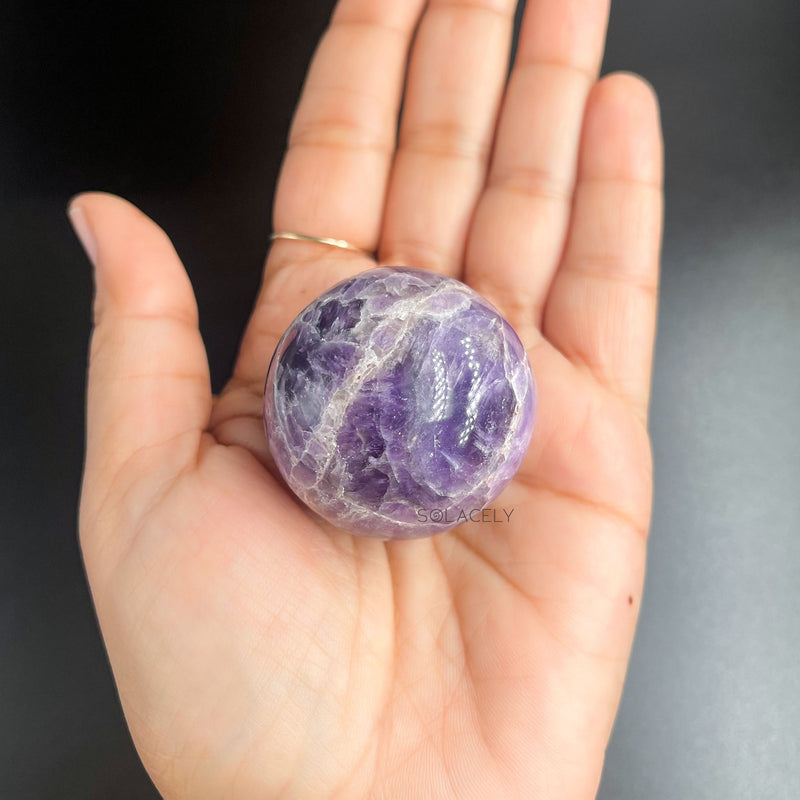
| Amethyst | Lilac to purple | 7 | Stillness and meditation |
| Labradorite | Grey with blue and gold flash | 6 to 6.5 | Intuition and protection |
| Rose quartz | Soft pink | 7 | Self-love and tenderness |
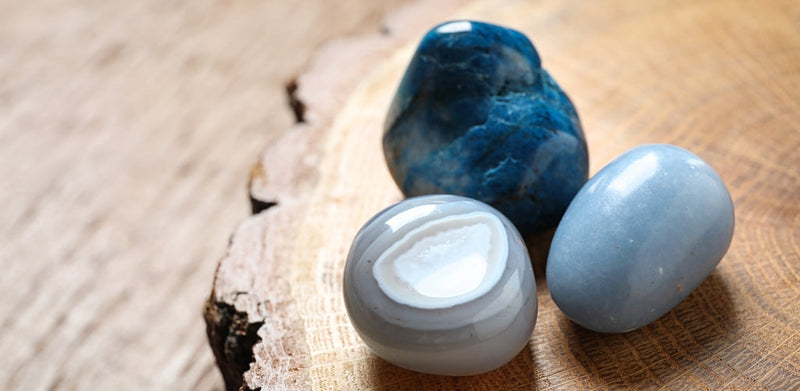
Angelite is the one the group is named around, a soft blue form of anhydrite, and our guide to angelite meaning and properties covers it in full. Celestite is its close companion, a pale blue crystal that grows in geodes and is prized for colour rather than size.
Seraphinite is the unexpected one, a deep green chlorite shot through with silvery feathering that is exactly why it earned its name. Selenite is the workhorse of the group, used to clear a space and to cleanse other stones, and it is the softest thing on most crystal shelves.
What angel crystals are traditionally kept for
Comfort comes first. These are the stones people keep through grief, through a frightening wait, through the kind of stretch where what is wanted is not energy but company. That is a real and long-standing use, and it is what separates this group from the confidence and abundance stones.
Connection is the second thread. In tradition angel crystals are used to feel closer to guidance, however you understand that: intuition, a departed relative, something larger. They are the stones most often held during prayer and meditation, and the ones placed on an altar or a shelf kept for that purpose.
Clarity of a gentle kind is the third. Blue lace agate and angelite are both kept for speaking softly and truthfully, and selenite for clearing what has built up in a room. Together they make the quiet, settling half of a crystal collection.
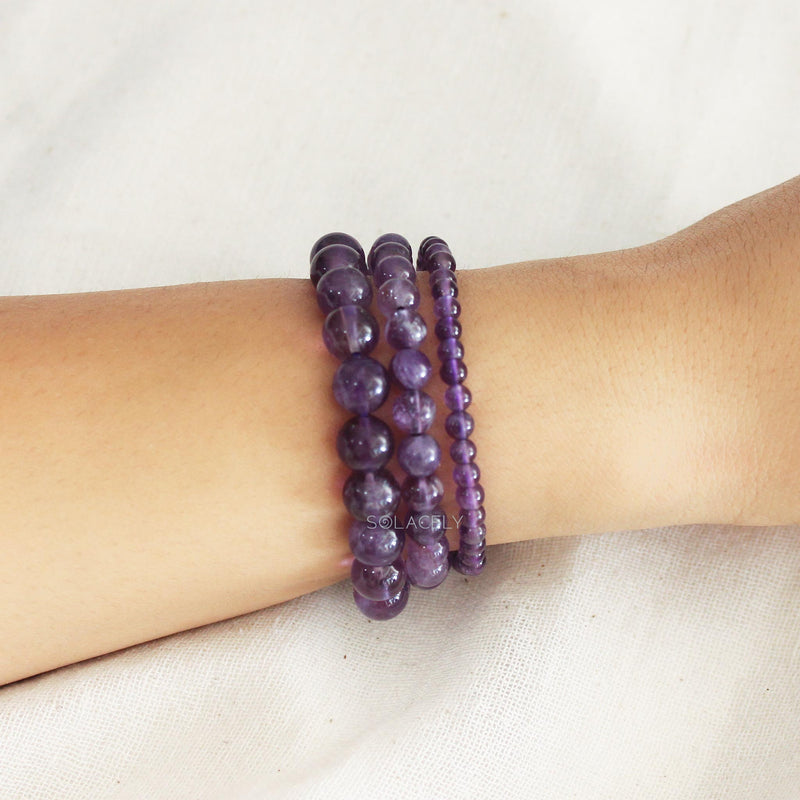
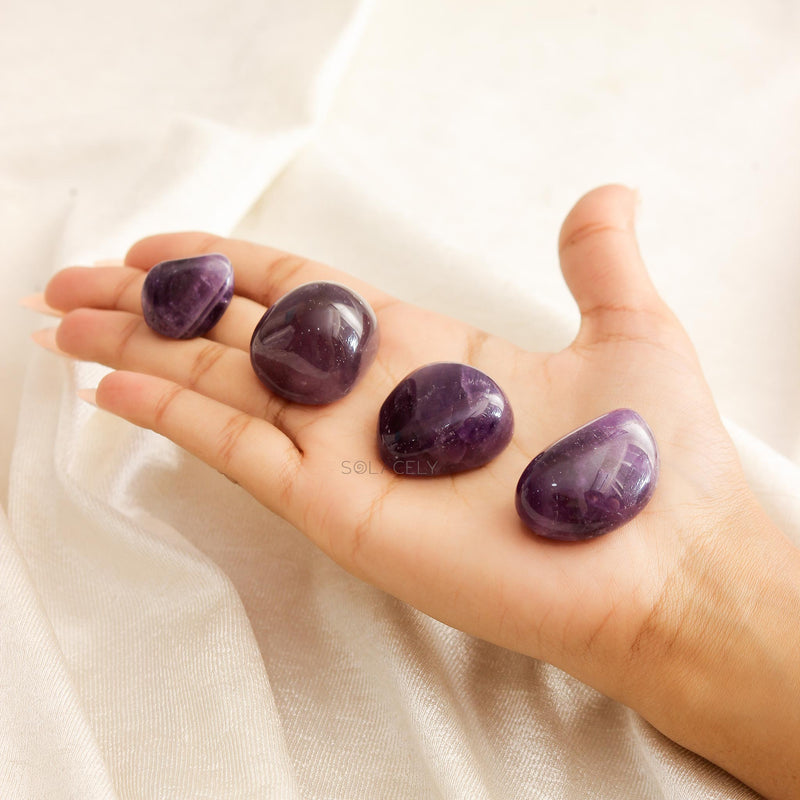
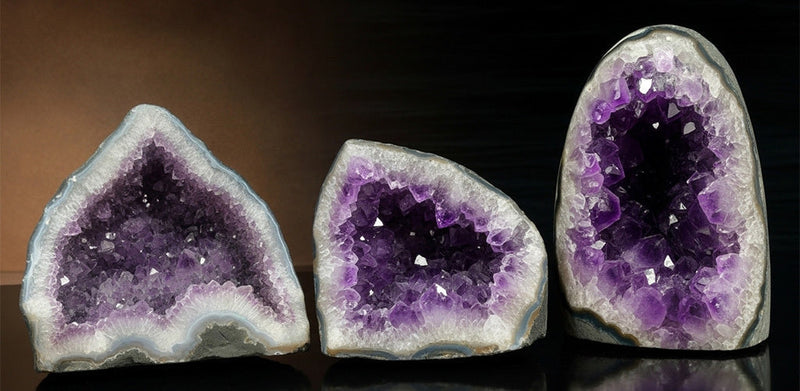
Amethyst overlaps into this group and is the easiest place to start, being both hard-wearing and widely available. Our guide to amethyst meaning and properties covers it, and our note on rose quartz benefits and properties covers the tender pink one.
How to use angel crystals
Holding is the most common practice. Sit somewhere quiet with the stone in cupped hands, breathe slowly, and let your attention rest on it. Angelite and celestite are both often held at the heart or the throat, and selenite is usually held upright like a small wand.
Placing is the other main use. A selenite bar on a windowsill, a celestite geode on a bedside table, an angelite palm stone beside a reading chair. In tradition these stones are kept where you rest rather than where you work, which is a useful rule of thumb for the whole group.
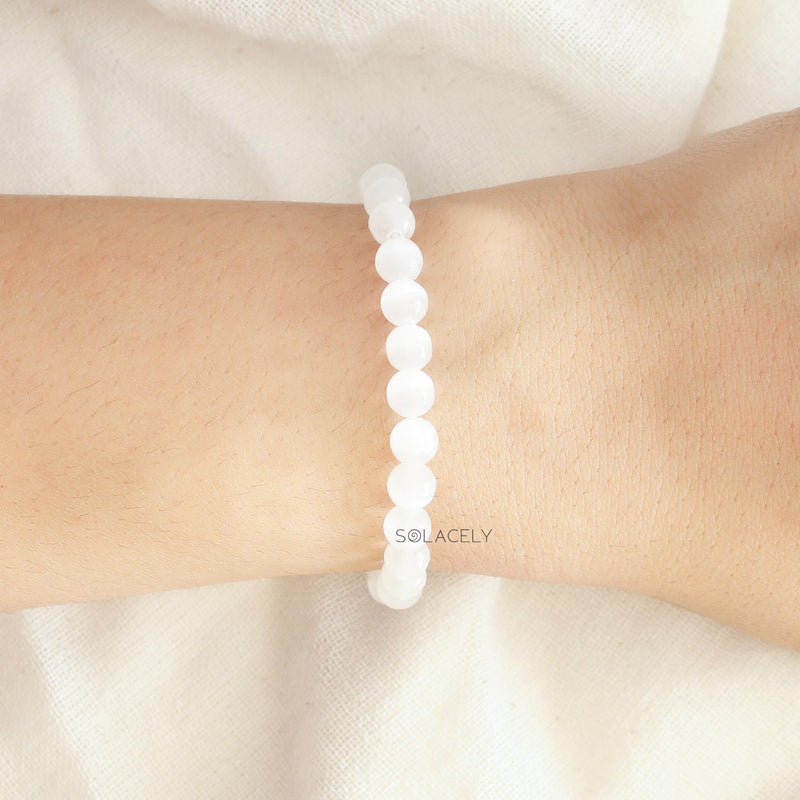
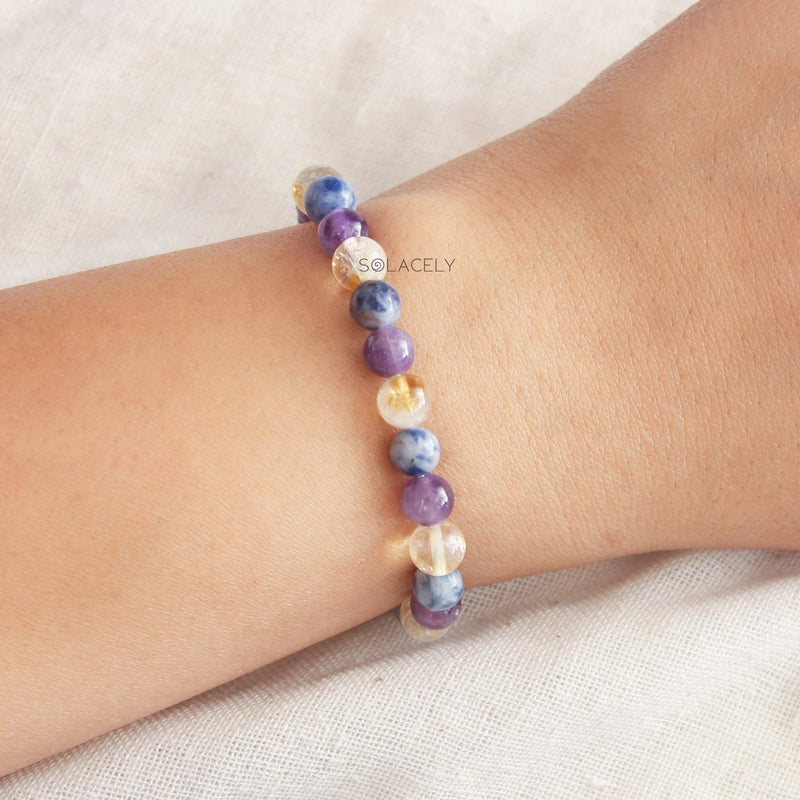
For wearing, choose from the hard end of the list. Blue lace agate, amethyst and rose quartz all sit at 7 on the Mohs scale and handle a bracelet perfectly well. Labradorite at 6 to 6.5 is fine too. The softer four belong in a bowl or a pendant rather than on a wrist.
Grids are the third traditional use. A simple arrangement of selenite around a central celestite or amethyst, set on a shelf with a stated intention, is the usual form. It does not need to be elaborate to be meaningful.
Whichever way you work with them, keep the practice small enough that you will actually repeat it. Angel crystals are not the stones of dramatic gestures, and everyone who keeps them for long describes the same thing: a habit of a minute or two, held to over months, is worth far more than an elaborate setup that gets dismantled after a fortnight.
Caring for soft stones
Water is the thing to get right. Selenite dissolves, and angelite and celestite are both water-sensitive, so none of these should be rinsed, soaked or left anywhere damp. Wipe them with a soft dry cloth and nothing more.
Handle them gently. At 2 on the Mohs scale selenite scratches with a fingernail, and celestite and angelite mark easily too, so store them separately from quartz and other harder stones. A lined box or a shelf where they will not be knocked is the right home.
Keep celestite and amethyst out of long hours of hard direct sun, which fades both permanently. For cleansing in the spiritual sense, sound, incense smoke and moonlight suit every stone in this group and risk none of them. Our step-by-step on how to cleanse and charge crystals sets out each method in order.
Angel crystals are kept as part of a long-standing spiritual and cultural tradition. They are not a medical device or treatment, and they do not diagnose, treat, cure or prevent any condition. Nothing here replaces advice from a doctor, therapist or other qualified professional, and you should never delay or stop medical care because of a crystal. Several of these stones are very soft and may shed fine particles, so keep them away from food, drinking water, babies and young children.
Sources
Written by Chetena Sharma. Reviewed by the Solacely editorial team.
Frequently asked questions
About the author


Written by Chetna Sharma, crystal healing practitioner and co-founder of Solacely. Chetna has worked with healing crystals for over a decade and curates Solacely's protective stone collection.