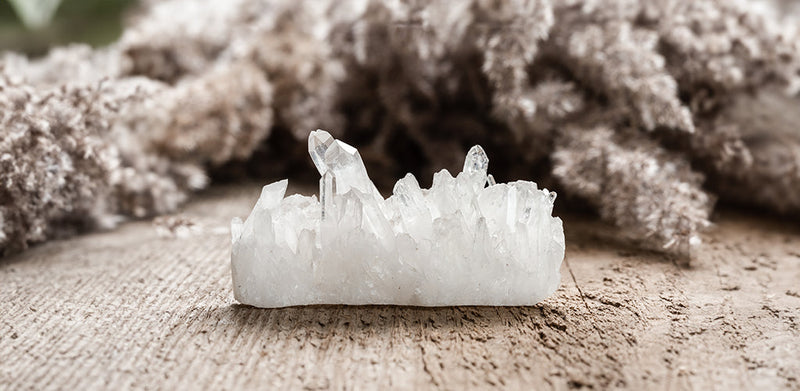
April's birthstone is diamond. It is the hardest natural material known, rated 10 on the Mohs scale, and it has been kept as a symbol of clarity, strength and lasting commitment for centuries. Clear quartz and white topaz are the alternatives people choose for the same qualities.
Key takeaways
- Diamond is the modern April birthstone, and the hardest natural material at 10 on the Mohs scale.
- Traditionally kept for clarity, strength and enduring commitment.
- Clear quartz and white topaz are the usual alternatives, both bright and both far friendlier on price.
- Diamond is hard but not unbreakable: it has cleavage directions, so a sharp knock can still chip it.
- Clear quartz is the practical everyday choice and one of the most versatile stones to own.
Why diamond is April's stone
Diamond has been the April birthstone since the modern list was settled in the early twentieth century, though its symbolic weight goes back much further. Its association with permanence comes directly from its physical character, which is unusual among birthstones and part of why the meaning has stuck so firmly.
The qualities attached to it are consistent across sources: clarity of mind, strength that does not need to announce itself, and commitment that lasts. That last one is why diamond became the engagement stone, and the association now runs both ways.
For anyone born in April who would rather have something less formal, the alternatives carry the same brightness. If you want the full twelve month picture, the birthstones by month guide lays out the modern and traditional lists together.
What makes diamond distinctive
Diamond is pure carbon arranged in an exceptionally tight crystal structure, and that arrangement is the source of everything it is known for. It sits at 10 on the Mohs scale, the top of the scale, which means nothing else in ordinary life will scratch it.
It also has an unusually high refractive index, which is what produces the fire people recognise across a room. Light entering a well cut diamond bounces internally before leaving, splitting into flashes of colour as it goes, and cutting a stone to maximise that effect is a genuine craft.
One useful thing to know is that hardness and toughness are different. Diamond resists scratching completely, but it has cleavage directions, so a sharp knock at the wrong angle can still chip a stone. That is worth knowing for a ring worn every day, and it is why settings matter.
Clear quartz and white topaz
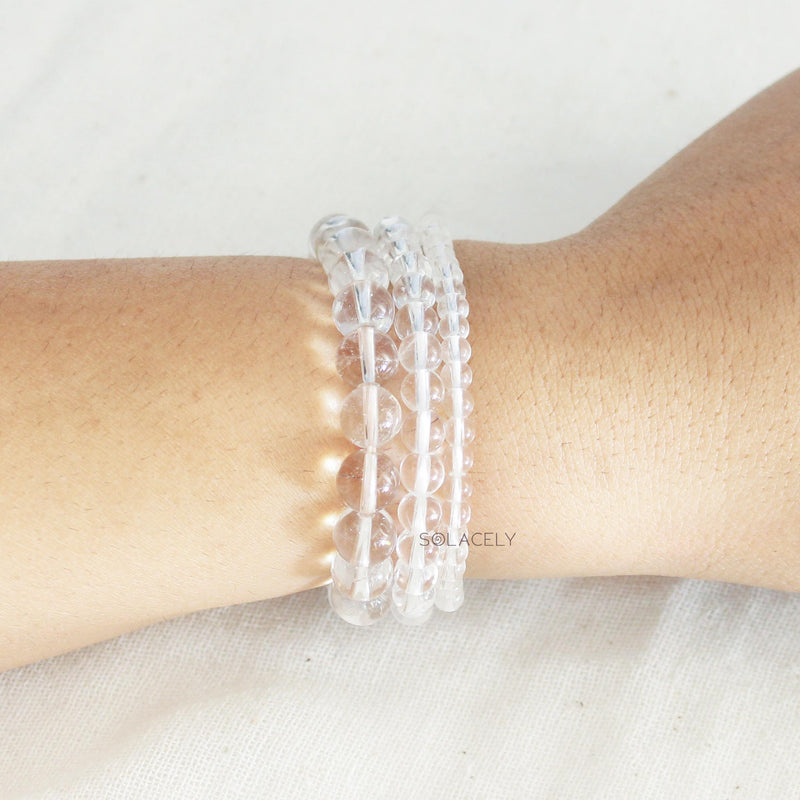
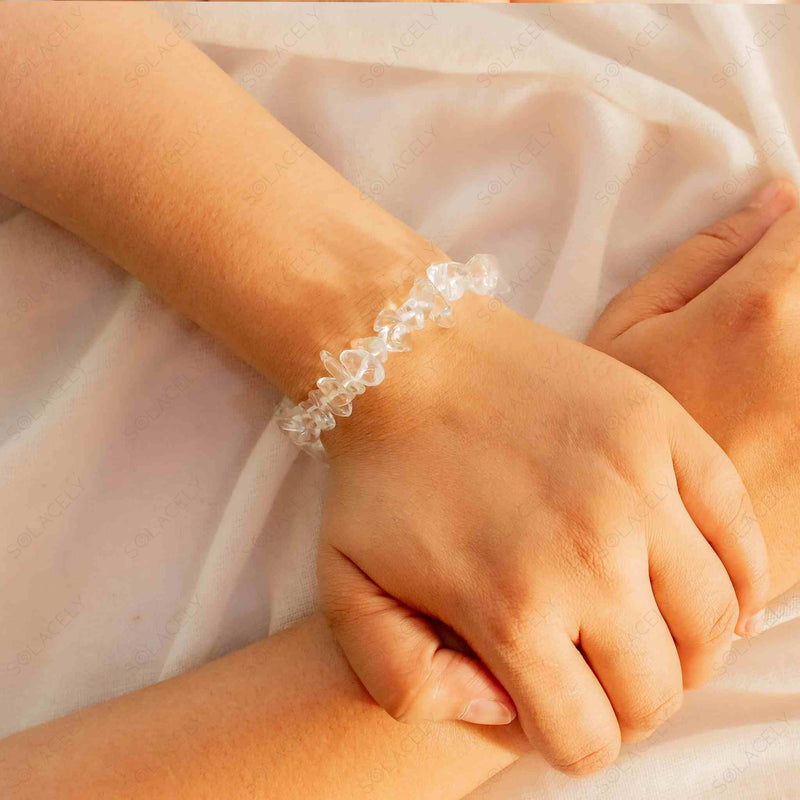
Clear quartz is the alternative most people actually reach for, and it is a genuinely good one. It carries the same brightness and clarity association, it is available in every format from tumbled stones to points, and it costs a fraction of anything faceted.
In crystal practice it is the neutral stone, kept for clarity and used as the anchor a collection is built around. It sits at 7 on the Mohs scale, comfortably hard enough for daily wear, and it is one of the most forgiving stones to look after. Our clear quartz guide covers it fully.
White topaz is the other option and it sits between the two. At 8 on the Mohs scale it is harder than quartz and holds a bright, lively polish, which makes it the closest look to diamond at a far gentler price. Its one care note is a single cleavage direction, so a protective setting suits it.
Comparing the April options
| Diamond | White topaz | Clear quartz | |
|---|---|---|---|
| Hardness | 10 Mohs | 8 Mohs | 7 Mohs |
| Look | Exceptional fire and brilliance | Bright, lively sparkle | Clear to milky, gentle glow |
| Traditionally kept for | Clarity, strength, commitment | Clear thinking, steadiness | Clarity, focus, amplification |
| Best for | A milestone piece kept for decades | A bright ring without the price | Everyday wear and home use |
| Care note | Hard, but chips on a sharp knock | Avoid ultrasonic cleaners | Very easy, avoid long strong sun |
Most people born in April end up with clear quartz for everyday and something faceted for occasions, which is a sensible way to have both. Choose the format around how it will actually be worn.
How April stones are traditionally used
All three are bright, clear stones, so the practices attached to them cluster around clarity rather than calm or drive.
- Worn daily. A clear quartz bracelet or pendant, kept as the neutral anchor of a set.
- On a desk. A quartz point where decisions get made, which is the classic placement.
- As a milestone gift. A diamond or white topaz piece marking a significant birthday.
- Paired. Clear quartz alongside almost anything, since it is the stone that sits well with everything.
Clear quartz is unusual in how easily it combines, which is part of why it anchors so many sets. For the wider clarity group, crystals for clarity and peace covers what belongs alongside it.
Caring for April stones
Diamond is straightforward: warm soapy water and a soft brush, which removes the film that dulls a stone far more often than any damage does. It tolerates ultrasonic cleaning well unless the setting or any accompanying stones say otherwise.
White topaz needs one extra habit. Because of its cleavage, ultrasonic and steam cleaners are best avoided entirely, and a bezel or protective setting is worth asking for on a ring worn daily.
Clear quartz is the easiest of the three. Warm water, mild soap, a soft cloth and a full dry, and it will look the same in ten years. Keep it out of long strong sun as a general habit for any quartz. For the neighbouring months, the March birthstone and May birthstone guides follow the same format.
Choosing an April birthday gift
Diamond carries an expectation that not every April birthday needs to meet, and it is worth saying that plainly before anyone feels they have to stretch. A birthstone gift is about marking the month, and all three options do that properly.
For a significant birthday, a small diamond in a simple setting reads as an heirloom and will genuinely last decades. Studs are the safest format, since they need no sizing and suit almost every wardrobe.
For everything else, clear quartz gives you scale and character for very little. A generous point for a desk, a tumbled palm stone, or a bracelet all read as thoughtful, and because quartz is so easy to look after the recipient does not need to learn anything to keep it looking well. White topaz sits in between if you want sparkle without the price of a faceted diamond.
What clear quartz does in a collection
Clear quartz is worth understanding on its own terms rather than only as a stand-in. In practice it is the stone that makes other stones easier to use, which is a genuinely useful role and the reason almost every collection ends up with some.
It is traditionally described as an amplifier, kept alongside another stone to sharpen whatever that one is for. It also carries no narrow association of its own, so it never competes with the intention you have set, and that neutrality is exactly why it anchors a desk or an altar so well.
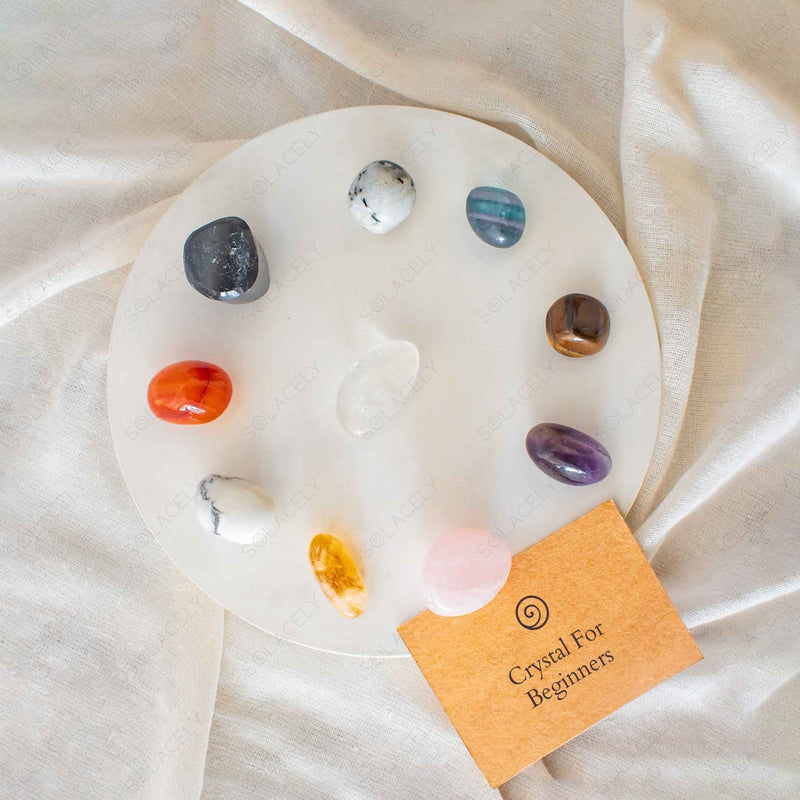
Formats are unusually varied. Points, clusters, tumbled stones, spheres and beads are all easy to find and all inexpensive, which makes clear quartz the friendliest stone to experiment with while you work out how you actually like to keep crystals.
The properties described here reflect traditional and cultural belief around crystals and gemstones. They are offered for reflection and wellbeing and are not medical advice, financial advice, or a treatment for any condition. If you are managing a health concern, please speak with a qualified healthcare professional. Keep small stones away from young children.
Sources
Written by Chetena Sharma. Reviewed by the Solacely editorial team.
Frequently asked questions
About the author


Written by Chetna Sharma, crystal healing practitioner and co-founder of Solacely. Chetna has worked with healing crystals for over a decade and curates Solacely's protective stone collection.