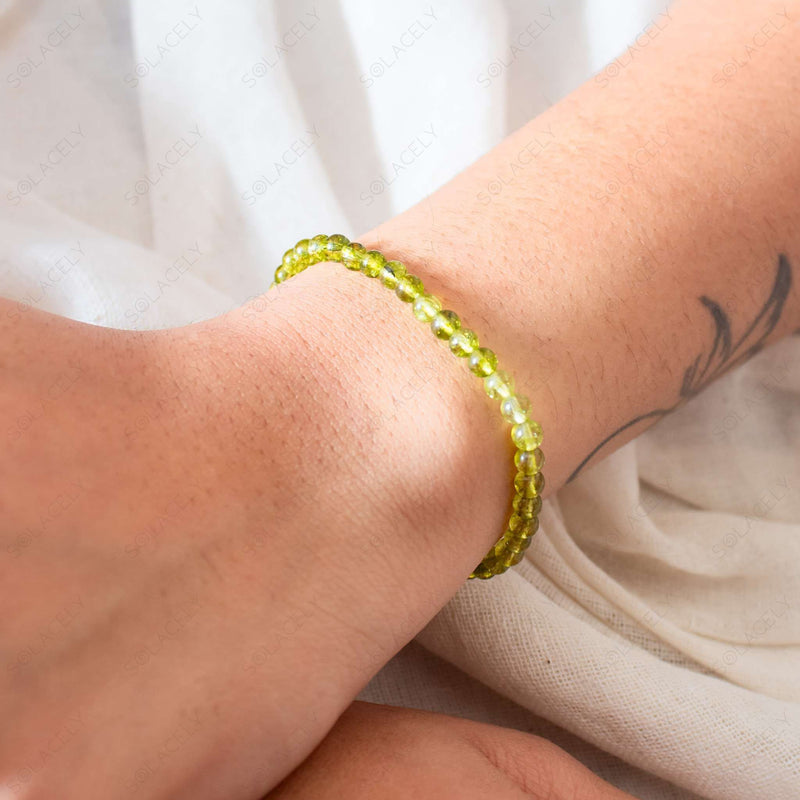
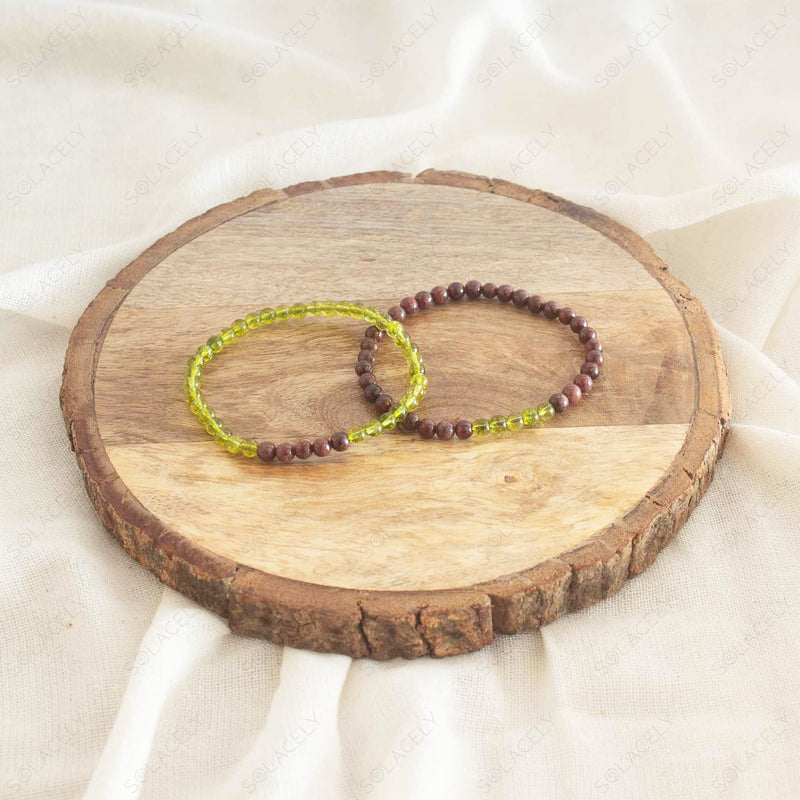
August has three modern birthstones: peridot, spinel and sardonyx. Peridot is the primary stone and the one most people picture, a green gem form of the mineral olivine that sits at 6.5 to 7 on the Mohs scale. Spinel joined the month in 2016, and sardonyx is the oldest of the three.
Key takeaways
- Peridot, spinel and sardonyx are all recognised birthstones for August, with peridot as the primary stone.
- Peridot is gem quality olivine, a magnesium iron silicate, rated 6.5 to 7 on the Mohs scale.
- Iron is part of peridot's essential chemistry, so the gem is only ever green, from yellowish green to deep olive.
- Spinel was added to the August list in 2016 and appears in red, pink, orange, purple, cobalt blue, grey and black, at Mohs 8.
- Sardonyx is a banded chalcedony of reddish sard and white or black onyx, carved into seals and cameos since antiquity.
- Peridot reacts to acids and dislikes sudden temperature changes, so warm soapy water and a protective setting suit it best.
What is peridot, and why is it August's main birthstone?
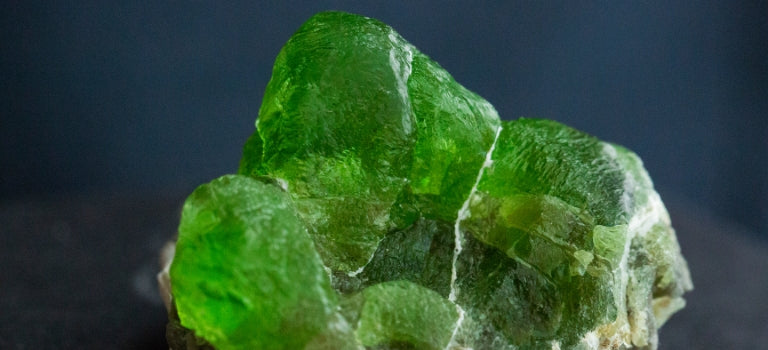
Peridot is gem quality olivine, a magnesium iron silicate that crystallises deep in the earth's mantle and rides to the surface in basalt lava. It has anchored the August slot on modern birthstone charts for well over a century. Gemmological reference works place it at 6.5 to 7 on the Mohs scale.
Olivine is the mineral name. Peridot is the name the gem trade uses once a crystal is clear enough to cut. The colour range runs from light yellowish green through vivid grass green to a deeper olive tone, and the richest grass greens, with little brown or yellow in them, are the most sought after. The amount of iron in a crystal decides where it lands in that range.
Peridot also has strong double refraction. Look through the table of a cut stone with a loupe and the back facet edges appear doubled, a soft blurring that gemmologists use as a quick identifier. Larger stones often show a slightly velvety depth because of it.
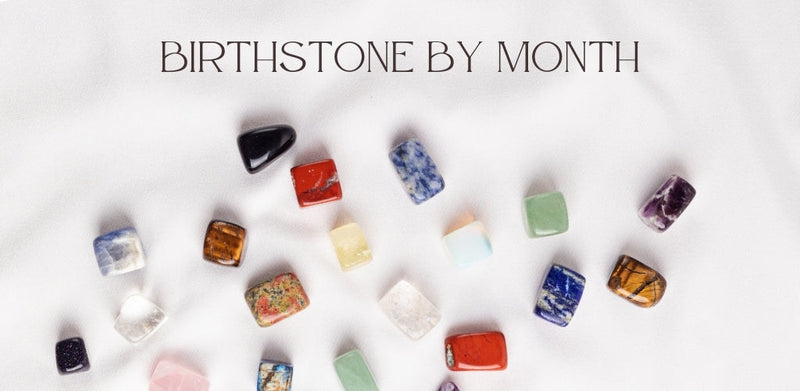
If you are choosing a gift and want to see how August sits alongside the rest of the calendar, our guide to birthstones by month lays out every month's stones together.
Why is peridot only ever green?
Peridot is green because iron belongs to its essential chemistry rather than arriving as a stray impurity. Gems coloured by their own core ingredients are described as self coloured, or idiochromatic, and they appear in one hue only. That is why no peridot is blue, red, pink or colourless, whatever the lighting.
Compare that with quartz or corundum. Those minerals are colourless when pure, and traces of other elements give amethyst its purple, citrine its gold, ruby its red and sapphire its blue. Peridot has no such switch. Its formula, roughly (Mg,Fe)2SiO4, carries iron in the crystal structure from the moment it forms.
The practical upshot for a buyer is simple. You are choosing a tone of green rather than a colour. Bright yellowish green reads lively in daylight and looks wonderful against yellow gold. Deeper olive stones turn richer under warm evening light and sit beautifully in white metal.
Where does August's peridot come from?
Peridot is mined on several continents, and the most storied source is Zabargad, a small island in the Red Sea off the Egyptian coast, worked for roughly three and a half thousand years. Stones from Zabargad reached ancient Egypt and later European treasuries. Some peridot has even arrived on Earth inside meteorites.
Most commercial peridot today comes from the San Carlos Apache Reservation in Arizona, where the material weathers out of basalt and yields bright, clean stones. The high mountain deposits of northern Pakistan are known for notably large and clear crystals. Myanmar, China, Vietnam, Tanzania and Norway all contribute material as well.
The meteorite connection is genuine. Pallasites are stony iron meteorites in which olivine crystals sit suspended in a metallic matrix, and a small number of those crystals have been clean enough to facet. Faceted pallasite peridot is a collector's piece, and it makes peridot one of the very few gems that can honestly be said to have fallen from the sky.
Geologically that shared origin makes perfect sense. Olivine is one of the most abundant minerals in the earth's mantle and in the rocky bodies of the solar system, so the same mineral forms in both places by the same chemistry.
What are August's other two birthstones?
Spinel and sardonyx complete the August trio. Spinel was added to the modern list in 2016, joining peridot after decades of quiet admiration from collectors and gem dealers. Sardonyx is the oldest August stone by tradition, carved into seals and cameos in the ancient world long before modern birthstone charts existed.
Spinel
Spinel is magnesium aluminium oxide, rates 8 on the Mohs scale and appears in one of the widest colour ranges of any gem: red, hot pink, orange, purple, violet, grey, black and a celebrated cobalt blue. It is singly refractive, which gives cut stones a clean, lively brightness.
Its history is glamorous. Several of the great red stones in royal regalia, including the Black Prince's Ruby in the British Imperial State Crown and the Timur Ruby, are spinels that carried the name ruby for centuries. At Mohs 8, spinel is a sensible choice for a ring worn every day.
Sardonyx
Sardonyx is a banded chalcedony, which is quartz built from crystals too fine to see individually. It alternates layers of sard, a warm reddish brown to orange, with bands of white or black onyx, and rates 6.5 to 7 on the Mohs scale.
Those contrasting layers are exactly why it became the carver's stone. Cut a cameo through the bands and a pale figure lifts cleanly out of a dark ground. Roman soldiers wore sardonyx signet rings, and the stone has long been associated with steadiness, courage and clear speech.
How do you choose between peridot, spinel and sardonyx?
Choose on colour, hardness and the piece you have in mind. Peridot gives you green at a friendly price and suits pendants, earrings and protected ring settings. Spinel is the hardest of the three at Mohs 8 and by far the most versatile in colour. Sardonyx is the one for carving and bold banded pieces.
| Stone | What it is | Mohs hardness | Colour | Suits |
|---|---|---|---|---|
| Peridot | Gem quality olivine, a magnesium iron silicate | 6.5 to 7 | Yellowish green to deep olive only | Pendants, earrings, protected ring settings |
| Spinel | Magnesium aluminium oxide | 8 | Red, pink, orange, purple, cobalt blue, grey, black | Everyday rings and heirloom pieces |
| Sardonyx | Banded chalcedony, layers of sard and onyx | 6.5 to 7 | Reddish brown and orange banded with white or black | Cameos, signet rings, statement cuffs |
Gift buyers often want a set rather than a single stone. Peridot and spinel share a birth month and look striking together, since green and hot pink sit opposite each other on the colour wheel. If the birthday falls right at the turn of the month, our September birthstone guide covers what comes next.
What is peridot traditionally kept for?
Peridot is traditionally kept for renewal, warmth and fresh starts. Ancient Egyptian sources called it the gem of the sun, and it was worn as a stone of light against the fears of the night. People reach for it when they want to set something heavy down and begin again with a lighter heart.
In crystal tradition peridot is linked to the heart and the solar plexus, the two centres associated with openness and personal drive. It is often worn through a change of job, a house move or the close of a long chapter, as a daily cue to keep facing forward. Our full peridot meaning and properties guide goes further into how people work with it.
August also overlaps Leo, the sign that runs to 22 August, and peridot's sunny green sits naturally with Leo's warmth and generosity. Shopping for a Leo birthday? Our guides to crystals for a Leo woman and crystals for a Leo man pair well with an August birthstone piece.
How do you care for August birthstone jewellery?
Warm water, a drop of mild soap and a soft brush suit all three August stones. Peridot needs the most attention: it reacts to acids, dislikes sudden temperature changes and sits at 6.5 to 7 on the Mohs scale. Keep it out of ultrasonic and steam cleaners and away from household chemicals.
Thermal shock is the main thing to watch. Do not move a peridot ring from hot washing up water straight into a cold rinse, and take it off before a sauna or a hot workshop. In a ring, a bezel, a halo or a lower profile setting shields the girdle and the facet edges from knocks.
Spinel at Mohs 8 is more forgiving and stands up well to daily wear, though it still deserves a soft cloth and its own pouch. Sardonyx cleans happily with soapy water and should stay away from harsh chemicals and prolonged heat. Store each piece separately so harder stones cannot scratch softer neighbours.
One habit does more good than any polish. Put jewellery on after perfume, sunscreen and hairspray, and take rings off for cleaning, gardening and the gym.
Crystals and gemstones are offered here for spiritual, symbolic and decorative use. They are not a substitute for professional medical, psychological or financial advice, diagnosis or treatment. Please speak to a qualified professional about any health concern, and never delay or stop treatment. Keep small stones away from young children, who can choke on them, and do not place stones in drinking water.
Sources
- Gemological Institute of America, Birthstones by Month
- Gemological Institute of America, Peridot Description
Written by Chetena Sharma. Reviewed by the Solacely editorial team.
Frequently asked questions
About the author


Written by Chetna Sharma, crystal healing practitioner and co-founder of Solacely. Chetna has worked with healing crystals for over a decade and curates Solacely's protective stone collection.