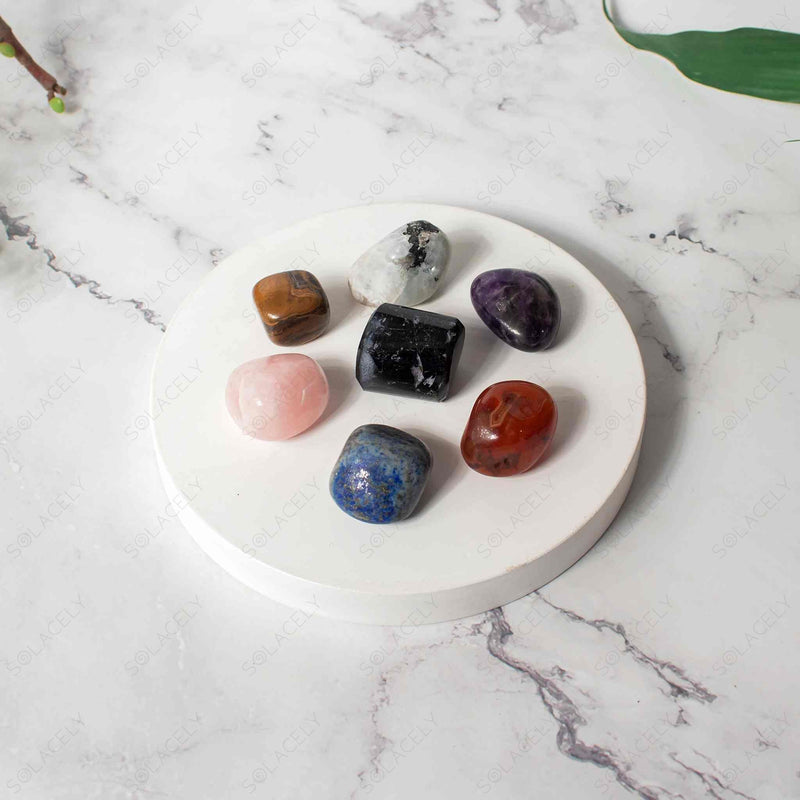
Citrine is assigned to the solar plexus, the chakra sitting just above the navel that yogic tradition links to personal power and the will to act. Alignment practice is simple: rest a piece above the navel, breathe into that area for ten to fifteen minutes, and repeat daily. The stone gives the breath a destination.
Key takeaways
- Citrine maps to the solar plexus (manipura), the centre of will, boundaries and self-direction.
- The mapping is colour-based: yellow stone, yellow chakra.
- Core practice is ten to fifteen minutes lying down with the stone above the navel.
- Citrine is quartz, hardness 7, and comfortable for daily wear.
- Daily and short beats occasional and long.
What the solar plexus chakra represents
Manipura, the third of the seven main centres in classical yogic mapping, sits above the navel and below the ribs. Its traditional domain is personal power: the capacity to decide, to hold a boundary, and to metabolise experience rather than be flattened by it. The colour assigned to it is yellow, which is why yellow stones cluster here.
In traditional description, a solar plexus that is working is someone who can say no without a paragraph of justification. One that is out of balance shows up as chronic deferring, difficulty starting things you have already decided to do, and a tendency to shrink in rooms. For the full mapping, our beginner's guide to the chakra system covers all seven.
Why citrine is the stone for it
Chakra-stone correspondences follow colour, and citrine is the most available yellow stone there is. Once you know that, the whole system becomes easier to use rather than harder, because any yellow stone can stand in.
Citrine's independent symbolism points the same way. Its associations with prosperity, initiative and self-assertion, covered in our symbolic meanings of citrine article, overlap almost exactly with solar plexus territory. The two traditions reinforce each other.
Mineralogically, citrine is the yellow-to-orange variety of quartz, coloured by iron, and a November birthstone. Warming quartz to bring out those golden tones is a well established trade practice, and the colour it produces is permanent and stable, which is why citrine is available in such a dependable range of warm shades.
The alignment practice, step by step
- Lie down. Flat on your back, knees bent if that is easier on your lower back.
- Place the stone. Directly above the navel, below the ribs. A tumbled piece stays put better than a point.
- Find the breath there. Most people breathe into the chest. Aim lower, so the stone rises and falls visibly.
- Count. Four counts in, six out. The longer exhale is what settles the body.
- Add a phrase if it helps. Something plain and true: I am allowed to want this. Silently, on each exhale.
- Ten to fifteen minutes. Timer on so you are not checking.
- Sit up slowly. Give it a minute before you stand.
Daily and short beats occasional and long, which holds across sitting practice generally.
Everyday versions when you cannot lie down
| Format | How it is used |
|---|---|
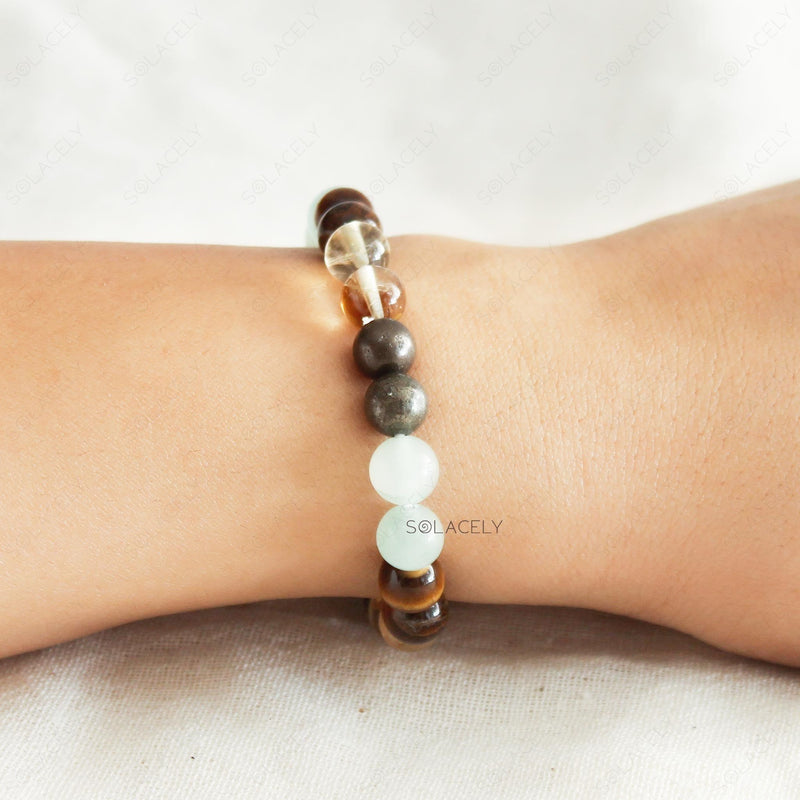
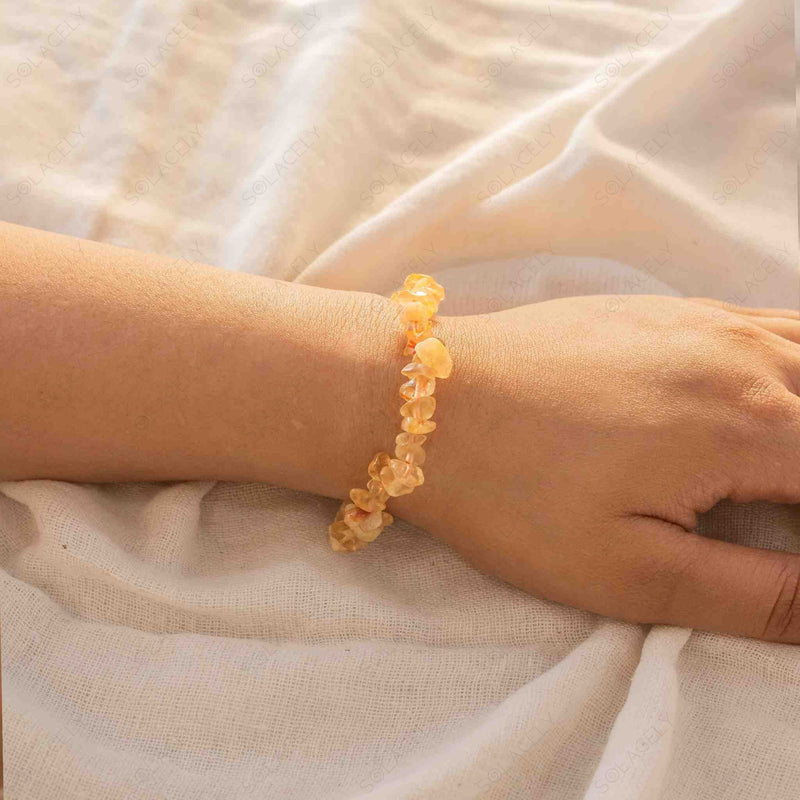
| Bracelet | Worn daily; touched deliberately before difficult conversations |
| Pocket stone | Held at waist height while waiting or commuting |
| Desk piece | In line of sight during work that requires asking for things |
| Belt-height pendant | Long chain so the stone sits near the solar plexus |
| Under a pillow | Passive placement for people who dislike sitting practice |
These keep the intention in circulation through the day, which is most of the point.
Combining citrine with other chakra stones
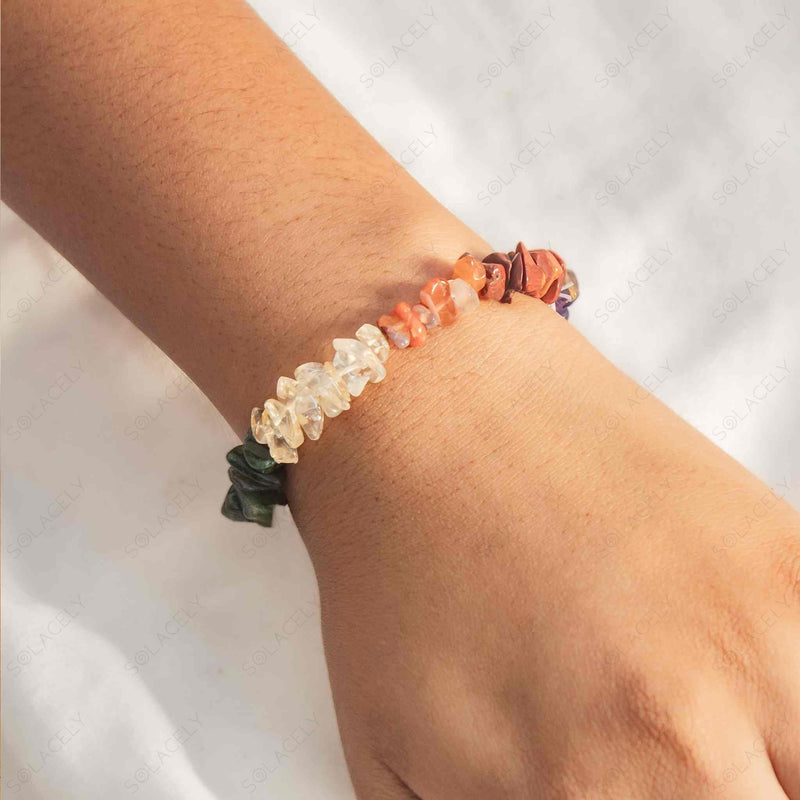
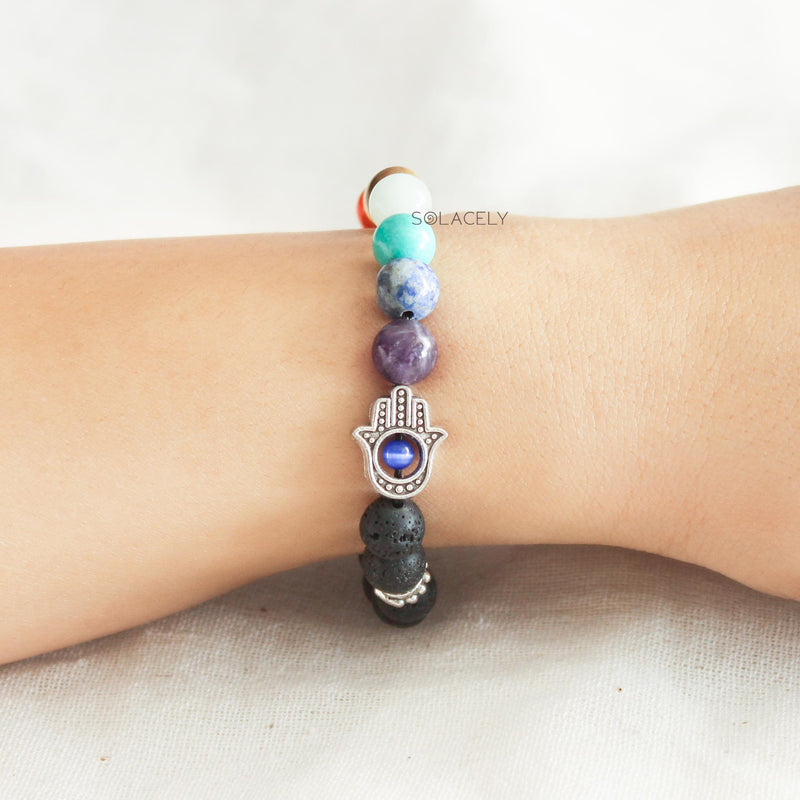
Full seven-stone layouts are common, and citrine occupies the third position from the base. The conventional line-up runs red jasper at the root, carnelian at the sacral, citrine at the solar plexus, green aventurine or rose quartz at the heart, blue lace agate or sodalite at the throat, amethyst at the third eye, and clear quartz or selenite at the crown.
Two pairings are worth naming. Citrine with carnelian is used when drive has stalled, since the two centres sit adjacent and their traditional domains overlap, a combination our sacral chakra guide covers. Citrine with amethyst is used when the wanting itself has become anxious, the calm of one balancing the push of the other.
If confidence rather than chakra work is your actual goal, the crystals for confidence selection is the more direct route.
Caring for citrine used in practice
At 7 on the Mohs scale, citrine handles regular handling well. Warm soapy water and a soft cloth are enough. Store it away from harder stones.
Keep it out of sustained direct sunlight, since citrine can pale over time in a bright window. Charge it in indirect daylight or moonlight instead, and avoid ultrasonic cleaners and steam. Our citrine properties guide covers the stone in full.
What people notice
Usually something quiet: a warmth or a loosening in the belly during a session, and over a few weeks a difference in what you are willing to ask for. The tradition points at behaviour rather than sensation, so the measure most practitioners use is simply whether you said the thing.
Chakra descriptions are part of a traditional spiritual framework and are not a medical model. Nothing here diagnoses or treats any condition. Persistent digestive, abdominal or mood symptoms should be discussed with a qualified healthcare professional.
Sources
Written by Chetena Sharma. Reviewed by the Solacely editorial team.
Frequently asked questions
About the author


Written by Chetna Sharma, crystal healing practitioner and co-founder of Solacely. Chetna has worked with healing crystals for over a decade and curates Solacely's protective stone collection.