The crystals most kept by artists are carnelian for starting, citrine for keeping going, blue lace agate for showing the work, and fluorite for editing. Choosing by the stage where your practice stalls is what makes a studio set useful rather than decorative.
Key takeaways
- Carnelian, citrine, blue lace agate and fluorite map onto the four stages where creative work stalls.
- Carnelian is traditionally tied to the sacral centre, long associated with creative energy.
- Fluorite is soft at 4 on the Mohs scale, so it belongs on a dish, away from tools and solvents.
- Keep stones off the working bench, since solvents and dust are hard on any polished surface.
- Three stones is the practical ceiling for a studio, one per stage you actually get stuck at.
Choose by where you actually get stuck
Creative difficulty is not one thing, which is why a general list of pretty stones rarely helps anybody finish anything. Not starting is a different problem from not finishing. Being unable to choose between options is different again from being unwilling to show the work.
Four stones cover the four common stalls, and picking on that basis turns a shelf into something you actually use. Carnelian for the blank start. Citrine for the ugly middle. Fluorite for the sorting and cutting. Blue lace agate for the showing.
That specificity is the whole trick. For the fuller treatment of the same idea, crystals for creativity and art covers how people build the set out.
Carnelian for starting
Carnelian is the artist's stone in most traditions, and it is the one worth owning if you buy only one. It is associated with drive, courage and physical vitality, which in practice means the act of beginning rather than the having of ideas.
That distinction matters because most artists are not short of ideas. The difficulty is the first mark, the blank surface, the moment before the session properly starts. Carnelian is kept for exactly that.
It is also a chalcedony at 7 on the Mohs scale, hard enough to survive a working studio where things get dropped and knocked. In chakra practice it sits with the sacral centre, long associated with creative and generative energy, which is covered further in crystals for the sacral chakra.
Citrine, blue lace agate and fluorite
Citrine handles the middle. Every project has a stretch where the work is visibly worse than the idea and abandoning it starts to feel sensible, and citrine is traditionally kept for the optimism to continue past that point. It is a warm golden quartz, durable at 7, and pleasant to have in view.
Blue lace agate handles the showing. A pale banded chalcedony traditionally tied to the throat centre, it is kept for communication that does not come out defensive, which is exactly the difficulty when talking about your own work. Wear it on the day rather than leaving it in the studio.
Fluorite handles the editing, the sorting and cutting that turns a sprawl into a finished piece. It is the most fragile of the four at 4 on the Mohs scale, with perfect cleavage in four directions, so it belongs on a dish and nowhere near a bench.
A studio set, stage by stage
| Where you are stuck | Stone | Hardness | How it is used |
|---|---|---|---|
| Cannot begin | Carnelian | 7 | Held before the first mark of a session |
| The ugly middle | Citrine | 7 | Kept in view where you work |
| Too many options | Fluorite | 4 | On a dish beside the plan or notebook |
| Showing or talking about it | Blue lace agate | 7 | Worn on the day, not left in the studio |
| Overwhelm, too much input | Amethyst | 7 | Where you rest, not where you work |
Move them as the stage changes. Carnelian away and fluorite out when a project shifts from making to editing is a small act that keeps each stone meaning something.
Studio care and safety
Studios are hard on stones, and the losses are almost entirely avoidable with two habits.
The first is to keep the set off the working bench. Turpentine, white spirit, acetone and strong cleaners dull polish on any stone and can etch softer material outright, so a shelf nearby is far better than the table where solvent gets decanted. Dust settles too, and a weekly wipe with a soft dry cloth handles it.
The second is to keep crystals out of your materials entirely. Do not grind stones into pigment or medium, and leave any cutting or sanding to a lapidary, since fine mineral dust is not something to be breathing in a small room. Polished stones on a shelf are the sensible way to keep them.
Making the set work
A stone on a shelf is decor. A stone attached to a repeated action becomes a marker for the transition into working, and that transition is where most studio days are won or lost.
- Tie it to a step you already take. Stone into hand, then the studio light goes on. Same order every time.
- Keep it visible from where you work. If you cannot see it while working, it is not doing anything.
- Do not buy more during a block. Shopping is a very effective way of avoiding the work.
- Give each stone one job. If everything on the shelf means creativity, nothing does.
If sustained concentration rather than starting is the difficulty, crystals for focus covers a different set, and the carnelian guide goes deeper on the central stone here.
Who this suits
It suits working artists more than aspiring ones, which is worth saying plainly. The value of a stage-based set is that it assumes you already have a practice and are trying to keep it moving, rather than waiting for inspiration to arrive.
It suits any discipline. Painters, writers, musicians, makers and anyone whose work involves producing something from nothing hit the same four stalls, and the set maps onto all of them equally. The stone that earns its place is simply the one matching where you personally stop.
Choosing the stones
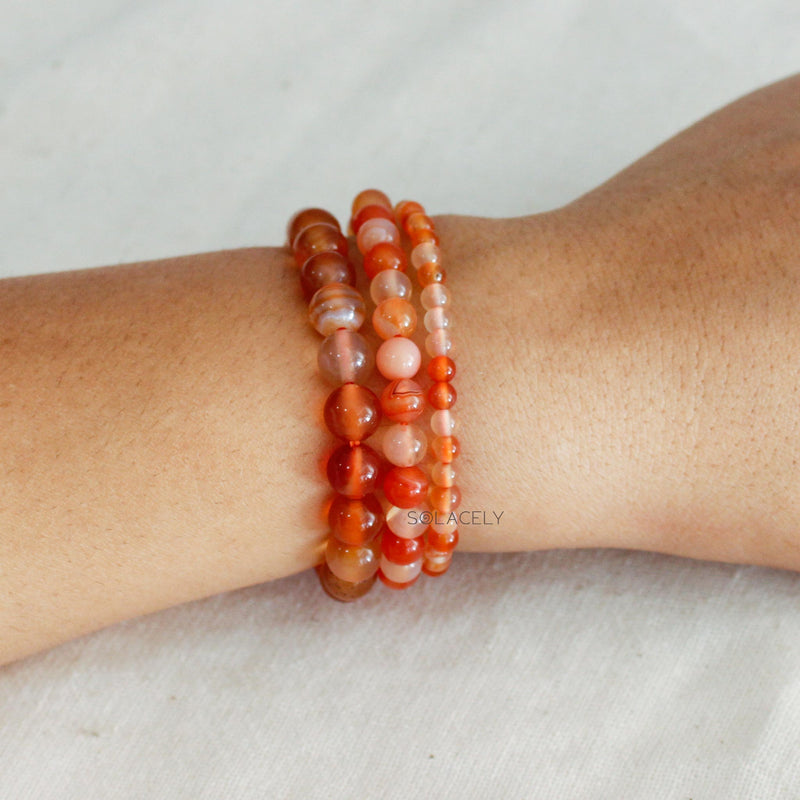
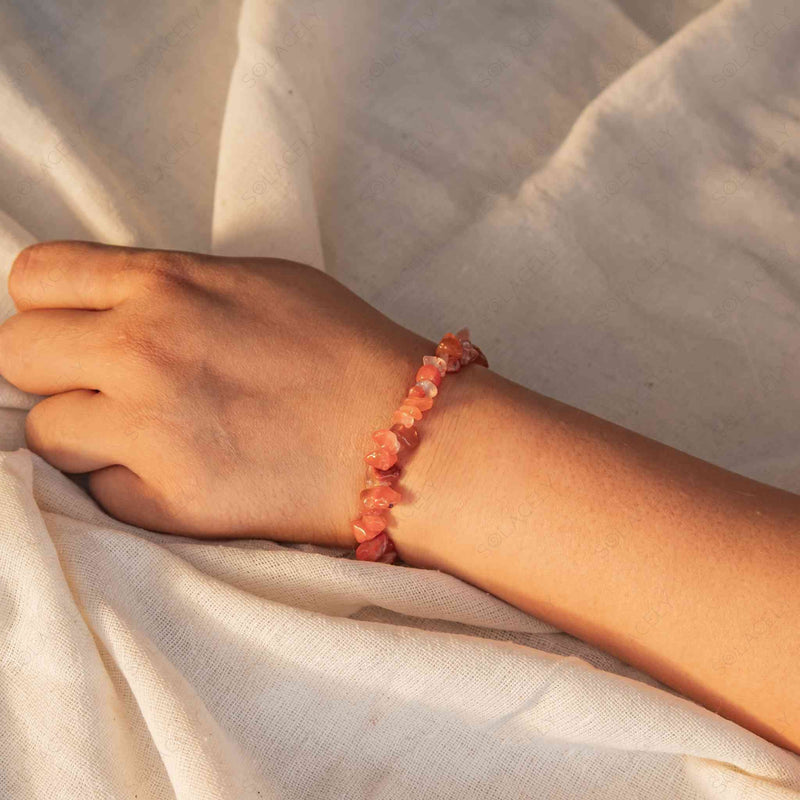
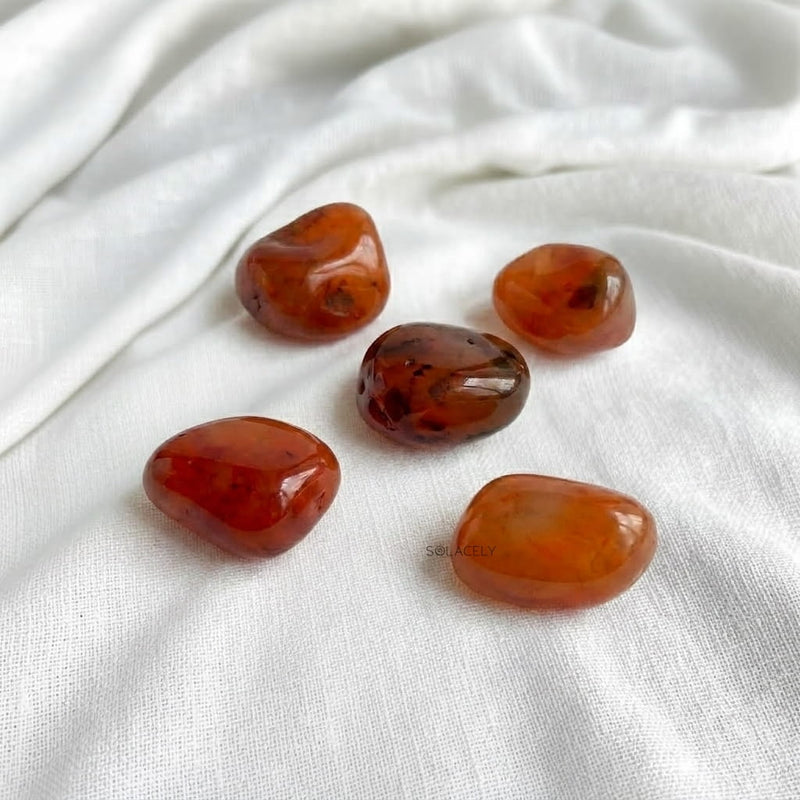
With carnelian, the range runs from a light apricot through vivid orange to a deep brownish red, and all of it is properly carnelian. Warming stone to bring out colour is one of the oldest practices in the trade and entirely stable, so pick the shade you want to look at every working day.
With citrine, the same applies across pale champagne to deep madeira. For a studio, a slightly larger tumbled piece or a small cluster reads better than a bead, since it needs to be visible from where you actually work.
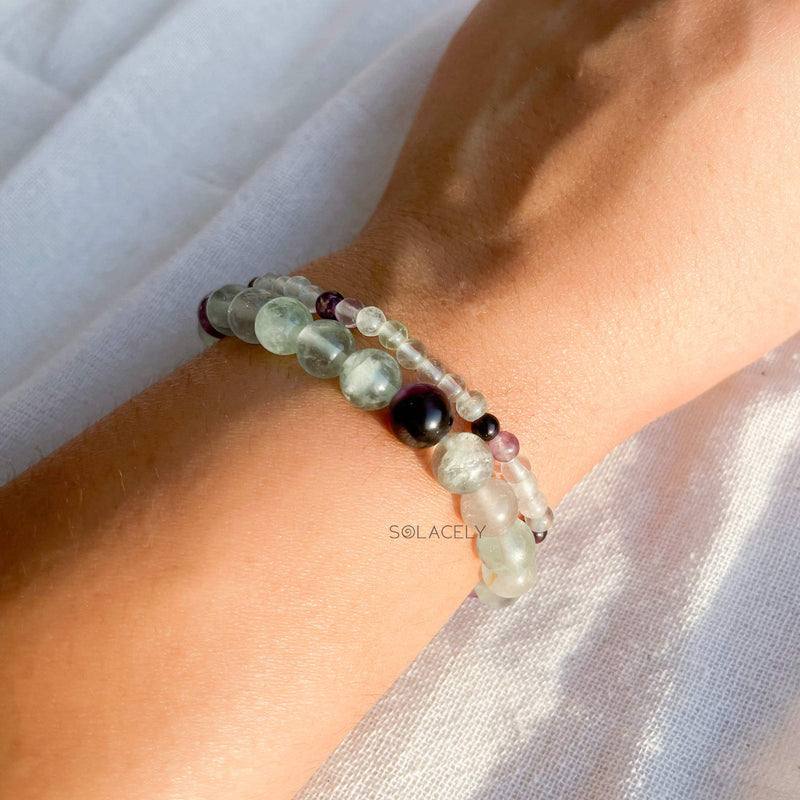
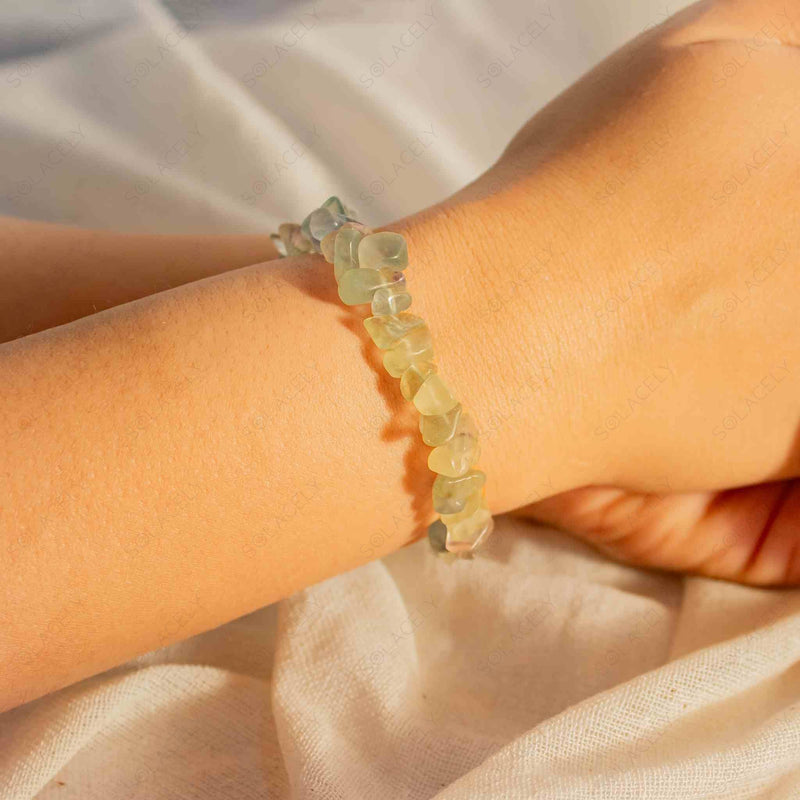
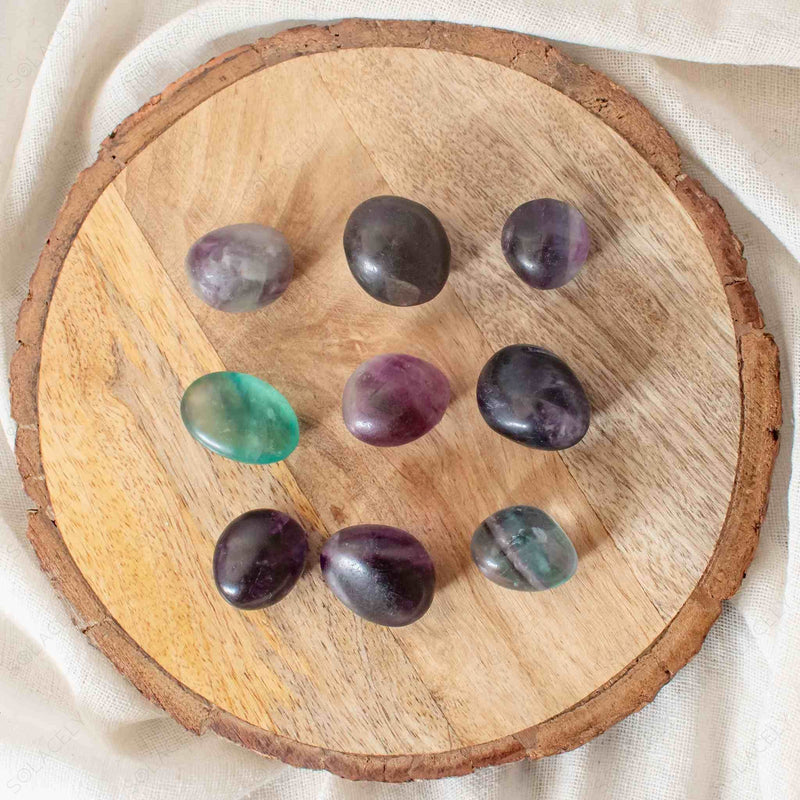
With fluorite, look for good colour banding and check the piece for existing cleavage cracks, which show as fine straight lines inside the stone. Rainbow fluorite banded in purple and green is the most widely available and behaves identically to single colour material.
What a studio practice can honestly offer
The value is in lowering the cost of starting. Most unfinished work is not defeated by a lack of ability but by the friction of the first ten minutes, and a physical cue attached to that moment is a genuinely effective bit of structure.
Beyond that, a studio shelf with a few chosen objects on it is simply a nicer place to work, and anyone who spends long hours alone making things knows how much the room matters. That is a fair thing to want and it needs no further justification.
The properties described here reflect traditional and cultural belief around crystals. They are offered for reflection and wellbeing and are not medical advice, a diagnosis, or a treatment for any condition. Do not grind, sand or inhale crystal dust, and never use crystals in materials that contact skin. If you are experiencing persistent low mood or burnout, please speak with a qualified healthcare professional.
Sources
Written by Chetena Sharma. Reviewed by the Solacely editorial team.
Frequently asked questions
About the author


Written by Chetna Sharma, crystal healing practitioner and co-founder of Solacely. Chetna has worked with healing crystals for over a decade and curates Solacely's protective stone collection.