Moonstone, rose quartz, carnelian, amazonite, green aventurine and clear quartz are the stones people most often keep close while trying to conceive. In crystal tradition each is associated with cycles, warmth, hope or self-kindness. They are kept as company through a tender season, alongside the care of your doctor or clinic.
Key takeaways
- Moonstone is the traditional stone of cycles, and the one most often chosen for this season.
- Rose quartz is kept for self-compassion, which is often what a long wait asks for most.
- Carnelian is the warmth and vitality stone, and amazonite the soothing one for difficult conversations.
- Fertility is a medical matter, and a doctor or fertility clinic is the route that investigates and treats it.
- Crystals are kept alongside that care as a daily reminder of hope, never in place of it.
Which crystals are traditionally kept during a fertility journey?
Six stones come up again and again. Moonstone for cycles, rose quartz for self-love, carnelian for warmth and vitality, amazonite for calm and honest speech, green aventurine for opportunity and hope, and clear quartz to hold whichever intention matters most to you. Each is chosen for what it has long been associated with.
Trying to conceive can be a very long stretch of hoping, waiting and counting. What people say they want from a stone in that season is not a mechanism but a marker: something to hold on a hard morning, something on the wrist that says this still matters, something that makes the waiting feel less shapeless.
That is the honest place these stones occupy in the tradition, and it is a real one. A crystal will not change what is happening in your body, and it is not meant to. It sits alongside the medical care that does, as a small daily kindness you give yourself.
The stones and what each is kept for
The table gathers the six most commonly chosen stones. Pick one rather than all six. A single stone you actually carry does more for you than a bowlful you stop noticing.
| Stone | Colour | Traditionally kept for |
|---|---|---|
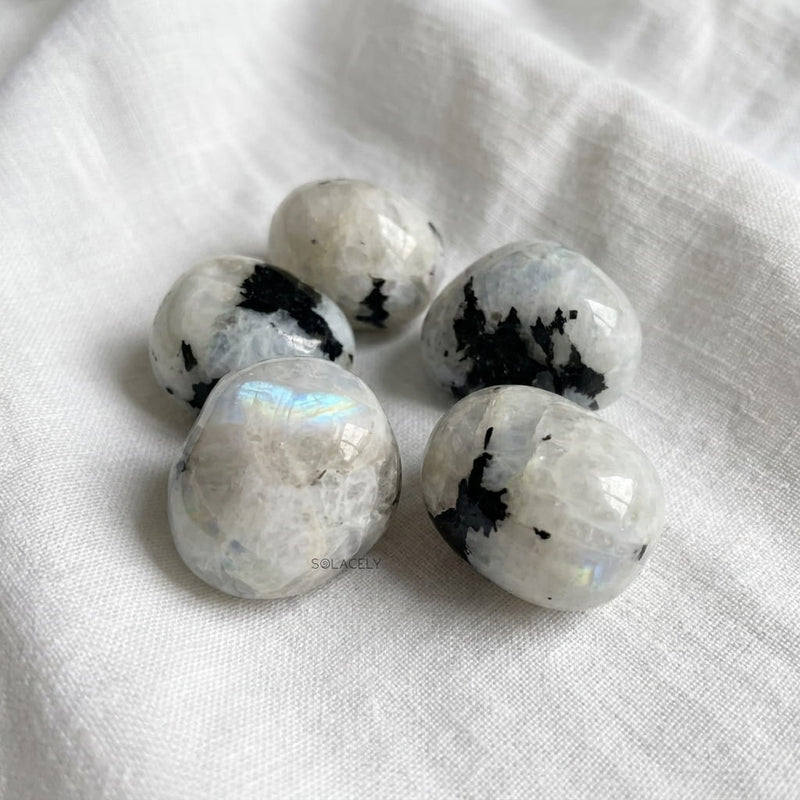
| Moonstone | Milky white with blue sheen | Cycles, intuition, new beginnings |
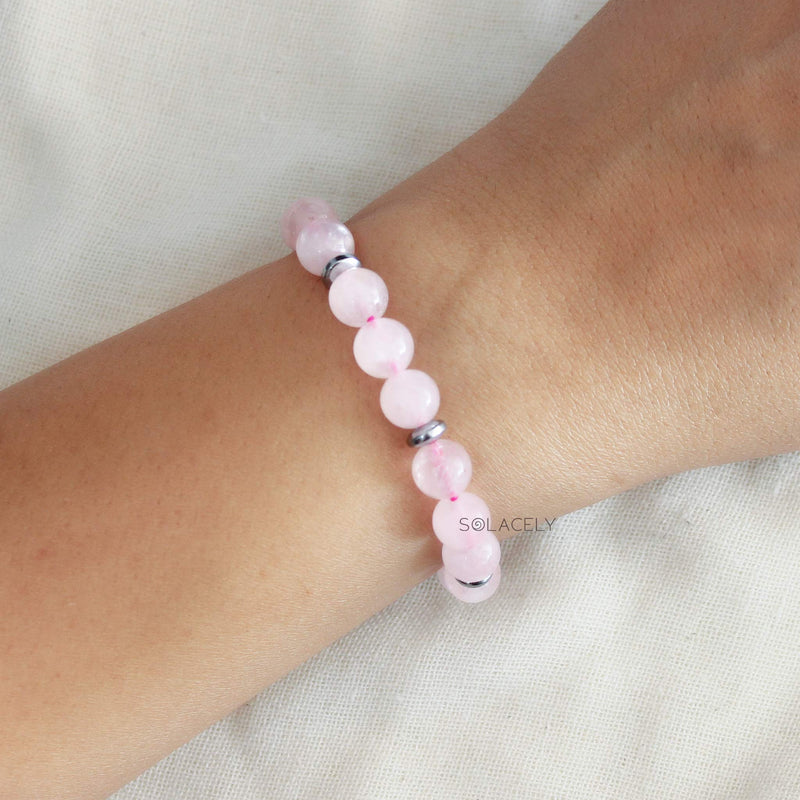
| Rose quartz | Pale to deep pink | Self-love, gentleness, open-heartedness |
| Carnelian | Warm orange to red | Warmth, vitality, creative momentum |
| Amazonite | Soft blue-green | Calm and speaking honestly |
| Green aventurine | Soft green | Hope, opportunity, good fortune |
| Clear quartz | Colourless | Holding an intention clearly |
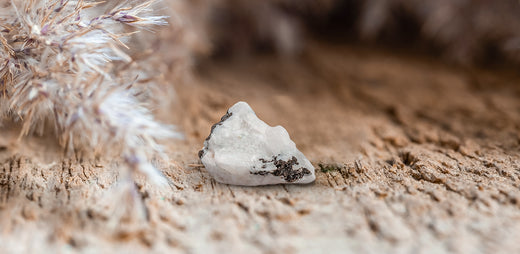
Moonstone is the one most people reach for first. It has been the stone of cycles and of the moon for a very long time, and that association makes it the natural companion for a season measured in months. Our guide to moonstone meaning and properties covers it in full.
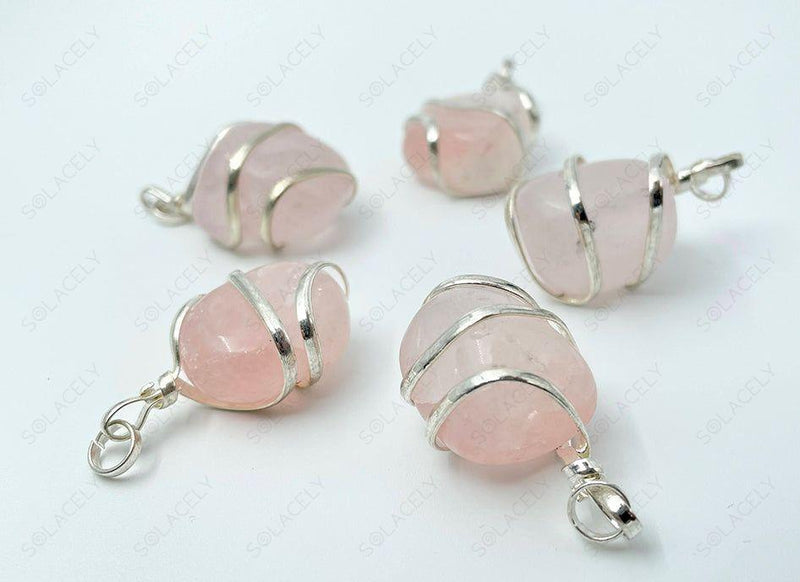
Rose quartz is the one many people end up valuing most. Trying to conceive can turn very quickly into being hard on yourself, and rose quartz is the stone of self-kindness above everything. Our guide to rose quartz benefits and properties sets out the tradition.
How people use them day to day
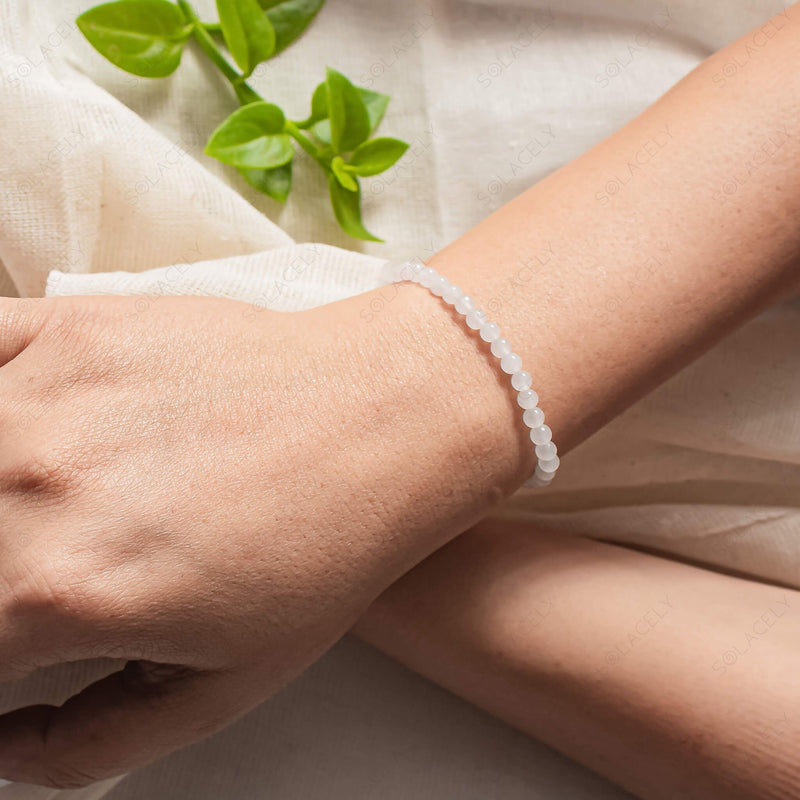
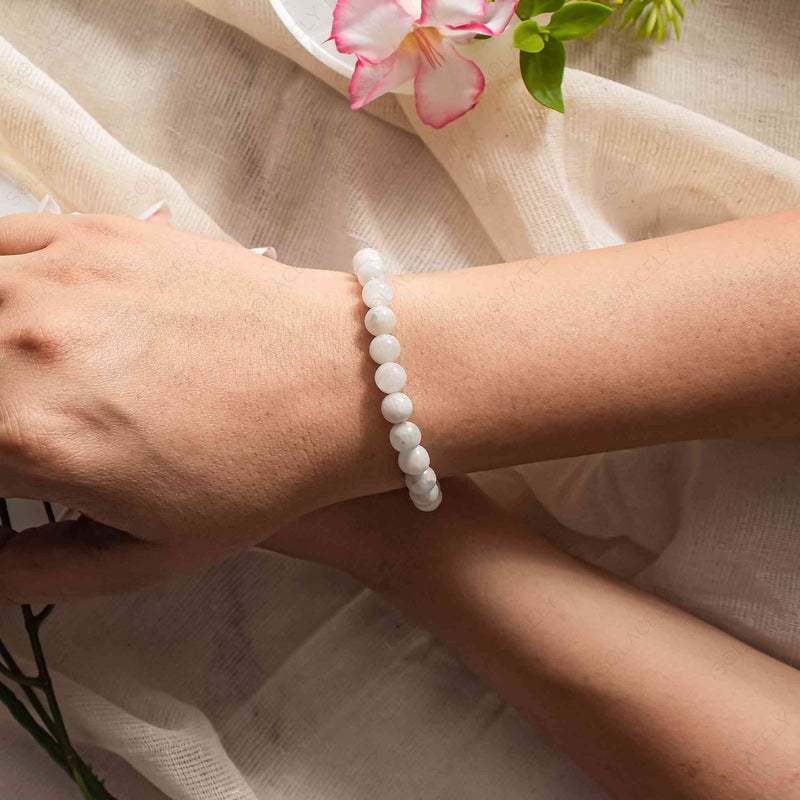
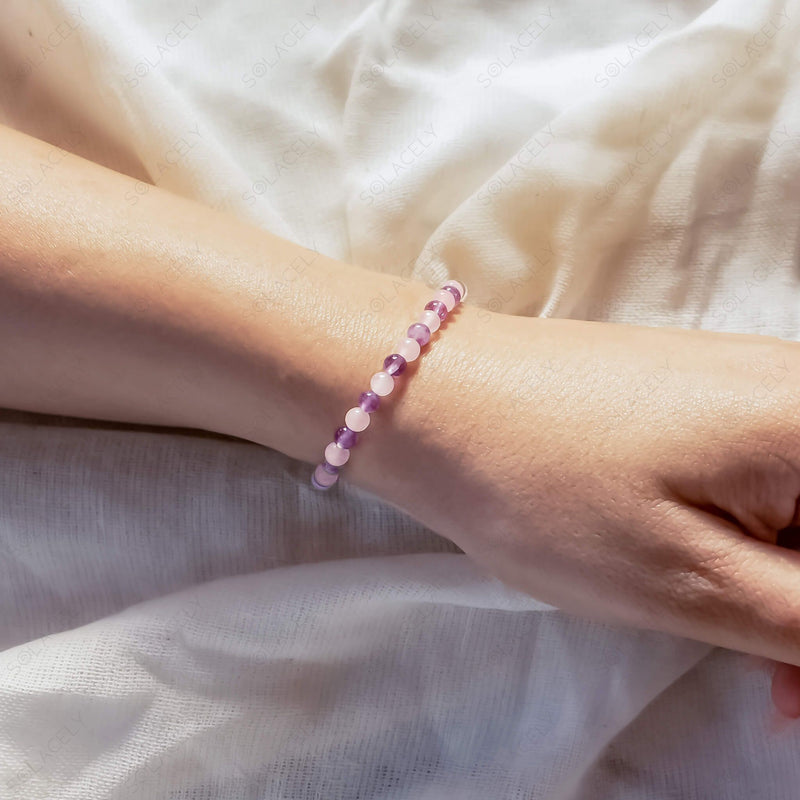
Most people wear one. A moonstone or rose quartz bracelet on the wrist is the simplest form, present through the appointments and the ordinary days between them without needing any effort from you. In crystal tradition the left wrist is the receiving side, which is where a stone kept for hope usually goes.
Others prefer to carry a tumble. A small stone in a pocket or a bag gives you something to reach for in a waiting room, and many people find that having something in the hand steadies them at moments when there is nothing else to do. A pendant worn at the chest sits with the heart chakra, which suits rose quartz.
At home, the bedside table is the traditional placement. Moonstone beside the bed, rose quartz on a dressing table, a small cluster where you will see it in the morning. None of this needs to be elaborate. The point is that it is somewhere you will actually look.
Partners often keep a stone too, and there is a whole tradition on that side as well. Carnelian is the usual choice for warmth and vitality, and our note on crystals for male fertility covers it.
Making a small ritual of it
A ritual gives the intention somewhere to land. The simplest version takes two minutes: hold the stone in both hands, say plainly what you are hoping for, and put it on. Some people do this at the start of a cycle, some every morning, some only on the days that feel heavy.
A monthly version suits this season particularly well. Cleanse the stone at the new moon, set your intention again, and let it sit on a windowsill overnight. Moonstone is traditionally charged in moonlight, which makes the new moon a natural marker if you are already counting by months.
Journalling alongside it helps a great many people. Keep the stone on the notebook, write down what the month held, and let the two things go together. What all of this is really doing is giving a difficult wait some shape and some tenderness, and that is worth a great deal on its own.
When to speak to someone
Fertility is a medical matter, and it is one that medicine is often very good at. General guidance is to speak to a doctor after twelve months of trying without conceiving, or after six months if you are over thirty-five, and sooner if you already know of a reason to. Both partners are worth investigating.
Speak to your doctor sooner than that if you have irregular or absent periods, very painful periods, a known condition such as endometriosis or polycystic ovary syndrome, a history of pelvic infection or surgery, or if either of you is being treated for anything that might affect fertility. There is no advantage in waiting.
The emotional weight of all this is real and it deserves care of its own. If the waiting is affecting your sleep, your work or your relationship, that is worth raising with your doctor too, and counselling that specialises in fertility exists for exactly this reason. Ask your clinic what they can refer you to.
Keep your stone through all of it if it helps you. Nothing here asks you to choose. The crystal is company on the journey and your clinic is the part that investigates and treats, and the two sit perfectly well side by side.
Caring for the stones
Moonstone is softer than quartz, at around 6 to 6.5 on the Mohs scale, and it can chip, so take a moonstone ring off before anything rough. Rose quartz, carnelian, aventurine and clear quartz all sit at 7 and handle daily wear easily. Warm soapy water and a soft cloth suit all of them.
Keep rose quartz out of long hours of hard direct sun, which fades the pink permanently. Amazonite is softer at around 6 and dislikes harsh chemicals. Never put any stone in drinking water, and keep small tumbles and beads away from babies and young children.
For cleansing in the spiritual sense, moonlight is the traditional choice here and it suits every stone on the list. Sound, incense smoke and a brief rinse all work too. Our step-by-step on how to cleanse and charge crystals covers each method in order.
Crystals are kept as part of a long-standing spiritual and cultural tradition. They are not a medical device or treatment. They do not diagnose, treat, cure or prevent any condition, and they do not affect fertility, hormones, ovulation, sperm or the outcome of any treatment. Nothing on this page is medical advice. If you are trying to conceive, please speak to your doctor or a fertility clinic, and never delay, stop or change medical care because of a crystal. Stones must not be placed in drinking water or used internally, and small tumbles and beads are a choking risk for babies and young children.
Sources
- Eunice Kennedy Shriver National Institute of Child Health and Human Development, Infertility and fertility
- Gemological Institute of America, Moonstone
Written by Chetena Sharma. Reviewed by the Solacely editorial team.
Frequently asked questions
About the author


Written by Chetna Sharma, crystal healing practitioner and co-founder of Solacely. Chetna has worked with healing crystals for over a decade and curates Solacely's protective stone collection.