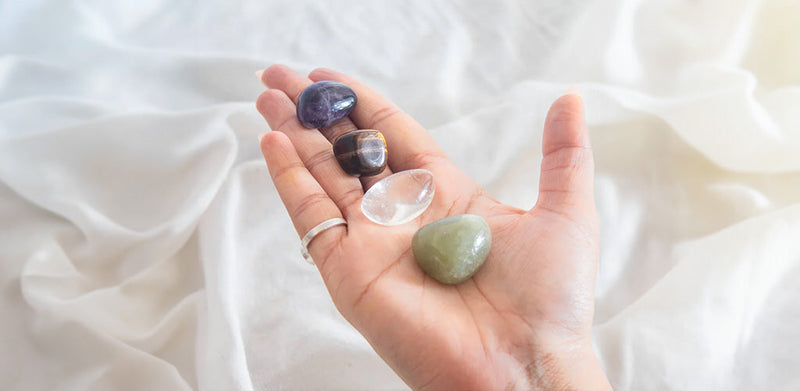
The crystals most used for focus are fluorite for mental order, tiger's eye for sustained effort, clear quartz as a neutral anchor, and amethyst for settling an overactive mind. They work as attention cues rather than stimulants, and pairing them with an actual attention practice is what makes the difference.
Key takeaways
- Fluorite, tiger's eye, clear quartz and amethyst are the four stones most commonly used for focus.
- The effect is behavioural: a consistent object marks the start of concentrated work and reduces the friction of beginning.
- Fluorite is soft at 4 on the Mohs scale and belongs on a desk dish, not loose in a bag.
- The NIH reports that mindfulness and meditation practices can support attention and stress management. That is the practice to pair a stone with.
- The uses described here are traditional practice. For a persistent attention difficulty, a GP is the right first call.
Do crystals help you concentrate?
In the way the practice describes, yes. A stone acts as a consistent environmental cue: a small deliberate object that marks the transition from scrolling into working, and that transition is where most working hours are won or lost.
That transition is where most focus fails. People rarely lose concentration mid task as often as they simply never begin the task, and a physical ritual reduces that starting friction. It is a modest mechanism and a real one.
What has genuine study behind it is attention training rather than minerals. The National Center for Complementary and Integrative Health summarises evidence that mindfulness and meditation practices can support attention and stress management. The stone is a prompt to start that practice, not a replacement for it.
Fluorite for mental order
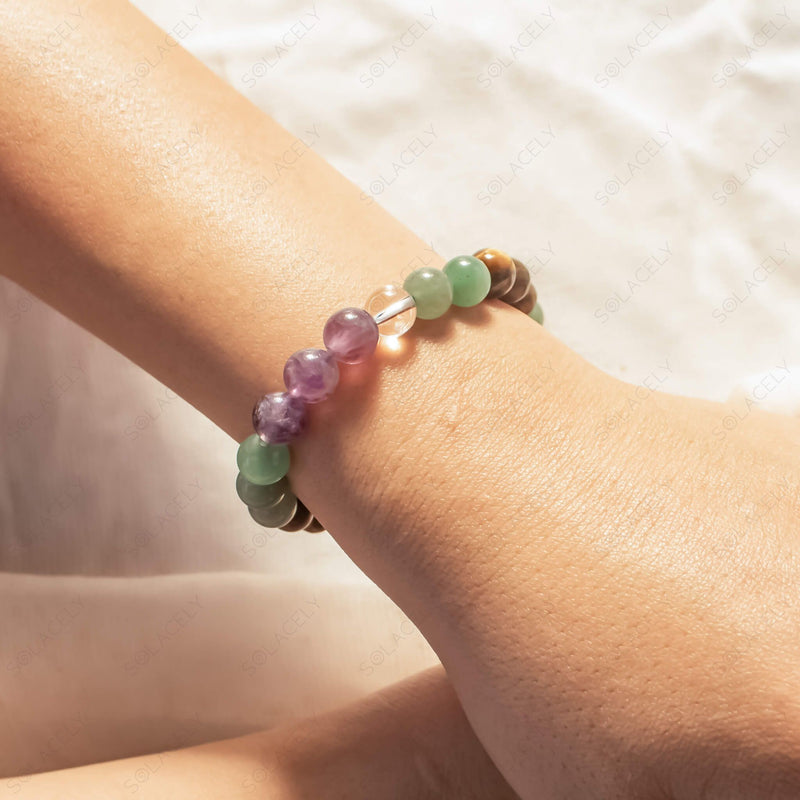
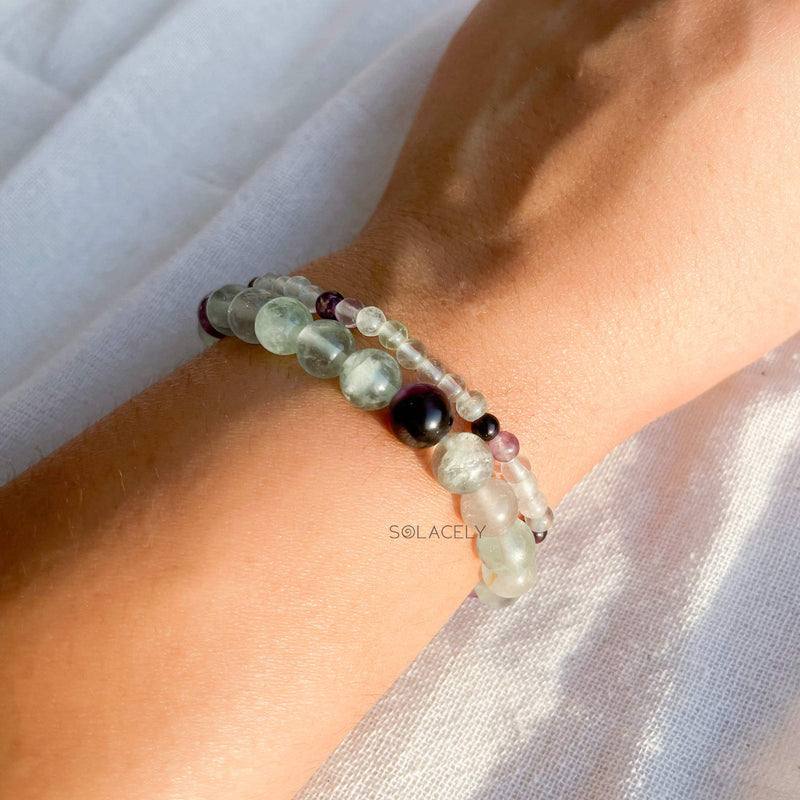
Fluorite is the first choice when the problem is scatter rather than tiredness. It is associated traditionally with sorting, sequencing and structured thinking, which suits planning, writing, studying and anything with a lot of moving parts competing for attention.
It is also the most fragile stone in this group. Fluorite is calcium fluoride, sits at 4 on the Mohs scale, and has perfect cleavage in four directions, which means it both scratches and splits easily. A steel key will mark it. The Mohs hardness scale is the quickest way to judge what any new stone can survive.
In practice that means fluorite is a desk stone, kept on a dish, not a carry stone. Rainbow fluorite, banded in purple and green, is the most widely available form and behaves identically to single colour material.
Tiger's eye and clear quartz
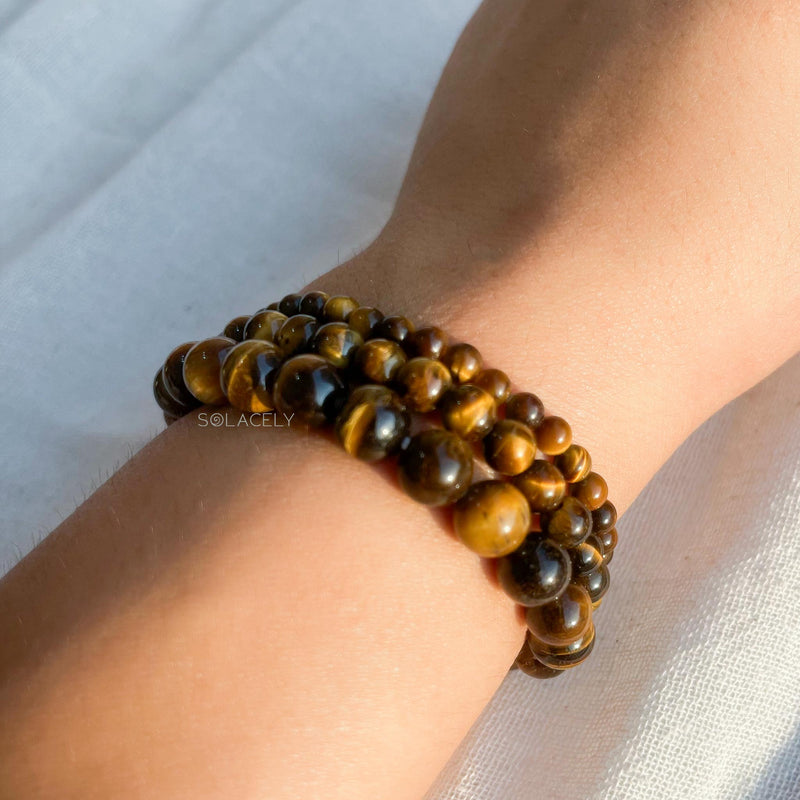
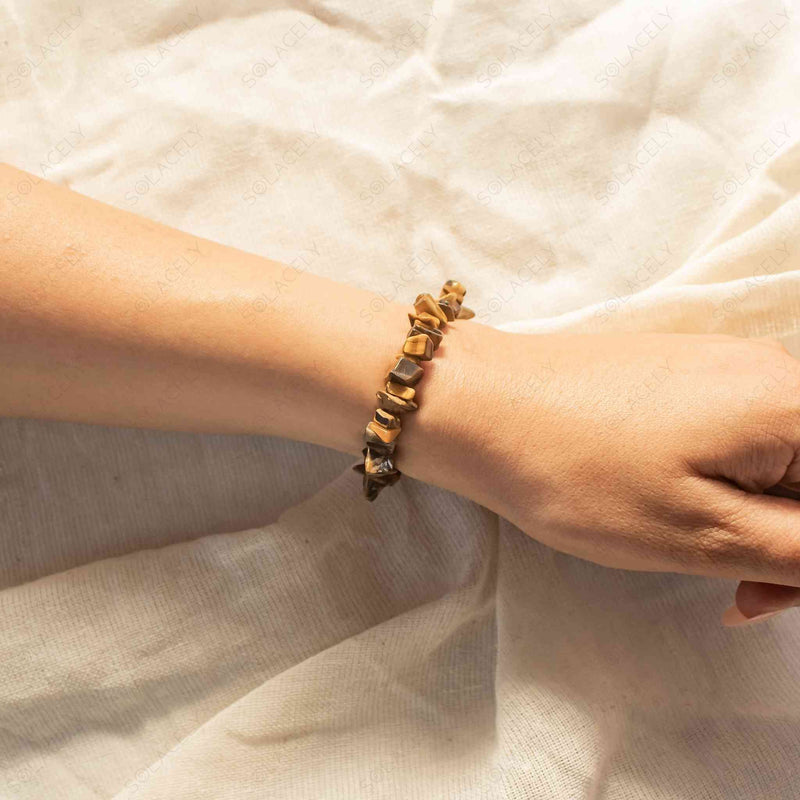
Tiger's eye is for staying with something past the interesting part. It is traditionally carried for willpower and decisiveness rather than for clarity, so it suits people whose focus fails through boredom rather than through overwhelm.
Its golden banded sheen comes from a fibrous internal structure that reflects light in a moving band, an effect called chatoyancy. It is a quartz variety at 7 on the Mohs scale, which makes it hard enough to live in a pocket or on a wrist all day, unlike fluorite. Our tiger's eye guide covers it in full.
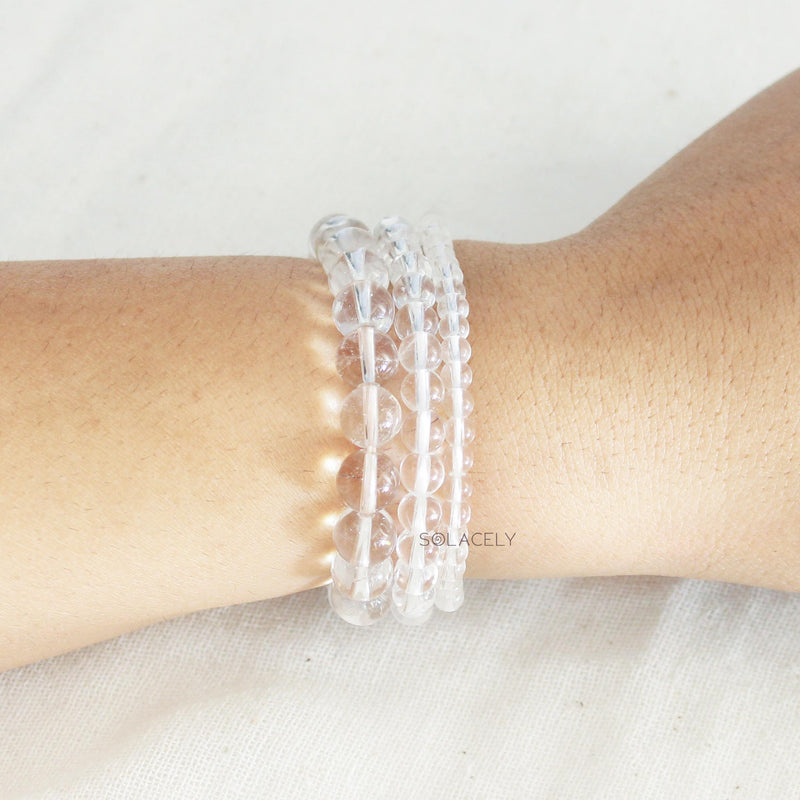
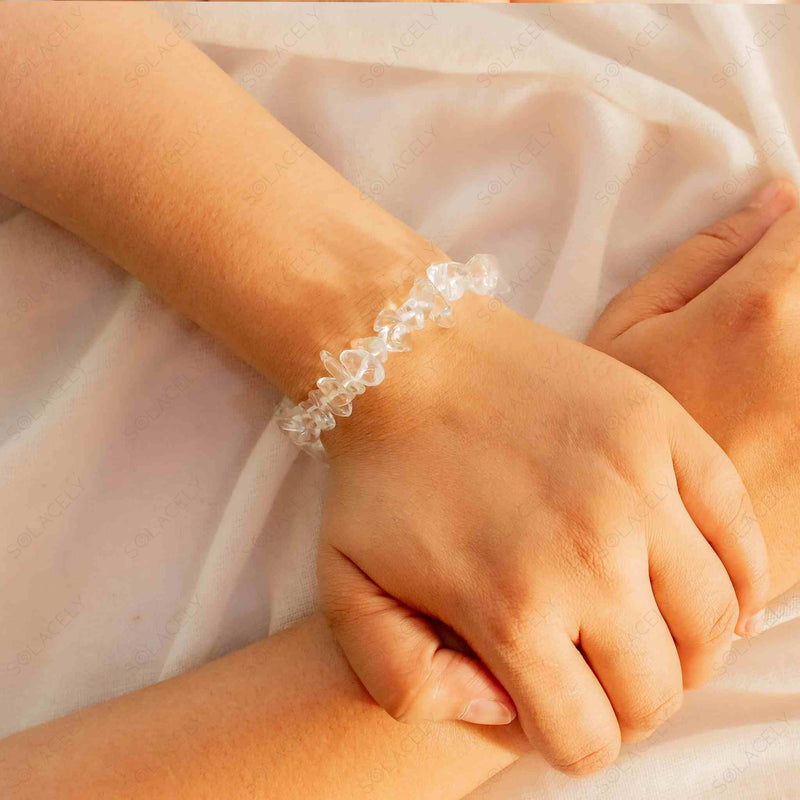
Clear quartz plays the neutral role. It carries no specific association beyond amplification and clarity, which makes it the anchor stone that a working set rotates around. Geology.com describes quartz as one of the most abundant minerals on Earth, which is why it is also the cheapest way into the practice.
Amethyst for an overactive mind
Amethyst is the stone for the version of poor focus that comes from too much input rather than too little energy. It is used traditionally for settling, and it belongs in the evening half of a working day rather than the morning.
The Gemological Institute of America describes amethyst as the purple variety of quartz, coloured by iron and natural irradiation within the crystal structure. One practical consequence is that prolonged direct sunlight fades the colour, so keep it off a bright windowsill.
Pairing amethyst with a hard stop is more effective than pairing it with more work. It is the stone that marks the end of a session, and used that way it protects the next day's concentration rather than today's.
Building a focus set
| How focus is failing | Stone | Where it goes |
|---|---|---|
| Too many open threads | Fluorite | Desk dish, beside the task list |
| Bored, drifting off task | Tiger's eye | Pocket or wrist, held before starting |
| General, no clear cause | Clear quartz | Centre of the desk as the anchor |
| Overstimulated, cannot settle | Amethyst | Away from the desk, marking the stop |
| Constantly interrupted | Black tourmaline | Between you and the door or shared space |
Two or three stones is the useful range. A large collection on a desk stops being a set of cues and becomes visual noise, which works directly against the thing you are trying to achieve. For a narrower selection built around study and retention, see crystals for concentration.
Making the practice hold
The ritual has to be small enough to survive a bad week. Anything elaborate gets abandoned in exactly the period when focus is worst, which is when you needed it.
- One action, always the same. Stone in hand, phone face down, timer started. In that order.
- Keep it within reach. A stone in a drawer is not a cue.
- Give each stone one job. If everything on the desk means focus, nothing does.
- Clean it weekly. Attach it to something you already do, like clearing the desk on a Friday.
Pair the set with a real method rather than hoping. A timed work block, a written next action, or a few minutes of breathing before starting all do measurable work that a stone cannot. See crystals for energy and focus for the energy side and crystals for the office desk for placement.
Care, and when to look elsewhere
Desk stones get handled constantly and pick up skin oil quickly. A wipe with a soft damp cloth once a week is enough for the quartz family stones, dried fully afterwards. Fluorite should be dusted dry rather than washed, since water sitting in cleavage cracks does it no favours.
Skip salt water on everything here. Keep amethyst and any heat treated stone out of prolonged sun. Store fluorite separately, because at 4 it will be scratched by essentially every other stone you own.
One honest caveat to close on. Persistent, life-affecting difficulty with attention is a clinical matter, and no arrangement of stones addresses it. If concentration problems are affecting work, study or relationships in a sustained way, that is worth raising with a GP rather than solving with a shelf.
The properties described here reflect traditional and cultural belief around crystals. They are offered for reflection and wellbeing and are not medical advice, a diagnosis, or a treatment for any condition. If concentration difficulties are persistent or affecting daily life, please speak to a GP or a qualified practitioner.
Sources
- National Center for Complementary and Integrative Health, Meditation and Mindfulness
- Gemological Institute of America, Amethyst Description
Written by Chetena Sharma. Reviewed by the Solacely editorial team.
Frequently asked questions
About the author


Written by Chetna Sharma, crystal healing practitioner and co-founder of Solacely. Chetna has worked with healing crystals for over a decade and curates Solacely's protective stone collection.