The crystals most often chosen during pregnancy are moonstone, rose quartz, and amethyst, kept as bedside stones or jewellery rather than anything taken internally. They are used for calm, comfort, and ritual, not for medical benefit. Nothing here replaces antenatal care, and a few common practices are worth avoiding outright.
Key takeaways
- Moonstone, rose quartz and amethyst are the three stones most commonly kept through pregnancy, all for calm and comfort.
- Never put crystals in drinking water, never use them internally, and never use them in place of prescribed care.
- Choose smooth, tumbled or beaded forms. Raw points and small chips are a hazard around a bedside and later around a crawling baby.
- The real, documented benefit of a bedtime ritual is relaxation, and the NIH notes relaxation techniques can help with stress and sleep.
- Everything described here is traditional belief, not medical fact. Speak to your midwife or obstetrician about anything clinical.
Which crystals are traditionally used during pregnancy?
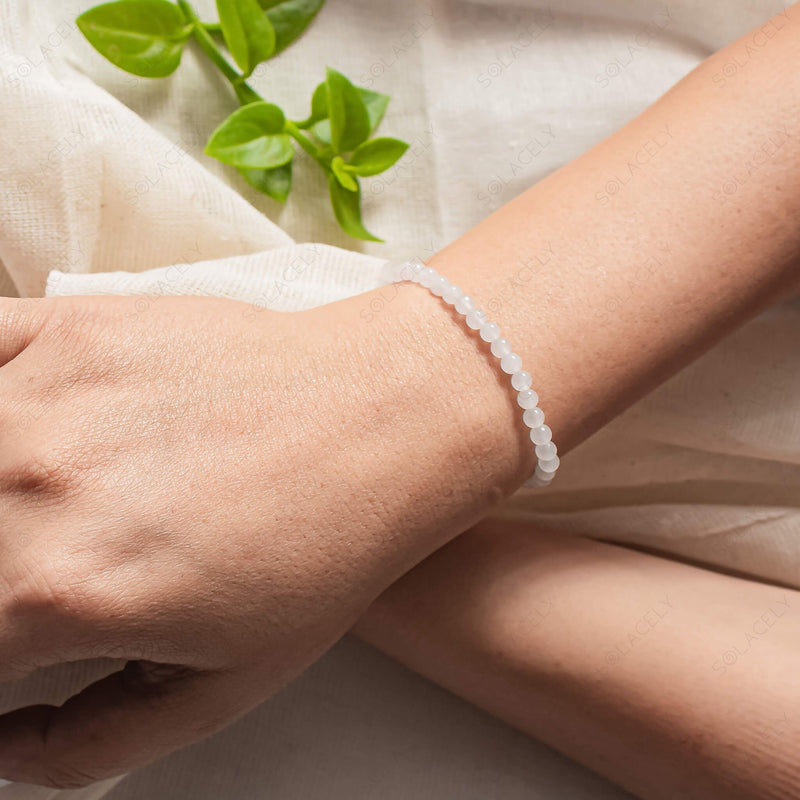
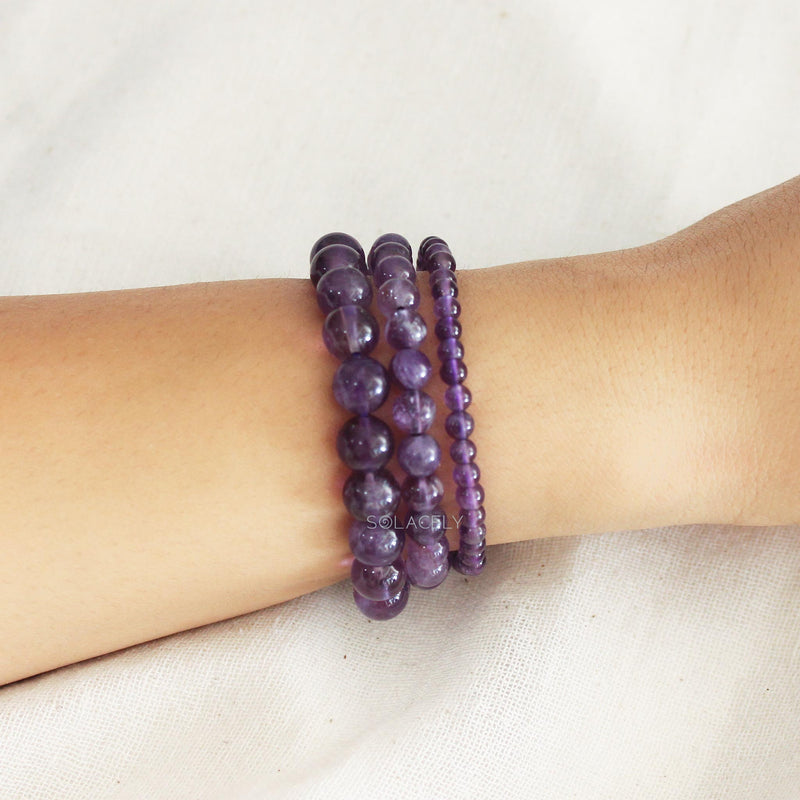
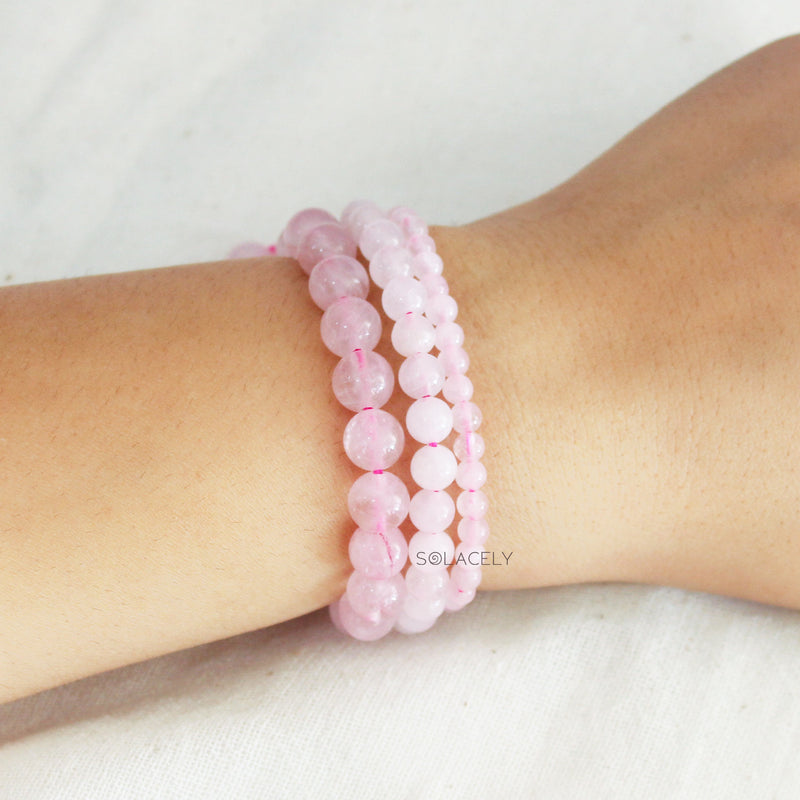
Three stones dominate: moonstone for the association with cycles and motherhood, rose quartz for softness and self-compassion, and amethyst for winding down at night. A fourth, red jasper, appears in some traditions for grounding in late pregnancy. All four are used passively, as objects you hold, wear, or keep nearby.
These choices are cultural rather than clinical. Moonstone earned its place because of a very old lunar association, not because anything about it acts on the body. The Gemological Institute of America describes moonstone as a feldspar whose floating blue sheen, called adularescence, comes from light scattering between microscopic layers inside the stone. That optical effect is the whole reason for its reputation, and it is a good example of how crystal folklore usually starts with how a stone looks.
If you are still at the trying stage rather than pregnant, the stones people reach for differ slightly, and our guide to crystals for fertility covers that ground separately.
Moonstone: the stone people associate with pregnancy
Moonstone is the pregnancy stone in almost every modern crystal tradition, linked to cycles, intuition, and new beginnings. It is a potassium feldspar, sitting around 6 to 6.5 on the Mohs scale, which makes it softer than quartz and easier to scratch. Handle it gently and keep it off hard surfaces.
People tend to keep moonstone somewhere they will see it daily: a bedside dish, a bracelet worn on the left wrist, a stone tucked into a hospital bag near the end. There is no correct method. The pattern that seems to matter is repetition, because the stone becomes a cue for a pause rather than a treatment.
One practical note. Moonstone's sheen shows best in movement and daylight, so a bracelet gets more out of it than a stone sitting in a drawer. If you want the mineralogy in more depth, the moonstone meaning and properties guide goes further than this article can.
Rose quartz and emotional steadiness
Rose quartz is the second most common choice, used for self-compassion rather than romance in this context. Pregnancy involves a lot of being examined, measured, and advised, and the stone tends to be adopted by people who want one object in the room that is simply reassuring rather than diagnostic.
It is a member of the quartz family, rated 7 on the Mohs scale, and hard enough to survive daily wear and rinsing. That durability matters more than it sounds, because a stone you can handle without anxiety is a stone you will actually use. The GIA notes its colour comes from trace inclusions within the quartz, which is why the pink is usually cloudy rather than clear.
Many people pair it with amethyst at night, one for softness and one for sleep. If the emotional side is what you are after, the fuller treatment sits in rose quartz for emotional healing.
Amethyst, rest, and the third trimester
Sleep is the complaint that comes up most in late pregnancy, and amethyst is the stone most often placed on a bedside table for it. Its role is entirely ritual: it marks the point in the evening where screens go off and the room quietens. That framing is honest and still useful.
What is genuinely evidence backed is the routine, not the mineral. The National Center for Complementary and Integrative Health reports that relaxation techniques such as breathing exercises and progressive muscle relaxation can help with stress and, in some studies, sleep quality. A crystal on the nightstand is a prompt for that practice rather than a substitute for it.
Amethyst is quartz, so it handles daily use well, though prolonged direct sunlight can fade the purple over time. Keep it out of a sunny windowsill. For a wider set of options, see the best crystals for sleep.
Safety: what to avoid completely
This is the part most crystal articles skip, and it matters more than the stone choice.
| Practice | Verdict | Why |
|---|---|---|
| Crystal elixirs or gem water | Avoid | Some minerals contain copper, lead, or asbestos-group fibres. Never soak a stone in water you intend to drink. |
| Malachite, cinnabar, galena | Avoid handling | Contain copper, mercury, or lead compounds. Not appropriate to keep loose during pregnancy. |
| Raw points and small chips | Avoid at bedside | Sharp edges and choking-size fragments, a problem again once the baby is mobile. |
| Replacing medical advice | Never | Bleeding, reduced movement, severe headache or swelling are clinical events. Call your midwife or doctor. |
| Tumbled or beaded stones, worn or kept nearby | Reasonable | Passive, external, low risk. This is the sensible way to use them. |
Nutrition and supplements are a separate question again, and one worth raising with a clinician rather than a crystal seller. The American College of Obstetricians and Gynecologists publishes plain-language guidance on that.
How to use them day to day
Keep it simple and low effort, because pregnancy is not the moment for an elaborate practice. Most people settle on one or two of the following.
- Wear one bracelet. A single beaded strand you never take off beats a drawer of stones you forget about.
- Keep one stone bedside. Tumbled, palm sized, smooth. Hold it for the length of a few slow breaths before sleep.
- Pack one for the hospital bag. A small familiar object is genuinely comforting in an unfamiliar room.
- Clean them properly. Warm water, mild soap, soft cloth, dried fully. Skip salt water and skip long sun sessions.
Hormonal shifts, mood swings, and fatigue are the practical realities behind most of these choices, and the crystals people pick for those are broadly the same ones covered in crystals for hormonal balance.
The properties described here reflect traditional and cultural belief around crystals. They are not medical claims and are not a substitute for professional healthcare. Pregnancy care in particular should be led by your midwife, obstetrician, or GP. Do not use crystals internally, do not drink water they have been soaked in, and never delay medical advice because of a crystal practice.
Sources
- National Center for Complementary and Integrative Health, Relaxation Techniques
- Gemological Institute of America, Moonstone Description
Written by Chetena Sharma. Reviewed by the Solacely editorial team.
Frequently asked questions
About the author


Written by Chetna Sharma, crystal healing practitioner and co-founder of Solacely. Chetna has worked with healing crystals for over a decade and curates Solacely's protective stone collection.