The seven stones people choose most for Valentine's Day are rose quartz, garnet, carnelian, moonstone, amethyst, lapis lazuli and opal. Rose quartz and garnet cover affection and passion. Moonstone and lapis lazuli are used for understanding and honest conversation. Amethyst is the calm one, and opal is the surprise.
Key takeaways
- Rose quartz for affection and self-kindness, garnet for warmth and commitment, carnelian for confidence and passion.
- Moonstone, lapis lazuli and amethyst are the quieter picks, traditionally used for understanding, honest speech and calm.
- Garnet is the January birthstone and sits at 6.5 to 7.5 on the Mohs scale, per the GIA, so it survives everyday jewellery.
- Opal is beautiful and fragile. It contains water, rates about 5 to 6.5 on Mohs, and dislikes sudden temperature change, so it is a poor choice for a first ring.
- A crystal gift lands better with one honest sentence about why you chose that stone. The stone is the prompt, not the message.
- All meanings here are traditional belief and cultural association, not medical or relationship advice.
Which crystals suit Valentine's Day?
Pick by what the relationship actually needs rather than by colour. Affection, passion, communication and calm are four different jobs, and the traditional stones for each are different too. The table below is the short version. Each stone is covered properly further down, including the ones that are difficult to look after.
| Stone | Traditionally used for | Best as |
|---|---|---|
| Rose quartz | Affection, self-kindness | Pendant, tumble, first gift |
| Garnet | Warmth, devotion, commitment | Ring, bracelet, milestone gift |
| Carnelian | Confidence, passion, courage | Bracelet, pocket stone |
| Moonstone | Understanding, emotional attunement | Pendant, gift for a new partner |
| Amethyst | Calm, rest, steadiness | Bedside piece, cluster |
| Lapis lazuli | Honest speech, listening | Necklace, table piece |
| Opal | Spontaneity, loyalty | Pendant or earrings, handled carefully |
Which stones are used for romance and passion?
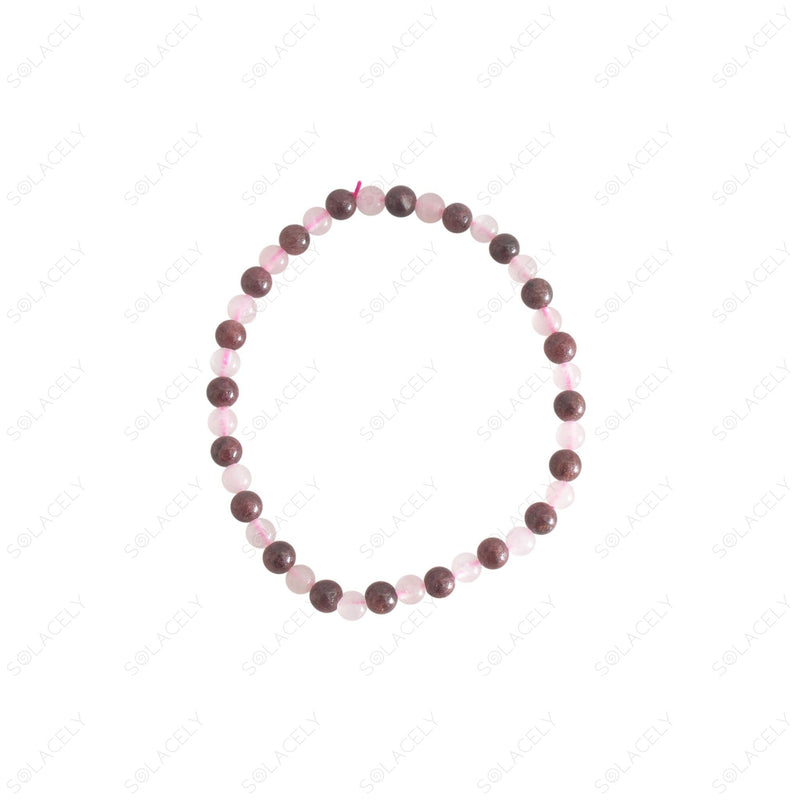
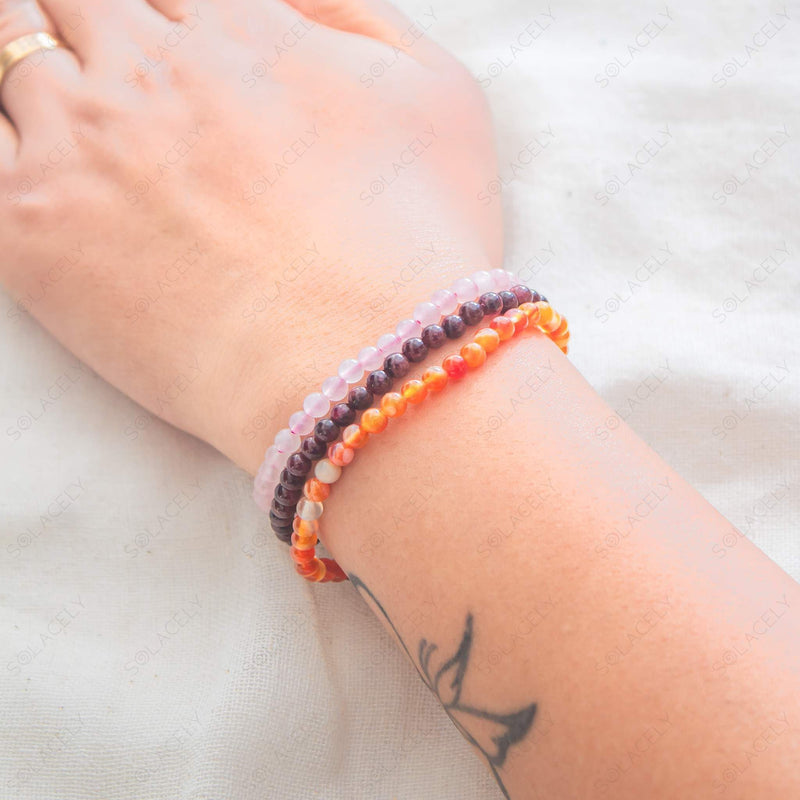
Rose quartz, garnet and carnelian are the traditional trio. Rose quartz is the gentle one, garnet the enduring one, and carnelian the one with heat behind it. They are also, conveniently, three very different colours, so a piece combining them reads as intentional rather than random.
Rose quartz
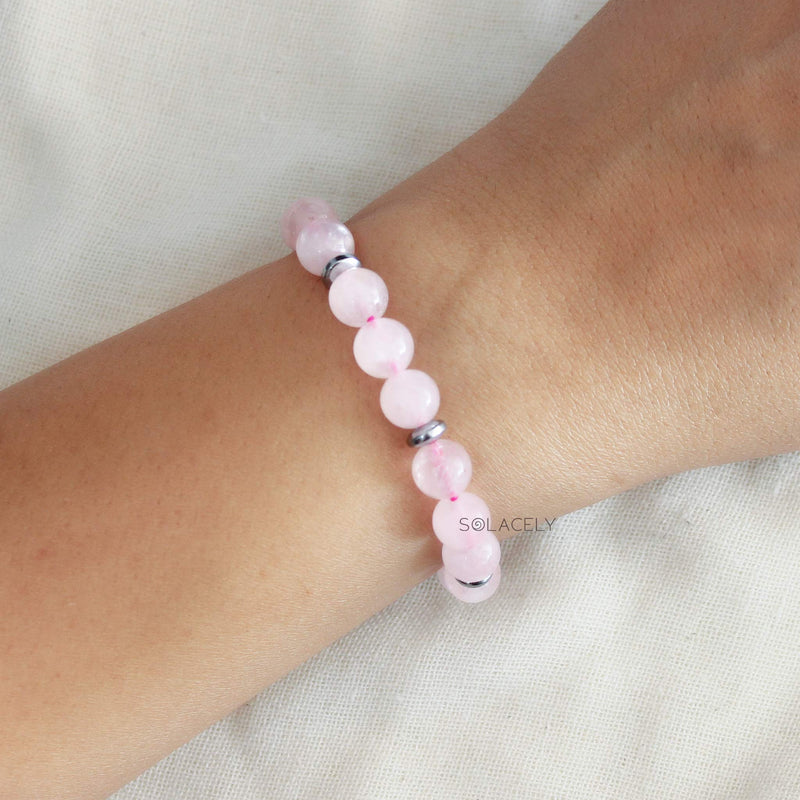
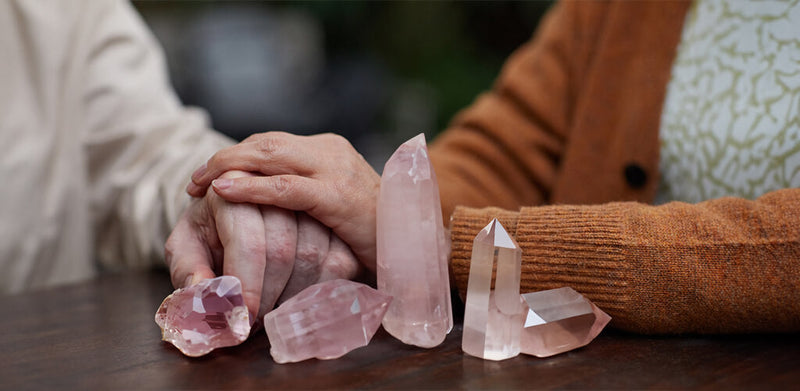
Rose quartz is the pink variety of quartz, clouded by microscopic inclusions that scatter light and give it that milky look. Crystal tradition calls it the stone of unconditional love, which in practice means affection directed inward as much as outward. It is the safest Valentine's gift there is, because nobody misreads it as pressure.
Wear it near the heart, keep a tumble on a bedside table, or hand one over as the small part of a bigger gift. Our piece on rose quartz for attracting love covers how people use it when they are not currently partnered.
Garnet
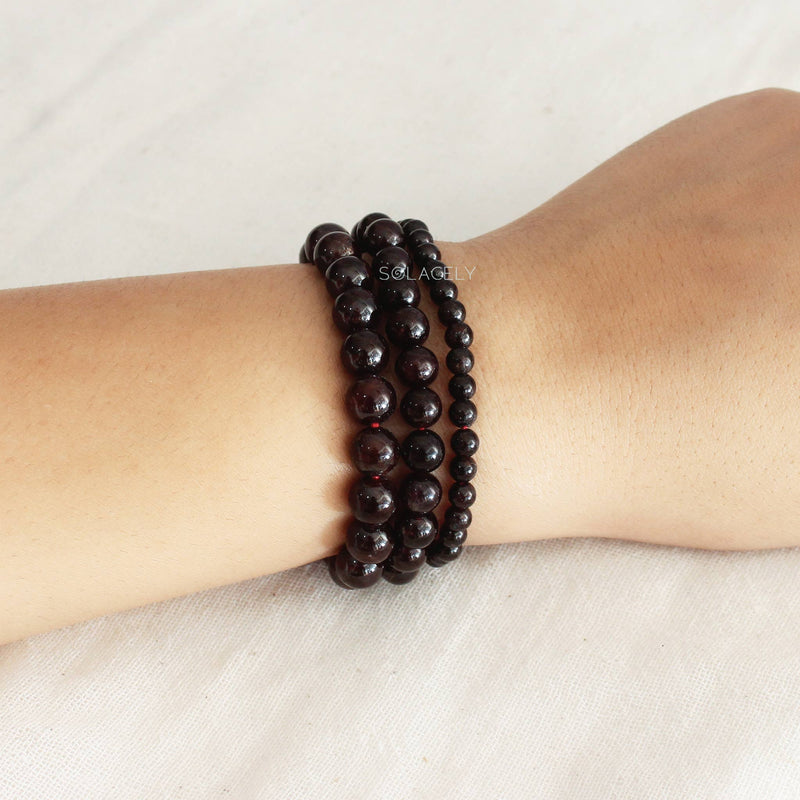
Garnet is not one mineral but a family of silicates. According to the Gemological Institute of America, garnet is the birthstone for January and spans a wide range of species, with hardness generally between 6.5 and 7.5 on the Mohs scale. The deep red stones most people picture are usually almandine or pyrope.
Historically garnet travelled well. It turns up in Egyptian jewellery, Roman signet rings and medieval travellers' talismans, which is where its long association with devotion and safe return comes from. That history makes it a better anniversary or engagement-adjacent stone than a first-date one. The full background sits in our garnet crystal meaning guide.
Carnelian
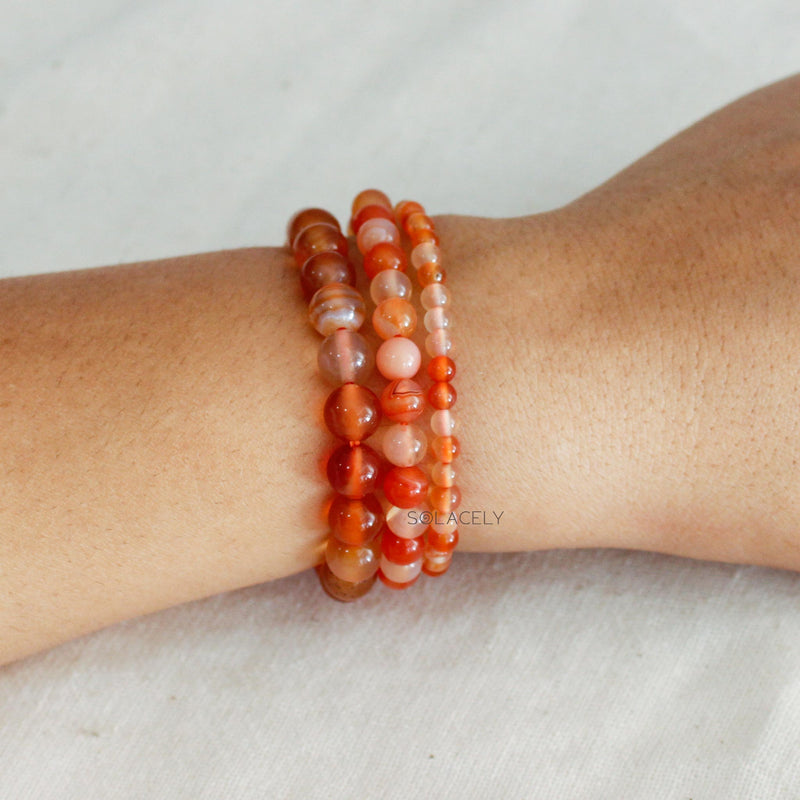
Carnelian is a translucent orange to red variety of chalcedony, a microcrystalline quartz. Tradition uses it for nerve rather than romance: speaking first, saying the true thing, asking for what you actually want. That makes it an underrated Valentine's stone, because what usually trips people up on the day is a failure of nerve rather than of feeling.
Keep it in a pocket during the evening rather than displaying it. The wider set of stones people combine for this is covered in crystals that attract love and passion.
Which stones suit calm, honesty and understanding?
Not every relationship needs more heat. Moonstone, amethyst, lapis lazuli and opal are the stones people choose when the thing that would help is a slower evening, a franker conversation or a bit of playfulness. These four also make better gifts for a long partnership than the obvious red and pink options.
Moonstone
Moonstone is a feldspar with a floating blue-white sheen called adularescence, caused by light scattering between microscopic layers inside the stone. Tilt it and the glow moves. Traditional practice links it to emotional attunement, noticing what someone means rather than only what they said.
It suits a newer relationship, where most of the work is still learning each other. A pendant is the usual format, since moonstone is softer than quartz and rings take more punishment.
Amethyst
Amethyst is purple quartz, hard enough for any format and widely available in every price band. Tradition gives it sobriety, rest and a quieter head. On Valentine's Day that translates to the end of the evening rather than the start of it: a cluster on the bedside table, not a centrepiece.
Keep it out of long direct sunlight. Amethyst colour comes from iron and natural irradiation, and prolonged strong light will fade a good purple to a washed-out lilac.
Lapis lazuli
Lapis lazuli is a rock rather than a single mineral, composed mainly of lazurite, usually with calcite and flecks of pyrite, which is what produces those gold specks in a deep blue field. It was ground into ultramarine pigment for centuries before it was worn as jewellery.
Its traditional use is honest speech. People put a piece on the dinner table for the conversations that keep getting postponed. It is a pointed gift, so give it to someone who will find that funny rather than loaded.
Opal
Opal is the wildcard. The Gemological Institute of America describes opal as a hydrated form of silica that contains water and produces play-of-colour, with hardness of roughly 5 to 6.5 and a real sensitivity to sudden temperature change. Beautiful, and genuinely demanding.
Traditionally it is linked to spontaneity and loyalty at once, which is a strange and appealing pairing. Give it as earrings or a pendant. Do not give it as a first ring unless you know the person will take it off before washing up.
How do you give a crystal as a Valentine's gift?
Say why you chose that specific stone, in one sentence, and then stop. A crystal handed over without a word is easy to misread. The same crystal with "I picked garnet because it is the one people carried when they wanted to come home safely" becomes a message, and it takes ten seconds.
- Match the format to the person. Someone who never wears jewellery will use a tumble or a small carving. Someone who wears the same bracelet daily will use a bracelet.
- Skip rings unless you are sure. Ring gifts carry meaning you may not intend, and sizing is a coin flip.
- Write the meaning down. A card with two lines about the stone survives longer than the explanation you give at dinner.
- Consider a pair. Matching stones, one each, sidestep the awkwardness of giving without receiving. Our guide to crystals for couples covers combinations that work.
What if you are spending Valentine's Day alone?
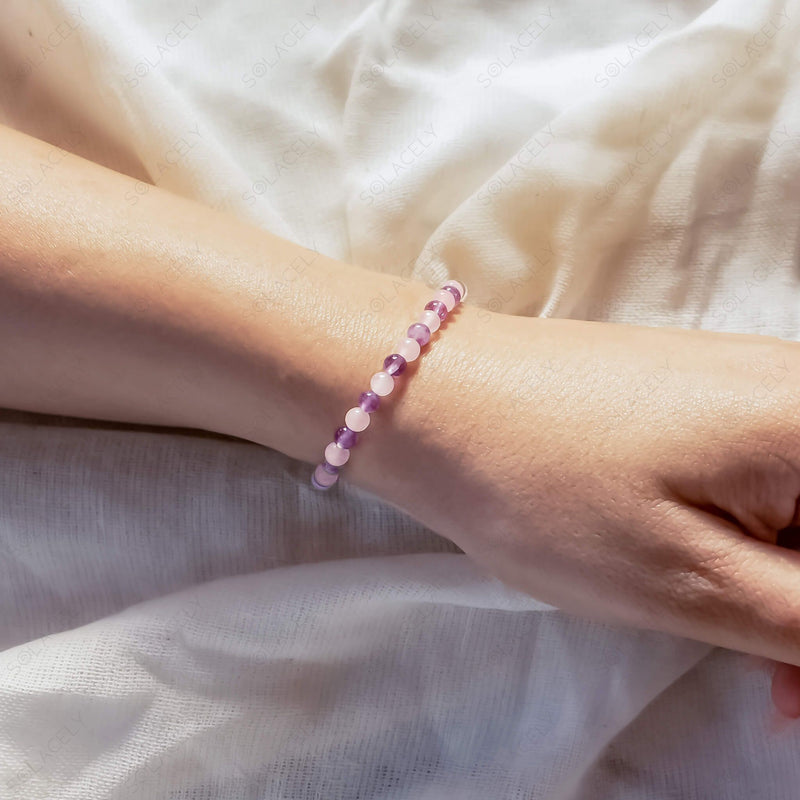
Rose quartz and amethyst are the two stones traditionally used for exactly this, and the framing matters more than the mineral. The practice here is a deliberate hour set aside for yourself, with a physical object as the cue that the hour has started. Manifesting a partner is a separate intention with its own stones behind it.
A workable version: one stone in the hand, ten quiet minutes, then something you actually enjoy. No performance, no altar required. If the day tends to be genuinely difficult rather than merely quiet, the more detailed piece on crystals for anxiety and self-love sets out a fuller routine.
Setting the room, and looking after the stones afterwards
Crystals photograph well by candlelight because polished surfaces bounce warm light around. That is a genuine reason to bring them out onto the table as well as keeping them on a shelf. Rose quartz and garnet around a candle, amethyst by the bed, lapis on the table.
Afterwards, care differs by mineral. Quartz-family stones such as rose quartz, amethyst and carnelian take a brief rinse and a full dry. Opal and moonstone should be wiped rather than soaked, and kept away from heat and perfume. Garnet handles warm soapy water and a soft brush. If you are unsure about a new stone, the Mohs hardness scale is the quickest way to judge what it can safely take.
Store softer pieces separately. Quartz will scratch opal and moonstone quite happily in a shared jewellery box, which is how most Valentine's gifts quietly get ruined by June.
The meanings described here reflect traditional and cultural belief around crystals. They are not medical claims, not relationship advice, and not a substitute for professional support. If you are struggling with your health or your relationship, please speak to a qualified professional.
Sources
- Gemological Institute of America, Garnet Description
- Gemological Institute of America, Opal Description
Written by Chetena Sharma. Reviewed by the Solacely editorial team.
Frequently asked questions
About the author


Written by Chetna Sharma, crystal healing practitioner and co-founder of Solacely. Chetna has worked with healing crystals for over a decade and curates Solacely's protective stone collection.