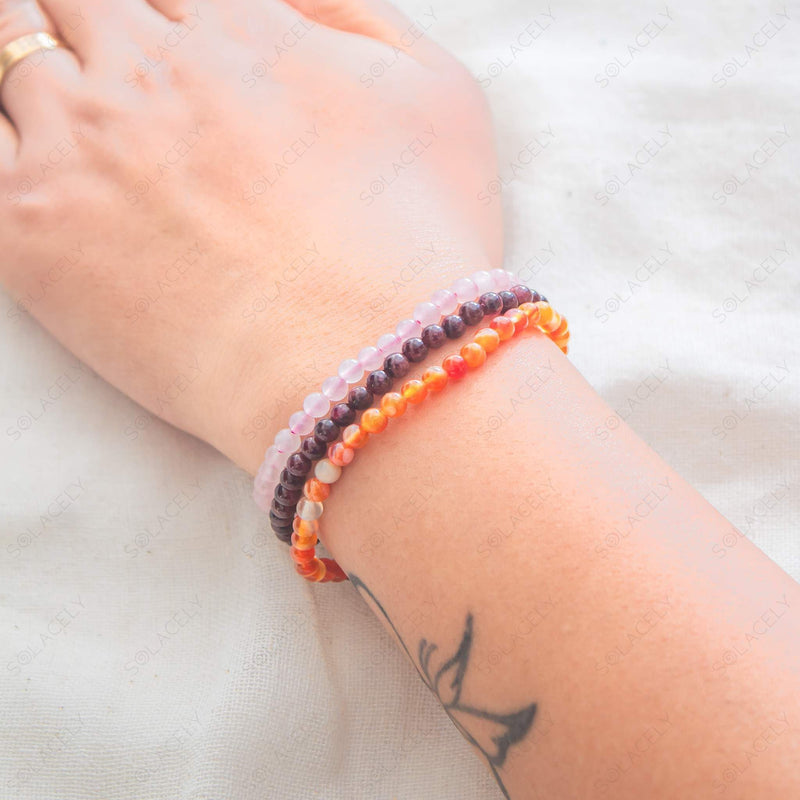
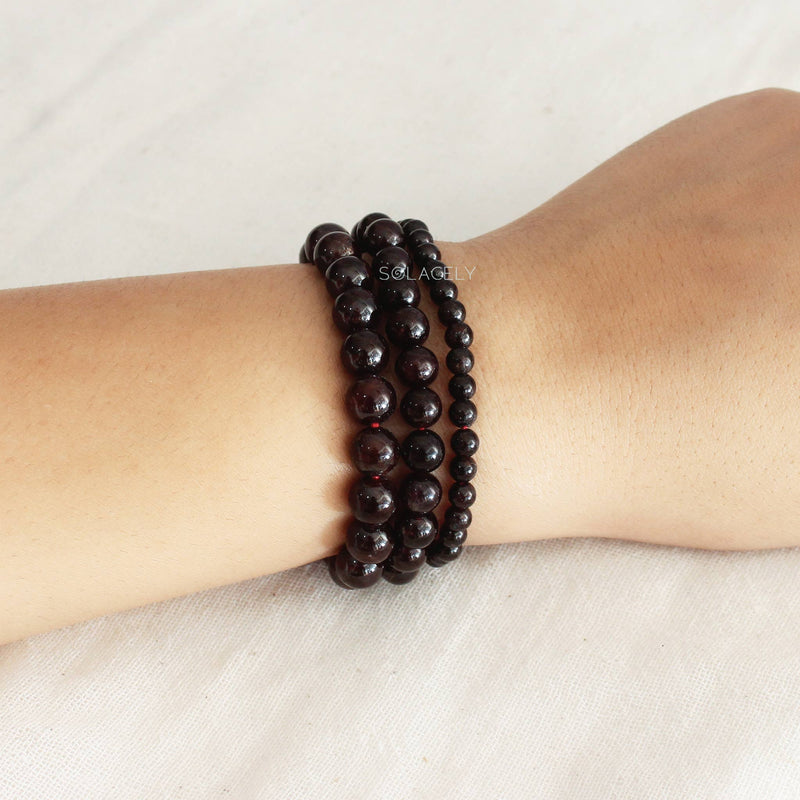
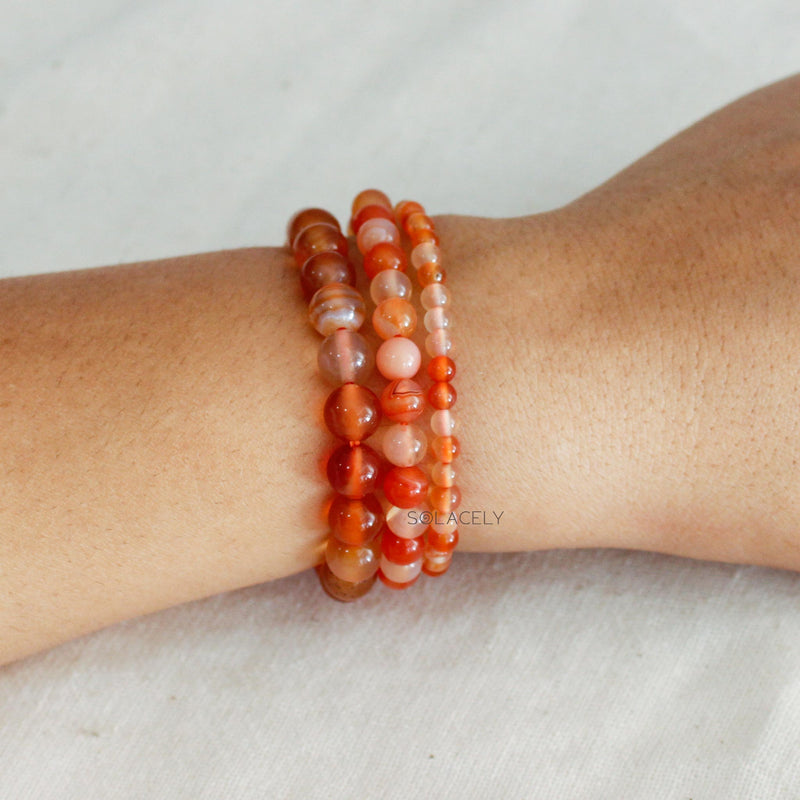
Passion stones are the warm reds: garnet, carnelian, red jasper, and ruby where budget allows. They are a different set from the pink love stones, and the split follows chakra placement. Pinks sit at the heart and are kept for tenderness. Reds sit lower and are kept for desire and physical connection.
Key takeaways
- This guide covers the passion half of love work. For attraction generally, see our companion guides below.
- Reds and oranges (garnet, carnelian, red jasper) for desire. Pinks (rose quartz, rhodonite) for tenderness.
- The split follows chakra placement: heart for pink, sacral and root for red.
- The standard long-relationship pairing is rose quartz plus garnet.
- Placement is the bedroom, and worn pieces sit low on the body.
Where this fits alongside our other love guides
Love is a wide topic and we cover it across several articles, so it is worth saying what this one is for.
If you are looking to meet someone, our crystals that attract love guide is the starting point. For the romance and courtship angle, crystals for love and romance covers it. If you are working toward a committed long-term partnership, crystals for love and a soulmate is the relevant one.
This article is about the part those guides deliberately leave alone: desire, heat, and physical connection, whether in a new relationship or a long one that has gone quiet.
Why passion stones are red and love stones are pink
The division maps cleanly onto chakra placement.
Anahata, the heart centre, is assigned green and pink, and its traditional domain is compassion, care and connection. Rose quartz, rhodonite and green aventurine live here, and their associations are all about tenderness.
Svadhishthana, the sacral centre below the navel, is assigned orange, and its domain in yogic tradition is creativity, pleasure and physical vitality. Carnelian is the classic stone here. Muladhara, the root, is assigned red and governs the body and physical presence, which is where garnet and red jasper sit.
So passion stones are lower-chakra stones, and that single fact explains the whole colour convention and the traditional advice about where to wear them.
The passion set
| Stone | Traditional use | Notes |
|---|---|---|
| Garnet | Devoted passion, commitment with heat | The classic; long associated with fidelity as well as desire |
| Carnelian | Desire, creative and physical vitality | Sacral chakra stone; the most affordable of the set |
| Red jasper | Stamina and physical grounding | Steadier and less intense than carnelian |
| Ruby | Intense passion | The traditional apex stone |
| Rhodochrosite | Passionate self-love | Kept for when desire has gone quiet through self-neglect |
| Rose quartz | Tenderness | Included because passion without it is thin |
Garnet is the one to start with. It is the January birthstone, a group of silicate minerals spanning many colours, and at 6.5 to 7.5 on the Mohs scale it is durable enough for daily wear.
The historical detail worth knowing: garnet was carried by Roman soldiers and by medieval travellers as a token of return, which is where its association with devotion rather than mere heat comes from. It is the passion stone with a commitment attached. Our garnet meaning guide covers its full history.
Pairing heat with tenderness
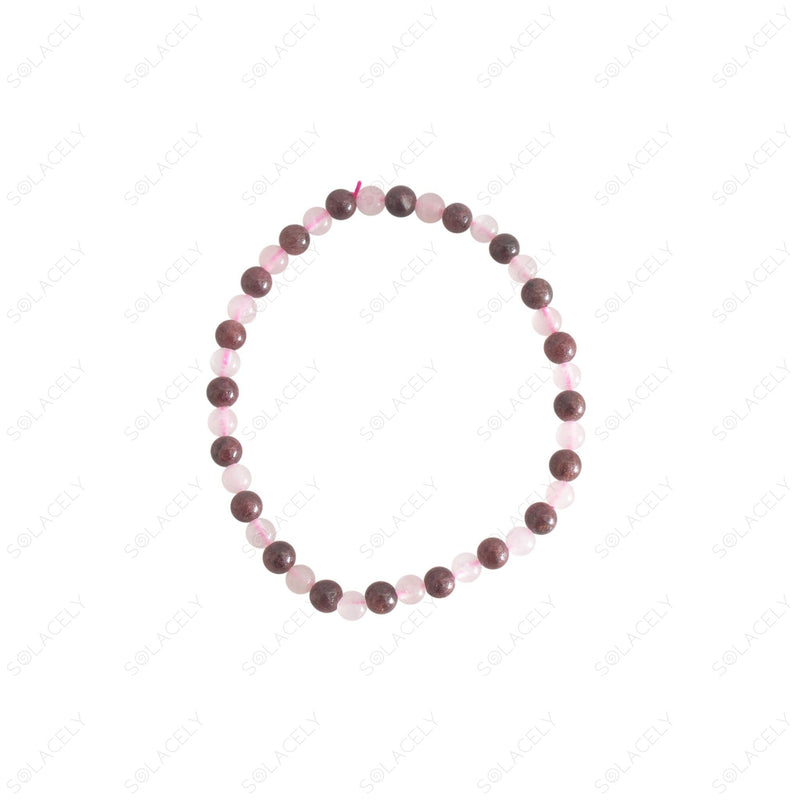
The standard combination for an established relationship is rose quartz plus garnet, and the logic is that most long relationships have plenty of one and want more of the other.
Couples together for years usually have tenderness in abundance and want more heat, which is why garnet gets added. New relationships sometimes have the reverse, and rose quartz is added to settle things into something lasting.
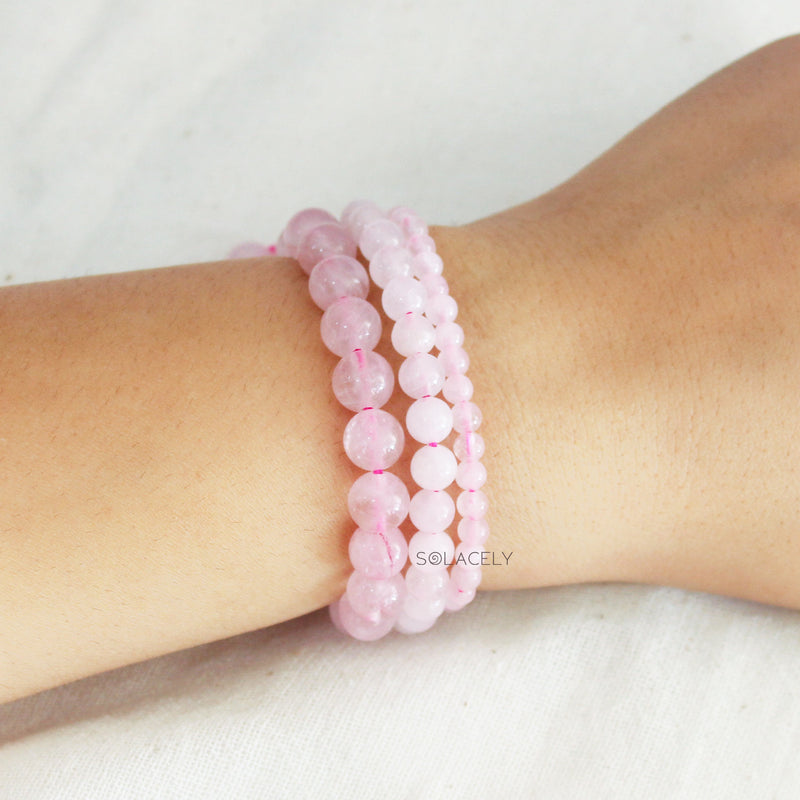
Practically this shows up as a paired piece, one for each person, or a single bracelet alternating both. Rose quartz gets its soft colour from microscopic inclusions, and that milkiness against garnet's saturation is a genuinely good visual pairing as well as a symbolic one. Our rose quartz for love guide covers the tenderness side.
Placement and wearing
- Bedroom. The conventional placement, usually a pair on a bedside table rather than a single piece.
- Low on the body. Wrist, waist, or a long pendant rather than a choker, following the sacral and root associations.
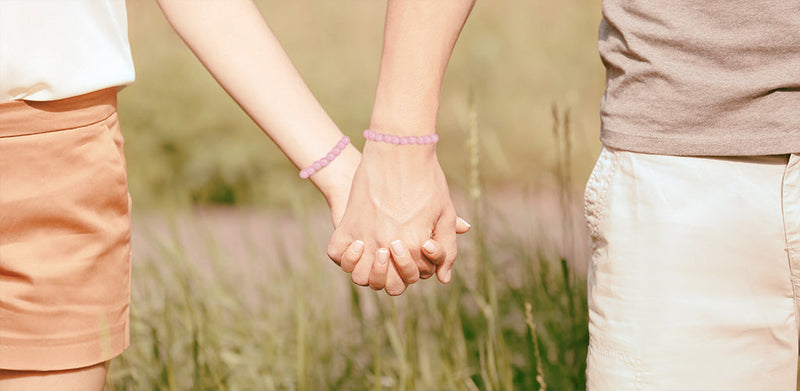
- Paired pieces for couples. Two matched stones, one each, is the traditional format.
- Cleanse regularly. Weekly for daily-worn pieces, using sound, smoke or moonlight rather than long sun.
Keeping the practice shared
Where passion has gone quiet in a long relationship, the practical things usually matter alongside: rest, time alone together, saying the thing that has not been said.
What a shared crystal practice offers is a small deliberate marker that the two of you have decided this matters. Couples who choose a pair of stones together are having a conversation they might not otherwise have had, and that is worth the price of two garnet bracelets.
The associations described here are traditional and cultural. Crystals do not affect libido, fertility or relationship outcomes and are not medical treatment. Changes in desire can have medical causes worth discussing with a doctor, and relationship difficulties are best addressed with a qualified counsellor.
Sources
- Gemological Institute of America, Garnet Description
- Gemological Institute of America, Rose Quartz Description
Written by Chetena Sharma. Reviewed by the Solacely editorial team.
Frequently asked questions
About the author


Written by Chetna Sharma, crystal healing practitioner and co-founder of Solacely. Chetna has worked with healing crystals for over a decade and curates Solacely's protective stone collection.