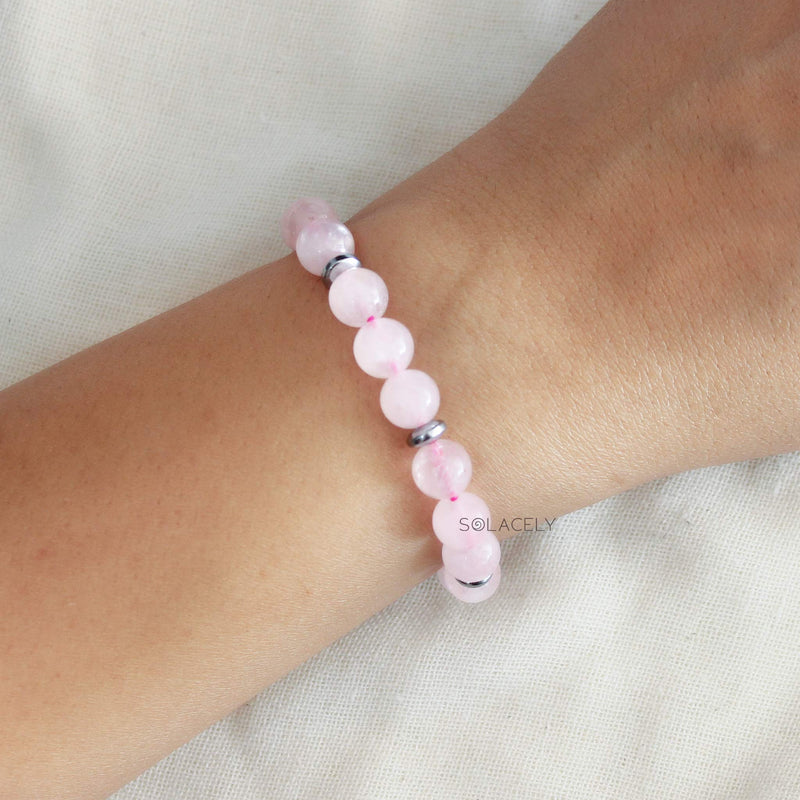
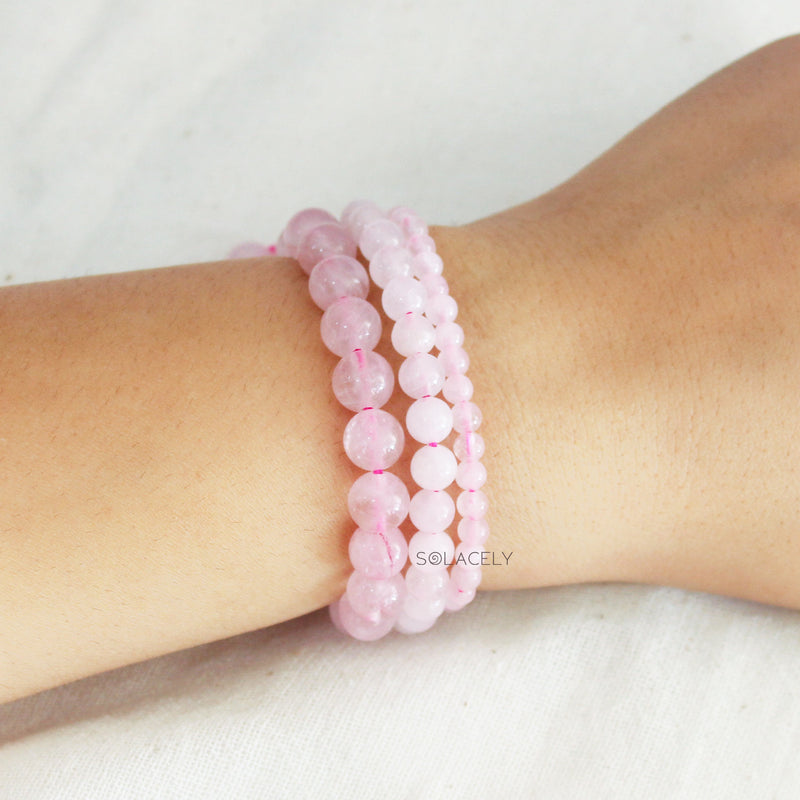
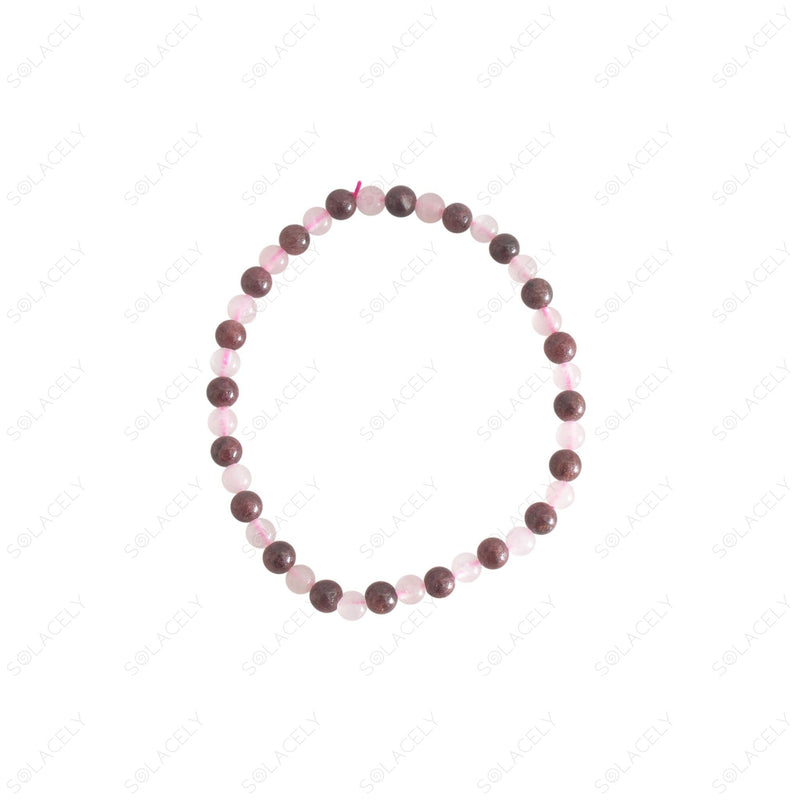
Rose quartz is the stone most people mean when they ask about crystals that attract love, but it is far from the only one. Rhodonite, rhodochrosite, green aventurine, garnet, morganite, kunzite and moonstone all carry love associations, and each suits a different situation: new love, an existing relationship, self-worth, or repair after heartbreak.
Key takeaways
- Rose quartz is a variety of quartz, sitting at 7 on the Mohs scale. Its pink comes from microscopic inclusions, not from the silica itself.
- That pink can fade in prolonged sunlight, and kunzite fades faster still. Cleanse both in moonlight rather than on a bright windowsill.
- Match the stone to the situation. Opening to new love, deepening an existing relationship, self-worth work and heartbreak each have different traditional picks.
- Hardness varies widely. Rose quartz and green aventurine are durable at 7 on Mohs, while rhodochrosite is only 3.5 to 4 and scratches easily.
- Keep one intention rather than five. A single stone chosen for the situation you are actually in gives that intention somewhere to land each day.
Which crystals are traditionally used to attract love?
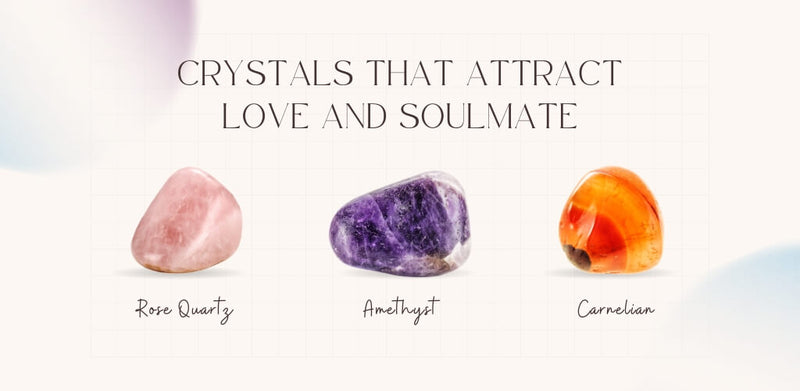
Rose quartz leads, and it has for a very long time. Tradition then assigns rhodonite to forgiveness, rhodochrosite to tenderness, green aventurine to luck in new connection, garnet to devotion and desire, morganite to gentle openness, kunzite to unguarded affection, and moonstone to emotional timing.
Rose quartz is a variety of quartz. Gemmological reference works place quartz at 7 on the Mohs hardness scale, and the species covers an unusually wide range of varieties. Those varieties take their colours from trace impurities and microscopic inclusions rather than from the silica itself. In rose quartz, fine inclusions scatter light and produce the soft milky pink people recognise on sight.
That detail has a practical consequence. The colour is not permanent under strong light, and prolonged sun exposure will pale a rose quartz piece over a matter of months. Kunzite is even more light sensitive and is well known among jewellers for fading. Keep both off sunny windowsills.
This guide covers the whole range of love work. If your goal is specifically a soulmate or a committed partner, the companion guide to crystals for attracting a soulmate and a committed partner goes deeper on that single aim. If what you actually want is personal magnetism, presence and charisma rather than romance, crystals for attraction and self-magnetism covers that separately.
Which crystals suit opening up to new love?
Rose quartz, green aventurine and morganite are the usual picks for someone single and wanting to be open rather than guarded. Rose quartz is used for softening, green aventurine for luck and willingness to try again, and morganite for staying available without forcing the pace.
Green aventurine is another member of the quartz family, and its shimmer comes from platy inclusions of green mica scattered through the stone. It shares rose quartz's hardness, which makes it an easy everyday bracelet. In practice, people wear it when they are re-entering dating and want a small daily reminder that they decided to try.
Morganite is the pink variety of beryl, the same mineral family as emerald and aquamarine, and it is harder again. It reads as delicate and behaves as tough, which is a useful combination in a piece you never take off.
What a bracelet does well is keep one intention in view several times a day. You catch it on your wrist while the kettle boils, and the decision you made about being open comes back to you. That small repetition is the whole point of wearing a stone rather than shelving it.
Which crystals deepen an existing relationship?
Garnet and moonstone are the traditional choices for couples already together, usually alongside rose quartz. Garnet carries associations with devotion, warmth and desire. Moonstone carries associations with emotional rhythm and patience, which is often the thing a long relationship actually needs more of.
Moonstone belongs to the feldspar group. Its billowy blue or white glow, called adularescence, comes from light scattering between microscopic layers inside the stone. It is softer than quartz, so it suits a pendant better than a ring you wear while gardening.
Garnet is a group of silicate minerals rather than a single species, and the red varieties have been set into jewellery since antiquity. Couples often choose matching pieces, or one garnet and one rose quartz between them, on the reasoning that garnet supplies heat while rose quartz supplies patience.
The other common use is shared placement rather than shared jewellery: two stones together on a bedside table, chosen as a pair on purpose. They sit there as a visible agreement about how you want to treat each other, and both of you see it every night.
Which crystals are used for self-love and self-worth?
Rose quartz, rhodochrosite and rhodonite are the standard self-love set. Rose quartz is used for general softening towards yourself, rhodochrosite for warmth and comfort, and rhodonite for the harder work of forgiving your own past decisions instead of replaying them at two in the morning.
This is the least glamorous corner of love crystal practice and probably the most useful one. People often arrive wanting a partner and end up spending six months on their own standards instead. If rose quartz is where you want to start, the full rose quartz meaning and properties guide sets out its associations in more detail.
Rhodochrosite deserves a care warning. It is a manganese carbonate and it is soft, roughly 3.5 to 4 on the Mohs scale, so it scratches easily, reacts with acids and should never be scrubbed. Keep it as a tumble on a shelf rather than a ring on your working hand.
Which crystals are used after heartbreak?
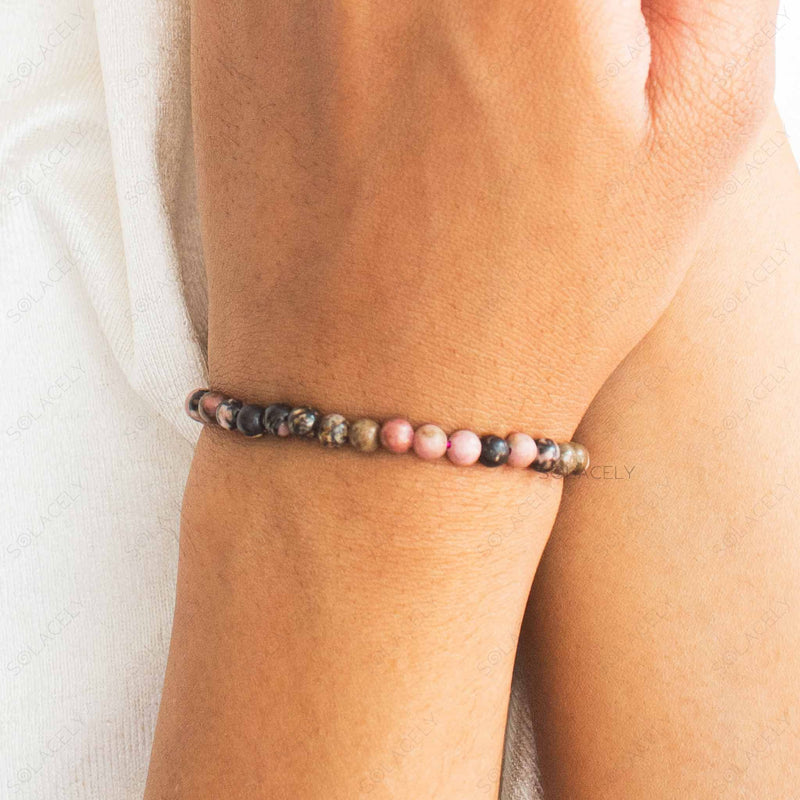
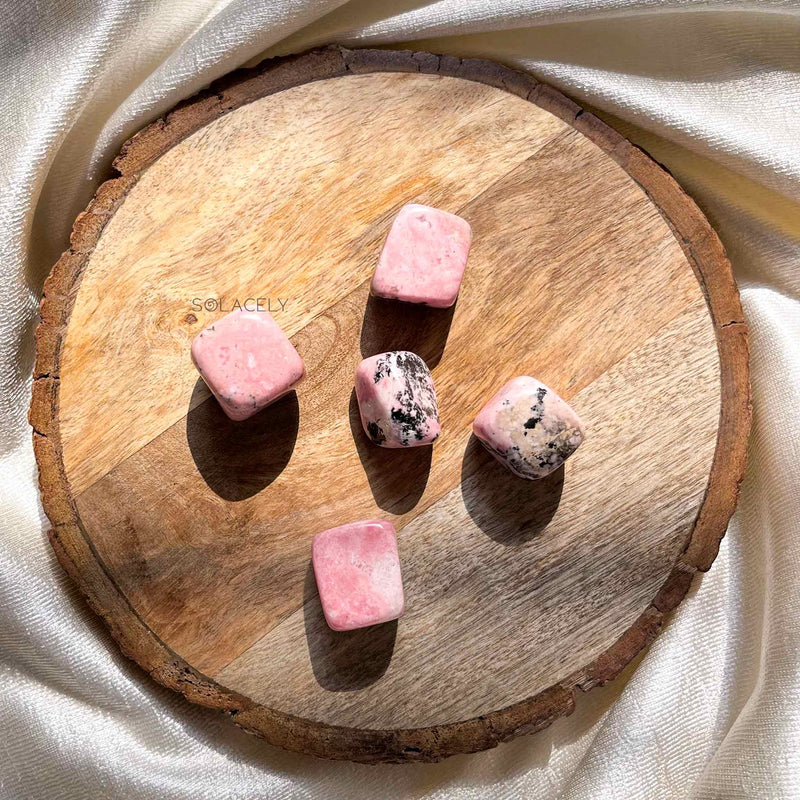
Rhodonite is the stone most commonly chosen after a breakup, with rose quartz and morganite alongside it. Rhodonite is a manganese silicate, usually pink with black oxide veining, and tradition ties that visible dark marbling to healing that includes the damage rather than pretending it away.
The practical use is simple. People carry a rhodonite tumble in a pocket and hold it while journalling, walking, or sitting through the first difficult half hour of an evening. It gives the hands something to do and the mind a marker to return to. Our fuller guide to crystals for moving on from heartbreak sets out a longer routine.
What a small ritual does is give a hard stretch of weeks some structure and some rhythm. Grief moves at its own pace, and having one steady thing to come back to each evening makes that pace easier to sit with. Many people find the stone becomes a marker of how far they have come, picked up in month three and noticeably lighter in the hand than it felt in week one.
How do people actually use love crystals?
Three approaches dominate: wearing them, placing them in the bedroom, and pairing two stones for two different jobs. Wearing is the most common, because it repeats the cue all day. Placement suits the home. Pairing is how most collections grow once a single stone stops feeling like enough.
| Situation | Stones most used | How they are used |
|---|---|---|
| Opening to new love | Rose quartz, green aventurine | Worn daily as a bracelet or pendant, or carried as a pocket tumble |
| Deepening a relationship | Garnet, moonstone | Matching pieces for both partners, or a pair placed on the bedside table |
| Self-love and self-worth | Rose quartz, rhodochrosite | Kept where you get ready each morning, held during a short daily pause |
| After heartbreak | Rhodonite, morganite | Carried in a pocket and held while journalling or breathing |
| Staying open without rushing | Morganite, kunzite | Worn near the heart, kept well out of direct sunlight |
Bedroom placement follows a consistent pattern in crystal practice: a pair of stones on the bedside table rather than one, often rose quartz with something warmer such as garnet. Pairs are used symbolically for partnership. The wider crystals for the bedroom guide covers layout in more depth.
Care is where these stones differ most from one another. The Mohs hardness scale is the quickest way to judge what a new piece can take. Rose quartz and green aventurine at 7 handle daily wear and a quick rinse. Rhodochrosite at 3.5 to 4 does not. Kunzite and rose quartz both fade under strong light, so cleanse them in moonlight, with sound, or on a selenite plate. Keep perfume and lotion off all of them, and put jewellery on last.
How do you choose the stone that matches where you are?
Start with the situation in front of you rather than the ending you are hoping for. Someone single and a little guarded, someone three years into a relationship and someone six weeks out of one are doing entirely different work. The traditional picks differ accordingly, so choose for the work.
That usually means one stone rather than five. A shelf of tumbles spreads your attention thin, and the piece that earns its keep is the one you actually wear. In our experience, the people who get the most from crystal practice own fewer stones and use them more deliberately. One bracelet, worn daily, with a single sentence attached to it.
Give that sentence a shape you can say out loud. Something specific tends to hold better than something grand. Not "I want love", but "I am going to answer the message I have been avoiding since Tuesday." The stone keeps that line in view, on your wrist or beside the kettle, until you no longer need reminding.
And let the choice move as you do. People often begin with rose quartz for openness, spend a season with rhodochrosite while they work on their own standards, then return to rose quartz for a completely different reason. Pick again whenever the situation shifts. The stone should follow the chapter you are in, not the one you started in.
The properties described here reflect traditional and cultural belief around crystals. They are not medical claims and are not a substitute for professional healthcare. If you are managing a health concern, speak to a qualified practitioner.
Sources
Written by Chetena Sharma. Reviewed by the Solacely editorial team.
Frequently asked questions
About the author


Written by Chetna Sharma, crystal healing practitioner and co-founder of Solacely. Chetna has worked with healing crystals for over a decade and curates Solacely's protective stone collection.