Crystals for attraction are stones worn to feel warmer, steadier, and more noticeable in a room: carnelian, citrine, tiger's eye, sunstone, garnet, pyrite, and rose quartz. They are traditionally chosen for personal magnetism rather than romance, and a piece you genuinely like changes how you carry yourself into a room.
Key takeaways
- These stones are traditionally kept for personal magnetism: presence, warmth, and being remembered after a meeting.
- Choose one stone for one situation rather than wearing the whole collection. A single intention holds better than six competing ones.
- Put the piece on before you leave, so it settles you while you are getting ready rather than at the door.
- Carnelian, citrine, tiger's eye, and rose quartz are all varieties of quartz, rated 7 on the Mohs scale, so most of this group survives daily wear.
- Pyrite is the exception on care. It is an iron sulfide and should be kept dry.
What do people actually mean by crystals for attraction?
Most people mean personal magnetism rather than romance: presence, warmth, being remembered after a meeting, drawing opportunities as much as people. Attraction in this broader sense is about how you occupy a room. That is why the stones chosen for it overlap so heavily with the ones chosen for nerve and self-assurance.
The distinction is worth making before you buy anything. If what you actually want is a partner or a deeper romantic connection, that is a narrower subject with its own traditional stones, and our guide to crystals that attract love covers it properly. This piece is about the wider kind of pull.
General magnetism shows up in professional situations more often than romantic ones. Interviews, pitches, a first day, a conference room where you know nobody. People wear a stone into those situations for the same reason they wear a particular jacket: it settles them before they walk in.
How do people actually use these stones?
Deliberately, and one at a time. In crystal tradition the choosing matters as much as the wearing. You pick a single stone for a single situation, fasten it before you leave the house, and let it settle you while you are still getting ready. By the time you arrive, most of the work is done.
Choosing is the part most people skip. Once you own a few pieces, the temptation is to wear all of them at once, which spreads your attention thin across the lot. Wearers who have kept this up for years tend to go the other way. One stone, picked that morning for that day, holds a thought far better.
Ask what the day is actually going to ask of you. Carnelian if you need to speak first. Tiger's eye if you need to stay level while somebody across the table is not. Pyrite if the meeting turns on what you can deliver. The choice takes seconds, and those seconds are what turn a bead into a reminder.
Timing matters just as much. Put the piece on before you leave rather than slipping it on in the car park, because the preparation is the point and the entrance is not. Getting ready is when you are most open to deciding how the next few hours are going to go. The ritual gives that decision somewhere to land.
Then there is the simplest part, and the one people underrate. A piece you genuinely like changes how you carry yourself into a room. You stand a little taller in something you chose on purpose. You catch sight of it mid conversation and remember why you put it on that morning. Many people find that steadiness is exactly what others respond to, which is why the same stones turn up in our crystals for confidence selection.
Which crystals are traditionally chosen for attraction?
Seven stones come up again and again: carnelian, citrine, tiger's eye, sunstone, garnet, pyrite, and rose quartz. Four of them, carnelian, citrine, tiger's eye, and rose quartz, are varieties of quartz, which sits at 7 on the Mohs hardness scale. Most of this group handles daily wear easily.
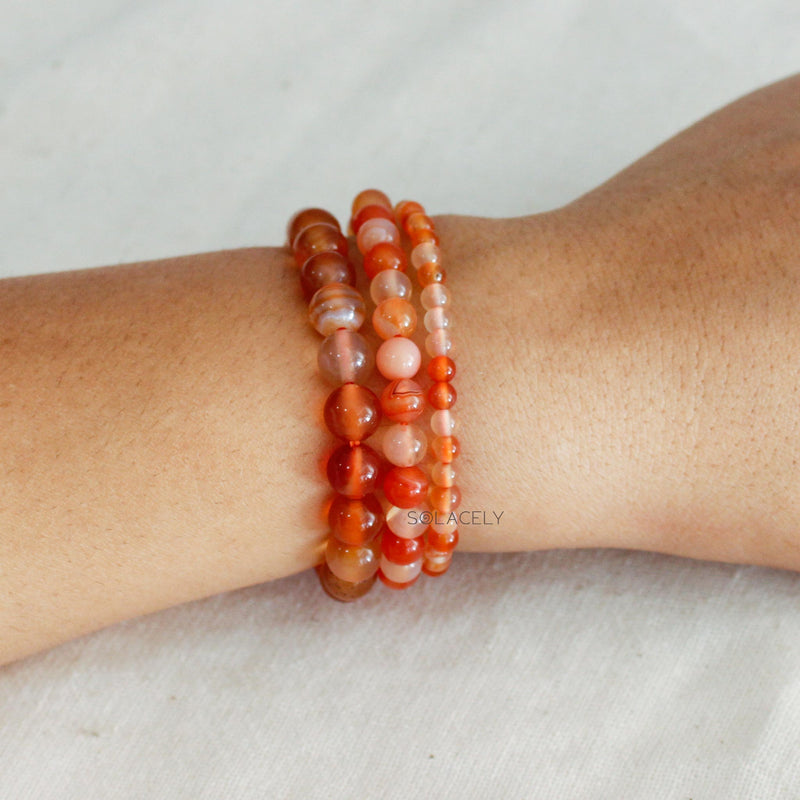
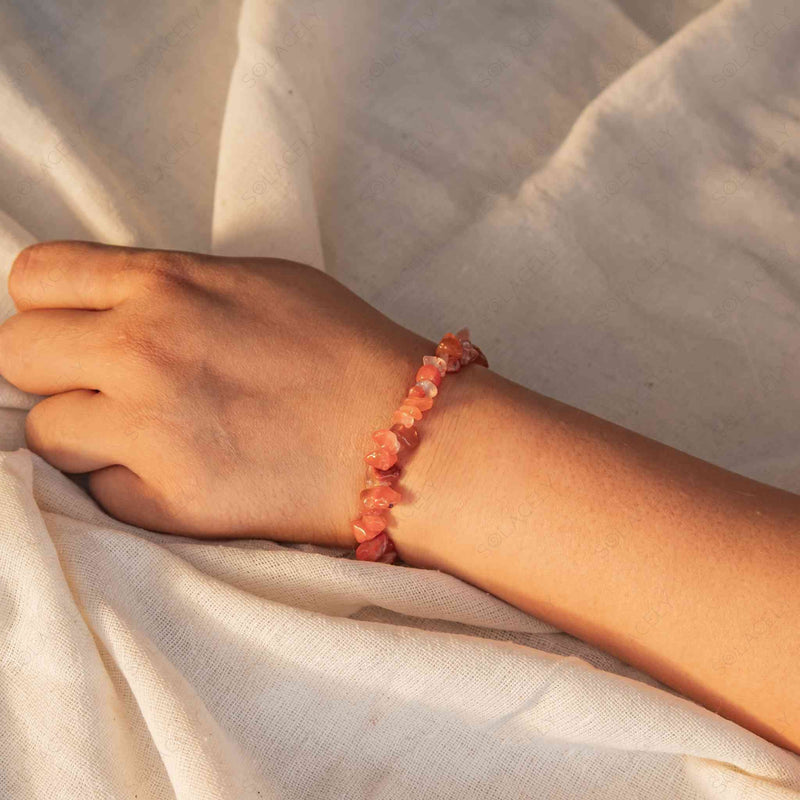
Carnelian is the one people reach for before something they are dreading. It is an orange to red chalcedony, a microcrystalline form of quartz, and its traditional job is nerve: appetite, willingness to speak first, the push to walk into the room rather than hover at the door. Our carnelian meaning and properties guide goes deeper on its history.
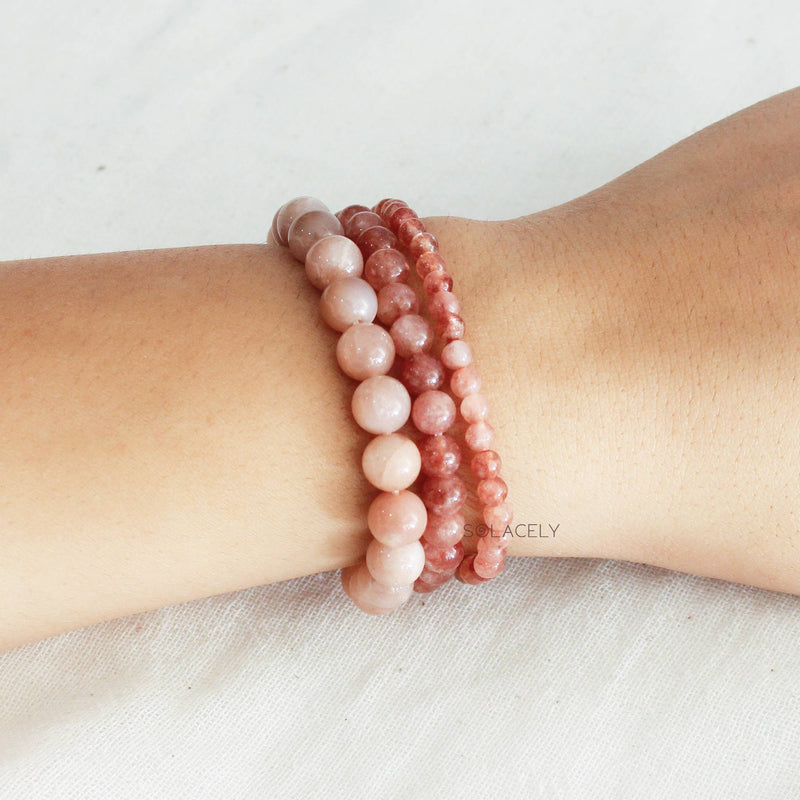
Sunstone and garnet cover warmth. Sunstone is a feldspar known for aventurescence, the glittery flash produced by tiny mineral inclusions catching light, and it is traditionally worn for openness and good humour. The sunstone guide has the full picture. Garnet, a group of silicate minerals spanning roughly 6.5 to 7.5 on the Mohs scale, is the deeper and more committed version of the same warmth.
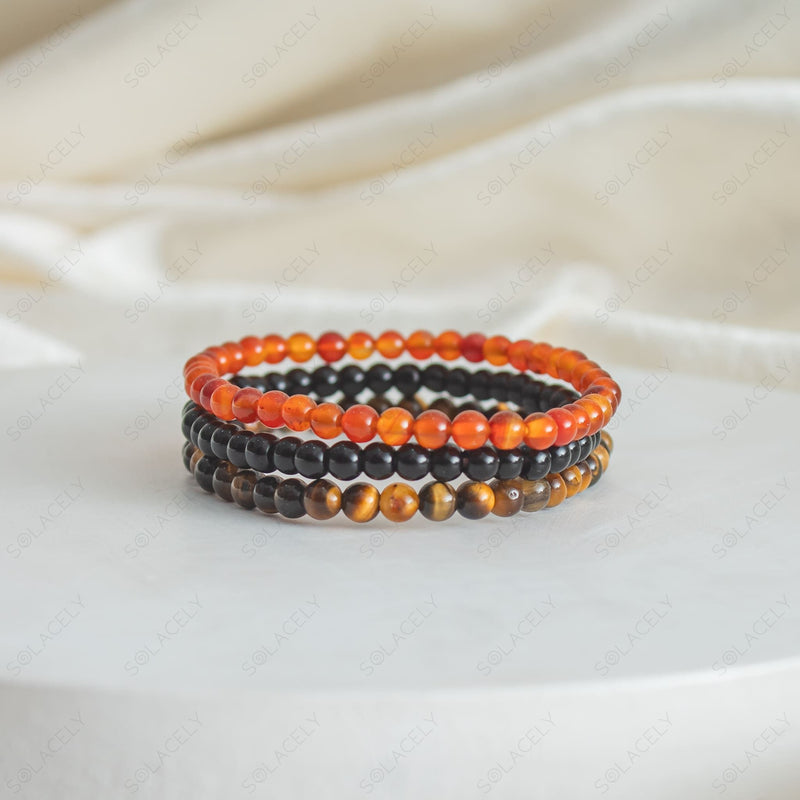
Tiger's eye and pyrite are the composed ones. Tiger's eye is a quartz with a silky banded chatoyancy, chosen traditionally for steadiness under pressure rather than sparkle. Pyrite is an iron sulfide, the brassy mineral behind the fool's gold nickname, and it is worn for the kind of magnetism that reads as capability. Citrine is the sunny counterpart, and rose quartz is the softener: the stone that keeps confidence from tipping into something colder.
| Stone | What it is | Traditionally chosen for | Care note |
|---|---|---|---|
| Carnelian | Orange chalcedony, quartz family | Nerve, drive, speaking up | Durable, colour can fade in long sun |
| Citrine | Yellow quartz | Optimism, visible good mood | Keep out of prolonged sunlight |
| Tiger's eye | Banded chatoyant quartz | Composure, steadiness under pressure | Hard wearing, avoid harsh cleaners |
| Sunstone | Feldspar with aventurescence | Warmth, openness, sociability | Softer than quartz, store separately |
| Garnet | Silicate mineral group | Depth, commitment, quiet intensity | 6.5 to 7.5 Mohs, soapy water is fine |
| Pyrite | Iron sulfide | Capability, drawing opportunity | Keep dry, never soak |
| Rose quartz | Pink quartz | Warmth, approachability | Fades in strong sun over time |
How do you use one before a social or professional situation?
Put it on before you leave, not when you arrive. The point of the piece is the twenty minutes of preparation, not the event itself. Choose something you can see or feel without touching it constantly, and pick one stone rather than four. A stack of competing intentions is just jewellery.
The practical version is simple, and it is closer to a routine than a ritual.
- Decide what you want from the situation in one sentence, out loud, while you fasten the piece. Vague intentions produce vague results.
- Wear it where you will catch it. A bracelet on your dominant wrist enters your eyeline every time you gesture or reach for a glass.
- Use it as a reset, not a rub. When your nerve dips mid conversation, touch the stone once, breathe out, and re-enter. Fiddling constantly does the opposite of composed.
- Give it a fixed home. A dish by the door means you actually wear it rather than finding it in a drawer three weeks later.
Which wrist? Traditional practice puts receiving stones on the left and projecting stones on the right, which would put carnelian and pyrite on the right. Wearers disagree constantly about this, and comfort tends to win. There is no rule here worth losing sleep over.
Can crystals help you attract opportunities rather than people?
The same stones get used for both, and the opportunity version is arguably the most practical application. Citrine and pyrite are the usual choices, kept on a desk rather than worn. What they do is keep a goal visible in your working environment, and a visible goal is one you are more likely to act on.
This is where placement beats wearing. A pyrite cluster near where you make decisions, a citrine piece by the laptop, a tiger's eye sphere within reach during difficult calls. Each of them sits in your field of view and keeps what you said you were working toward in plain sight, which is where good intentions tend to survive longest.
If a specific opening is what you are chasing, a job, a move, a first client, the dedicated guide to crystals for new opportunities is more targeted than a general magnetism piece. Attraction as a topic is broad by nature. Narrower intentions tend to produce better results, mostly because they are easier to act on.
How should you care for attraction stones?
Most of this group is quartz at 7 on the Mohs scale, so warm soapy water and a soft cloth will do. The two exceptions matter. Pyrite is an iron sulfide and should stay dry, and the coloured quartz varieties, citrine and rose quartz especially, can pale after long stretches in direct sunlight.
Pyrite deserves the clearest warning. Iron sulfide reacts with moisture and oxygen over time, which can dull the brassy shine and, on poorly stored specimens, cause the surface to break down. Wipe it with a dry cloth, keep it off bathroom shelves, and keep it out of water bowls entirely.
Sunstone is softer than the quartz group, so store it away from harder beads that will scratch it. Garnet handles a soft brush and warm water well. For everything here, put jewellery on last, after perfume, hairspray, and lotion have dried, because that film is what dulls a polish faster than anything else.
For energetic cleansing, moonlight, sound, or a short rest on selenite suits the whole set. Skip salt water, which is abrasive and unkind to pyrite in particular. Skip long sun sessions too, given what they do to coloured quartz.
The properties described here reflect traditional and cultural belief around crystals. They are not medical claims and are not a substitute for professional healthcare. If you are managing a health concern, speak to a qualified practitioner.
Sources
Written by Chetena Sharma. Reviewed by the Solacely editorial team.
Frequently asked questions
About the author


Written by Chetna Sharma, crystal healing practitioner and co-founder of Solacely. Chetna has worked with healing crystals for over a decade and curates Solacely's protective stone collection.