October has two birthstones: opal and tourmaline. Opal is a hydrated form of silica, prized for the shifting play of colour that seems to move across its surface. Tourmaline is a group of boron silicate minerals with one of the widest colour ranges of any gem family, from pink and green to bicoloured watermelon.
Key takeaways
- October's birthstones are opal and tourmaline. Opal is the older of the pair, and tourmaline joined it on modern birthstone lists during the twentieth century.
- Opal is hydrated silica, silicon dioxide with water held inside it. It is classed as a mineraloid rather than a crystalline mineral, and sits at roughly 5.5 to 6.5 on the Mohs scale.
- Opal's play of colour is structural. Light diffracts through an ordered arrangement of microscopic silica spheres, so the colour comes from the architecture of the stone rather than from a pigment.
- Tourmaline is a boron silicate group at 7 to 7.5 on the Mohs scale, covering pink rubellite, green verdelite, blue indicolite, black schorl and bicoloured watermelon tourmaline.
- Tourmaline is pyroelectric. It develops an electrical charge as its temperature shifts, a property traders noticed long before anyone could explain it.
- For a ring worn daily, tourmaline is the harder and more practical stone. Opal is the more spectacular, and it prefers gentler settings and gentler wear.
Why does October have two birthstones?
October has two birthstones because the modern lists give most months a choice. Opal is the traditional October stone, carried forward from older gem lists. Tourmaline was added during the twentieth century, and it brought both a harder gem and an enormous colour range to the same month.
Two options turn out to be genuinely useful. Anyone who wants an October piece for everyday wear can reach for tourmaline and its 7 to 7.5 hardness. Anyone who wants the stone to be the whole point of the piece can reach for opal instead. Our complete guide to birthstones by month sets out how all twelve months line up, including the months that carry three stones.
October also spans two zodiac signs. Libra runs until roughly the 22nd, and Scorpio takes over after that. Birthday jewellery given in October therefore lands in two quite different moods, which is another reason the pairing of a luminous stone and a colour-shifting mineral group works so well.
What is opal, and where does its colour come from?
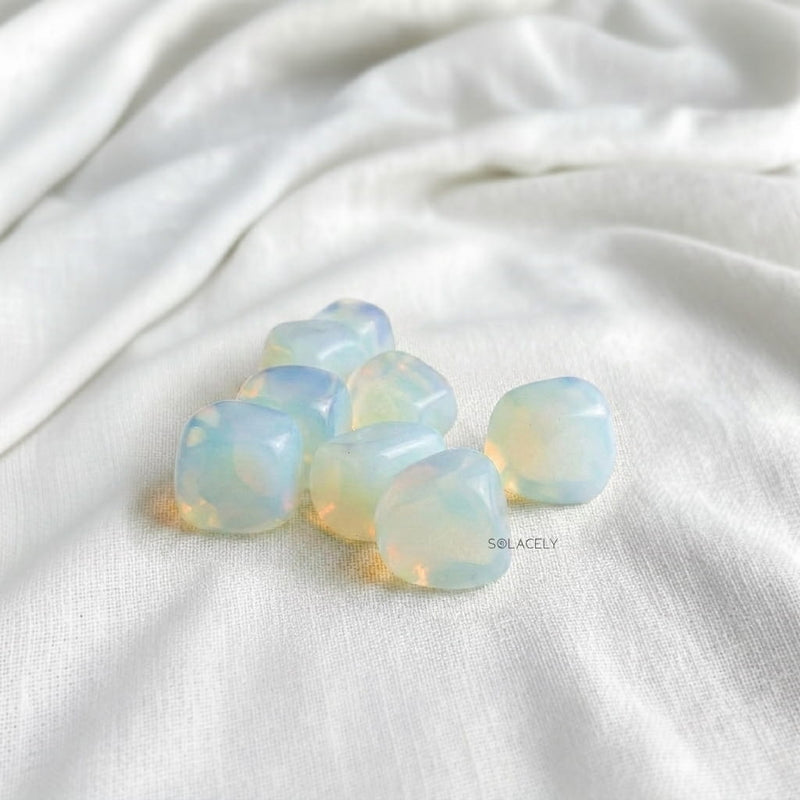
Opal is hydrated silica, silicon dioxide with water held within it, and it is a mineraloid because it lacks the repeating internal lattice of a true mineral. Its play of colour comes from light diffracting through an ordered arrangement of microscopic silica spheres, so the colour is structural rather than pigment.
Water content varies from a few percent to around twenty, with most gem opal sitting in the middle of that range. Those tiny spheres stack in a regular grid, and sphere size decides which colours you see. Smaller spheres send back blues and violets. Larger spheres reach through green and orange into red.
Gemmological references group opal by body tone as well as by colour play. White opal has a pale background, black opal a dark one that makes the flashes look electric, and crystal opal is translucent enough to let light pass right through. Boulder opal keeps a seam of its host ironstone attached. Mexican fire opal is prized for a warm orange body colour that may or may not carry play of colour at all. Australia has been the classic source for well over a century, with Ethiopian material now widely seen too.
Not every opal flashes. Common opal, sometimes called potch, has the same chemistry without the ordered sphere structure, and it is valued for its steady colour instead. Pink opal is the best known of these, soft and opaque, and it has its own following.
What is tourmaline, and why does it come in so many colours?
Tourmaline is not one mineral but a group of related boron silicates that share a crystal structure while swapping elements in and out of it. That chemical flexibility is why the group spans nearly every colour, and why a single crystal can change colour along its own length.
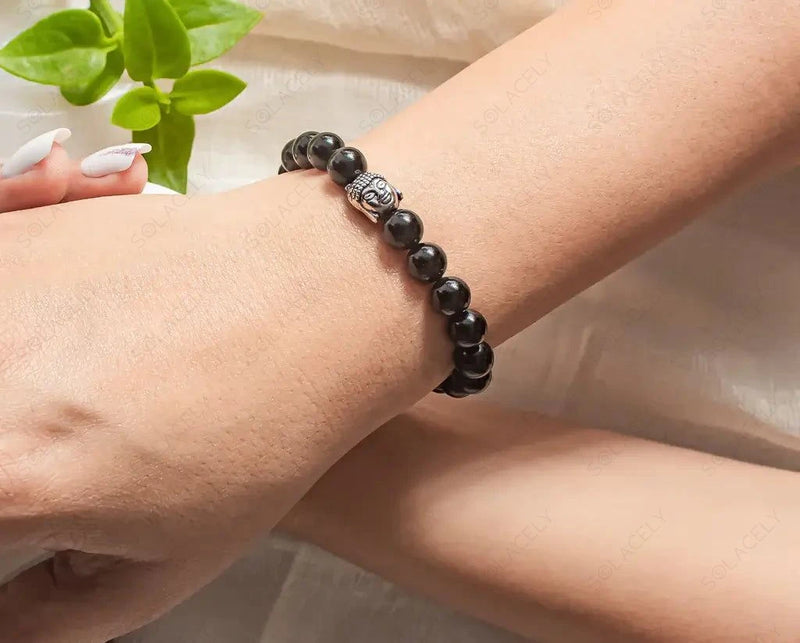
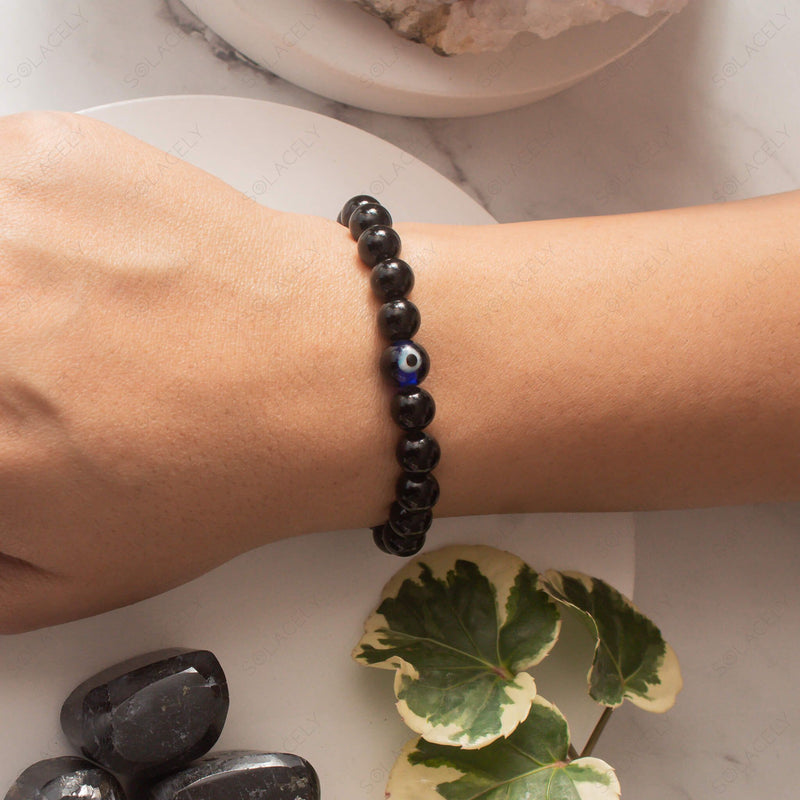
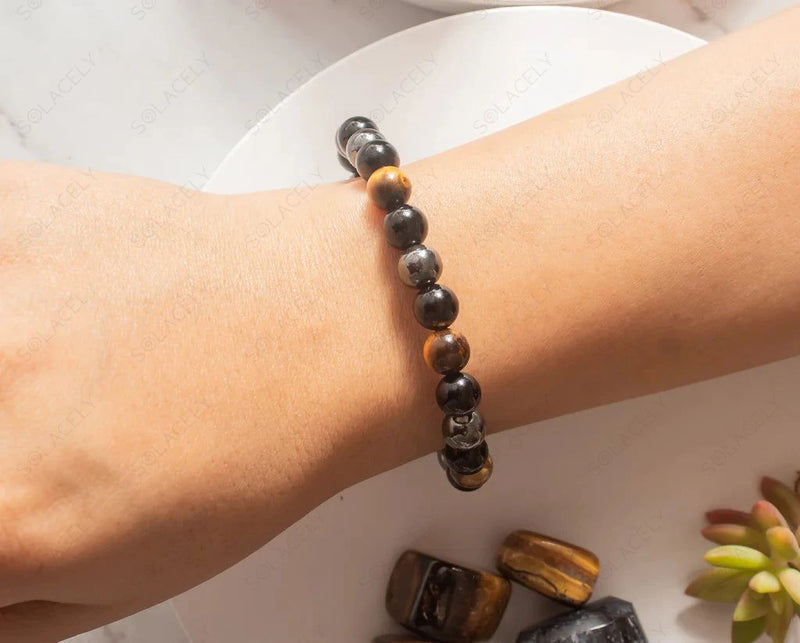
Trace elements do the work. Iron tends towards green, deep blue and black. Manganese gives the pinks and reds sold as rubellite. Copper produces the vivid blue and green of the Paraiba type. Blue tourmaline is called indicolite, green is verdelite, and black is schorl, which is the most abundant member of the group by a wide margin.
Watermelon tourmaline is the showpiece. A pink core sits inside a green rind, formed as the chemistry of the growing crystal shifted, and slices cut across the crystal display both colours at once. Tourmaline crystals grow as long prisms with a rounded triangular cross section and heavy lengthways striations, so the shape alone is recognisable on a specimen tray.
Then there is the property that makes tourmaline unusual among gems. It is pyroelectric, developing an electrical charge at opposite ends of the crystal as its temperature rises or falls, and it is piezoelectric under pressure too. Eighteenth century traders in Europe noticed that a warmed crystal would pull ash and light debris towards it, and the nickname for that behaviour stuck long before the physics was understood. Black tourmaline carries the same property, which is part of why it has such a long history as a carried stone.
Opal or tourmaline: which should you choose?
Choose tourmaline if the piece will be worn every day, especially as a ring. At 7 to 7.5 on the Mohs scale it copes with knocks and household dust far better. Choose opal when you want the stone itself to be the event, and keep it for pendants, earrings and occasional rings.
| Feature | Opal | Tourmaline |
|---|---|---|
| What it is | Hydrated silica, a mineraloid | A group of boron silicate minerals |
| Mohs hardness | 5.5 to 6.5 | 7 to 7.5 |
| Source of colour | Diffraction through stacked silica spheres | Trace elements such as iron, manganese and copper |
| Signature look | Shifting flashes across the surface | Saturated single colours, or two in one crystal |
| Best settings | Pendants, earrings, bezel-set rings | Any setting, including everyday rings |
| Main care point | Can craze if it dries out or meets sudden heat | Avoid steam, ultrasonics and strong heat |
Setting style matters more for opal than for almost any other gem. A bezel wraps metal all the way round the edge and takes the impact that a claw setting would pass straight to the stone. If you want an October ring that never comes off, look at our notes on choosing crystals for rings before you commit to a design.
Budget behaves differently across the two as well. Tourmaline gives you an enormous colour spread at many price points, so you can chase a specific shade. Opal is priced far more on the individual stone, since no two patterns of colour play are alike.
What are October's birthstones traditionally kept for?
Opal is long associated with imagination, hope and creative expression, and people reach for it when they want their inner life to show a little more. Tourmaline is kept by colour: pink for the heart, green for growth and renewal, black for grounding and steadiness through a demanding stretch.
That colour-led approach is worth understanding, because it is how most people actually pick a tourmaline. Rubellite and other pink stones are worn as a reminder of self-compassion and warmth towards others. Green verdelite is traditionally kept for renewal, for the feeling of something starting again after a long pause. Indicolite, the blue variety, is associated with clear speech and honest conversation. Our guide to what crystal colours mean follows the same logic across the wider stone family.
Opal's associations lean towards the imaginative and the expressive rather than the practical. It is often given for a milestone birthday, worn as a reminder of hope, or kept on a writing desk or a studio bench where creative work happens. Many people find that its constant shift of colour is exactly the point: the stone never looks quite the same twice, and that is a useful thing to have in view.
For October birthdays specifically, a common approach is to wear both. Opal for the occasion piece, and a tourmaline in your birth colour of choice for the day to day.
How do you care for opal and tourmaline?
Opal holds water within its structure, so it can craze, meaning fine surface cracking, if it dries out or meets a sudden temperature change. Tourmaline is harder and steadier but dislikes heat and steam. Warm soapy water and a soft cloth suit both stones, and neither belongs in an ultrasonic cleaner.
Opal care. Keep it away from prolonged dry heat: radiators, hot car dashboards, direct summer sun on a windowsill. Take rings off before cleaning products, hairspray and swimming pools. Clean with lukewarm water, a drop of mild soap and a soft cloth, then dry gently. Store opal on its own in a soft pouch rather than loose in a box where harder stones can scratch it. Assembled opal pieces, where a thin layer is backed or capped, should be wiped rather than soaked.
Tourmaline care. Skip the steam cleaner and the ultrasonic bath, since many tourmalines carry internal fractures and liquid inclusions that dislike vibration. Strong heat can shift the colour, so keep it away from jeweller's torches during repairs and mention the stone to anyone resizing a ring. Warm soapy water and a soft brush handle everyday cleaning. Store tourmaline separately from sapphire and diamond, which will scratch it.
One last practical note for both. Check claw settings once a year, especially on a ring you wear constantly. A loose claw is the most common way a good stone gets lost.
Crystals and birthstones are kept for reflection, comfort and personal meaning. They are not medicines, and they are not a substitute for professional medical, psychological or financial advice. If you have a health concern, please speak to a qualified practitioner. Keep small stones away from young children, who may swallow them, and never place stones in drinking water.
Sources
Written by Chetena Sharma. Reviewed by the Solacely editorial team.
Frequently asked questions
About the author


Written by Chetna Sharma, crystal healing practitioner and co-founder of Solacely. Chetna has worked with healing crystals for over a decade and curates Solacely's protective stone collection.