Crystal colour has three causes: an element built into the mineral itself, trace impurities inside an otherwise colourless structure, or light bouncing around inside the stone. Colour also carries traditional meaning in crystal practice, and most people choose a stone by its shade long before they learn its mineral name.
Key takeaways
- Idiochromatic minerals are coloured by an element essential to their chemistry. Malachite is green because it is a copper carbonate mineral.
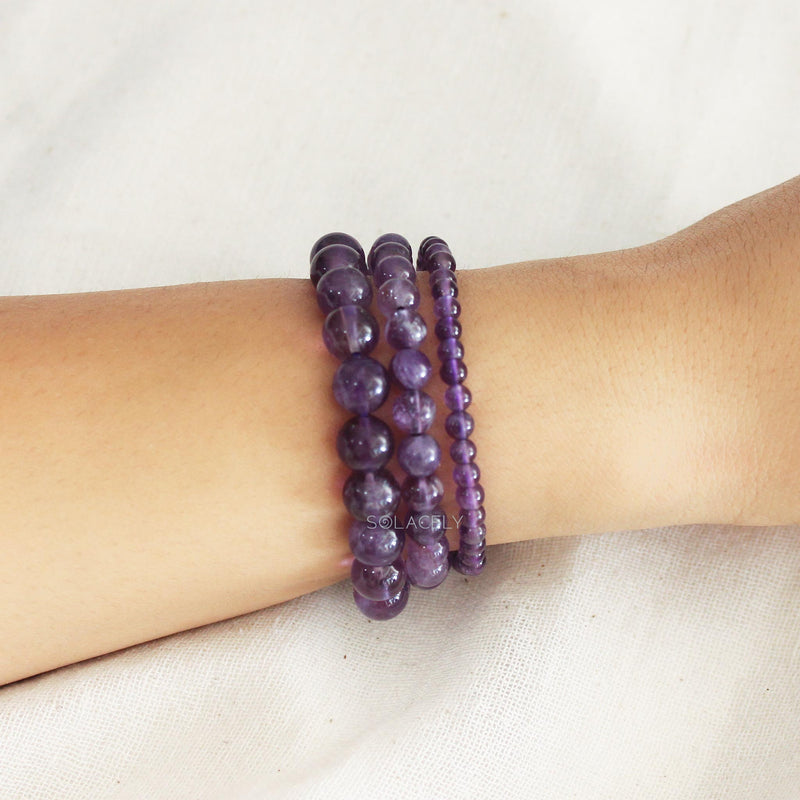
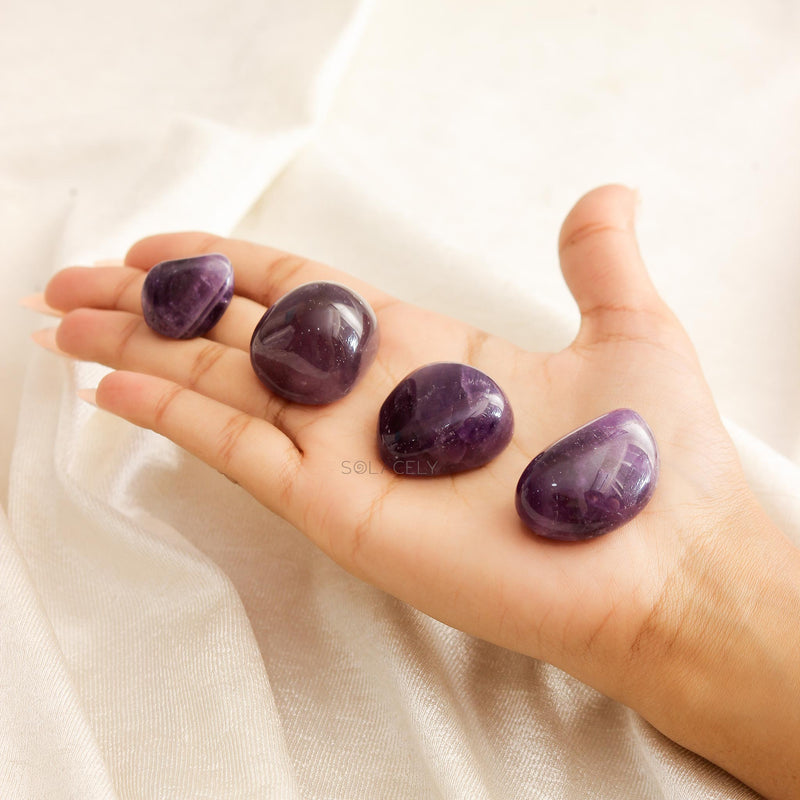
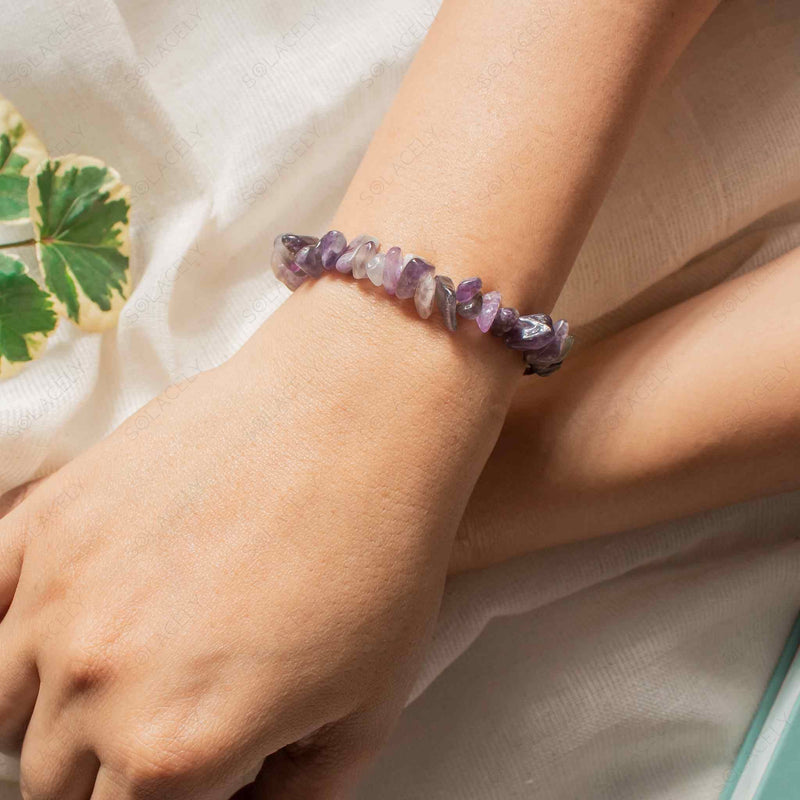
- Allochromatic minerals are colourless when pure. Amethyst's purple comes from iron plus natural irradiation, according to the GIA.
- Pseudochromatic colour comes from structure, not pigment. Labradorescence, opal's play-of-colour and aventurescence are all light effects.
- Colour cause predicts care. A colour written into the formula holds its tone in bright light, while impurity colours such as amethyst purple prefer indirect light.
- Colour is a starting filter. Pick the family that matches your intention, then read the individual stone before you choose.
Why are crystals coloured at all?
Colour is what your eye registers after a mineral absorbs part of the light passing through it. Most of that absorption comes from transition metals: iron, copper, chromium, manganese, titanium and vanadium. Gemmologists sort the causes into three groups, and every coloured stone you own falls into one of them.
The three groups are idiochromatic, meaning coloured by an essential ingredient, allochromatic, meaning coloured by trace impurities, and pseudochromatic, meaning coloured by structure and light rather than chemistry. Defects in the crystal lattice, usually called colour centres, sit alongside these and explain stones such as smoky quartz.
Why should a buyer care? Because the cause tells you which stones have reliable colour and which vary wildly between specimens. It also tells you which colours survive sunlight and which fade, which is the single most useful practical takeaway from the whole subject.
Which crystals get their colour from their own chemistry?
Idiochromatic minerals carry a colouring element in their basic formula, so the colour stays consistent across every specimen. Malachite is the textbook case. Malachite is a copper carbonate hydroxide mineral, and copper is exactly what makes it green. Take the copper out and you no longer have malachite.
Peridot works the same way. Iron is a structural component of the olivine family, so peridot is always green. Only the shade shifts, from yellowish olive to a deeper bottle green, depending on how much iron sits in the structure. You will never find a colourless peridot, and you will never find a blue one.
Other familiar examples: rhodochrosite is pink because of manganese, azurite is blue because of copper, and turquoise owes its blue-green to copper as well. When colour is written into the formula, you always know what you are getting, which makes these stones the easy ones to choose from a photograph.
Why do trace impurities change a stone's colour so much?
Allochromatic minerals are colourless when chemically pure, and tiny amounts of impurity do all the work. Emerald is beryl coloured green by chromium, vanadium or both. Plain beryl is colourless. A fraction of a percent of chromium creates one of the most valuable gems on earth.
Corundum tells the same story twice over. Pure aluminium oxide is colourless. Add chromium and you get ruby red. Add iron and titanium instead and you get blue sapphire. Same mineral, same hardness, completely different stone in the eye and on the price list.
Quartz is the family most crystal buyers actually own. The GIA attributes amethyst's purple to iron impurities combined with natural irradiation inside the earth. Warming quartz to bring out its golden tones is a long established and entirely stable practice across the coloured stone trade, so choose the shade you actually want to look at.
Where does colour come from structure rather than chemistry?
Pseudochromatic colour is an optical effect, not a pigment. Opal's play-of-colour is light diffracting through an ordered arrangement of microscopic silica spheres. There is no green or blue ingredient anywhere in the stone. Disturb the arrangement and the colour goes with it.
Labradorite runs on the same principle. Its blues and golds, called labradorescence, come from light reflecting off thin internal layers that formed as the feldspar cooled and separated. Tilt the stone and the flash moves across the surface. That movement is the giveaway that you are looking at structure rather than chemistry.
Aventurescence is the third familiar example. The glitter in green aventurine and in sunstone comes from tiny reflective platelets of mica or hematite suspended inside the stone. Tiger's eye and its rolling band of light, called chatoyancy, is another version of the same trick.
How do you choose between stones that share a colour?
Start with how the colour is made, because that decides how a piece behaves once it is yours. Colour written into a mineral's formula, like malachite's copper green, holds its tone almost anywhere you put it. Colour that comes from trace impurities is more delicate and prefers indirect light.
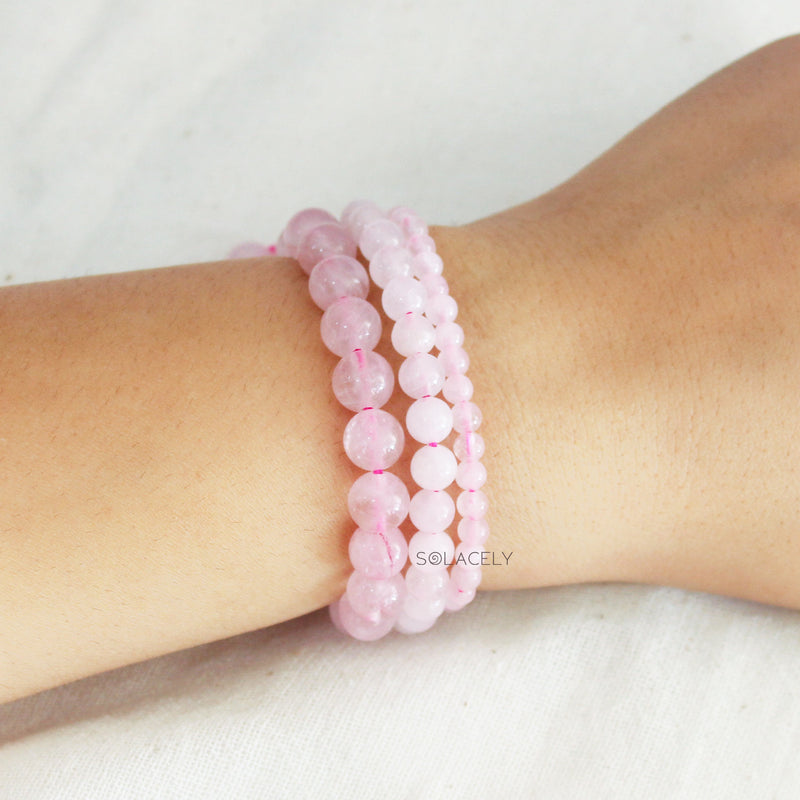
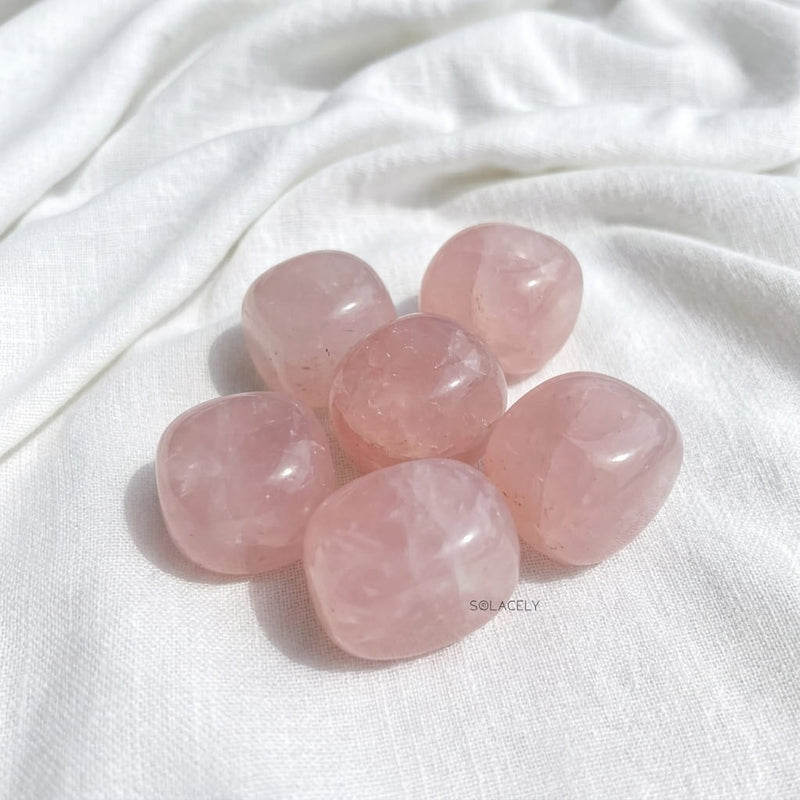
So the first question is where the piece will live. A bright south-facing windowsill suits the idiochromatic stones: malachite, peridot, rhodochrosite, turquoise. A bedside table or a shaded shelf is the better home for amethyst, kunzite, rose quartz and fluorite, whose purples and pinks stay richest out of strong sun.
The second question is how much the exact shade matters to you. Idiochromatic stones look near enough identical piece to piece, so choosing one from a photo is predictable. Allochromatic stones vary widely, because a fraction of a percent of iron or chromium separates pale lilac from deep royal purple. If you want a particular tone, pick the individual piece.
The third question applies only to the structural colours, and it is the one people forget. Labradorite, opal, moonstone and sunstone need movement and a light source to do anything at all. Under flat overhead lighting they can look quiet. Tilt them towards a window and the flash arrives. Judge them in the light they will actually live in.
Two blues make the point neatly. Turquoise takes its blue-green from copper in its own formula, so it reads the same steady shade in every piece and in any light. Labradorite's blue is a light effect that arrives only at the right angle. One colour is a constant, the other is a moment you catch.
What does each crystal colour traditionally mean?
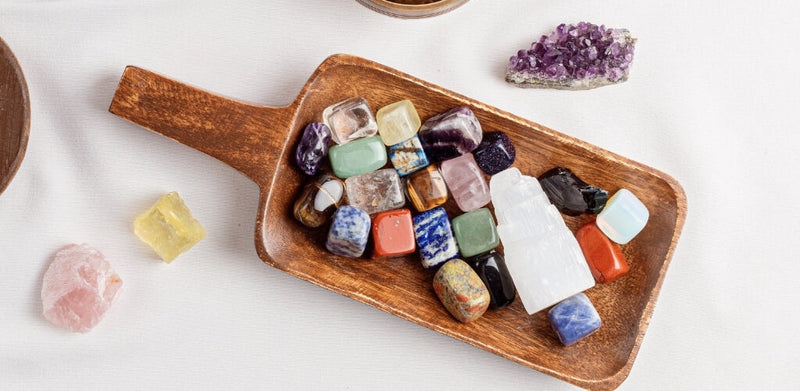
Colour is the shortcut most people use to choose a stone, and the associations are old and fairly consistent across sources. They come down through generations of crystal practice, which is why most people walk into a shop looking for a colour rather than a mineral name. The table below sets out the eight colour families you will meet most often, with the stones that anchor each one.
| Colour | Common stones | Traditional association |
|---|---|---|
| Purple | Amethyst, lepidolite, fluorite | Rest, intuition, calm |
| Green | Green aventurine, jade, malachite | Growth, luck, the heart |
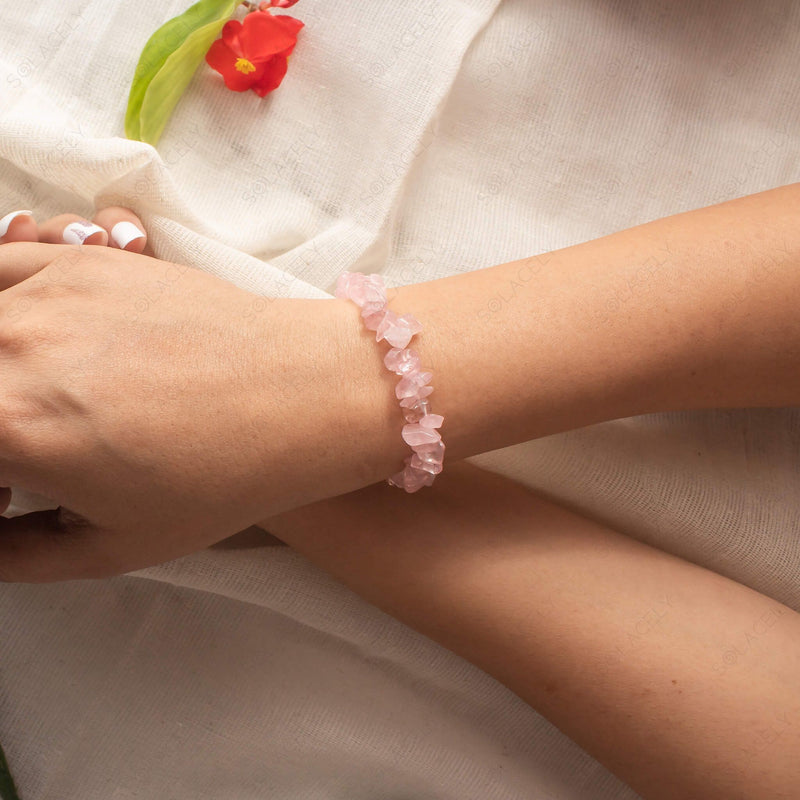
| Pink | Rose quartz, rhodonite, pink opal | Love, self-kindness |
| Black | Black tourmaline, obsidian, onyx | Grounding, boundaries |
| Blue | Lapis lazuli, sodalite, blue lace agate | Voice, clarity, truth |
| Red | Garnet, red jasper, bloodstone | Drive, vitality, courage |
| Yellow and orange | Citrine, carnelian, sunstone | Confidence, warmth |
| White and clear | Clear quartz, selenite, moonstone | Clarity, a clean reset |
Purple is the rest and intuition family. Amethyst leads it, with lepidolite and purple fluorite behind, and the fuller guide to purple crystals covers the rest of the group. Green is the growth colour, built around green aventurine, jade and malachite. The green crystals guide explains why that family attracts so many money intentions.
Pink gets chosen for self-kindness at least as often as for romance, and the pink crystals guide lists the usual stones. Black is the opposite pole, used for grounding and for holding a boundary. Black tourmaline, obsidian and onyx all sit in the black crystals guide. Blue is the communication family, from lapis lazuli through to blue lace agate, and it is covered in the blue crystals guide.
Red, orange and yellow share the warm end of the spectrum: garnet and red jasper for drive, carnelian and sunstone for warmth, citrine for confidence. White and clear stones, including selenite, clear quartz and moonstone, tend to be used for a general reset rather than one specific goal.
One thing worth saying plainly: colour is a starting filter, not a rule. Two green stones can be used very differently. Malachite is bold and traditionally worn for transformation, while green aventurine is gentle and worn for luck. Pick the colour family first if that helps, then read the individual stone before you buy.
The properties described here reflect traditional and cultural belief around crystals. They are not medical claims and are not a substitute for professional healthcare. If you are managing a health concern, speak to a qualified practitioner.
Sources
Written by Chetena Sharma. Reviewed by the Solacely editorial team.
Frequently asked questions
About the author


Written by Chetna Sharma, crystal healing practitioner and co-founder of Solacely. Chetna has worked with healing crystals for over a decade and curates Solacely's protective stone collection.