Green crystals get their colour from a handful of specific elements: chromium and vanadium in emerald and green aventurine, copper in malachite, iron built into peridot's own chemistry. That difference explains why some greens are gem hard and others scratch with a fingernail. Here is how the main ones compare.
Key takeaways
- Most green crystals owe their colour to chromium, vanadium, copper or iron. The element responsible changes with the mineral, not with the shade.
- Peridot is idiochromatic: iron is part of its essential chemistry, so it is never anything but green.
- Jade is two separate minerals, jadeite and nephrite, sold under a single trade name.
- Hardness varies hugely. Malachite sits at 3.5 to 4 on the Mohs scale and fluorite at 4, while aventurine and jade handle daily wear.
- Meaning and intention here follow long standing crystal tradition, while the buying decision comes down to hardness and care.
What makes green crystals green?
Green comes from a small set of elements sitting inside the crystal structure. Chromium and vanadium colour emerald, copper colours malachite, and iron colours peridot. Which element is at work depends on the mineral, not on how light or dark the stone looks. Two stones of identical shade can be coloured by completely different chemistry.
Mineralogists divide this into two cases. Allochromatic minerals are colourless when chemically pure and pick up colour from trace impurities, which is why beryl appears as emerald, aquamarine and morganite. Idiochromatic minerals contain the colouring element as an essential part of their composition. Those minerals only ever show one colour range, because you cannot remove the chromophore without changing the mineral itself.
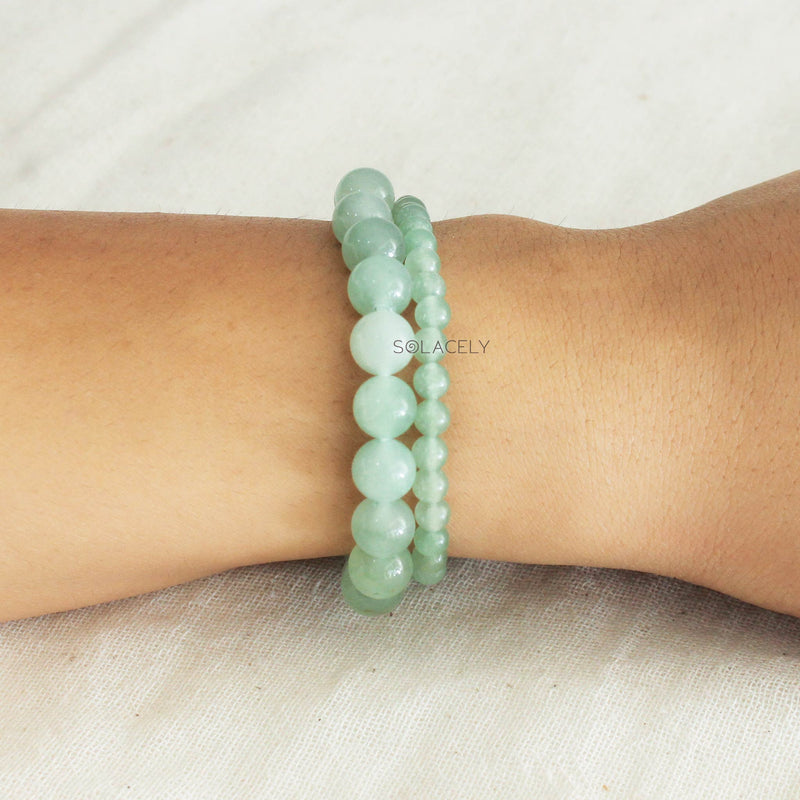
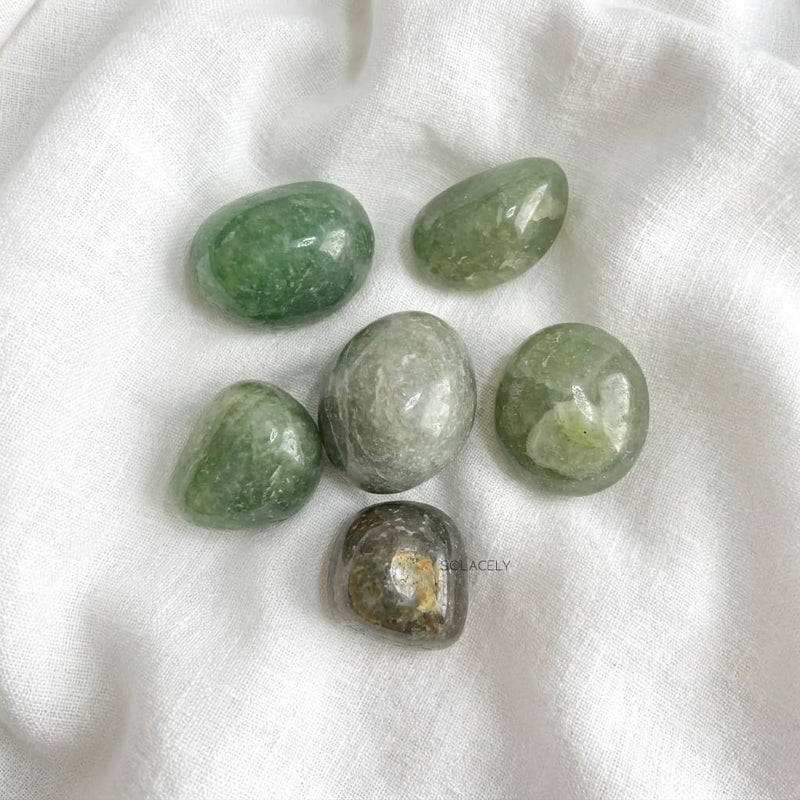
Emerald is the textbook allochromatic green. It is the green variety of beryl coloured by chromium, vanadium or both, and the rest of the beryl family runs blue, pink or colourless without those elements. Green aventurine works on a similar principle at a far lower price point: the green comes from fuchsite, a chromium-bearing mica, scattered through quartz as tiny platelets. Those platelets also produce the glittery aventurescence the stone is named for.
Peridot and malachite sit on the other side of the line. Peridot is gem quality olivine, and iron is written into the mineral's formula, so peridot is always some version of green or yellow green. Malachite is a copper carbonate hydroxide, and copper is doing both jobs at once: holding the structure together and producing the banded green. Strip the copper out and there is no malachite left. For the same chemistry applied across every other colour family, our guide to how crystal colour works is the broader reference.
Which green crystals are most commonly used?
Ten stones cover most of what you will meet: green aventurine, jade, malachite, emerald, peridot, moss agate, green fluorite, prehnite, amazonite and green onyx. They come from completely unrelated mineral families, and their hardness runs from 3.5 to 8, which matters far more when buying than the colour does.
| Stone | Mineral family | Mohs | Care note |
|---|---|---|---|
| Green aventurine | Quartz with fuchsite mica | 7 | Daily wear, warm soapy water |
| Jadeite jade | Pyroxene | 6.5 to 7 | Tough enough for rings |
| Nephrite jade | Amphibole | 6 to 6.5 | Very tough, avoid strong heat |
| Malachite | Copper carbonate | 3.5 to 4 | Wipe dry only, no ultrasonic |
| Emerald | Beryl | 7.5 to 8 | Often fractured, clean gently |
| Peridot | Olivine | 6.5 to 7 | Avoid acids and thermal shock |
| Moss agate | Chalcedony | 6.5 to 7 | Hardwearing, soap and water |
| Green fluorite | Halide, calcium fluoride | 4 | Perfect cleavage, chips on impact |
| Prehnite | Calcium aluminium silicate | 6 to 6.5 | Mild soap, avoid knocks |
| Amazonite | Feldspar, microcline | 6 to 6.5 | Cleavage planes, no ultrasonic |
| Green onyx | Chalcedony | 6.5 to 7 | Keep out of prolonged sun |
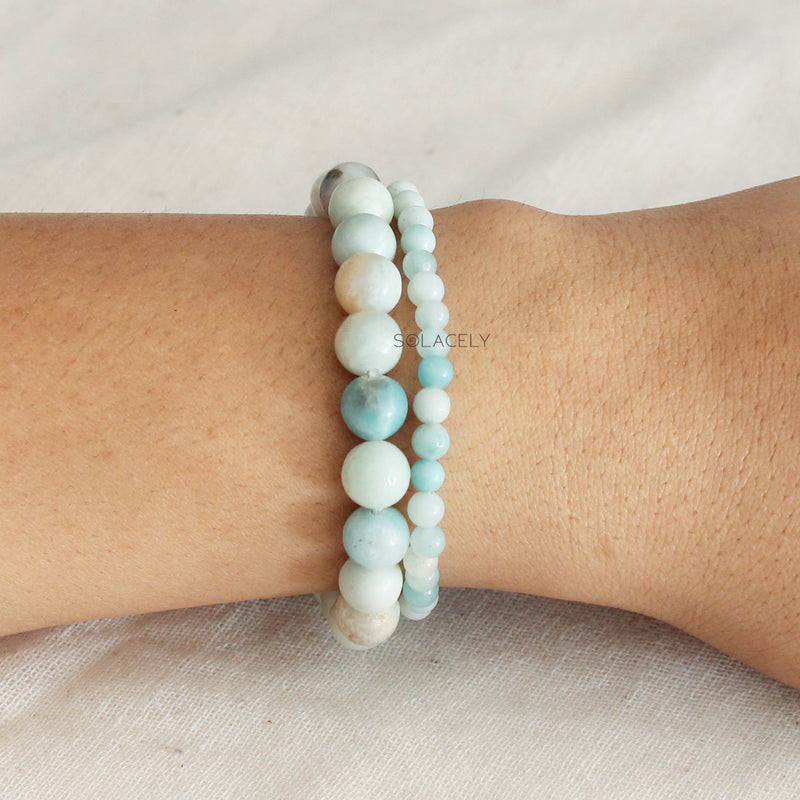
A few of these names have interesting stories behind them. Moss agate carries no banding, so it sits slightly apart from the true agates: it is chalcedony holding green inclusions of chlorite or hornblende that happen to look like plant growth caught in stone. Green onyx belongs to the same chalcedony family, cut and polished for beads, cabochons and carving. Amazonite is a feldspar, and its blue green colour is generally attributed to trace lead sitting within the crystal structure rather than to copper, which is a neat piece of chemistry for a stone named after a river it was never mined beside.
If you want depth on a single stone, there are full guides to green aventurine, to malachite and to peridot. The short version is straightforward. Aventurine is the workhorse: inexpensive, tough and forgiving. Malachite is the most striking and the most fragile. Peridot is the one you will meet as a faceted birthstone, since it is the traditional stone for August.
Why is jade two different minerals?
Because the trade name was fixed long before the mineralogy was. Gemmological reference works treat jade as two distinct minerals: jadeite, a pyroxene, and nephrite, an amphibole from the tremolite to actinolite series. Both were carved as jade for thousands of years before chemistry could tell them apart, and the single name stuck.
The practical differences are real. Jadeite is slightly harder and takes the vivid green of imperial jade, which, fittingly, comes from chromium again. Nephrite is a touch softer but exceptionally tough, because its structure is a dense mat of interlocking fibres rather than blocky crystals. That toughness is why nephrite was worked into axe heads and blades in Neolithic China and by Maori carvers in New Zealand, long before anyone wore it as jewellery.
For buyers this matters in one blunt way: hardness and toughness are not the same measurement. Mohs hardness tells you what will scratch a stone. Toughness tells you whether it will survive being dropped. Jade scores modestly on the first and extremely well on the second. Our green jade guide goes further into grades and treatments.
What are green crystals traditionally associated with?
Green is tied to the heart chakra in the chakra system, and to growth, renewal, luck and money in most modern crystal practice. Those associations come from colour symbolism, which is why stones from completely separate mineral families are gathered together the moment they happen to look green.
That gathering is part of the appeal. A colour tradition will happily set malachite, a soft copper carbonate from oxidised copper deposits, beside emerald, a hard beryl formed under very different conditions, and both earn their place through the same green. So choose on the symbolism that speaks to you and on how a piece feels in the hand. Both are good reasons, and they are the ones people actually use.
The older layer of meaning is more specific. Jade carried moral and protective significance in Chinese culture for millennia. Peridot was mined on Zabargad in the Red Sea and, in the ancient world, was sometimes confused with emerald. Malachite was ground for pigment and worn as an amulet in Egypt. Those documented cultural uses sit underneath the modern association with abundance and give it a long history to stand on.
How do you choose between them?
Start with how the stone will be used, then narrow by intention. If the piece is a ring or an everyday bracelet, hardness rules out malachite and fluorite before you get to meaning. If it will sit on a shelf, the fragile ones are back in play and you can choose purely on look and association.
- Money and opportunity. Green aventurine first, jade second. Both are hard enough to wear constantly, which matters if the point is a daily reminder.
- Heart chakra and emotional work. Prehnite or green jade. Both are quiet rather than loud, and prehnite is easy to find as tumbles.
- Focus and mental order. Green fluorite, kept somewhere it will not be knocked.
- Calm communication. Amazonite, which straddles green and blue and is often grouped with throat chakra stones.
- Patience and slow growth. Moss agate, traditionally the gardener's stone.
- Statement and display. Malachite, on a shelf rather than on a finger.
One more filter that people skip: match the stone to the occasion. Emerald and fine jadeite are gem purchases, graded and certified, and they suit a piece meant to be kept for decades or passed on. Aventurine, moss agate and prehnite cost very little, which makes them easy to buy in several shapes at once and move around the house as your intentions shift through the year.
How should you care for green crystals?
Sort them by hardness before you sort them by anything else. The Mohs hardness scale is the quickest test to apply: anything below about 5 can be scratched by ordinary household dust and grit, which is exactly where malachite at 3.5 to 4 and fluorite at 4 land.
Malachite needs the most restraint. It is soft, it is a carbonate so acids attack it, and prolonged water contact can dull the polish. Wipe it with a dry or barely damp cloth, never use an ultrasonic or steam cleaner, and keep it away from vinegar, lemon and household cleaners. If you are cutting or sanding raw malachite, do it wet and wear a mask, because copper carbonate dust is not something to breathe.
Fluorite has a second problem on top of softness. It has perfect cleavage in four directions, which means a knock at the wrong angle can split a clean plane straight off the stone rather than chipping an edge. Fluorite also dislikes sudden temperature change. Keep it out of hot water and off hard surfaces.
Aventurine, jade, moss agate and green onyx are the easy ones. Warm water, a drop of mild soap and a soft brush will do, followed by a full dry. Emerald is hard, though it typically holds fine internal fractures, and clarity enhancement with oil is long established practice across the trade, so an emerald takes gentle hand cleaning rather than ultrasonic. Store everything separately, since quartz will scratch almost every softer green on this list.
The properties described here reflect traditional and cultural belief around crystals. They are not medical claims and are not a substitute for professional healthcare. If you are managing a health concern, speak to a qualified practitioner.
Sources
Written by Chetena Sharma. Reviewed by the Solacely editorial team.
Frequently asked questions
About the author


Written by Chetna Sharma, crystal healing practitioner and co-founder of Solacely. Chetna has worked with healing crystals for over a decade and curates Solacely's protective stone collection.