Rose quartz and carnelian pair gentleness with warmth. Rose quartz is kept for self-compassion and carnelian for courage and getting started, so the combination is chosen by people who want to be kinder to themselves and braver at the same time.
Key takeaways
- Rose quartz is traditionally kept for self-compassion; carnelian for courage and beginning things.
- Both are quartz family stones at 7 on the Mohs scale, so the set takes daily wear comfortably.
- The pairing suits people rebuilding confidence rather than chasing ambition.
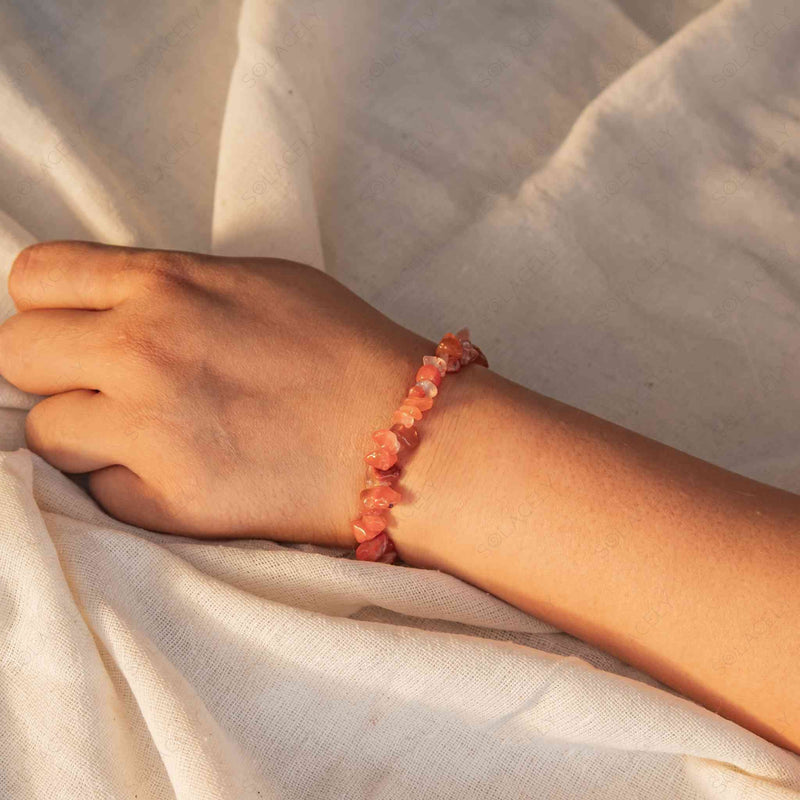
- Carnelian's warm orange against rose quartz's milky pink makes a naturally handsome strand.
- Keep both out of long direct sunlight, which softens their colour over time.
What each stone brings
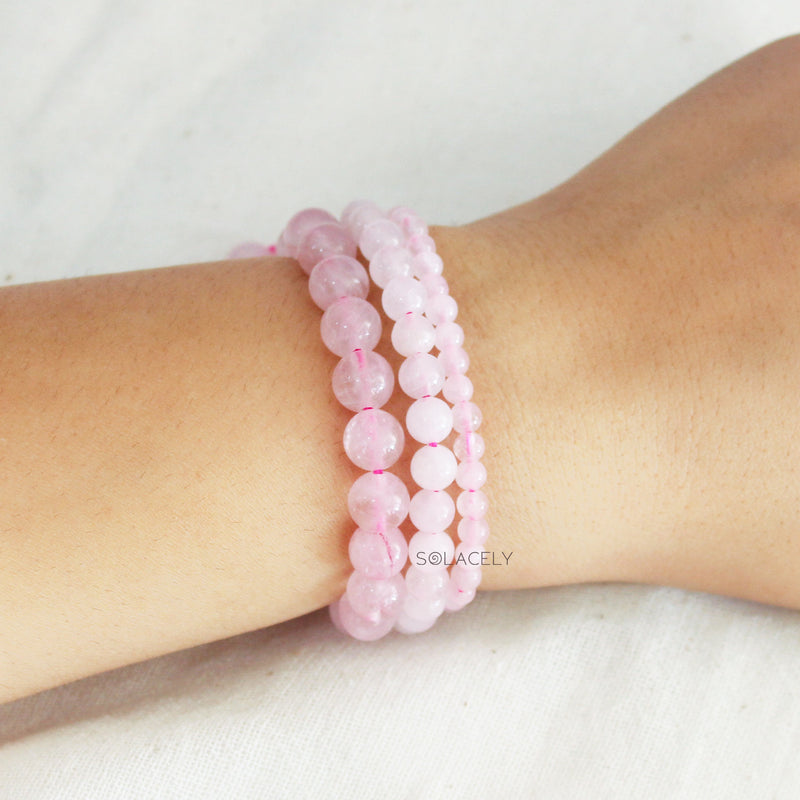
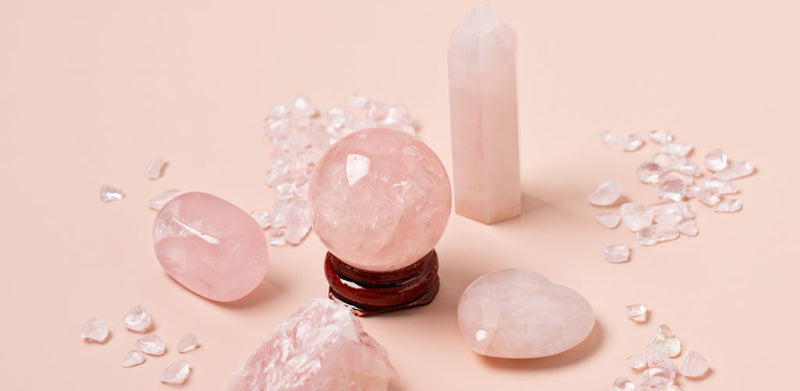
Rose quartz is the softer half and the better known. Its milky pink comes from fine inclusions distributed through the quartz, which is what gives it that gentle inner glow rather than a clear sparkle. In tradition it is the stone of the heart, kept far more often for kindness toward yourself than for romance.
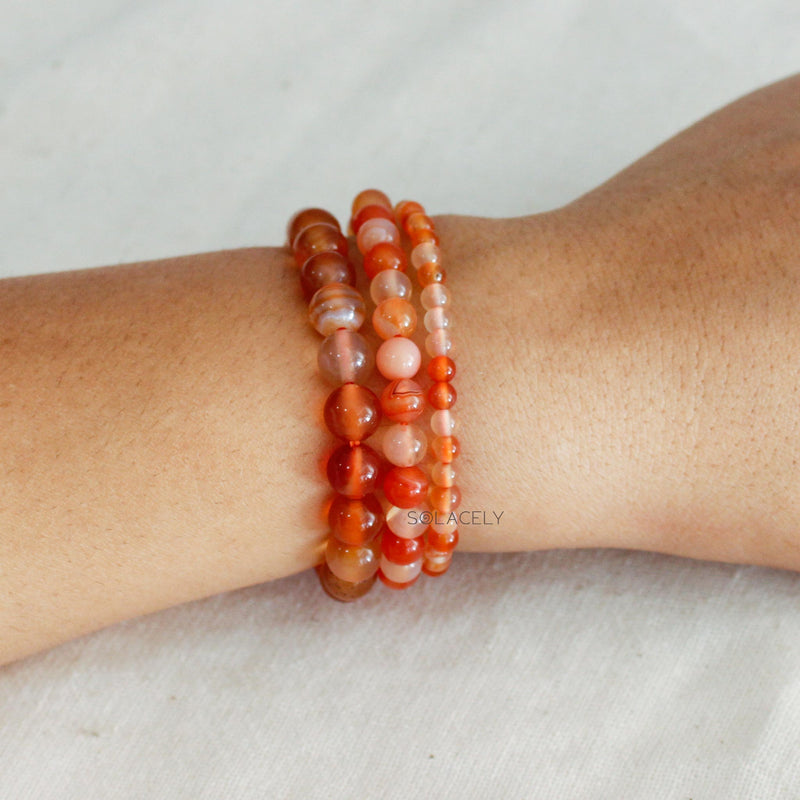
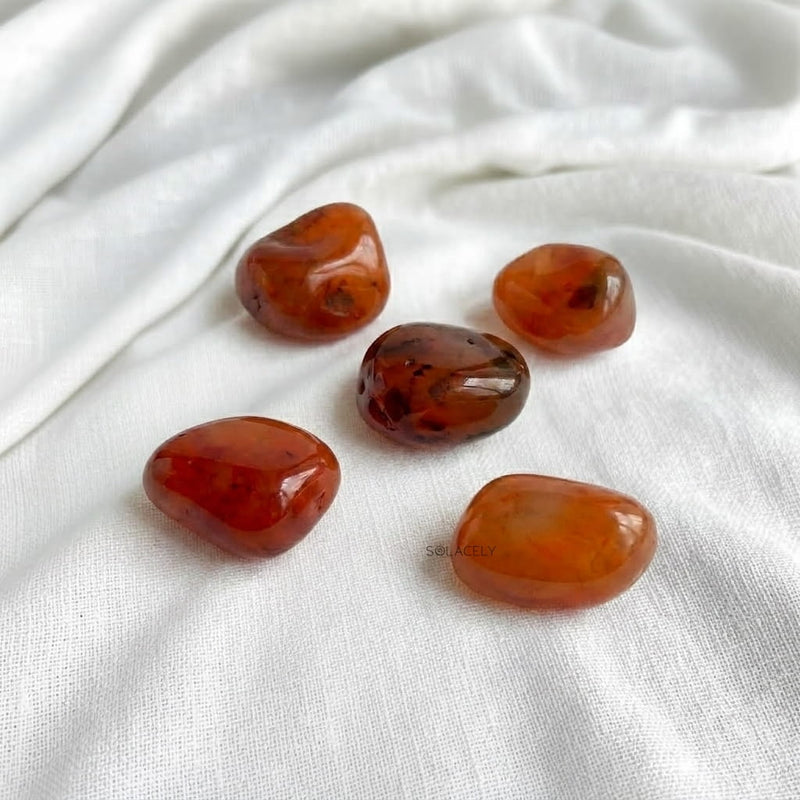
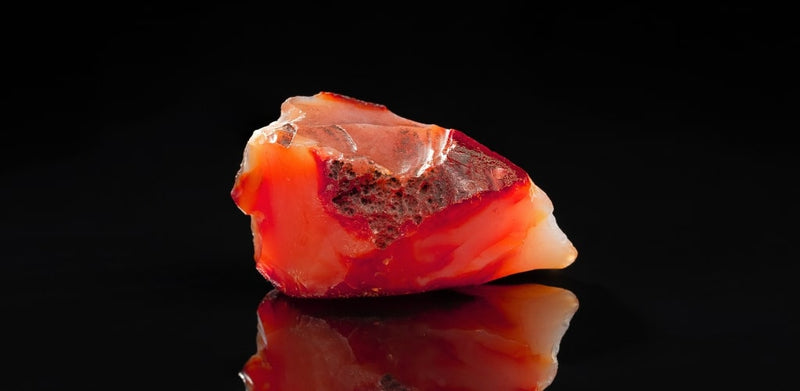
Carnelian is the warm half. It is a chalcedony, a quartz made of crystals too fine to see, coloured orange to reddish brown by iron. It has been worn for thousands of years and set into Roman signet rings, and its traditional associations are courage, drive and the physical energy to act.
Put simply, rose quartz is kept for how you treat yourself and carnelian for what you are willing to attempt. The rose quartz guide and the carnelian guide cover each in full.
Why the pairing works
Most confidence sets are built entirely from warm, forward stones, and they can feel like pressure to somebody whose confidence is low precisely because they have been hard on themselves. This pairing solves that by putting the softness first.
Rose quartz does the work of making the attempt feel allowed. Carnelian supplies the push once it does. That order matters, and it is why people who have found pure drive stones unhelpful often get on much better with this combination.
The recurring picture is somebody returning to something after a knock. Going back to a hobby they used to be good at, dating again, putting work forward for the first time in a while. In each case the barrier is not really capability, it is self-criticism, and that is exactly the gap the pairing addresses.
Comparing rose quartz and carnelian
| Rose quartz | Carnelian | |
|---|---|---|
| Family | Quartz | Chalcedony, a microcrystalline quartz |
| Look | Milky translucent pink | Warm translucent orange to red |
| Hardness | 7 Mohs | 7 Mohs |
| Traditionally kept for | Self-compassion, comfort, the heart | Courage, drive, beginning things |
| Chakra association | Heart | Sacral |
| Care note | Keep out of long direct sun | Keep out of long direct sun |
The shared hardness is what makes this pairing so easy to live with. Both stones sit at 7, so they can share a strand, a pouch and a daily routine without either marking the other.
How to wear the pair
Because both stones are equally durable, you can arrange them however you like, which is unusual and genuinely freeing.
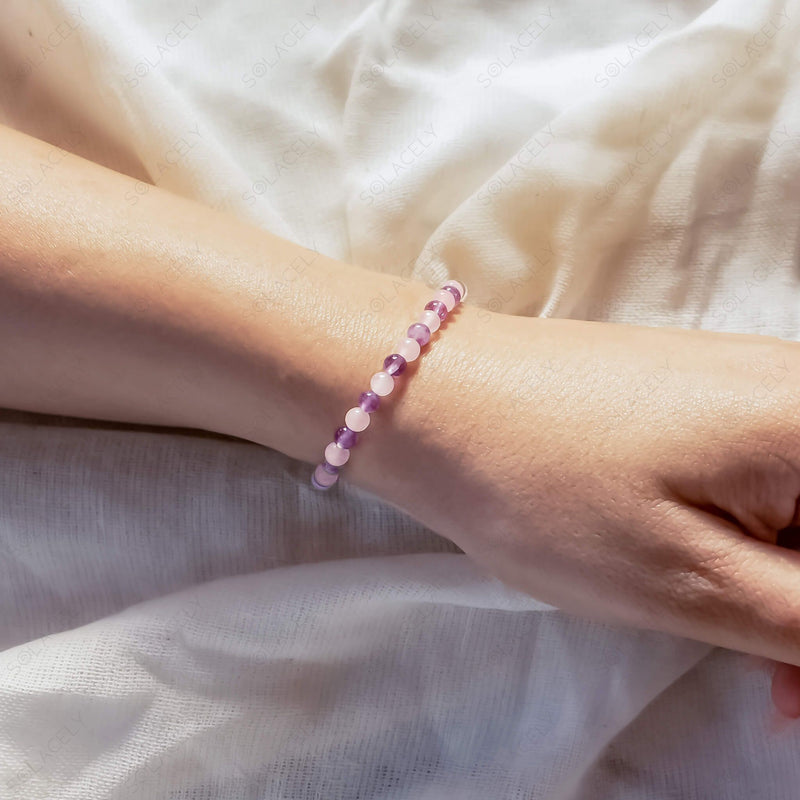
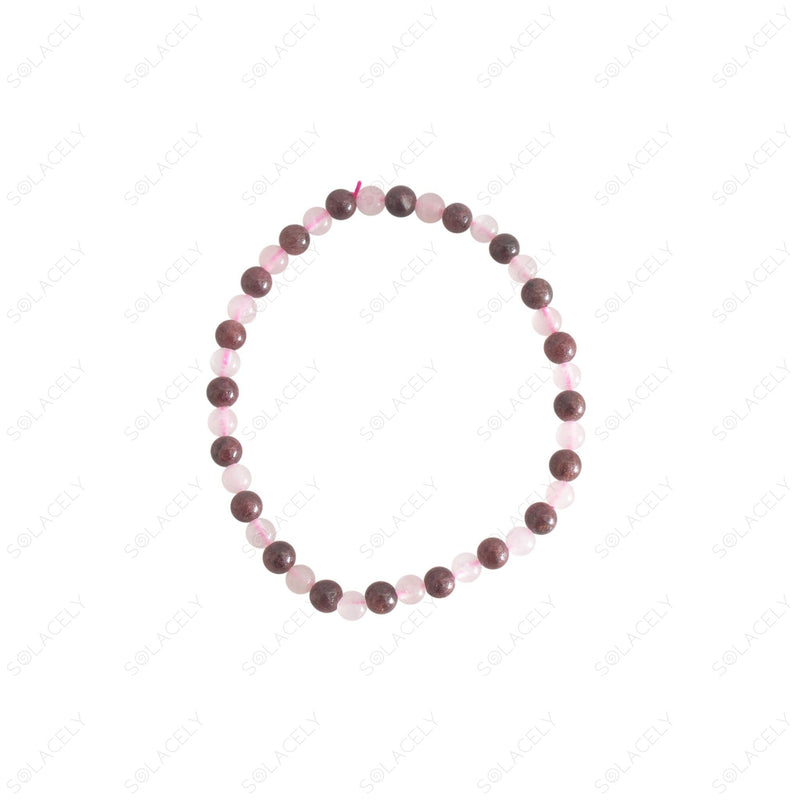
- Alternating bracelet. The most popular format, and the colours look excellent together.
- Two strands stacked. Rose quartz nearest the skin, carnelian outside, is the common arrangement.
- Pendant. A carnelian drop with rose quartz beads, or the reverse if you want the softer stone forward.
- Pocket pair. One tumbled stone of each, carried together through a demanding week.
- Rings. Either works, since both handle daily wear at 7 on the Mohs scale.
Most people report reaching for the carnelian side of the set on days that need action and the rose quartz side on days that need patience, which is a natural way to use a two-stone pairing. For the sacral centre that carnelian sits with, see crystals for the sacral chakra.
Choosing the two stones
With rose quartz, look for an even, soft pink with light sitting inside the stone. The characteristic milkiness is what you want rather than something to avoid, since it is what gives the stone its glow.
With carnelian, the range runs from a light apricot through vivid orange to a deep brownish red, and all of it is properly carnelian. Warming stone to bring out colour is one of the oldest practices in the gem trade, used since antiquity and entirely stable, so simply choose the shade you want to look at.
For a strand, bead size shapes the feel more than anything else. Smaller beads read delicate and everyday; larger beads make a statement. If you want the set to be quiet daily company rather than a feature, 6 to 8 mm is the comfortable range.
Caring for both
This is one of the easiest pairs to look after, because the two stones want exactly the same things. Warm water, mild soap, a soft brush and a full dry suits both, and neither needs anything more elaborate.
The one shared habit worth keeping is to store them away from a bright windowsill. Both rose quartz and carnelian can soften in colour after long hours of strong sun, so a drawer, a dish on a bedside table or a shelf out of the light is kinder over the years.
For energetic cleansing, moonlight, sound or a rest on selenite all suit the pair, and there is no need for salt with either stone. If you would like a third stone for the same intention, crystals for confidence covers what pairs naturally alongside.
Who this combination suits
It suits people rebuilding rather than pushing. Anyone coming back to something after a setback, anyone whose confidence has been dented rather than absent, and anyone who has tried a pure drive stone and found it a bit relentless will get more from this pairing.
It suits less well anyone who needs calm above all, since carnelian is a warm and forward stone and there is nothing settling about it. If rest is the real requirement, a purely gentle pairing is the better answer, and the carnelian can wait until the energy for it returns.
Carnelian's long history
Few stones have been in continuous use as long as carnelian. It appears in Mesopotamian burials, in Egyptian jewellery alongside lapis lazuli and turquoise, and throughout the Roman world, where it was the favoured material for signet rings because hot sealing wax does not stick to polished chalcedony.
That practical detail is a lovely piece of history: the stone was chosen for a job it happened to be good at, and the symbolism of authority and identity grew around the use rather than the other way round. Carved carnelian intaglios survive in museum collections in remarkable numbers.
Its warmth also gave it a long association with vitality and courage across those same cultures, which is the thread that carries into modern crystal practice. When people describe carnelian as the stone of action, they are repeating something very old.
Building on the pair
Two stones is usually enough for this intention, and a third only earns its place if there is a specific gap to fill.
- Add clear quartz if you want a neutral anchor to sit between the two moods.
- Add citrine if the confidence you want is professional rather than personal.
- Add amethyst if the rebuilding is happening alongside poor sleep, kept at the bedside.
- Stop at three. Past that the set stops meaning one thing and becomes an arrangement.
The properties described here reflect traditional and cultural belief around crystals. They are offered for reflection and wellbeing and are not medical advice, a diagnosis, or a treatment for any condition. If you are managing low mood, anxiety or a health concern, please speak with a qualified healthcare professional. Keep small stones away from young children, and never place crystals in drinking water.
Sources
Written by Chetena Sharma. Reviewed by the Solacely editorial team.
Frequently asked questions
About the author


Written by Chetna Sharma, crystal healing practitioner and co-founder of Solacely. Chetna has worked with healing crystals for over a decade and curates Solacely's protective stone collection.