Smoky quartz and aquamarine are paired for grounded calm and the courage to communicate. Smoky quartz, a grey-brown grounding stone, keeps you settled and steady, while aquamarine, the blue-green stone of the sea, brings calm, courage, and clear, honest communication. Together they are used to stay grounded and composed under pressure, and to speak your mind calmly and bravely. It is a steadying, courage-and-clarity ritual for hard conversations and high-stakes moments, not a magic fix.
Key Takeaways
- Smoky quartz is a grey-brown quartz linked with grounding, protection, and releasing stress, tied to the root chakra.
- Aquamarine is a blue-green beryl linked with calm, courage, and clear, honest communication, tied to the throat chakra.
- Together they pair a grounded, steady body with calm courage and clear speech, which suits high-pressure moments and hard conversations.
- The honest benefit is a steadying cue to stay composed and speak bravely, not a literal effect on the outcome.
- These are traditional, belief-based associations, not medical facts. Treat the pair as a calming ritual and seek support for real anxiety.
What are smoky quartz and aquamarine?
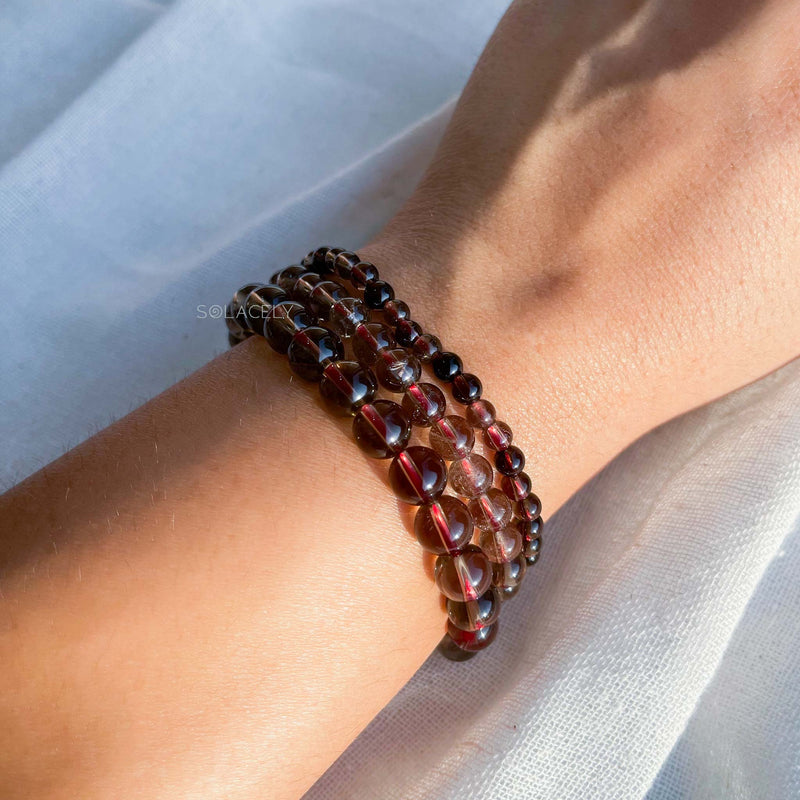
Smoky quartz is a grey-to-brown member of the quartz family. According to the Gemological Institute of America, quartz occurs in many colours, and smoky quartz owes its tint to natural radiation acting on the crystal over long periods. Tradition reads its dark, earthy tone as grounding and protective, tying it to the root chakra and to feeling safe, settled, and present.
Aquamarine is the blue-green variety of the mineral beryl, the same family as emerald. As Encyclopaedia Britannica notes, aquamarine is a pale blue to blue-green beryl, its name coming from the Latin for sea water, and it has long been treasured for its clear, watery colour. In crystal tradition that cool sea-blue links it to the throat, to calm, courage, and clear, honest communication.
So one stone is dark and grounding, the other cool and clear. That contrast is the point of the pairing: smoky quartz settles the body, aquamarine calms the mind and frees the voice. If you want the wider map of stones by intention, our guide to crystals for different purposes lays them out.
Why pair smoky quartz with aquamarine?
The pairing works because speaking up under pressure needs two things: a steady base and a calm, courageous voice. Smoky quartz provides the grounding, the settled, secure feeling that keeps you from being swept away by nerves, while aquamarine provides the calm courage and clarity to actually say what you mean. Grounded steadiness plus brave, clear speech is the whole idea.
Think of when this suits you: a difficult conversation you have been avoiding, a presentation or interview, standing up for yourself, or any high-stakes moment when nerves threaten to make you freeze or babble. Smoky quartz keeps you rooted and composed; aquamarine keeps you calm and clear enough to speak with courage. That mix is exactly what pressure-filled communication needs.
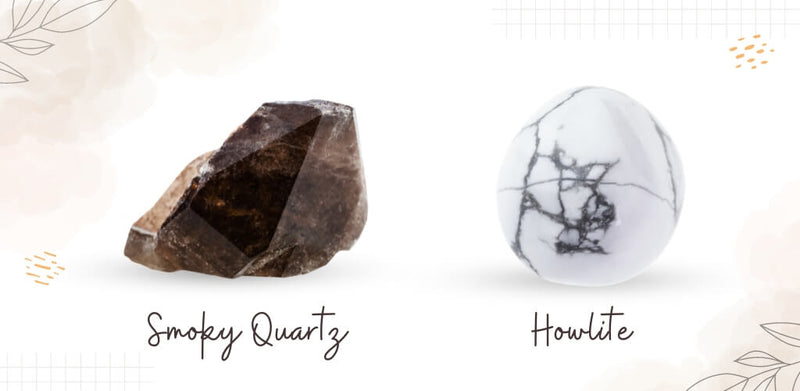
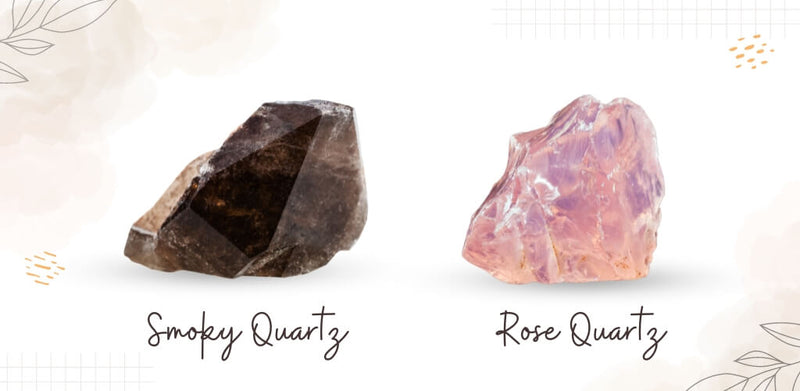
This gives it a distinctly courageous, expressive flavour among the smoky-quartz pairings. Where smoky quartz with rose quartz opens the heart, and with howlite quiets a racing mind, smoky quartz with aquamarine steadies you to speak up. We cover those siblings in smoky quartz and rose quartz and smoky quartz and howlite.
Smoky quartz: grounding and composure
Smoky quartz is the great grounding stone, traditionally used to feel settled, safe, and present, and to release stress. Its dark, earthy colour reads as the ground itself, warm and stable, which is why people reach for it when they feel scattered, anxious, or up in their heads and want to come back down into their body. Under pressure, that grounding is the foundation for staying composed.
The honest mechanism is weight and attention. Holding a smooth, cool, slightly heavy stone and letting your breath slow is a simple, tactile way to anchor yourself in the moment, which is what grounding means in practice. Before a nerve-racking conversation, that anchor keeps your feet on the ground so the nerves do not sweep you away.
Tradition also frames smoky quartz as protective, a stone that helps you feel shielded and less exposed, which matters when you are about to say something difficult. That steady, secure feeling is the base the pairing rests on, because it is far easier to find your voice once your body feels settled rather than braced and jittery.
Aquamarine: calm courage and clear communication
Aquamarine is the stone of calm courage and clear communication, traditionally used to soothe the nerves, steady the emotions, and help you speak your truth clearly. Its sea-blue colour has long been a talisman for calm and courage, once carried by sailors for safe passage, which is why tradition ties it to facing rough waters, literal or emotional, with a composed, clear head.
The realistic benefit is a calming cue for brave speech. Holding aquamarine before a hard conversation, breathing slowly, and setting an intention to speak calmly and clearly is a small mindfulness practice, and the U.S. National Center for Complementary and Integrative Health notes that mindfulness can help many people manage stress and steady the mind. A calmer state makes it far easier to find your words and say them well.
Because aquamarine is tied to the throat and clear expression, it suits anyone who freezes, rushes, or loses their thread when the stakes feel high. Its calm, courageous clarity complements smoky quartz's grounding perfectly: one keeps you settled, the other keeps your voice steady, so you can speak up without being swept away by nerves.
How to use smoky quartz and aquamarine together
The pair is simple to use, and the aim is to stay grounded and speak with calm courage. Keep both stones where they remind you to stay steady and clear, and pair them with slow breathing and a clear intention. Here are the common ways people combine them.
- Before a hard talk. Hold both for a minute, breathe slowly, and set an intention to stay grounded and speak calmly and clearly.
- Two-hand hold. Rest smoky quartz in one hand and aquamarine in the other, feeling grounded before you find your voice.
- Carry the pair. Keep both in a pocket on a day with a presentation, interview, or difficult conversation ahead.
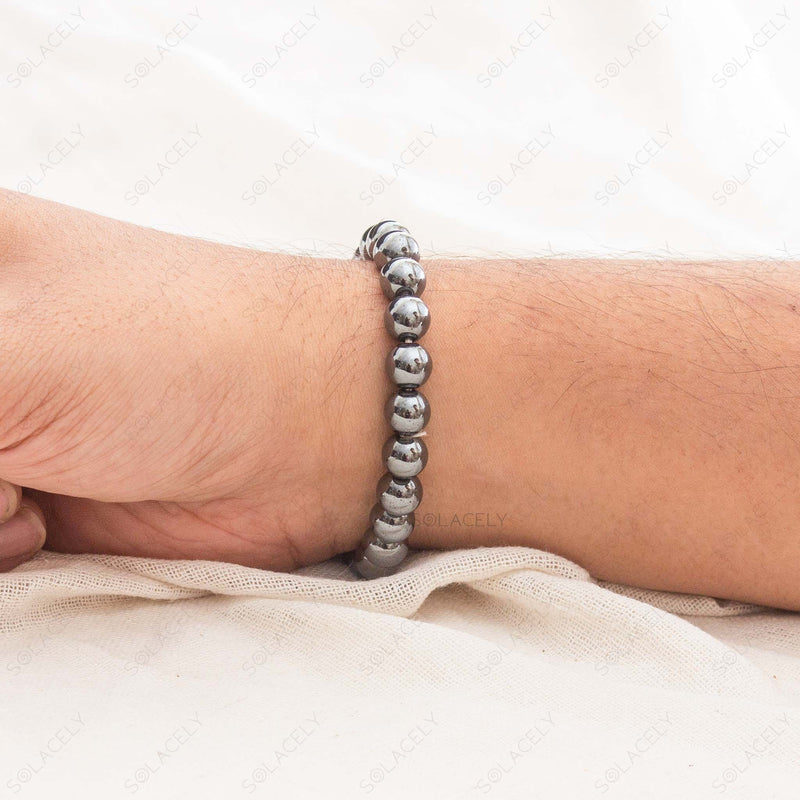
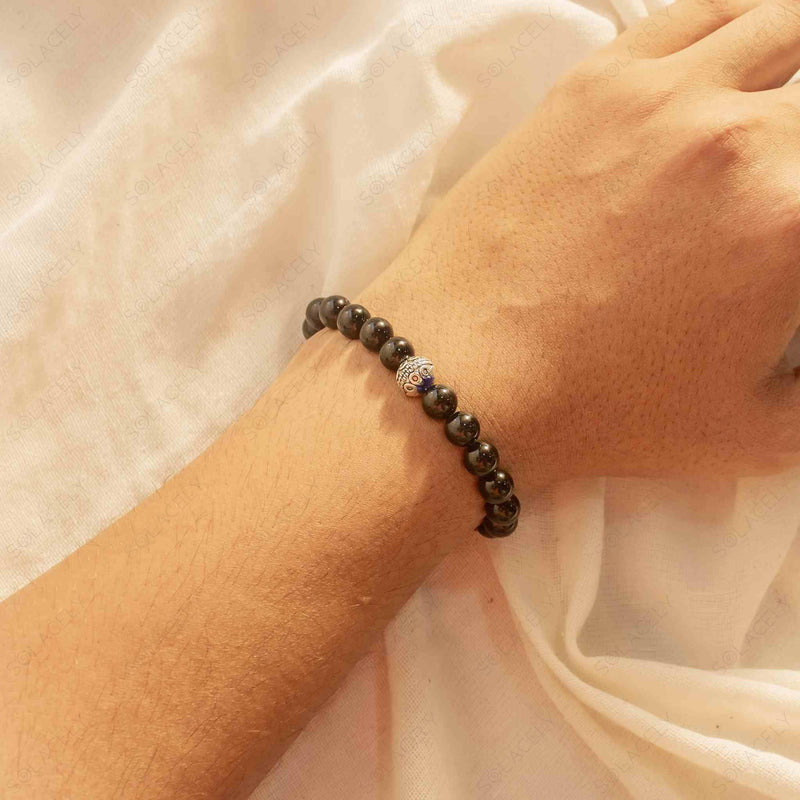
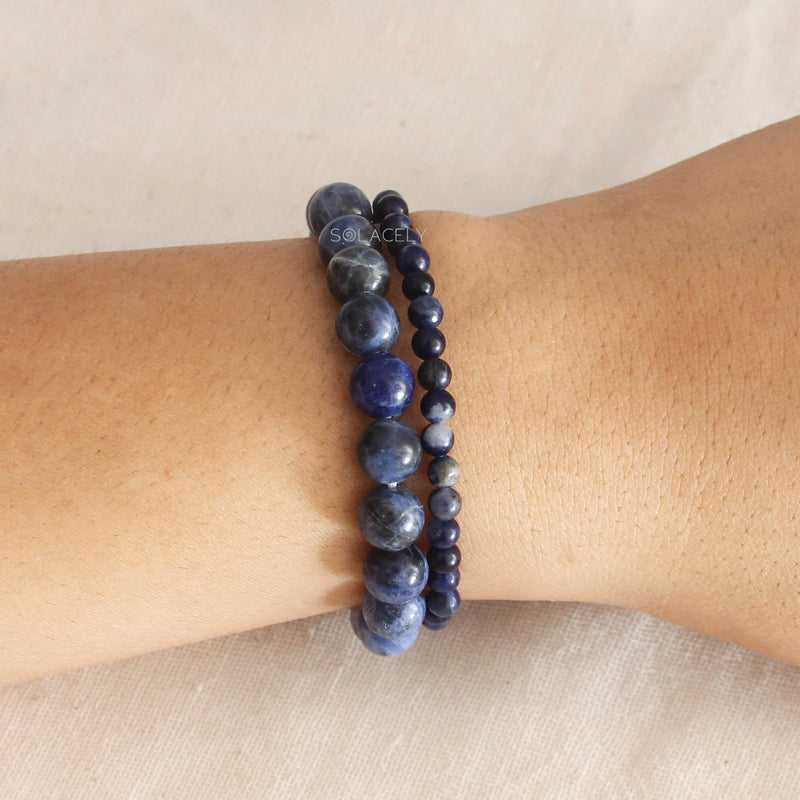
- Wear them. A smoky quartz and aquamarine bracelet or pendant keeps the grounded-and-clear theme with you.
- Pre-speaking ritual. Hold the pair before public speaking to settle nerves and steady your delivery.
Whichever you choose, let the breath lead and the stones follow as a cue. Smoky quartz grounds, aquamarine clears and encourages, and slow breathing carries the composure into how you speak, so your voice stays steady even when the moment feels big. To reset the stones and refresh the intention, our step-by-step on how to cleanse and charge crystals covers the gentle methods.
Choosing and caring for your stones
Both stones are lovely and reasonably hard-wearing, so choose pieces whose colour and feel you like. Good smoky quartz ranges from pale, hazy grey to deep warm brown; good aquamarine shows a clear, pretty pale blue to blue-green, sometimes almost watery. Tumbled stones, faceted aquamarine, and jewellery all work well for this calming, courage-building practice, so choose the form that fits how you like to carry or hold a stone.
Caring for them is straightforward, as both are durable. Smoky quartz is quartz and rates 7 on the Mohs hardness scale, while aquamarine, being beryl, is a touch harder at about 7.5 to 8, so both handle everyday wear and a wipe with a soft cloth. Keep aquamarine out of prolonged strong sunlight, which can affect its colour over time, and protect faceted pieces from hard knocks.
If you like to cleanse the stones to reset the intention, both tolerate the gentle methods well: cool running water, a night in indirect moonlight, or sound from a singing bowl. To understand how these stones map to the body's traditional energy centres, the grounding root and the expressive throat, our primer on the seven chakras explained sets out the wider framework.
Common mistakes with this pairing
This grounded-courage duo works best as a cue for your own calm, clear speaking, not a substitute for actually speaking up. Keep these few slips in mind and the pair stays genuinely supportive.
- Staying silent. Aquamarine supports brave speech, but you still have to say the thing. The stones settle you; the words are yours.
- Skipping preparation. For a presentation or interview, the stones calm your nerves but cannot do the prep. Rehearse as well.
- Expecting composure without the breath. The calm comes from grounding and slow breathing, not the stones alone. Let the breath lead.
- Confusing courage with bluntness. Speaking bravely still means speaking kindly. Use the calm to be clear, not harsh.
- Leaving them unused. A stone in a drawer steadies nothing. The pre-moment cue is the point.
Sources
- Gemological Institute of America - Quartz description and colour varieties (smoky quartz): https://www.gia.edu/quartz
- Encyclopaedia Britannica - Aquamarine (beryl) gem description: https://www.britannica.com/science/aquamarine
- National Center for Complementary and Integrative Health (NIH) - Meditation and Mindfulness: What You Need To Know: https://www.nccih.nih.gov/health/meditation-and-mindfulness-what-you-need-to-know
Frequently asked questions
About the author


Written by Chetna Sharma, crystal healing practitioner and co-founder of Solacely. Chetna has worked with healing crystals for over a decade and curates Solacely's protective stone collection.