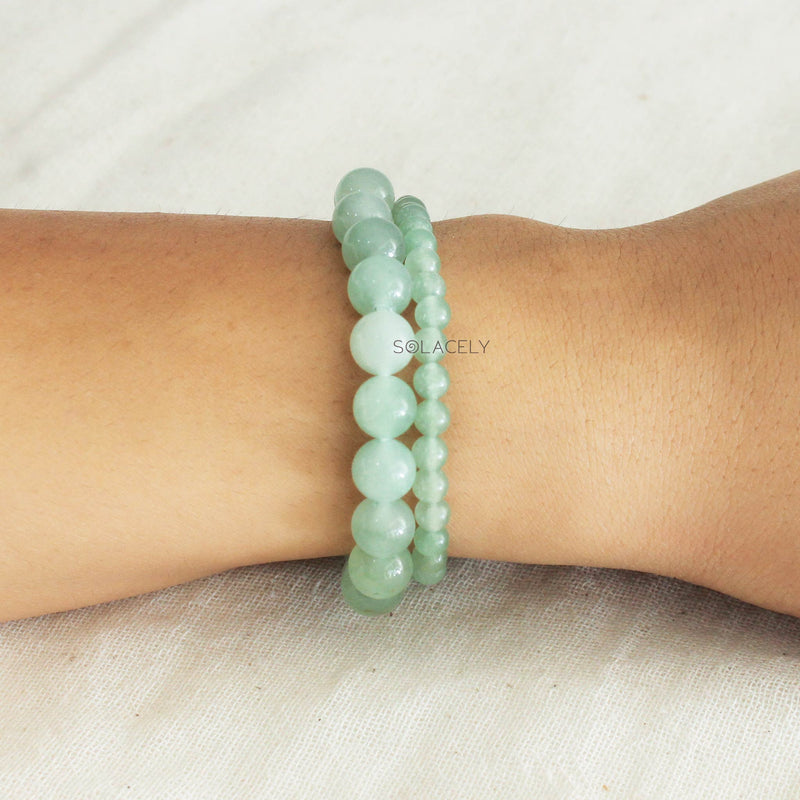
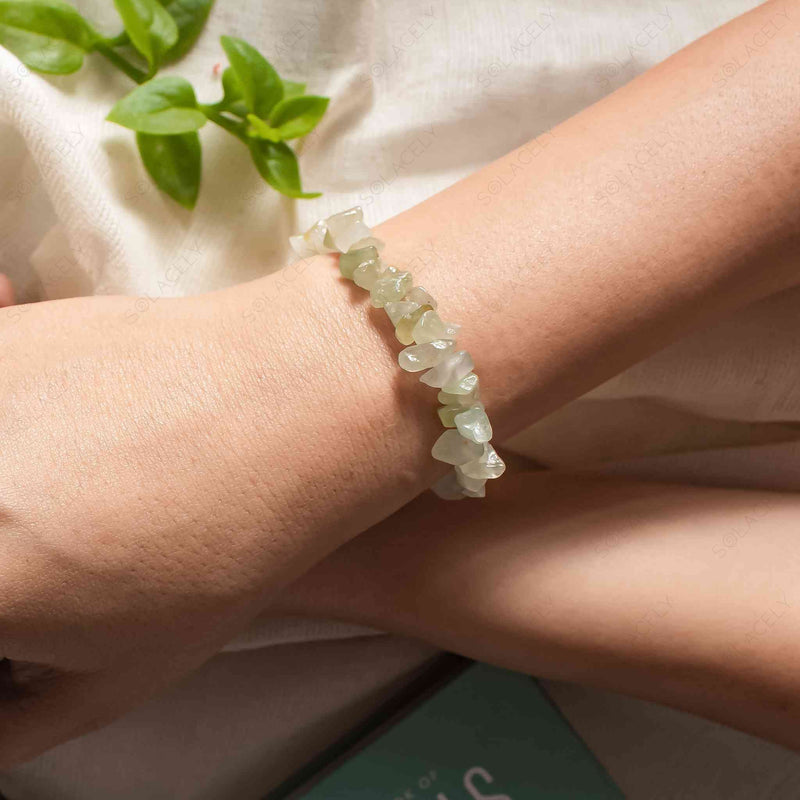
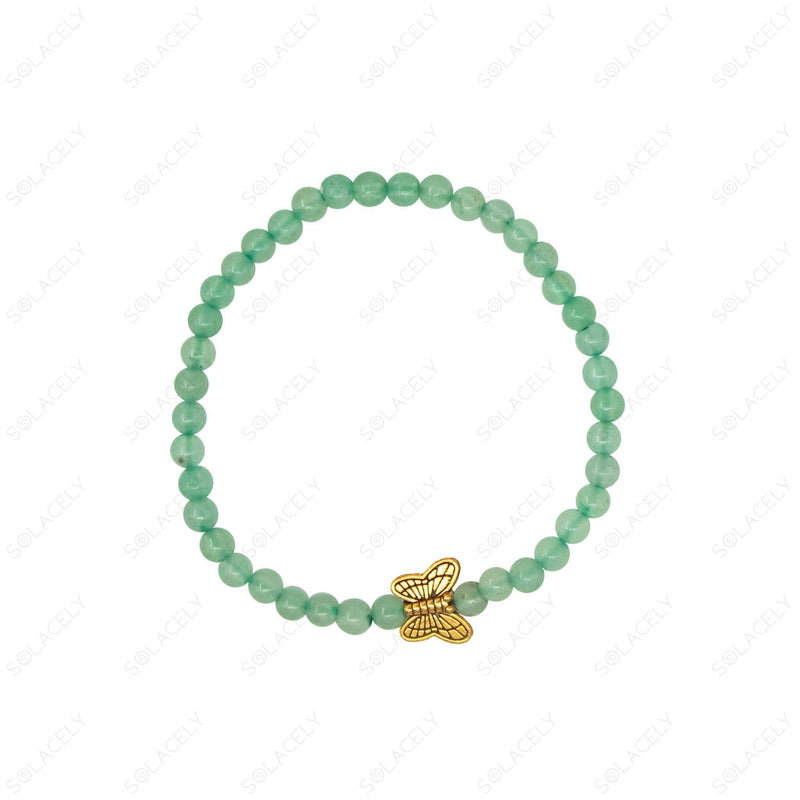
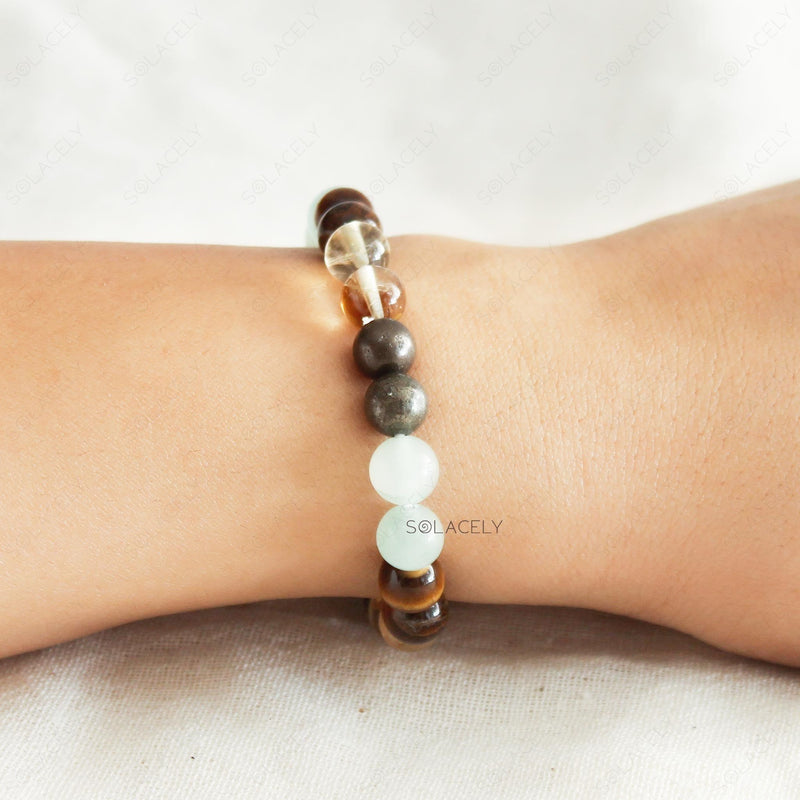
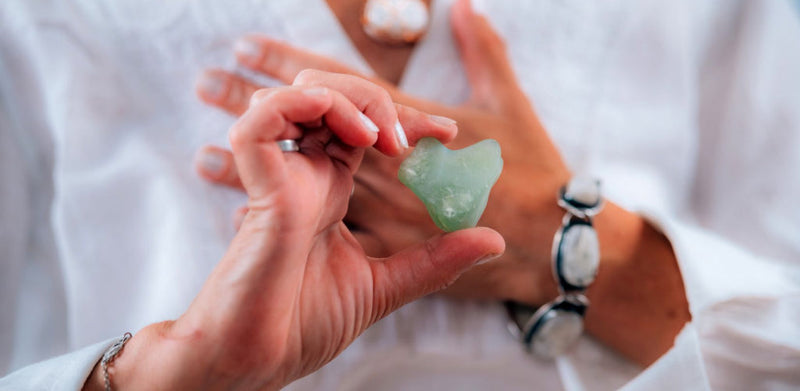
Wear a green aventurine bracelet on your left wrist. Aventurine is a receiving stone, kept for opportunity and openings arriving, and the left is the side that draws things in. The right is the exception, chosen for days when the luck has to be gone after rather than waited for.
Key takeaways
- Left wrist for the usual intention: staying open to what arrives.
- Right wrist on a day you are pitching, interviewing or asking.
- It is a quartz, not a jade. The faint glitter comes from mica inclusions.
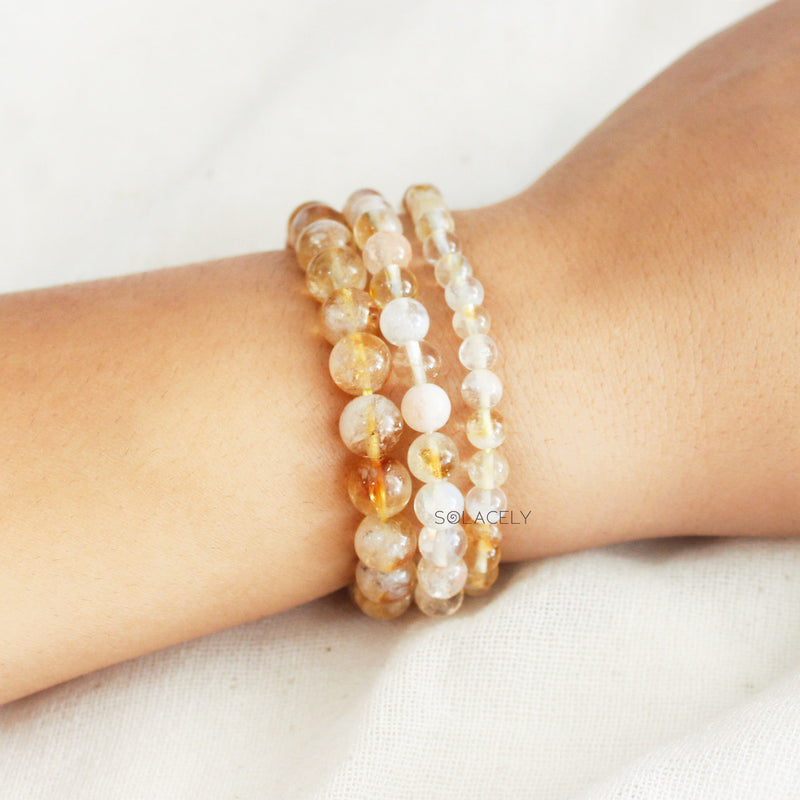
- Pairs best with citrine, which matches it closely on hardness.
- Easy to look after. Keep it off a sunny sill and it will outlast the elastic many times over.
Why the left wrist
Crystal practice reads the left as the receiving side and the right as the projecting side. Anything you want to draw in goes left. Anything you want to send out or keep at a distance goes right.
Green aventurine is squarely a left hand stone. It is the stone of opportunity rather than of effort, kept for chances turning up, doors opening, things going your way in the ordinary run of a week. That is receiving work by definition, so the left wrist matches the intention.
It is worth being precise about what it is kept for, because it separates aventurine from the other green prosperity stones. Jade is about steady accumulation over years. Malachite is about change you have decided on. Aventurine is about luck in the everyday sense, the unplanned good turn, and that is a gentler and more open thing than either.
When to wear it on the right
There is one situation where practitioners move it across, and it follows cleanly from the rule.
Some luck has to be gone after. The pitch, the interview, the conversation where you name a number, the application you send unsolicited. On those days the intention is not staying open, it is putting yourself forward, and the right wrist reads as active rather than receptive.
Plenty of people simply keep it on the left permanently and do not bother switching, which is a perfectly reasonable way to wear it. The distinction matters most if you like the practice to stay legible to you.
What the glitter actually is
Aventurine is a quartz, and the faint shimmer that runs through a good piece has a name: aventurescence. It comes from tiny flat inclusions of fuchsite, a chromium bearing mica, which catch the light as the stone turns.
That is worth knowing for two reasons. It is what distinguishes aventurine from jade, which is a different mineral family and has no such glitter. And it is a fair test of quality, since a piece with visible aventurescence in daylight has been cut to show it off rather than merely cut to size.
What to wear with it on the same wrist
| Partner stone | Mohs | What it adds |
|---|---|---|
| Citrine | 7 | Prosperity with a warmer, more confident edge |
| Clear quartz | 7 | Clarity about which opportunity to take |
| Labradorite | 6 to 6.5 | Sensing your way through a decision |
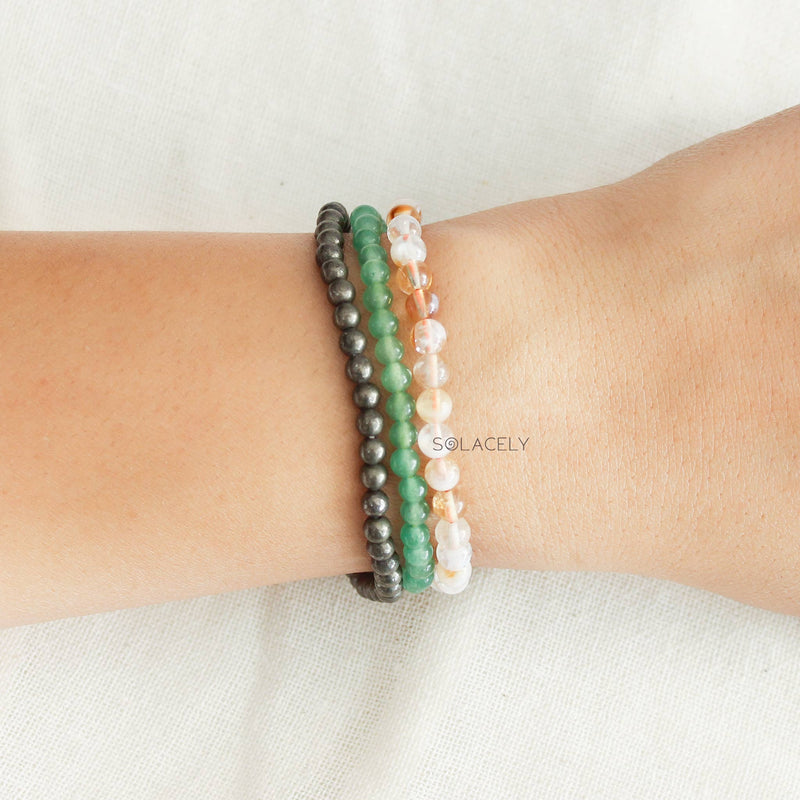
| Pyrite | 6 to 6.5 | Drive, though it must stay dry |
Citrine and clear quartz are the closest hardness matches at 7 against aventurine's 6.5 to 7, so those combinations wear evenly and hold their finish together. We cover the labradorite pairing in green aventurine and labradorite. If you stack pyrite alongside, remember the whole bracelet then has to stay dry.
Looking after it
Aventurine is one of the least demanding stones to own. It is a hard, non porous quartz, so water, smoke, sound and moonlight are all safe, and warm soapy water handles everyday cleaning.
The one caution is sunlight. Sustained direct sun can slowly pale the green over years, the same way it pales amethyst and rose quartz, so a sunny windowsill is the one place not to leave it. Anywhere shaded is fine.
As with any beaded bracelet, take it off for the shower and the gym so the elastic lasts.
Where to go next
For the rule applied across every stone, see our pillar guide to which hand to wear your crystal bracelet. For what the stone is and what it is kept for, see green aventurine meaning, benefits and properties.
The uses described here reflect traditional and cultural crystal practice. They are not medical claims and are not a substitute for professional healthcare or advice.
Sources
Written by Chetena Sharma. Reviewed by the Solacely editorial team.
Frequently asked questions
About the author


Written by Chetna Sharma, crystal healing practitioner and co-founder of Solacely. Chetna has worked with healing crystals for over a decade and curates Solacely's protective stone collection.