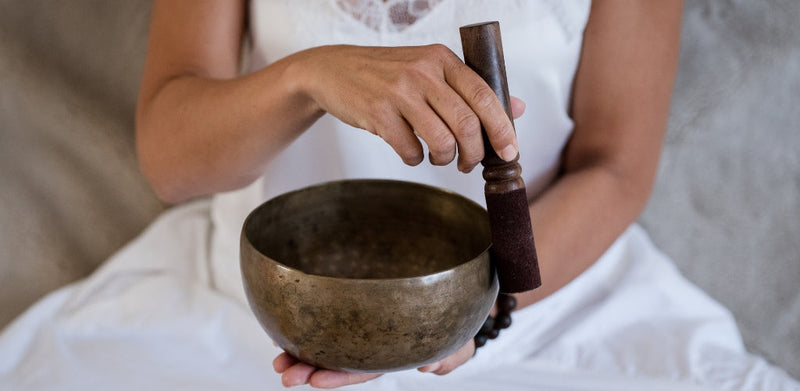
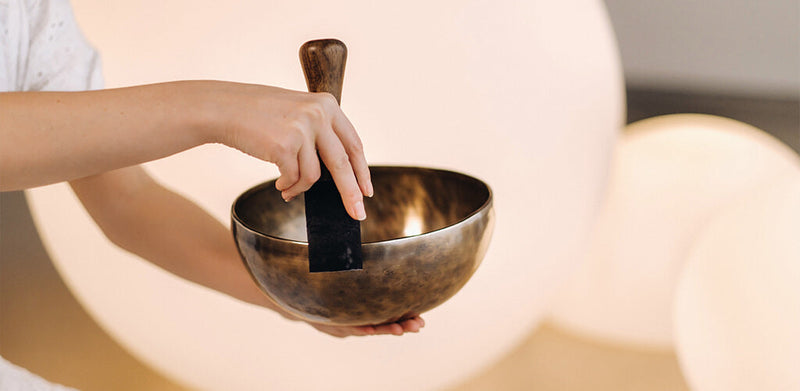
The main mental benefits people report from a singing bowl are less stress and anxiety, a calming relaxation response, steadier focus, a lifted mood, and an easier drift into sleep. The strongest evidence so far, a 2017 study by Goldsby and colleagues, found people felt significantly less tension, anger, fatigue, and anxiety after a single session. It's a small, preliminary study, so read these as gentle, well-supported effects on how you feel, not medical cures.
Key Takeaways
- Stress and anxiety relief: In Goldsby et al. 2017, 62 adults reported significantly less tension, anger, fatigue, and anxiety after one 60-minute singing bowl meditation.
- A relaxation response: Slow, sustained tones give the mind a single thing to rest on, which helps shift the body out of 'fight or flight' into calmer, slower breathing.
- Focus and mood: Users describe a clearer, less scattered head and a lighter mood after a few minutes of listening, effects that overlap with what meditation research shows.
- Easier sleep onset: A short evening session helps many people wind down and fall asleep faster by quieting mental chatter, though it treats bedtime routine, not clinical insomnia.
- Honest framing: The evidence is early and the studies are small. A singing bowl is a calming self-care tool, not a treatment for anxiety, depression, or any medical condition.
The mind benefits of a singing bowl, in a scannable list
A singing bowl is a struck or rimmed metal bowl whose long, layered tone people use to calm and steady the mind. When it comes specifically to mental wellbeing, here are the benefits people most consistently report, each of which we unpack below:
- Stress relief: the sustained sound gives a busy mind one thing to settle on, easing the wound-up feeling of a stressful day.
- Anxiety relief: in the best available study, anxiety scores dropped significantly after a single listening session.
- A relaxation response: slow tones and slow breathing nudge the nervous system toward rest, the opposite of 'fight or flight.'
- Sharper, calmer focus: many users describe a clearer, less scattered head afterward, useful before study or work.
- A lift in mood: tension, anger, and low mood tend to soften, leaving people feeling a bit lighter.
- Easier sleep onset: an evening session quiets mental chatter and helps you drift off faster.
That list is the honest short version. The evidence behind it is real but early, so the rest of this guide expands each point, tells you what a study actually found, and where it stops. If you want the full picture across body, mind, and spirit rather than the mind alone, our general singing bowl benefits guide is the companion piece to this one.
What the evidence actually says (Goldsby et al. 2017 and NCCIH)
The honest answer is that research on singing bowls and the mind is early, promising, and thin. The most cited study is Goldsby et al. 2017, published in the Journal of Evidence-Based Complementary & Alternative Medicine. In it, 62 adults, average age around 50, reported significantly less tension, anger, fatigue, depressed mood, and anxiety after a single 60-minute singing bowl sound meditation. That's the strongest single data point we have.
But the same study carries a big caveat: there was no control group. Everyone got the sound meditation, so we can't fully separate the tones from the effect of simply lying down quietly for an hour. The authors themselves frame it as observational and preliminary. That's why every claim on this page is worded as 'people report' and 'helps,' not 'cures' or 'proven.'
For the broader mechanism, the National Center for Complementary and Integrative Health (NCCIH) at the US National Institutes of Health is a useful, sober reference. NCCIH notes that meditation and mindfulness practices can help with stress, anxiety, and sleep for many people, while stressing that evidence varies by condition and that these are complements to, not replacements for, conventional care. A singing bowl session is essentially a form of guided, sound-anchored meditation, so that verdict fits it well.
| Source | What it found | The honest limit |
|---|---|---|
| Goldsby et al. 2017 (n=62) | Significantly less tension, anger, fatigue, low mood, and anxiety after one 60-min session | No control group; single session; small sample |
| NCCIH (NIH) overview | Meditation and mindfulness can ease stress, anxiety, and sleep issues for many | Effects vary; not a substitute for medical care |
So the fair summary is this: singing bowls reliably help many people relax and feel calmer in the moment, and there's early evidence for a real mood and anxiety shift. Claims that they cure anxiety, rewire your brain, or replace therapy are not supported. For a deeper look at the whole field, including other instruments and the older roots of the practice, see our sound healing guide.
Stress and anxiety relief
The clearest mental benefit is stress and anxiety relief, and it's also the best supported. In Goldsby et al. 2017, anxiety and tension both dropped significantly after one session, and this matches what most people feel the first time they sit with a bowl: the shoulders drop, the jaw unclenches, and the racing thoughts slow down.
Why would a sound do that? Part of it is attention. Anxiety feeds on a mind that jumps between worries. A singing bowl's tone is long, even, and slightly hypnotic, so it gives your attention a single, undemanding thing to rest on. That's the same principle as a mantra or the breath in meditation, just with an external anchor that's easier for beginners to hold onto.
It's worth being precise about what this is and isn't. Easing everyday stress and the general hum of anxiety is well within reach for a home practice. Treating a diagnosed anxiety disorder is not. If your anxiety is persistent, disrupts daily life, or comes with panic, a singing bowl can be a soothing addition to your routine, but the actual treatment belongs with a doctor or therapist. Used that way, as a calming ritual alongside proper care, it's genuinely helpful and completely safe.
The relaxation response and your nervous system
Underneath the stress relief sits one physiological idea: the relaxation response. When you're stressed, your sympathetic nervous system runs the show, that's the 'fight or flight' state, with fast breathing and a busy mind. Slow, sustained sound paired with slow breathing helps tip you toward the parasympathetic 'rest and digest' state instead. That shift is what people are really describing when they say a bowl 'melts the tension.'
You don't need special equipment or belief for this to work. The mechanics are simple: a long tone naturally lengthens your out-breath, and a longer exhale is one of the most reliable ways to signal calm to the body. Sit or lie comfortably, strike the bowl, and let your breath follow the sound as it fades. Do that for a few cycles and most people notice a real drop in physical tension.
This is also why sound pairs so well with formal meditation. If you already sit to meditate, a bowl at the start and end bookends the session and deepens the settling. Our Tibetan singing bowl meditation guide walks through exactly how to build the sound into a sitting practice, step by step.
Focus and mental clarity
Many people reach for a singing bowl not to relax into sleep but to clear a foggy, scattered head before they work or study. The reported benefit here is calmer focus: fewer competing thoughts, a cleaner mental desk. It's a quieter, less dramatic effect than stress relief, but users describe it consistently.
The likely reason is the same attention-training mechanism. A minute or two of listening acts as a reset button between tasks. Instead of carrying the residue of the last email into the next piece of deep work, you give your mind a short, single-pointed break. That overlaps neatly with what mindfulness research suggests, that brief attention practices can reduce mind-wandering and help you re-engage with a task.
A practical way to use this: keep a small bowl on your desk and strike it once at the top of each focused work block. Let the tone fade completely before you begin, using it as a clear 'start now' signal. It won't turn a distracted afternoon into laser focus on its own, but as a small ritual to mark the boundary between rest and work, it's a low-effort, screen-free anchor that many people find sticks.
Mood: easing tension, anger and low feelings
Beyond anxiety, Goldsby et al. 2017 found reductions in tension, anger, fatigue, and depressed mood after a session. In plain terms, people felt lighter. That's the mood benefit: not euphoria, but a softening of the heavy, irritable, worn-down feelings that pile up over a hard day.
Part of this is simply that relaxation and mood are linked. When the body unclenches and the breath slows, the sharp edges of a bad mood tend to dull. Part of it may be the small ritual itself, taking ten deliberate minutes for yourself is a mood-lifter in its own right, sound or no sound. Either way, the effect is real enough that people build the habit around it.
The line to hold here is the most important one on the page. A lift in everyday low mood is very different from treating depression. Depression is a medical condition that deserves proper assessment and care. A singing bowl can be a comforting part of a wider self-care routine, but if low mood lingers for weeks, please treat that as a signal to talk to a professional, not to reach for a bowl. Framed honestly, as a gentle mood ritual rather than a remedy, it earns its place.
Sleep onset: quieting the mind at bedtime
One of the most popular reasons people buy a singing bowl is trouble falling asleep, specifically the racing, won't-switch-off mind at bedtime. The benefit here is easier sleep onset: a short evening session quiets mental chatter so you drift off faster. It targets the wind-down routine, not the deeper machinery of clinical sleep disorders.
The logic follows directly from the relaxation response. Most sleep-onset trouble is really an over-active mind, and the long, fading tones give that mind somewhere soft to land. A gentle bowl session becomes a signal to your body that the day is closing, the audio equivalent of dimming the lights. Keep it slow and quiet, well below the volume you'd use for a daytime meditation.
If sleep is your main goal, we've written a dedicated guide, our singing bowl for sleep walkthrough covers the best time to practise, how long to play, and how to fold it into a bedtime routine. For persistent insomnia, though, the same rule applies as everywhere on this page: a bowl helps the ritual, but ongoing sleeplessness deserves a doctor's input.
How to use a singing bowl for a calmer mind
You don't need training or a big setup to get the mental benefits. The core practice is short, simple, and works with any decent bowl. Here's a beginner routine you can start tonight:
- Sit or lie comfortably in a quiet spot where you won't be interrupted for ten minutes.
- Strike the bowl gently with the mallet, or run the mallet slowly around the rim to build a continuous tone.
- Follow the sound with your breath. Let each out-breath stretch to match the fading tone. This is where the relaxation response kicks in.
- Let it fade fully before the next strike. The silence after is part of the practice.
- Keep it short at first, five to ten minutes. Consistency beats length; a little most days does more than one long session a week.
For a structured version built specifically around stress, our guide to stress-free living with singing bowl meditation lays out a full routine. And if you're curious which tones people pair with a calmer mind, the singing bowl frequencies chart breaks down the sounds, though for mental calm, the tone you personally find soothing matters far more than any specific Hz number.
Choosing a singing bowl for mental wellbeing
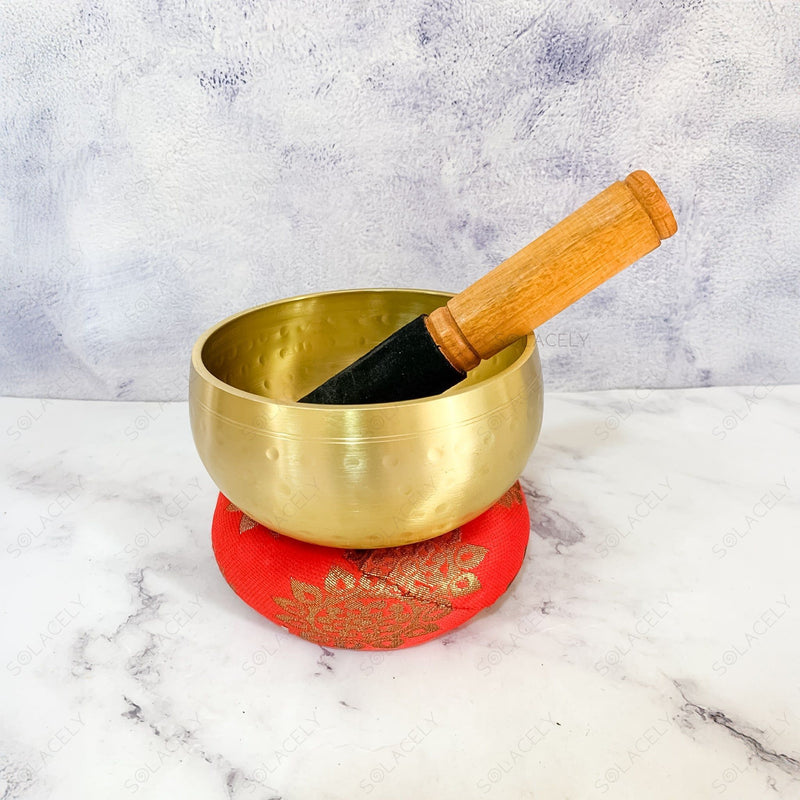
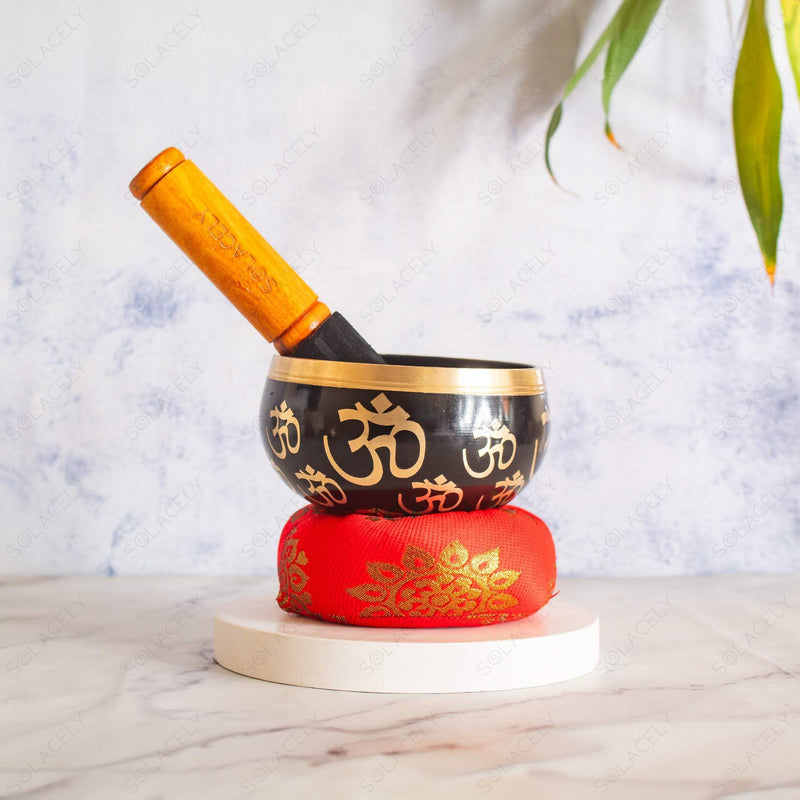
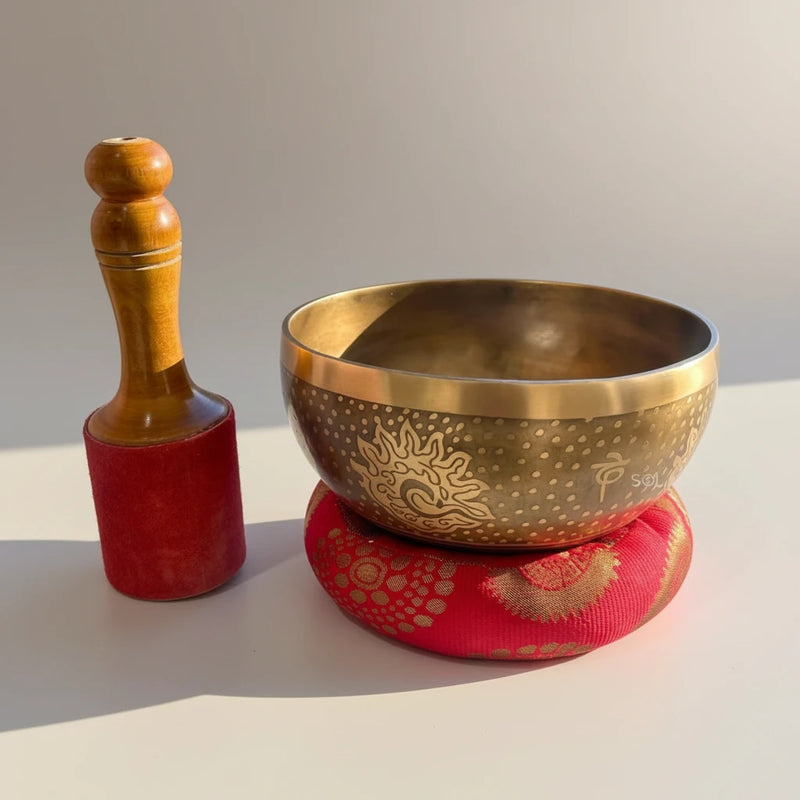
For a calm-the-mind practice, you want a bowl with a warm, long-sustaining tone that you find pleasant, comfortably sized to hold or place beside you. You don't need the largest or most expensive one. A mid-size hand-hammered bowl in the 10 to 15 cm range suits most home meditation and sleep routines well.
Singing bowls span a wide price range. Simple machine-made bowls sit at the budget end, good hand-hammered Tibetan-style bowls in the entry-level to mid-range band, and larger antique or master-crafted pieces well into premium territory. For a first bowl aimed at stress and sleep, a mid-range hand-hammered bowl is a sensible, lasting buy. A singing bowl also makes a thoughtful, calming gift for a housewarming (griha pravesh), Diwali, or a friend going through a stressful stretch.
Trust your ear over the spec sheet. When you can, strike a few bowls and pick the tone that makes your own shoulders drop. That sound, the one that settles you, is the one that will actually get used every evening, and a bowl that gets used is worth far more than a 'better' one that sits on a shelf.
Sources
- Goldsby TL, Goldsby ME, McWalters M, Mills PJ. Effects of Singing Bowl Sound Meditation on Mood, Tension, and Well-being: An Observational Study. Journal of Evidence-Based Complementary & Alternative Medicine, 2017
- PubMed record for the Goldsby et al. singing bowl study (PMID 27694559)
- National Center for Complementary and Integrative Health (NIH) — Meditation and Mindfulness: What You Need To Know
Frequently asked questions
About the author


Written by Chetna Sharma, crystal healing practitioner and co-founder of Solacely. Chetna has worked with healing crystals for over a decade and curates Solacely's protective stone collection.