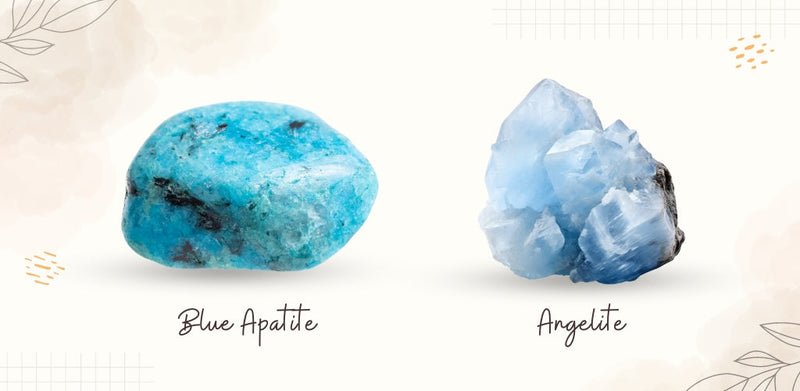
Angelite is the trade name for a pale blue, massive form of anhydrite, a calcium sulfate mineral. It is soft, around 3.5 on the Mohs scale, and it reacts to water, so it is kept dry. People reach for it as a quiet throat chakra stone for calm, unhurried speech and steady meditation.
Key takeaways
- Angelite is the trade name for massive blue anhydrite, a calcium sulfate mineral closely related to gypsum.
- It sits at roughly 3.5 on the Mohs hardness scale, so it scuffs and scratches far more easily than quartz.
- Angelite is water sensitive. Do not soak it, do not store it in a bathroom, and never put it in drinking water or elixirs.
- It is traditionally kept as a throat and third eye stone, carried as a daily cue for calm, honest speech.
- Colours run from soft powder blue to blue grey, usually with white or pale marbling, so no two pieces match.
- Cleanse it with smoke, sound or moonlight, and keep it away from harder beads in your jewellery box.
What is angelite?
Angelite is a compact, fine grained blue anhydrite. Anhydrite is calcium sulfate without water in its structure, and it is the dry cousin of gypsum, which is the same compound with water bound into it. The blue to blue grey colour comes from trace elements in the deposit, and the surface takes a soft, waxy polish.
Because angelite is massive rather than crystalline, you rarely see sharp faces on it. It arrives as tumbled pebbles, carved angels, spheres and rounded beads, all of which suit the material because it holds a smooth, even shape well. Much of the angelite in the crystal trade comes from Peru, with other sulfate deposits in Europe and North America.
The name itself belongs to the crystal world rather than to mineralogy. Sellers, carvers and crystal writers adopted it for the pale blue anhydrite that looked like a stretch of early morning sky, and the name stuck because it described the stone people were actually holding. Ask a geologist for anhydrite and ask a crystal shop for angelite and you are pointing at the same rock.
One geological detail is worth carrying into your care routine. Anhydrite and gypsum swap places depending on water: anhydrite that sits in water slowly takes water back into its structure and turns towards gypsum, and the surface loses its polish as it does so. That is the whole reason the care advice further down this guide is so firm about keeping angelite dry.
Angelite meaning
Angelite is long associated with gentle communication, comfort and a sense of being watched over. The name points at angels and the sky, and the stone is traditionally kept by people who want to feel accompanied rather than alone in a difficult stretch. Its meaning centres on softness: saying the true thing, kindly.
Where a stone like black tourmaline is often described as a wall, angelite is described as a hand on the shoulder. It is the stone people pick up when a conversation needs to happen and they would rather it happened without heat. Grief, apology, a difficult message to a family member, a boundary that has been avoided for months: these are the moments angelite has been kept for.
It also carries a reputation as a stone of awareness. In that reading, the pale blue is a reminder to slow down enough to notice what you actually feel before you speak. Many people find that useful as a small ritual, holding the stone for a minute at the start of a journalling session or before picking up the phone.
Angelite benefits and properties
Angelite is traditionally kept for calm, clear expression and quiet reflection. It is used as a meditation stone, a bedside stone and a desk stone, and it is worn as beads when someone wants a steady reminder close to the skin. The benefits people describe are mostly about tone: softer words, slower reactions, easier silences.
The qualities most often named are these:
- Calm under pressure. Held in the hand, angelite is used as a pause button before a reply that would have been sharper without it.
- Honest speech. As a throat stone it is worn as a cue to say the thing plainly instead of circling it.
- Comfort in grief. Its reputation as an angelic stone makes it a common gift for someone going through a loss.
- Compassion and patience. People keep it in shared spaces where tempers can run short, including desks and family rooms.
- Quiet meditation. The soft colour and smooth surface suit long, undramatic sitting practice rather than intense visualisation.
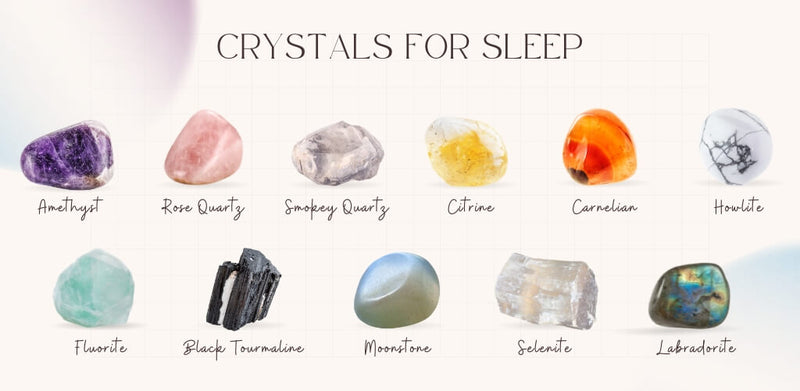
- Evening wind down. A tumbled piece on the bedside table is a familiar part of a bedtime ritual, alongside the other crystals kept for sleep.
Physically, the properties that matter to a buyer are hardness and water sensitivity. At around 3.5 on the Mohs scale angelite is one of the softer stones on a crystal shelf, which is why it is carved rather than faceted, and why a tumbled piece rattling in a bag with quartz will pick up marks. Choose the shade and marbling you like, then treat the piece gently and it will keep its polish for years.
Angelite and the chakras
Angelite is placed with the throat chakra first and the third eye second. The throat association follows the colour and the stone's link with speech, so it is worn as a necklace or held during any practice about expression. The third eye reading treats it as a stone for calm intuition rather than dramatic vision.
In a simple layout, angelite goes at the hollow of the throat while you breathe slowly for a few minutes and let the jaw unclench. Some people follow it with a piece at the brow. If you are building a fuller practice around expression, the wider guide to throat chakra crystals sets out how angelite sits alongside blue lace agate, aquamarine and sodalite.
Angelite also belongs to the broader family of blue stones kept for cooling, settling work. Within that group it is the softest in feel and in hardness, which is part of the appeal: it is a stone you keep still with, not one you carry loose in a pocket with your keys.
How to use angelite
Use angelite where a conversation or a wind down happens. The three placements that get the most use are the bedside table, the desk and the hand during meditation. It is also worn as beads and pendants, which keeps it near the throat, and a carved angel is often set on a shelf as a household piece rather than something carried.
A few practical ways people work with it:
- Before a hard conversation. Hold it, name what you actually want to say, then set it down and go.
- On the desk. Kept in view during calls, as a reminder to slow the pace of your own voice.
- In meditation. Rested in the palm or at the throat during a short, quiet sit, often paired with calming crystals like amethyst or howlite.
- By the bed. On the nightstand as part of an evening ritual, away from the edge where it could fall.
- As a gift. Angelite angels are a common gesture for someone grieving or going through a long, tiring stretch.
It pairs easily. Amethyst is the classic partner for evening practice, clear quartz is added when people want to amplify an intention, and blue apatite brings a brighter, more outspoken edge to the same throat work, which is covered in the guide to blue apatite and angelite together.
Caring for angelite
Angelite needs dry care. It is soft at roughly 3.5 on the Mohs scale and it takes water back into its structure over time, so soaking, rinsing and steam are all off the list, as are ultrasonic cleaners and salt water baths. Wipe it with a dry or barely damp cloth and dry it at once.
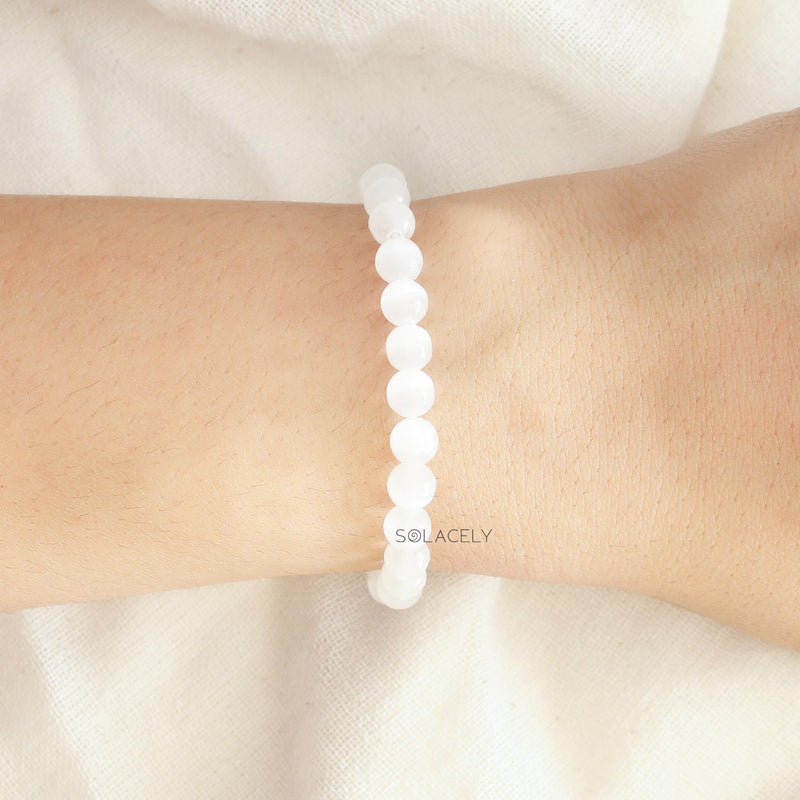
Cleanse it with methods that never touch it with liquid: smoke from sage or palo santo, the sound of a singing bowl or chime, an hour on a selenite plate, or a night on a windowsill under the moon. Selenite is a good companion here because it is gypsum, the same family, and it needs exactly the same dry handling.
For storage, keep angelite in its own pouch or a lined compartment. Anything harder, which is most of a crystal collection, will scratch it if the pieces knock together. Take angelite bracelets off before washing up, swimming, showering or applying perfume and hand cream, and set them down somewhere they will not roll onto a hard floor.
| Stone | Mohs hardness | Water | Best cleansing |
|---|---|---|---|
| Angelite | About 3.5 | Keep dry | Smoke, sound, moonlight, selenite plate |
| Selenite | About 2 | Keep dry | Smoke, sound, moonlight |
| Sodalite | About 5.5 to 6 | Brief rinse is fine | Rinse, smoke, sound |
| Blue lace agate | About 7 | Brief rinse is fine | Rinse, smoke, sound, moonlight |
Charging is simple and dry. Moonlight is the usual choice, and a short spell of soft early light is fine, though there is no reason to leave a pale stone baking on a hot windowsill all day. Set your intention while you hold it, put it back where you use it, and repeat whenever the piece feels like it has been through a heavy few weeks.
Choosing a piece of angelite
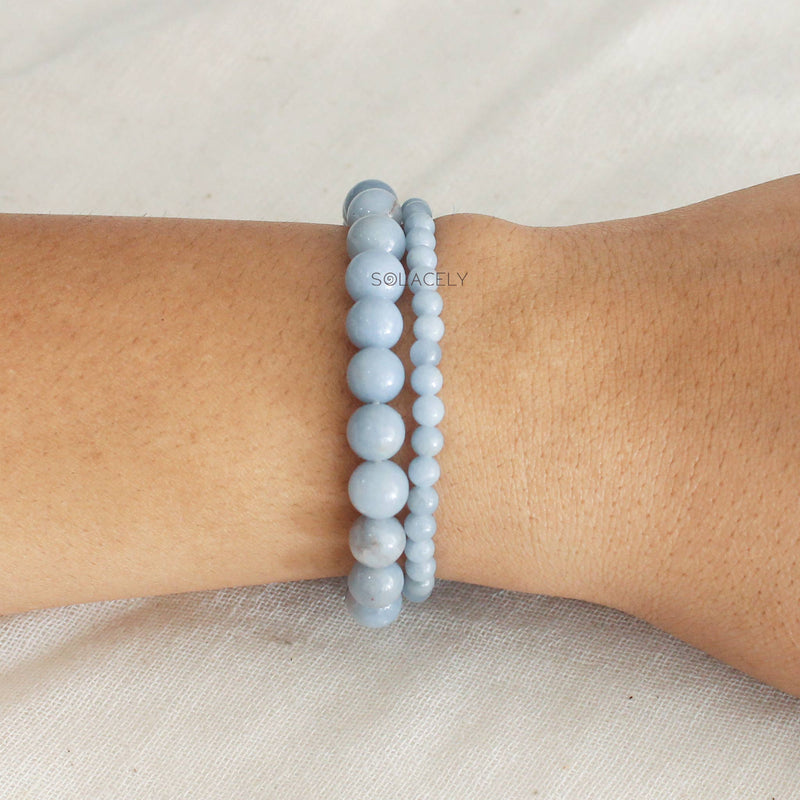
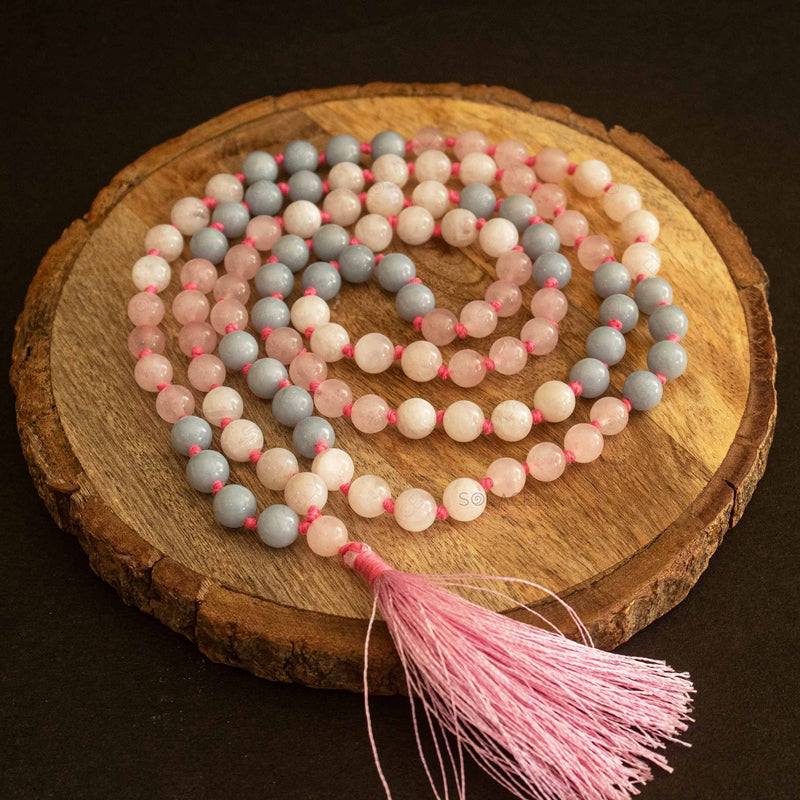
Pick angelite by the shade you want to look at every day and by the shape that suits where it will live. Beads give you contact with the skin, tumbles suit a pocket or a bedside dish, spheres and carved angels are display pieces, and japmalas suit people who count breaths or repetitions in their practice.
Colour runs from a very pale, almost chalky blue to a deeper blue grey, and the white veining varies from a faint cloud to bold marbling. Neither is better. A softer, cloudier piece reads as gentle on a shelf, while a stronger blue holds its own next to darker stones in a bracelet stack. Hold a few if you can, because the surface feel of angelite is a large part of why people keep it.
For bracelets, think about how you will wear it. Angelite beads sit best on their own strand or next to other soft stones, rather than sandwiched between tiger's eye or hematite. If you want a piece for daily wear through washing up and gym bags, a harder blue stone is the more practical choice and angelite can stay on the nightstand where it is happiest.
Crystals are kept for comfort, focus and ritual. They are not a treatment for any physical or mental health condition, and nothing here replaces advice from a qualified professional or any care that has already been arranged for you. Angelite is soft and water sensitive, so keep it out of water and never place it in drinking water or elixirs. Small beads and chips are a choking and strangulation risk, so keep them away from babies and young children.
Sources
Written by Chetena Sharma. Reviewed by the Solacely editorial team.
Frequently asked questions
About the author


Written by Chetna Sharma, crystal healing practitioner and co-founder of Solacely. Chetna has worked with healing crystals for over a decade and curates Solacely's protective stone collection.