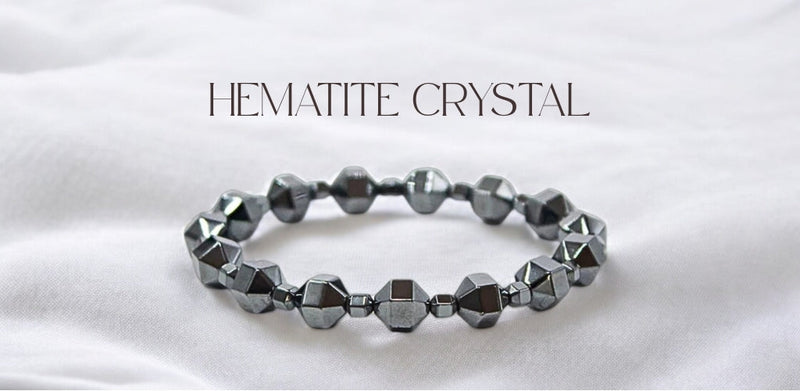
Hematite and bloodstone are the two classic iron stones of crystal practice, and both take their names and their lore from blood. Hematite is iron oxide itself. Bloodstone is green chalcedony flecked with iron oxide. The pairing is worn traditionally for endurance, nerve and steady physical energy.
Key takeaways
- Hematite is iron oxide at about 5 to 6 Mohs. Bloodstone is a chalcedony, a form of quartz, at roughly 6.5 to 7.
- Both names come from blood. Hematite's root is the Greek haima, after its red streak, and bloodstone is named for its red iron oxide flecks.
- Bloodstone, also called heliotrope, is a traditional March birthstone alongside aquamarine.
- Traditional use pairs bloodstone's reputation for courage and stamina with hematite's reputation for grounding and focus.
- Bloodstone is the tougher stone of the two and the better choice for rings and daily knocks.
- Every metaphysical use described here reflects traditional belief, and it belongs alongside your doctor's care rather than in place of it.
What actually links hematite and bloodstone?
Iron, in both the chemistry and the folklore. Hematite is an iron oxide and, as Geology.com explains, the most important ore of iron on earth. Bloodstone is a quartz variety whose red markings come from iron oxide inclusions. The two stones are cousins through the same element.
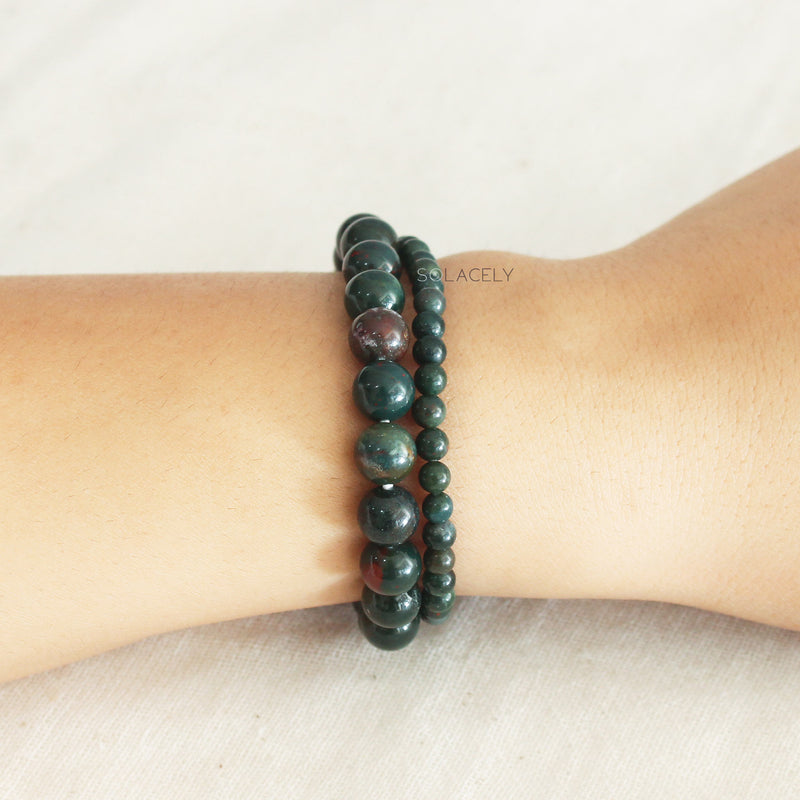
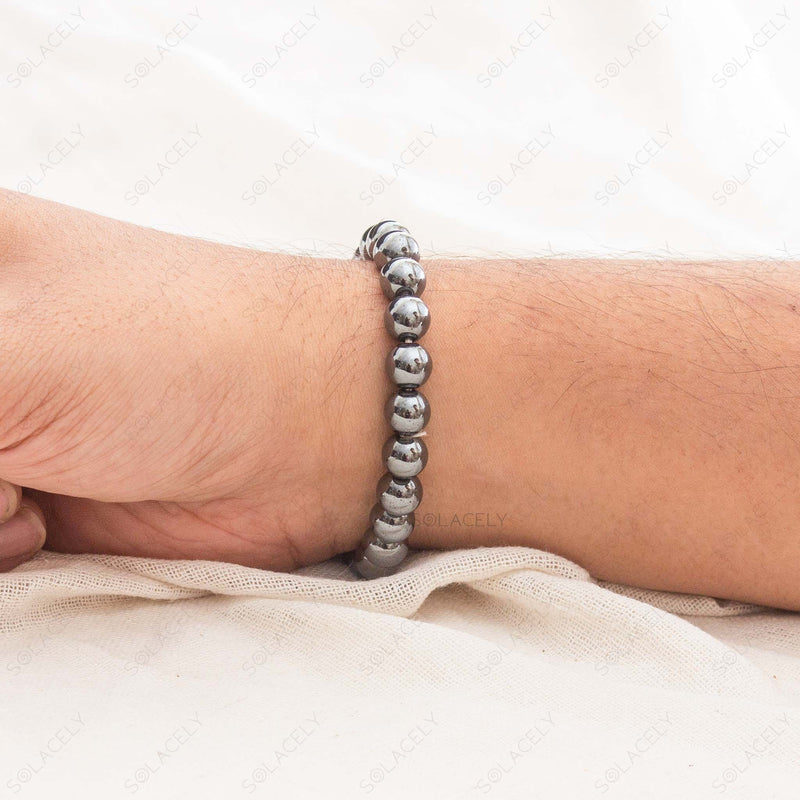
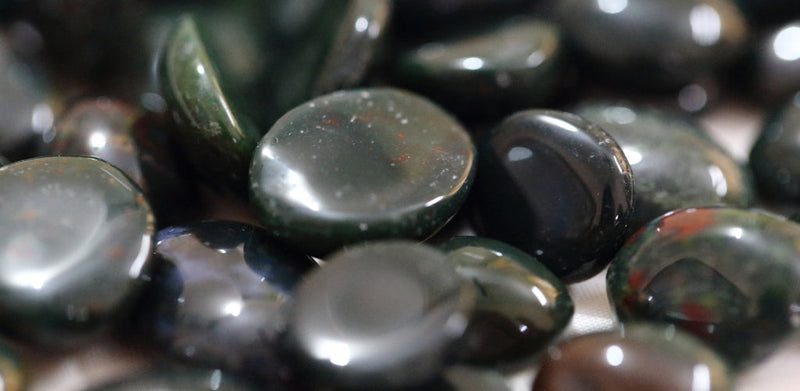
That shared iron is why they end up in the same conversation so often, and it is the thread practitioners pull on when they set the two together. Hematite gives you a dense, cool, mirror bright grey. Bloodstone gives you deep opaque green scattered with red. Visually they set each other off well, and both read as serious rather than decorative.
The other link is temperament. Neither stone is soft or sentimental in the way rose quartz or kunzite are. Both were historically carried by people doing hard, physical, risky things: soldiers, sailors, labourers, athletes. If you want the fuller background on the grey half of the pair, our hematite meaning and properties guide sets it out in detail.
What is bloodstone, mineralogically?
Bloodstone is a dark green variety of chalcedony, which is the microcrystalline form of quartz. Mineral references list heliotrope, the older name for bloodstone, among the recognised chalcedony varieties. The green base comes from included minerals, and the red spots are iron oxide.
Because it is a quartz, bloodstone sits around 6.5 to 7 on the Mohs scale. That makes it harder and tougher than hematite, and comfortable for rings, pendants and beads that get knocked about. It also takes a soft waxy polish rather than a mirror one, so it looks quieter than its name suggests.
The Gemological Institute of America lists bloodstone as a March birthstone alongside aquamarine, which surprises people who only know the blue one. If you were born in March, this pairing gives you a birthstone option that is far less common in shops. Our bloodstone crystal guide covers sourcing and grading, since quality varies widely.
Where does the blood folklore come from?
From two separate traditions that happened to land on the same idea. Hematite's name is Greek and descriptive, taken from haima, meaning blood, because the mineral leaves a red brown streak when rubbed on a rough surface. Bloodstone's name is European and symbolic, attached to its red flecks.
Medieval Christian lore called bloodstone the martyr's stone and held that the red spots were drops of blood fallen onto green jasper at the crucifixion. That story is why the stone appears in so many carved religious objects from that period. Roman writers before them already valued heliotrope, and the older Greek name refers to the sun rather than to blood at all.
Hematite's story is less dramatic and more practical. Powdered hematite is red ochre, one of the oldest pigments humans have used, found in burial sites and cave art across continents. The association between this mineral and blood is therefore not a modern crystal shop invention. It is genuinely ancient, and it is grounded in something you can see on a piece of unglazed tile.
What is the hematite and bloodstone pairing used for?
Stamina, in the broad sense. In traditional practice bloodstone is the stone of courage and physical vitality, and hematite is the stone of grounding and focus. Put together, the intention people set is usually about lasting through something demanding without losing the plot: a training block, a long shift pattern, a difficult few months.
- Physical training. Bloodstone's long athletic reputation makes it the traditional gym bag stone, with hematite added for focus between sets.
- Long working stretches. Night shifts, exam season, deadline weeks. The pair is chosen for endurance rather than for a burst of motivation.
- Nerve before a hard thing. Courage is bloodstone's oldest association, going back well before modern crystal literature.
- Recovery periods. A common choice, and the one place to keep your doctor's care leading and the stones in a supporting role.
Worth saying plainly: this is not the pairing for calm. It leans towards effort and drive. If your week needs softening rather than fuelling, look elsewhere. Our guides to crystals for strength and crystals for courage put the pairing in context against the other traditional options.
Hematite and bloodstone compared
Most practical decisions between these two come down to durability and how visible you want the stone to be. Bloodstone survives daily wear better. Hematite makes more of a statement and demands more care.
| Hematite | Bloodstone | |
|---|---|---|
| Mineral | Iron oxide | Chalcedony, a quartz variety |
| Also known as | Haematite, specularite | Heliotrope |
| Hardness | About 5 to 6 Mohs | About 6.5 to 7 Mohs |
| Colour | Metallic silver grey to black | Dark green with red flecks |
| Streak | Red brown | White |
| Traditional role | Grounding, focus, steadiness | Courage, stamina, vitality |
| Birthstone status | None | Traditional March birthstone |
| Best formats | Beads, tumbles, pocket stones | Beads, rings, pendants, carvings |
How do you wear and use them together?
Keep it simple and physical. This is a working pair, not an altar pair, so the formats that suit it are the ones that survive movement. A bloodstone strand and a hematite strand on the same wrist is the standard approach, with a spacer bead between them to protect the softer hematite polish.
- Bracelets. Bloodstone on the dominant wrist for effort, hematite on the other for steadiness. Convention, not rule.
- Pocket stones. A tumbled bloodstone in a kit bag is the most durable option of all.
- Rings. Bloodstone only. Hematite chips at the edges and the damage shows immediately on a mirror finish.
- Desk or workspace. Hematite within reach as a weighted object to hold, which is genuinely useful during long stretches of concentration.
On care, the two need different handling. Bloodstone tolerates warm soapy water and a soft brush, since quartz is stable and unbothered. Hematite gets a dry wipe and nothing more, because the iron content means standing water can leave rust marks around bead holes. Store them apart. Bloodstone is the harder stone and will scratch hematite over time. For an approach to a similar problem with more fire in it, compare hematite and carnelian, which is the motivation pairing rather than the endurance one.
The properties described here reflect traditional and cultural belief around crystals. They are not medical claims. Neither hematite nor bloodstone treats, prevents or affects anaemia, iron deficiency, blood pressure, circulation, menstrual conditions or any other medical issue. If you are managing a health concern, speak to a qualified healthcare professional.
Sources
Written by Chetena Sharma. Reviewed by the Solacely editorial team.
Frequently asked questions
About the author


Written by Chetna Sharma, crystal healing practitioner and co-founder of Solacely. Chetna has worked with healing crystals for over a decade and curates Solacely's protective stone collection.