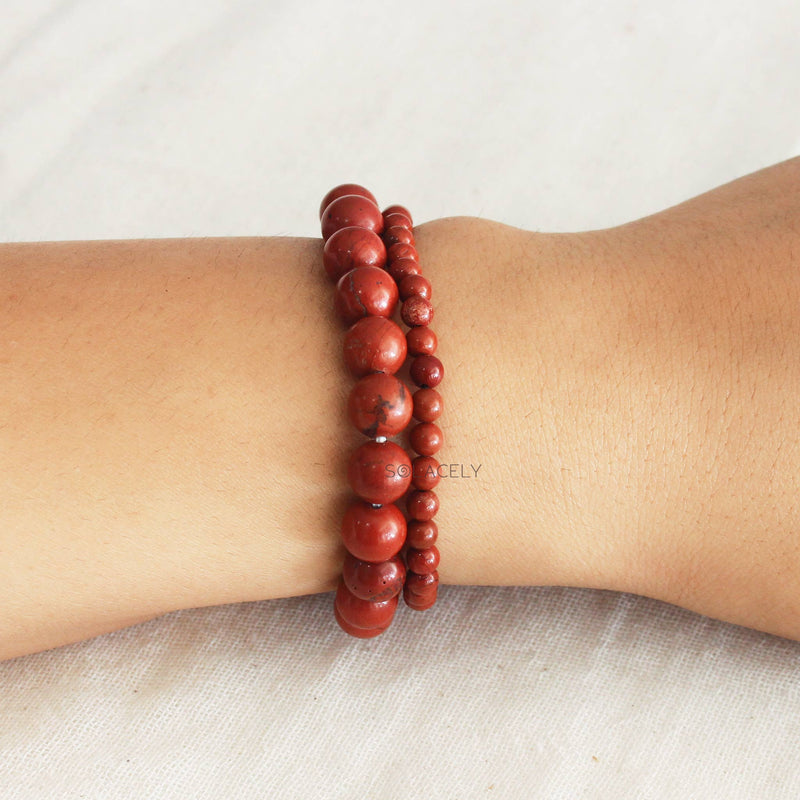
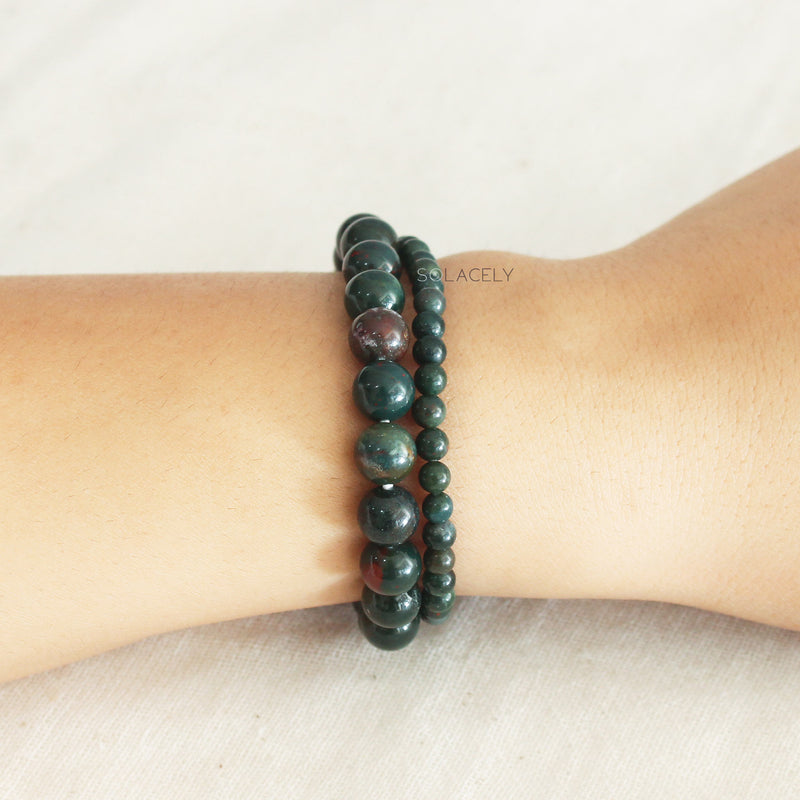
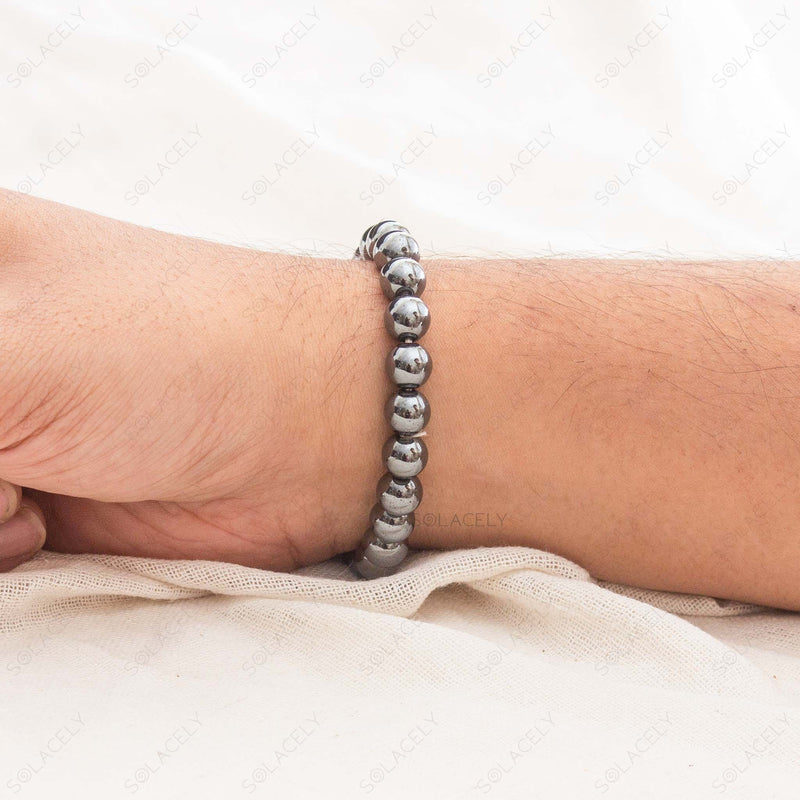
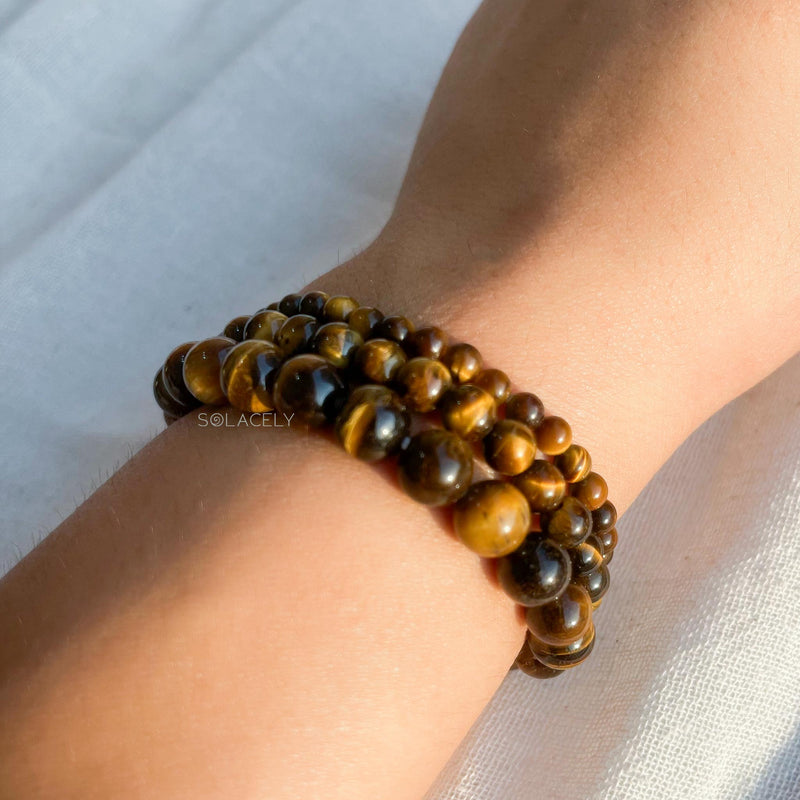
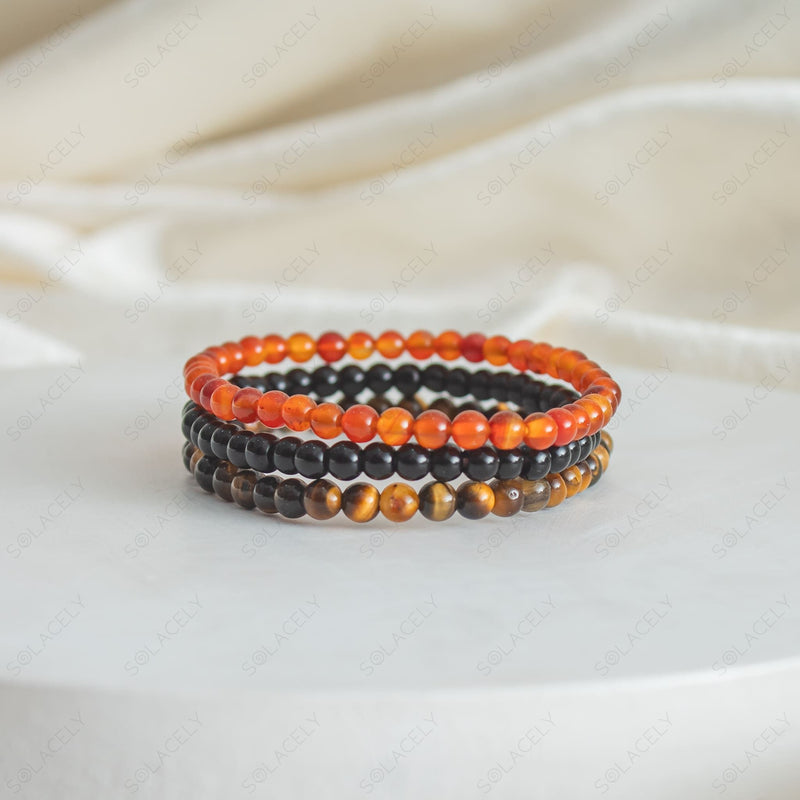
Strength means three different things, and the traditional stones differ for each. Red jasper, bloodstone and hematite for physical endurance. Tiger's eye and carnelian for nerve. Rhodonite and lepidolite for emotional endurance, the kind that carries you through a long hard stretch. Work out which you mean before choosing.
Key takeaways
- Three kinds of strength, three sets of stones: physical, nerve, and emotional endurance.
- Strength stones are for continuing. Confidence stones are for starting.
- Hematite's reputation comes from its density as much as its colour.
- Attach the practice to the moment you want to stop, not to your morning generally.
- Different stones again for the return after a lapse.
Three kinds of strength
People searching for strength stones usually want one of these, and they rarely overlap.
- Physical endurance. Getting through training, a physical job, or a long illness.
- Nerve. Doing the frightening thing: the conversation, the interview, the resignation.
- Emotional endurance. Continuing through grief, caregiving, or a stretch with no visible end.
The third is the one most people mean and the one least served by generic advice, which tends to default to red stones and physical vigour. Someone eighteen months into caring for a parent is looking for something to help them stay, not something to fire them up.
The stones, sorted by kind
| Stone | Kind of strength | Traditional use |
|---|---|---|
| Red jasper | Physical | Steady stamina rather than a burst |
| Bloodstone | Physical | Vitality; long associated with athletes and soldiers |
| Hematite | Physical and nerve | Grounding, composure under load |
| Tiger's eye | Nerve | Courage in front of people |
| Carnelian | Nerve | Acting despite hesitation |
| Rhodonite | Emotional | Continuing after a setback; self-forgiveness |
| Lepidolite | Emotional | Steadiness through prolonged difficulty |
| Black tourmaline | Emotional | Holding a boundary when it costs you something |
Hematite is worth a note. It is an iron oxide, notably dense, and its name comes from the Greek word for blood after the red-brown streak it leaves when scratched. That physical heft is a large part of why it became the grounding stone: it feels like something in the hand.
Strength is not confidence
These get conflated, and the distinction is useful. Confidence stones such as citrine are kept for the moment before you act: self-belief, permission, the willingness to begin. Strength stones are kept for the middle, when the thing is already underway and has stopped being interesting.
Someone who cannot start a project needs one thing. Someone in month four of a project they now resent needs another. Our crystals for confidence guide covers the starting problem properly.
How to use a strength stone
The key is specificity of moment. Most people attach a crystal habit to their morning, which is exactly when strength is least needed. Attach it instead to the point of difficulty.
- Identify the moment you usually stop. The fourth set. The second hour. Nine at night.
- Have the stone reachable at that moment. Gym bag, desk, pocket, bedside.
- Touch it as a decision marker. To make continuing a deliberate choice rather than a drift.
- One sentence, process not outcome. "Two more" beats "be strong".
- Review monthly. If the kind of strength you need has changed, change the stone.
For prolonged difficulty rather than acute moments, our crystals for spiritual strength guide covers the longer game, and crystals for emotional healing covers recovery.
The physical side
Physical strength is built by progressive resistance training, adequate protein and rest, and the National Institute on Aging covers the evidence for strength and balance work. The principles are the same at any age: load, progress, recover, repeat.
Where a stone contributes is adherence, which is where most programmes actually fail. A ritual object tied to showing up supports the habit, and habits are the whole game. Our crystals for sports performance guide covers pre-training routines in detail.
Emotional endurance, and asking for help
The emotional variety is where most people arrive at this topic, usually during something genuinely hard. A small daily marker of continuing has real value there, particularly when nothing else is providing structure.
It works best alongside people: friends, family, a GP, a carers' support service. Endurance is not something anyone should be doing entirely alone, and the stone is company rather than a substitute for it.
If grounding is what you are really after, our root chakra crystals guide covers the stones traditionally kept for feeling planted.
Care
The strength set is mostly durable. Red jasper, bloodstone, carnelian and tiger's eye are quartz family stones near 7 on the Mohs scale and take daily wear and warm water without complaint.
Two exceptions. Hematite is prone to rust spots if left wet, so dry it fully. Lepidolite is soft at around 2.5 to 3 and flakes along its layers, so handle it gently and store it dry. Cleanse the set weekly if it is in daily use, with sound, smoke or moonlight.
Crystal practices described here are traditional and cultural. They are not a treatment for any medical or mental health condition. If you are managing grief, burnout, caregiver strain or persistent low mood, please speak to a qualified healthcare professional.
Sources
Written by Chetena Sharma. Reviewed by the Solacely editorial team.
Frequently asked questions
About the author


Written by Chetna Sharma, crystal healing practitioner and co-founder of Solacely. Chetna has worked with healing crystals for over a decade and curates Solacely's protective stone collection.