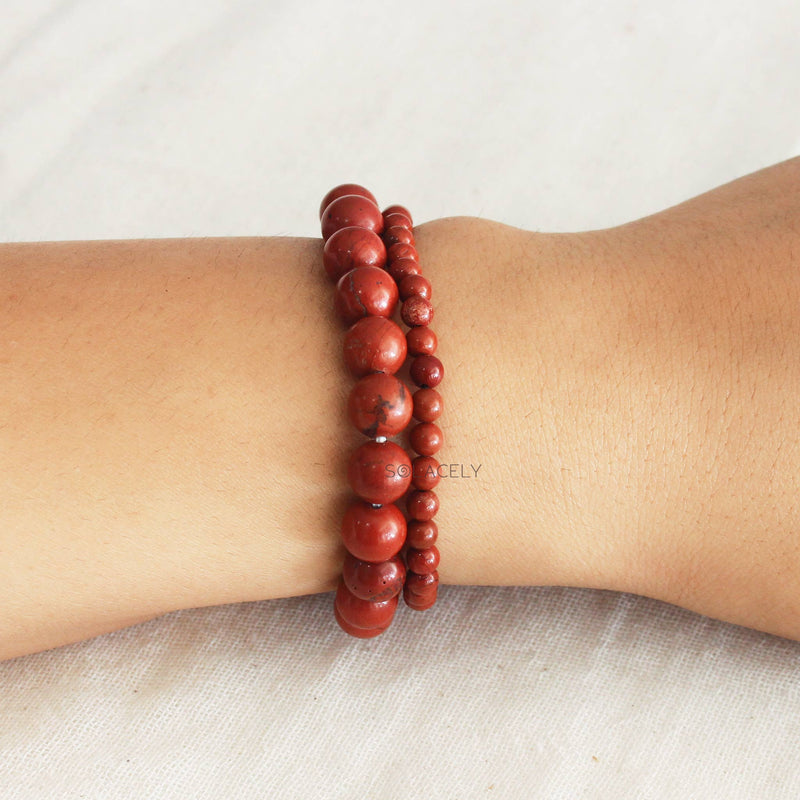
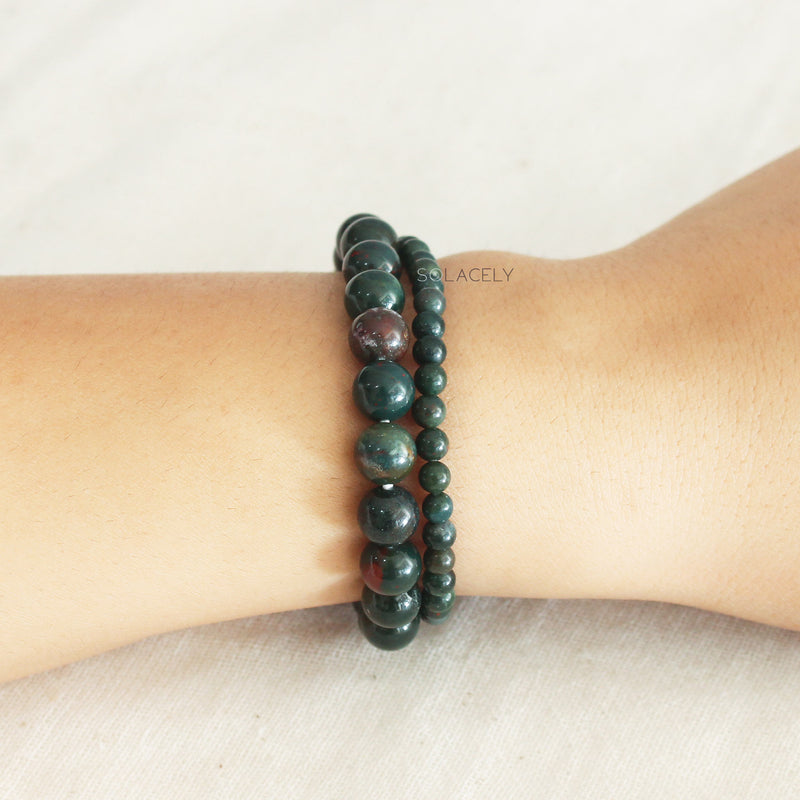
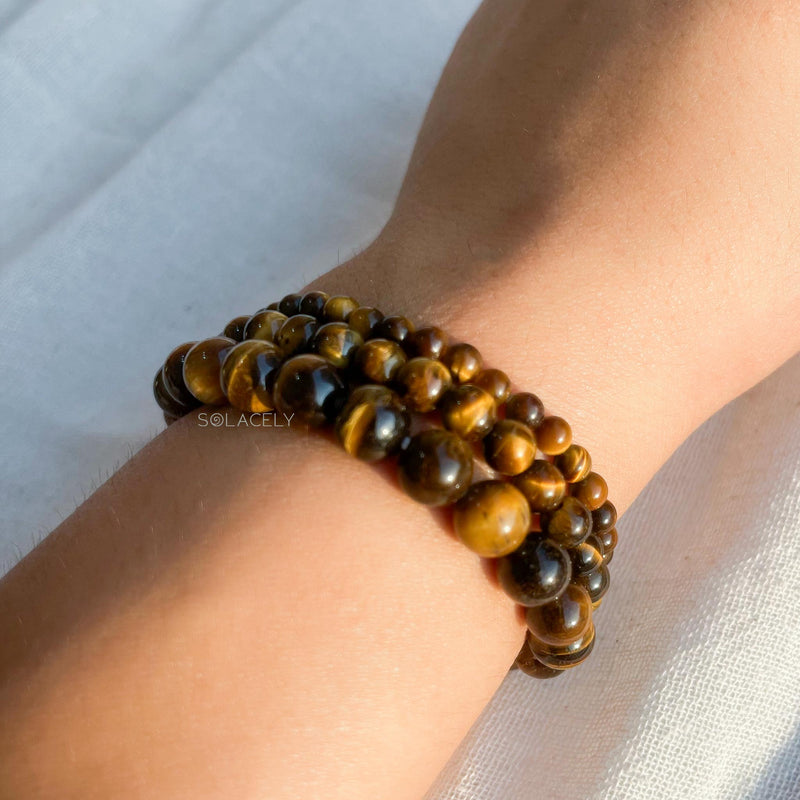
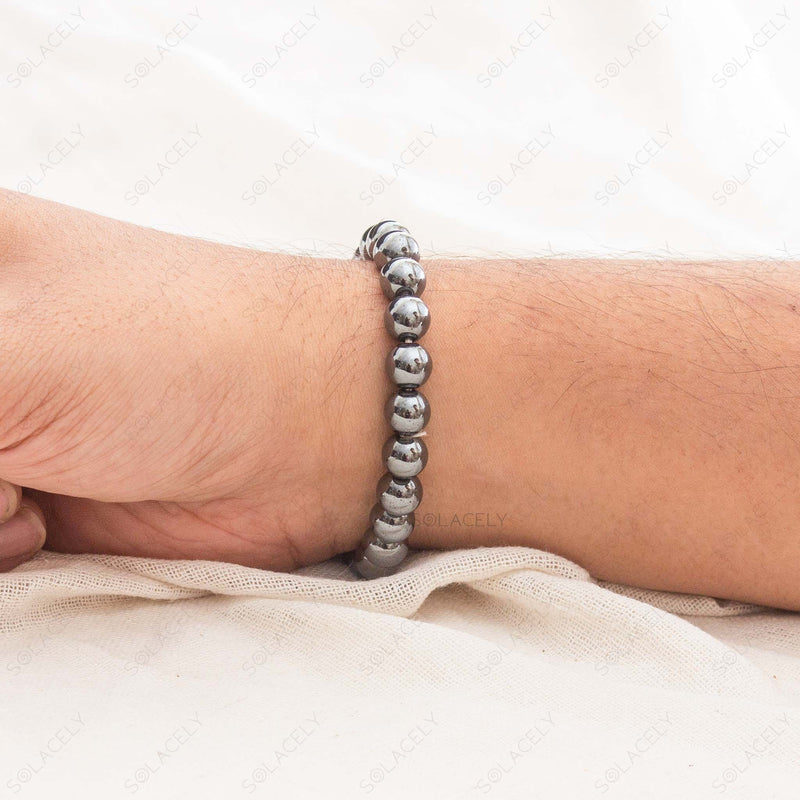
Red jasper and bloodstone are the traditional endurance stones, hematite and tiger's eye the composure ones, and carnelian the stone of motivation to train. Athletes keep them in a kit bag and handle them as part of a fixed pre-competition routine, which is where the tradition sits most naturally.
Key takeaways
- Traditional set: red jasper, bloodstone, hematite, tiger's eye, carnelian, clear quartz.
- Red stones dominate through colour symbolism: red, blood, vitality, the root chakra.
- Used inside a fixed pre-competition routine, which is what sport psychology takes seriously.
- Do not wear beaded pieces while training. Sweat degrades cord and many sports ban jewellery.
- Different stones for the recovery period than for the event.
Why a routine is where this belongs
Athletes across every discipline use fixed sequences before competing, and the consistency of the sequence is what makes it useful. It narrows attention, marks the transition from ordinary time into competition time, and gives a nervous system something familiar to hold.
A stone sits naturally inside that. It is an object you handle at the same point every time, and the repetition is what gives it weight. Athletes who keep one describe exactly that: a small fixed moment before the noise starts.
The stones and what each is kept for
| Stone | Traditional association | When it is used |
|---|---|---|
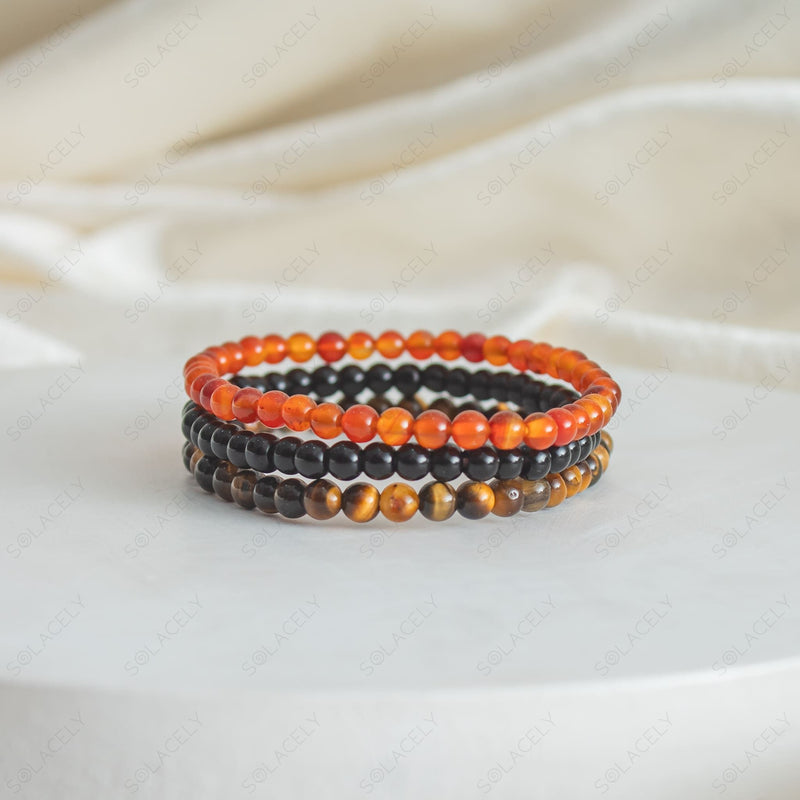
| Red jasper | Endurance, steady physical stamina | Long events, distance work |
| Bloodstone | Vitality; the classic athlete's stone | General training and competition |
| Hematite | Grounding, composure | Before high-pressure moments |
| Tiger's eye | Nerve, holding a line of focus | Finals, unfamiliar venues |
| Carnelian | Motivation to start | Training on days you do not want to |
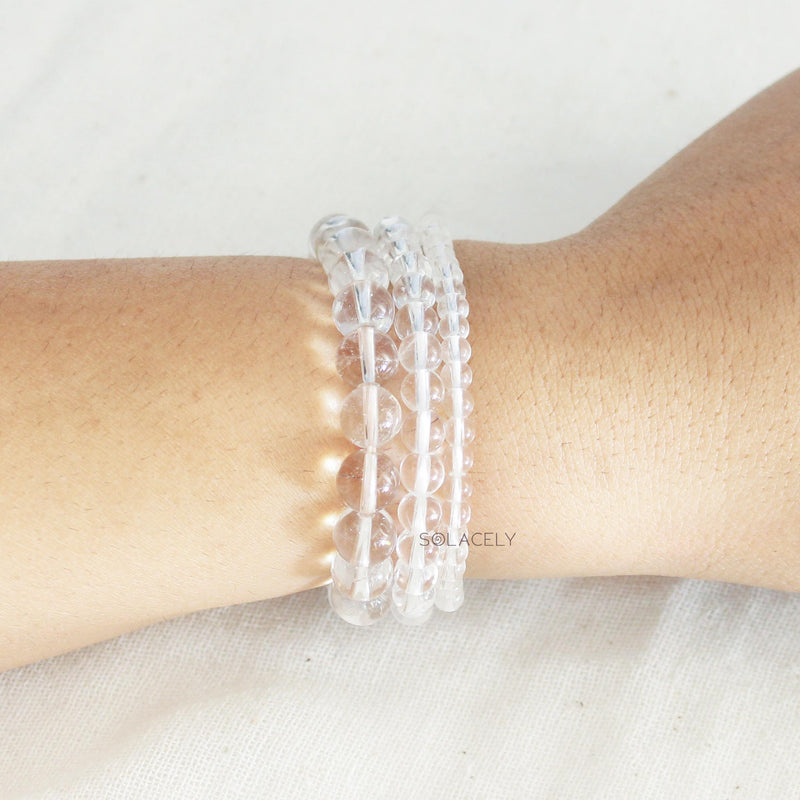
| Clear quartz | Clarity; used alongside another stone | General, paired |
Bloodstone earned its name honestly: a dark green chalcedony flecked with red jasper inclusions, and the red-on-green look is where both the name and the vitality association come from. Hematite is the other interesting one, since its reason is physical as well as symbolic. It is an iron oxide and noticeably dense, so it feels like something the moment you pick it up.
Building a pre-competition routine
- Fix the sequence and do not vary it. Same order, same timings, every event.
- Put the stone at a specific point. Most people place it after warm up and before final preparation.
- Hold it for a fixed count. Thirty seconds with a longer exhale than inhale.
- Say the same cue. One process-focused sentence. "Smooth first three hundred" beats "win".
- Leave it in the bag for the event. Practical rather than symbolic, and covered below.
- Build it in training first. A ritual introduced on competition day is just another thing to think about.
Our crystals for confidence guide covers the nerve side, and crystals for focus covers attention.
Why not to wear them while training
This gets skipped in most articles and it costs people their bracelets.
Sweat is hard on elastic and waxed cord, and a beaded bracelet worn through heavy training sessions will typically fail within months. Beads catch on bars, ropes and equipment. Most contact sports and many organised competitions prohibit jewellery outright, and a snagged bracelet mid-movement is a genuine injury risk.
The practical answer athletes use: keep the piece in the kit bag or locker, handle it as part of the pre-event routine, and put it on afterwards. That preserves both the object and the ritual.
Recovery and injury
Competition ends and the harder psychological work sometimes starts, particularly after a poor result or during injury. The traditional stones for that period differ from the performance ones: rhodonite and rose quartz for self-forgiveness, amethyst for sleep, lepidolite for the emotional dip of a long layoff.
Injury layoffs are where athletes most often report the practice mattering, and the reason is not mysterious. A layoff removes the routine that structured the week, and a small daily ritual partly fills that gap. Our crystals for spiritual strength guide covers the stones people turn to when the work gets hard, and crystals for strength covers the wider set.
What the routine sits alongside
Training quality and progression, sleep, nutrition and recovery are what build performance, and a pre-competition ritual works best on top of a sound programme rather than instead of one. The National Institute on Aging summarises the evidence for physical activity broadly, and the principles hold across levels: consistency and progressive load beat intensity in isolation.
On the psychological side, a short breathing or mindfulness practice attached to the crystal ritual strengthens the whole thing, and the National Center for Complementary and Integrative Health reviews that research. If motivation to train is the real obstacle, our crystals for energy and focus guide addresses it more directly.
Crystal practices described here are traditional and cultural, and nothing here is medical or coaching advice. Speak to a qualified coach or healthcare professional about training and injury.
Sources
- National Institute on Aging, Exercise and Physical Activity
- NCCIH, Meditation and Mindfulness: Effectiveness and Safety
Written by Chetena Sharma. Reviewed by the Solacely editorial team.
Frequently asked questions
About the author


Written by Chetna Sharma, crystal healing practitioner and co-founder of Solacely. Chetna has worked with healing crystals for over a decade and curates Solacely's protective stone collection.