Hematite and malachite pair a dense iron oxide with a soft copper mineral. Hematite is worn for grounding and steadiness, malachite for transformation and heart work. The pairing is popular, but the two stones need very different care: malachite is soft, chemically reactive, and should never be soaked in water.
Key takeaways
- Hematite is an iron oxide, Fe2O3, sitting around 5 to 6.5 on the Mohs scale. It is the world's most important ore of iron.
- Malachite is a copper carbonate hydroxide rated only 3.5 to 4 on Mohs. It is soft, porous, and reacts with acids.
- Never soak malachite, clean it with vinegar or household cleaners, or put it in an ultrasonic cleaner. Wipe it dry instead.
- Do not inhale dust from raw or unpolished malachite. Cutters work wet and use extraction for exactly this reason.
- The pairing is traditionally kept for grounding plus change: hematite as the anchor, malachite as the mover.
What is hematite?
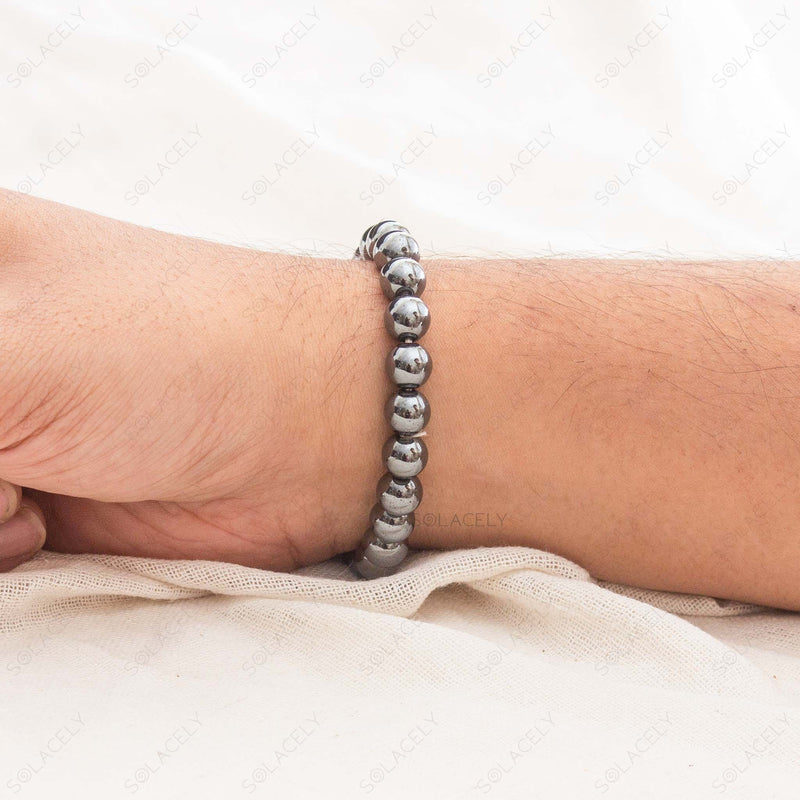
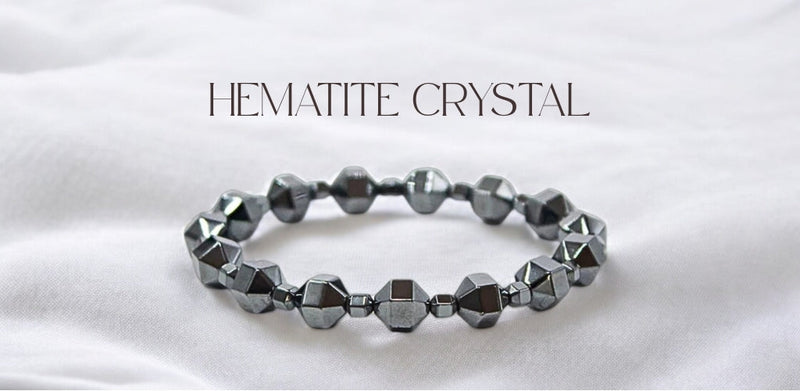
Hematite is an iron oxide with the formula Fe2O3, and it is the most important ore of iron mined today. It sits at roughly 5 to 6.5 on the Mohs hardness scale, feels noticeably heavy for its size, and leaves a red brown streak on unglazed porcelain.
Hematite occurs in several forms, from the metallic silver grey specular variety through to earthy red masses, and its name traces back to the Greek word for blood because of that streak. Polished beads look like gunmetal. Scratch one and the powder underneath is rust red.
Weight is a large part of why hematite gets described as grounding. A hematite strand is heavier than a quartz strand of the same bead size, and wearers feel the difference immediately. That physical anchor is the whole appeal, and it is covered in more depth in our hematite meaning and properties guide.
Hematite reaches the shelf in a few different finishes. Tumbled pieces keep a soft, rounded sheen, faceted beads throw sharp points of light, and specular hematite carries a glittering surface made of tiny plates. All of them share the same dense feel in the hand. Pick the finish you actually enjoy looking at, because that is the piece you will keep reaching for.
What is malachite, and why does it need careful handling?
Malachite is a copper carbonate hydroxide rated just 3.5 to 4 on the Mohs scale. That softness, combined with its copper content, is why it needs specific handling: no soaking, no acids, no ultrasonic cleaners, and no breathing in dust from raw or unpolished pieces.
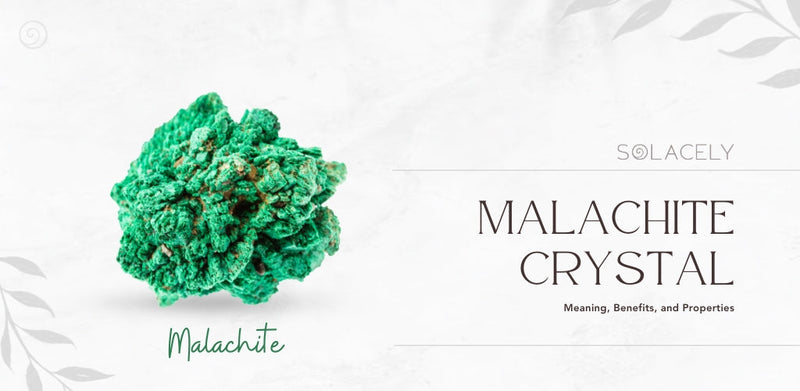
Malachite forms as a secondary copper mineral in the oxidised upper zones of copper deposits, which is why it so often turns up beside azurite and copper ore. Mineral references record a long history for it as a minor ore of copper and as a green pigment. The banded pattern people recognise comes from layers building up inside cavities over a very long time.
The care warning is not fussiness. Malachite reacts with acid, so lemon juice, vinegar, and standard household cleaners will etch the surface. It is porous enough that prolonged water contact dulls the polish and can loosen any stabilising resin. Wipe it with a dry or barely damp cloth, then let it air dry fully.
Dust deserves its own line. Lapidaries cut and sand malachite wet, with extraction running, because the powder carries copper compounds nobody should be inhaling. A finished, sealed, polished bead on a bracelet is a completely different situation from grinding a raw chunk in a closed room. The wider picture sits in our malachite meaning and properties guide.
Why do people pair hematite with malachite?
The pairing is used because the two stones are traditionally given opposite jobs. Hematite is the anchor: grounding, steadying, tied to the root chakra. Malachite is the mover: change, boundary setting, and heart chakra work. Worn together, the intention is change that does not knock you off balance.
There is a practical logic under the tradition. Anyone attempting a real shift, a job move, ending something, starting therapy, swings between momentum and overwhelm. A grounding stone plus a transformation stone is a tidy symbolic answer to that swing, and it gives the wearer two separate cues from one piece.
The colour contrast is genuine too. Metallic grey against banded green reads well on the wrist, and jewellery designers use the pairing on purpose: hematite as the frame, malachite as the focal point. If the steadier half is what interests you, the wider crystals for grounding guide covers more options.
How do you wear hematite and malachite together?
Stacking is the usual approach: one hematite strand and one malachite strand on the same wrist, or a single bracelet alternating both. Because malachite is far softer, keep the two from grinding against each other all day, and take the pair off before the gym, the shower, or the washing up.
- Bracelets. The most forgiving format. Use spacer beads so hematite is not constantly rubbing the malachite.
- Pendants. A malachite cabochon sits well near the heart, with hematite beads carrying the chain.
- Rings. Fine for hematite, poor for malachite. Rings take knocks and a 3.5 hardness will not survive many of them.
- At home. A hematite piece on a desk for focus, a malachite piece somewhere dry and out of direct sun.
Which wrist? Traditional practice puts receiving stones on the left and projecting stones on the right, though wearers disagree and comfort usually wins. If you want a harder, lower maintenance protective pairing instead, hematite and black tourmaline is the more conventional route.
How should you clean and care for each stone?
Care is where this pairing goes wrong most often, because people treat both stones the same way. Hematite handles a quick rinse and a dry cloth. Malachite handles almost nothing wet. The Mohs hardness scale shows the gap plainly: 5 to 6.5 against 3.5 to 4.
| Hematite | Malachite | |
|---|---|---|
| Composition | Iron oxide | Copper carbonate hydroxide |
| Hardness | Roughly 5 to 6.5 Mohs | Only 3.5 to 4 Mohs |
| Water | Quick rinse, dry at once | No soaking, damp cloth only |
| Acids and cleaners | Avoid | Never, it reacts and etches |
| Ultrasonic cleaner | Not advised | Never |
| Raw or unpolished dust | Keep out of eyes | Do not inhale, work wet |
Hematite has its own quirk. Because it is an iron mineral, it can develop surface rust spots if it is stored damp, so dry it properly rather than leaving it on a wet basin edge. Skip salt water for both stones, since salt is abrasive and corrosive in different ways for each.
For energetic cleansing, sound, moonlight, or a short rest on a selenite plate suits the pair. Neither needs to be submerged, and malachite genuinely should not be. Keep perfume, hairspray, and lotion off both, and put jewellery on last once everything else has dried.
Who suits this combination, and who should skip it?
It suits people already committed to a deliberate change who want something steadying alongside the push. It also suits wearers who like weight and strong visual contrast. It is a poor choice for young children, for anyone rough with their hands at work, and for anyone unwilling to follow malachite's care rules.
Skip it if you want a low maintenance everyday piece you never think about. Malachite is beautiful and it is high effort. If the green heart association draws you but the fragility puts you off, green jade and malachite covers a gentler entry point, and jade is considerably more forgiving in daily wear.
One final practical note on finishing. Stabilising malachite with resin is a long established practice across the coloured stone trade, and it is what makes a soft mineral wearable enough for everyday jewellery. It does shape the care routine: a stabilised piece takes a wipe more comfortably than an unsealed one, and neither should ever be soaked. Ask how your piece was finished, then care for it accordingly.
The properties described here reflect traditional and cultural belief around crystals. They are not medical claims and are not a substitute for professional healthcare. If you are managing a health concern, speak to a qualified practitioner.
Sources
Written by Chetena Sharma. Reviewed by the Solacely editorial team.
Frequently asked questions
About the author


Written by Chetna Sharma, crystal healing practitioner and co-founder of Solacely. Chetna has worked with healing crystals for over a decade and curates Solacely's protective stone collection.