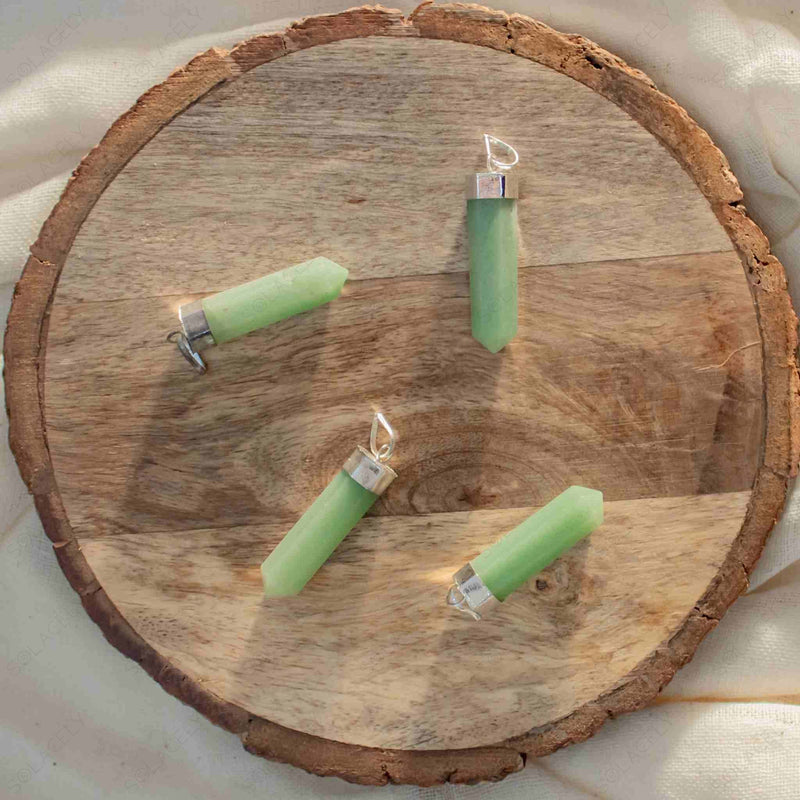
Green jade and malachite pair a stone of patient growth with a stone of sharp change. Jade is worn for prosperity and steadiness; malachite for transformation and refusing to repeat a pattern. One safety rule governs the pairing: malachite is a copper mineral and must never be used in water.
Key takeaways
- Jade covers two separate minerals, jadeite and nephrite, sold under one trade name.
- Malachite is a copper carbonate. Never make elixirs, never soak it, and never sand or grind raw material.
- Malachite is soft at 3.5 to 4 on the Mohs scale, so jade will scratch it if they share a pouch.
- The pairing is used for steady building plus decisive change: jade for the long game, malachite for the break.
- All metaphysical uses described here are traditional belief, not medical fact.
What green jade is
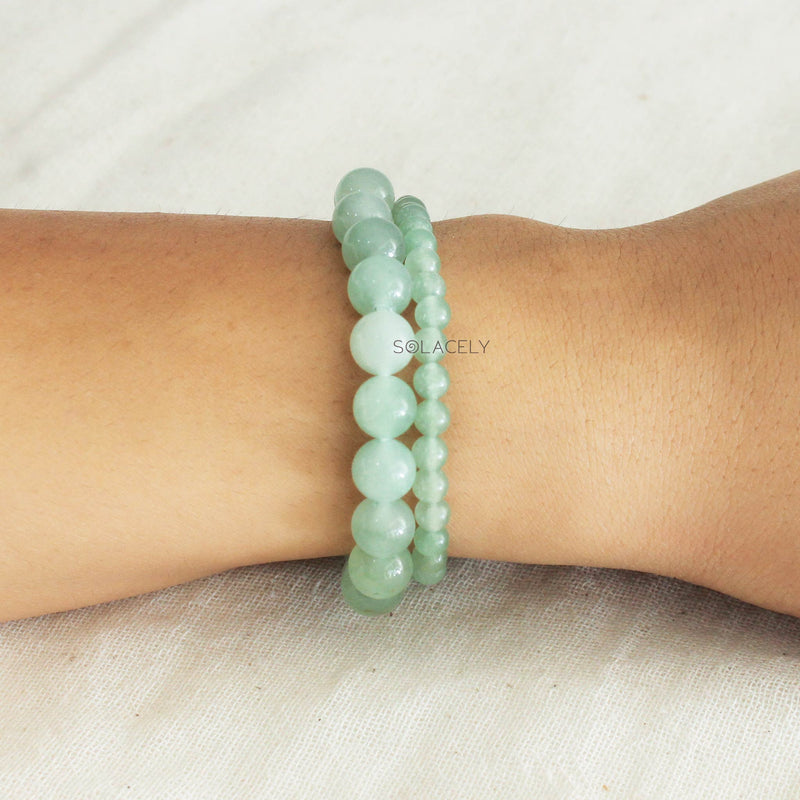
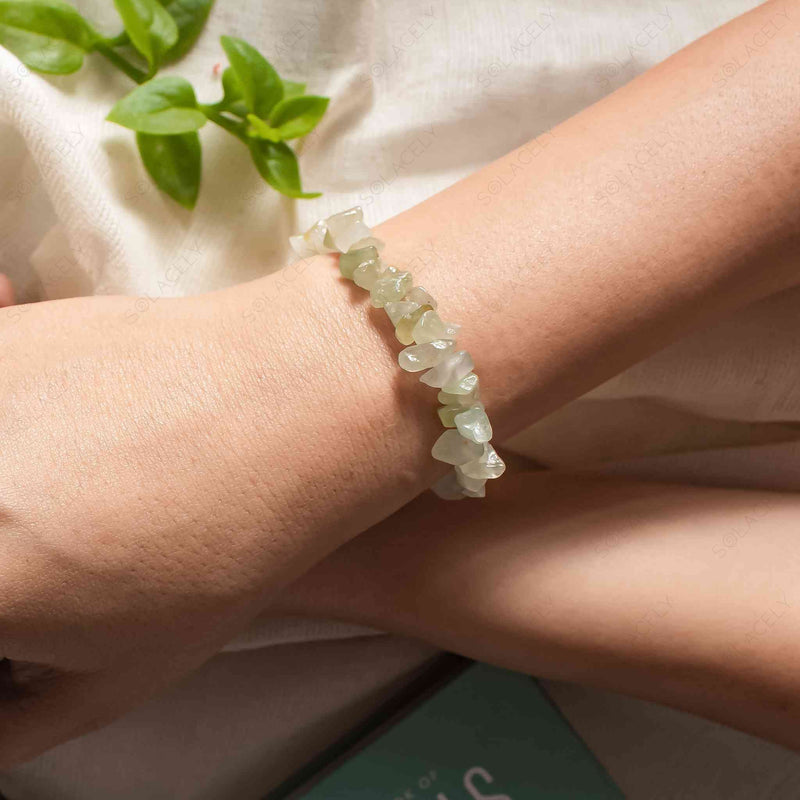
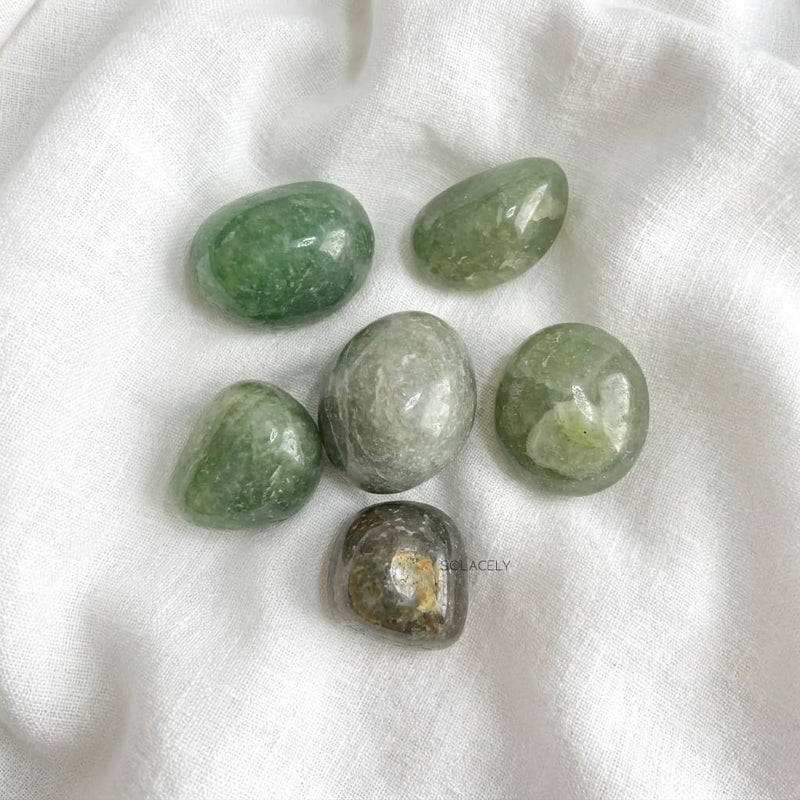
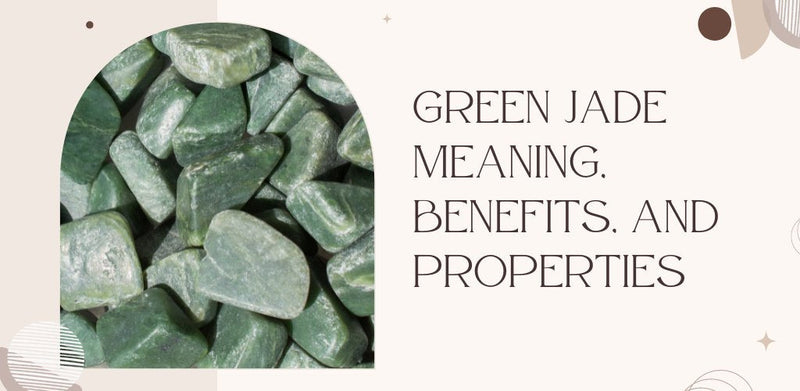
Green jade is a trade name covering two chemically distinct minerals. Jadeite is a pyroxene, nephrite is an amphibole, and the two were only distinguished from one another in the nineteenth century. Both have been carved for thousands of years across China, Mesoamerica and New Zealand.
The Gemological Institute of America notes that jadeite is the rarer and generally more valuable of the two, with fine imperial green material reaching prices that rival fine coloured diamond. Nephrite is more common and is the material behind most historical Chinese carving.
What matters for wear is toughness rather than hardness. Geology.com describes nephrite's interlocking fibrous structure as making it exceptionally resistant to breaking, which is why jade was used for axe heads long before it was used for jewellery. The green jade guide covers the varieties.
What malachite is, and the rule that comes with it
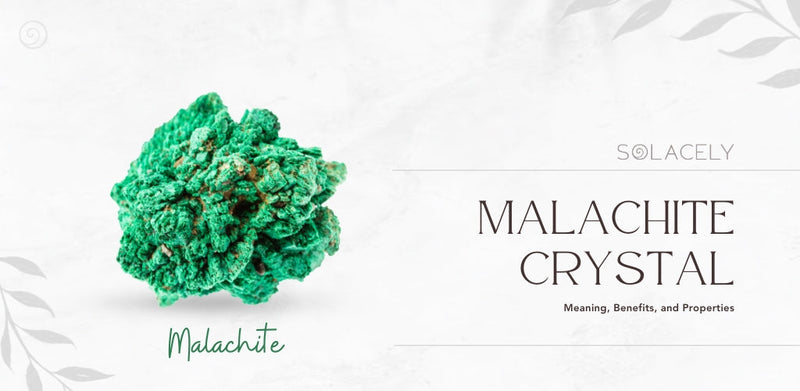
Malachite is a copper carbonate hydroxide, and its banded green comes directly from that copper content. It has been mined and carved since antiquity, and ground malachite was used as a green pigment in Egyptian and medieval European painting.
That copper content carries a real, practical warning rather than a theoretical one. Geology.com describes malachite as a copper carbonate hydroxide mineral, and copper compounds are toxic if ingested. Never make malachite elixirs, never soak it in water you intend to drink, and never sand, grind, or polish raw material without proper dust protection.
Polished, sealed pieces handled with dry hands are entirely fine, which is how the overwhelming majority of people use it. The risk is in ingestion and dust, not in ordinary wear. The malachite guide sets out the full picture.
Why the pairing works
The two stones are used for opposite tempos of the same ambition. Jade is patient, associated with slow accumulation, harmony, and luck that arrives through steadiness rather than by accident. Malachite is abrupt, associated with change, with seeing a pattern clearly, and with declining to repeat it.
Put together, the intention people describe is building something while being willing to cut what is not working. That is a genuinely useful combination for anyone running a business, leaving a career, or restructuring a life that has drifted. Jade alone can read as passive; malachite alone can read as restless.
There is a visual case too. Malachite's dramatic concentric banding against jade's even, waxy green is a strong contrast, and it is the reason the pairing turns up so often in statement pieces rather than everyday stacks.
Comparing green jade and malachite
| Green jade | Malachite | |
|---|---|---|
| Chemistry | Jadeite (pyroxene) or nephrite (amphibole) | Copper carbonate hydroxide |
| Hardness | Jadeite 6.5 to 7, nephrite 6 to 6.5 | 3.5 to 4 Mohs |
| Toughness | Exceptional | Poor, scratches and scuffs easily |
| Water | Warm soapy water, dry fully | Damp cloth only. Never soak, never elixirs |
| Traditional use | Prosperity, harmony, longevity | Transformation, protection during change |
| Best format | Bangle, pendant, carved piece | Pendant or polished cabochon, never a ring |
The hardness gap is the practical headline. Check the Mohs hardness scale before storing them together, because jade will scratch malachite readily and the damage does not polish out at home.
How to wear and place the pair
Malachite is the fragile half, so the format should protect it. A pendant is the sensible default, with jade taking whatever role gets more contact.
- Pendants. The best format for malachite by a wide margin, since it hangs clear of surfaces.
- Bracelets. Workable, but expect malachite beads to dull within a year of daily wear.
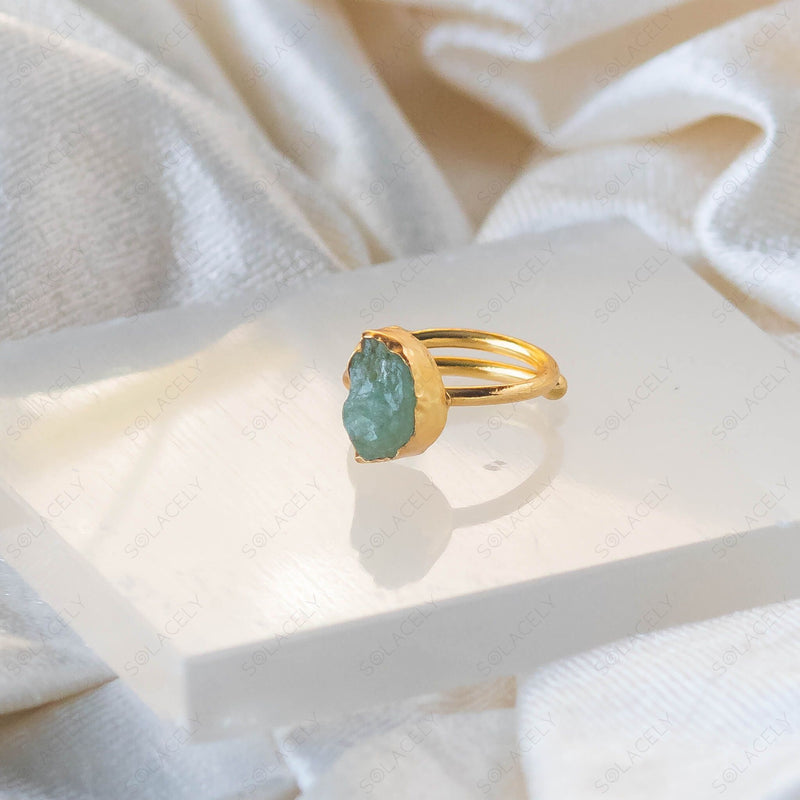
- Rings. Jade only. Malachite in a ring will be scratched and scuffed almost immediately.
- At home. Malachite on a desk or shelf where it will be seen but not handled constantly, jade wherever it will be touched.
One more caution for households with children or pets: keep malachite out of reach, since a chewed or swallowed piece is a genuine hazard rather than a theoretical one. If prosperity rather than change is the main goal, crystals for prosperity covers gentler options.
Buying both honestly
Jade is one of the most misrepresented stones on the market, and the vocabulary does a lot of quiet work. Type A means untreated jadeite, Type B has been bleached and polymer impregnated, and Type C has been dyed. Type B and C material can look excellent initially and yellow noticeably over a few years.
Separately, much of what is sold cheaply as jade is serpentine, aventurine quartz or dyed marble. None of those are bad stones, but they are not jade and the price should reflect it. Ask which mineral it is, and get the answer in writing on anything expensive.
Malachite has the opposite problem. It is inexpensive, so the risk is reconstituted material: crushed malachite bound in resin, pressed into blocks and cut. It looks convincing but the banding repeats unnaturally and the piece feels lighter than solid stone. Ask whether it is natural or reconstituted.
Care and cleansing
Jade is easy. Warm water, mild soap, a soft brush, dried fully. Avoid ultrasonic cleaners and steam on any dyed or polymer treated material, which covers a large share of the cheap market.
Malachite is the exception to almost every general rule. Wipe it with a barely damp cloth and dry it immediately. No soaking, no salt, no ultrasonic, no steam, no elixirs, and no abrasives. If the polish dulls, that is a job for a lapidary rather than a home fix.
For energetic cleansing, both suit moonlight or sound. Neither needs sunlight, and prolonged sun does malachite's colour no favours. For a gentler green pairing with the same jade base, see green jade and peridot, and for a protective one, green jade and black obsidian.
The properties described here reflect traditional and cultural belief around crystals. They are not medical claims and are not a substitute for professional healthcare. Malachite is a copper mineral and is toxic if ingested. Never use it in elixirs or drinking water, never grind or sand it without dust protection, and keep it away from children and pets. If you are managing a health concern, speak to a qualified practitioner.
Sources
Written by Chetena Sharma. Reviewed by the Solacely editorial team.
Frequently asked questions
About the author


Written by Chetna Sharma, crystal healing practitioner and co-founder of Solacely. Chetna has worked with healing crystals for over a decade and curates Solacely's protective stone collection.