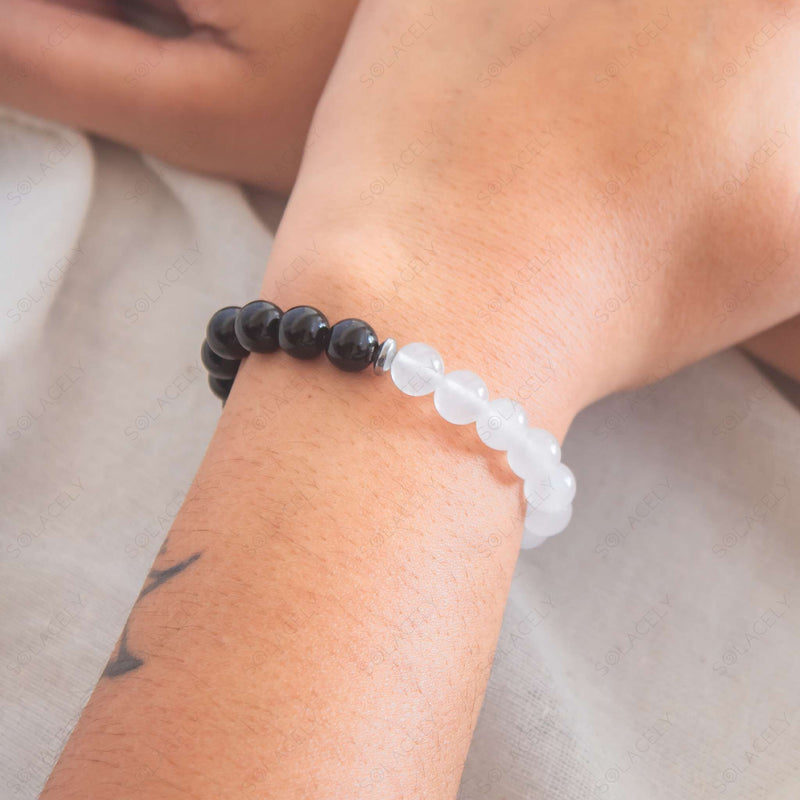
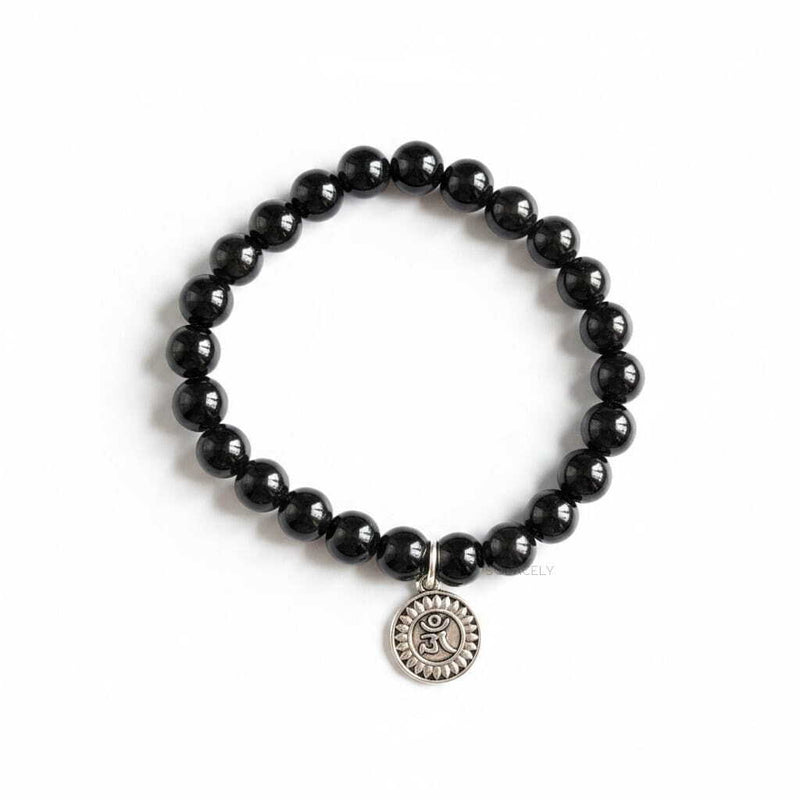
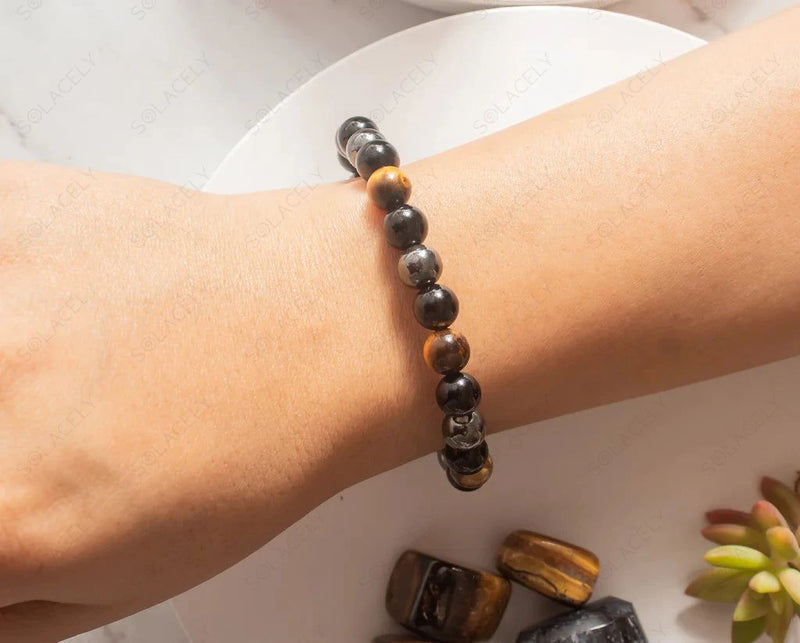
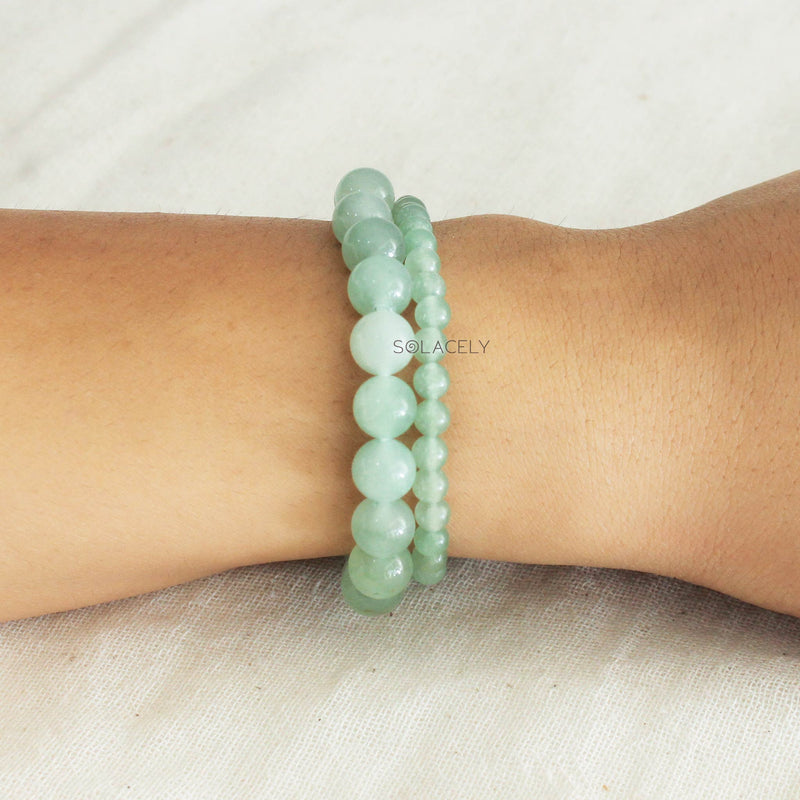
Green jade and black obsidian pair a stone of steady growth with a stone of hard boundaries. Jade is worn for prosperity, patience, and long-term luck; obsidian is worn for cutting off what drains you. Together they are used when you want to build something while protecting it.
Key takeaways
- Jade is not one mineral. Jadeite and nephrite are two chemically different stones sold under the same name.
- Obsidian is volcanic glass rather than a mineral, with a smooth amorphous structure.
- The pairing is used for growth plus boundaries: jade for the long build, obsidian for the cut off.
- Obsidian is soft at 5 to 5.5 on the Mohs scale and chips into razor edges, so avoid rings and raw shards.
- All metaphysical uses described here are traditional belief, not medical fact.
What green jade actually is
Green jade is a trade name covering two separate minerals. Jadeite is a pyroxene, nephrite is an amphibole, and they were only distinguished from one another in the nineteenth century. Both are green, both are extraordinarily tough, and both have been carved for thousands of years across China, Mesoamerica, and New Zealand.
The Gemological Institute of America notes that jadeite is the rarer and generally more valuable of the two, with the finest imperial green material commanding prices that rival fine coloured diamond. Nephrite is more common, and it is the material behind most of the historical Chinese carving people picture when they hear the word jade.
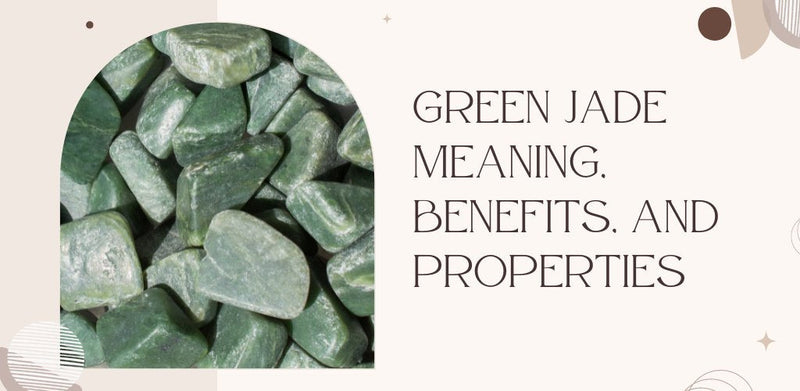
What matters for wear is toughness rather than hardness. Geology.com describes nephrite's interlocking fibrous structure as making it exceptionally resistant to breaking, which is why jade was used for axe heads and blades long before it was used for jewellery. A jade bangle survives knocks that would shatter a quartz one. The green jade meaning and properties guide goes deeper into the varieties.
What black obsidian actually is
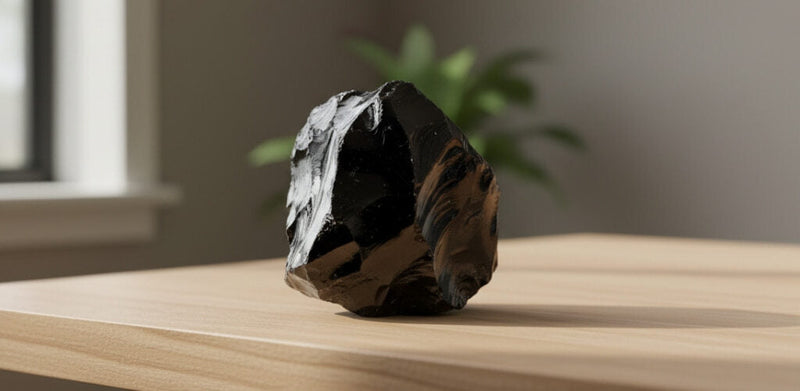
Obsidian is not a mineral. It is volcanic glass, formed when felsic lava cools so fast that atoms never arrange into a crystal lattice. That single fact explains almost everything about how it behaves, including why crystal-structure language does not really apply to it.
Geology.com describes obsidian as an igneous rock that breaks with a conchoidal fracture, producing curved surfaces and edges sharper than surgical steel. Ancient toolmakers exploited exactly this, and obsidian blades appear across the archaeological record from Anatolia to Mesoamerica. It is also why raw obsidian needs respect: a chipped edge will cut you.
In crystal practice that cutting quality became the metaphor. Obsidian is used for severing, for honesty, and for boundary setting rather than for gentle comfort. If you are choosing between the two most common black protection stones, black obsidian versus black tourmaline lays out the difference.
Why the pairing works
The two stones are traditionally used for opposite halves of the same problem. Jade is patient. It is associated with slow accumulation, with harmony, and with luck that arrives through steadiness rather than luck that arrives by accident. Obsidian is impatient by comparison, associated with seeing a situation plainly and ending it.
Put together, the intention is usually growth that is defended. People reach for this pairing when they are building something worth protecting: a business, a recovery, a set of new boundaries with family. Jade alone can read as passive. Obsidian alone can read as hard. The combination is the reason people wear them on the same wrist.
There is a visual argument too. Deep green against glassy black is a strong contrast that reads as serious rather than decorative, which suits the intention. It is a common choice for people who want a piece that does not look like a wellness accessory.
Comparing green jade and black obsidian
| Green jade | Black obsidian | |
|---|---|---|
| Material | Jadeite (pyroxene) or nephrite (amphibole) | Volcanic glass, amorphous structure |
| Hardness | Jadeite 6.5 to 7, nephrite 6 to 6.5 | 5 to 5.5 Mohs |
| Toughness | Exceptional, resists breaking | Poor, chips and flakes |
| Traditional use | Prosperity, harmony, longevity | Protection, truth, cutting ties |
| Best format | Bangle, pendant, carved piece | Tumbled bead, sphere, polished pendant |
| Avoid | Harsh chemicals, ultrasonic cleaners | Rings, knocks, raw shards near skin |
Check the Mohs hardness scale before storing them together. Jade will scratch obsidian, so they should not share a pouch unpadded.
How to wear and place the pair
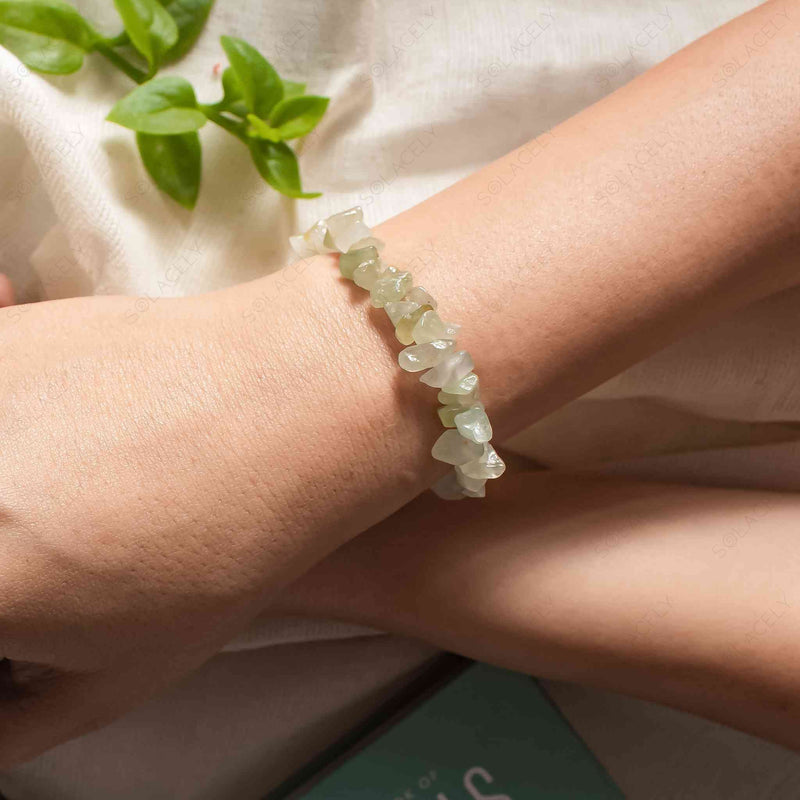
The simplest arrangement is a two-strand stack: obsidian on the outside, jade nearer the skin. The reasoning most wearers give is that the protective stone faces outward while the growth stone stays close, though this is convention rather than rule and plenty of people do the reverse.
- Bracelets. The forgiving format for both. A single strand alternating green and black also works and looks less like a stack.
- Pendants. Jade carves beautifully, so a jade pendant with obsidian beads is the more elegant version.
- Rings. Jade only. Obsidian in a ring will chip within months.
- At home. Obsidian near the entrance, jade on a desk or in the wealth corner of a room, following the usual feng shui placement.
If protection is the dominant reason you are here, the broader crystals for protection selection covers stronger options than obsidian alone.
Care and cleansing
Jade is easy. Warm water, mild soap, a soft brush, dried fully. Avoid ultrasonic cleaners and steam on any jade that has been dyed or polymer treated, which covers a large share of the cheap market. Ask the seller directly whether the piece is untreated, sometimes called Type A jadeite.
Obsidian is easier still but more fragile. Wipe it, dry it, and store it away from harder stones. Do not soak it for long periods and do not put it in salt, which dulls the glassy polish. Check polished obsidian occasionally for chips, since a fresh chip is genuinely sharp.
For energetic cleansing both suit moonlight, sound, or a rest on selenite. Neither needs sunlight, and prolonged sun does obsidian's polish no favours. For a related green pairing with a very different character, see green jade and malachite.
Buying green jade and obsidian honestly
Jade is one of the most misrepresented stones on the market, and the vocabulary sellers use is doing a lot of quiet work. Type A means untreated jadeite, Type B has been bleached and polymer impregnated, and Type C has been dyed. Type B and C material can look excellent on day one and degrade noticeably over a few years as the polymer yellows.
Separately, jade covers two minerals, jadeite and nephrite, and both are properly jade. Serpentine and aventurine quartz are handsome green stones in their own right and sometimes appear alongside under broader trade names, so it is worth simply asking which mineral a piece is. Any good seller will say plainly and will put it in writing on anything expensive.
Obsidian is the opposite problem. It is genuinely inexpensive, so the risk is not fakery but quality. Look for an even glassy polish without cloudy patches, check the piece under a light for chips along the drill holes on beads, and be wary of anything sold as a rare colour at a premium, since most colour variation in obsidian is common and not a marker of value.
The properties described here reflect traditional and cultural belief around crystals. They are not medical claims and are not a substitute for professional healthcare. Handle raw or chipped obsidian carefully, since freshly fractured edges are genuinely sharp. If you are managing a health concern, speak to a qualified practitioner.
Sources
Written by Chetena Sharma. Reviewed by the Solacely editorial team.
Frequently asked questions
About the author


Written by Chetna Sharma, crystal healing practitioner and co-founder of Solacely. Chetna has worked with healing crystals for over a decade and curates Solacely's protective stone collection.