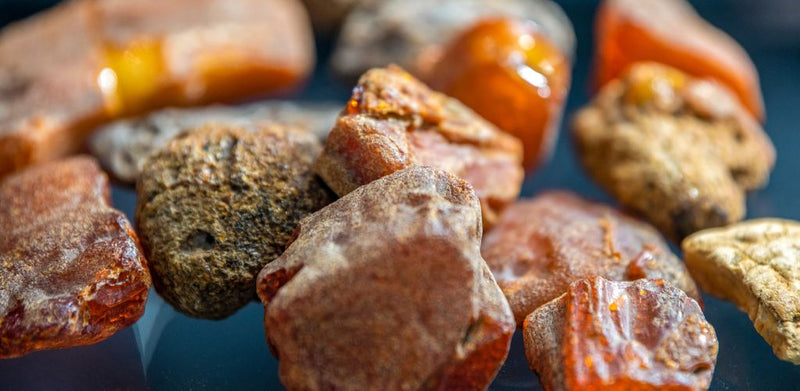
Peridot and sunstone are both warm, light-toned stones used for lift rather than protection. Peridot is gem quality olivine, worn for renewal; sunstone is a feldspar with a glittering internal flash, worn for optimism and confidence. The pairing is chosen by people coming out of a flat stretch.
Key takeaways
- Peridot is gem quality olivine and the August birthstone. It occurs in green only.
- Sunstone is a feldspar whose spangled glitter, called aventurescence, comes from tiny reflective copper or hematite platelets inside the stone.
- Both are relatively soft. Peridot is 6.5 to 7 Mohs and sunstone roughly 6 to 6.5, so pendants outlast rings.
- Sunstone has cleavage planes like all feldspars, meaning a sharp knock can split a piece that looks undamaged.
- Metaphysical uses described here are traditional belief, not medical fact.
What each stone is
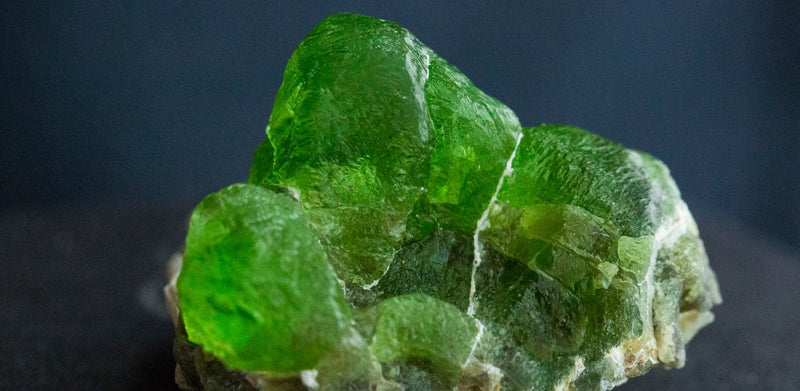
Peridot is the gem variety of olivine, a magnesium iron silicate that forms deep in the Earth's mantle and reaches the surface through volcanic activity. The Gemological Institute of America notes that peridot is one of the few gemstones found in a single colour, with the shade varying from yellowish green to deep olive depending on iron content.
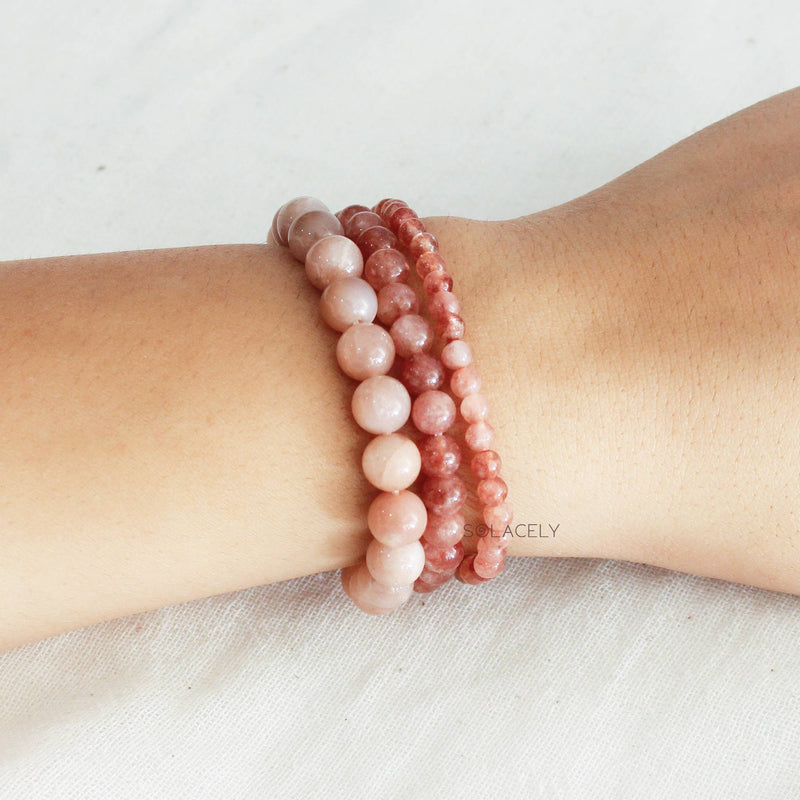
Sunstone is a member of the feldspar group, and its defining feature is entirely optical. Geology.com explains that the glitter comes from minute reflective inclusions of copper or hematite suspended within the crystal, which catch the light as the stone moves. Without that flash, sunstone is fairly plain material.
The two therefore differ in a way that matters for wear. Peridot's colour is intrinsic and shows in any light. Sunstone's appeal depends on movement, which makes a bracelet a far better format for it than a stone sitting still in a drawer. Our fuller treatment sits in the sunstone meaning and properties guide.
Why the pairing works
Both stones are used for lift, which is unusual. Most recommended pairings deliberately balance an active stone against a calming one. This one does not, and that is the point: it is a set built for people whose problem is flatness rather than agitation.
Peridot handles the letting go. It is associated with clearing out what has gone stale and beginning again without dragging the last chapter behind you. Sunstone handles the warmth: optimism, visibility, and being willing to be seen, which is often exactly what goes missing during a long dull period.
The practical consequence is that this is a poor set for anyone already running hot. If you are anxious rather than flat, a grounding stone belongs in the mix. Used for the right problem, though, the pairing is one of the more coherent warm combinations available.
Comparing peridot and sunstone
| Peridot | Sunstone | |
|---|---|---|
| Mineral group | Olivine, magnesium iron silicate | Feldspar |
| What creates the look | Iron in the crystal structure | Reflective copper or hematite platelets |
| Hardness | 6.5 to 7 Mohs | 6 to 6.5 Mohs |
| Main weakness | Brittle, sensitive to acids and heat shock | Cleavage planes, splits on a sharp knock |
| Traditional use | Renewal, lightness, letting go | Optimism, confidence, visibility |
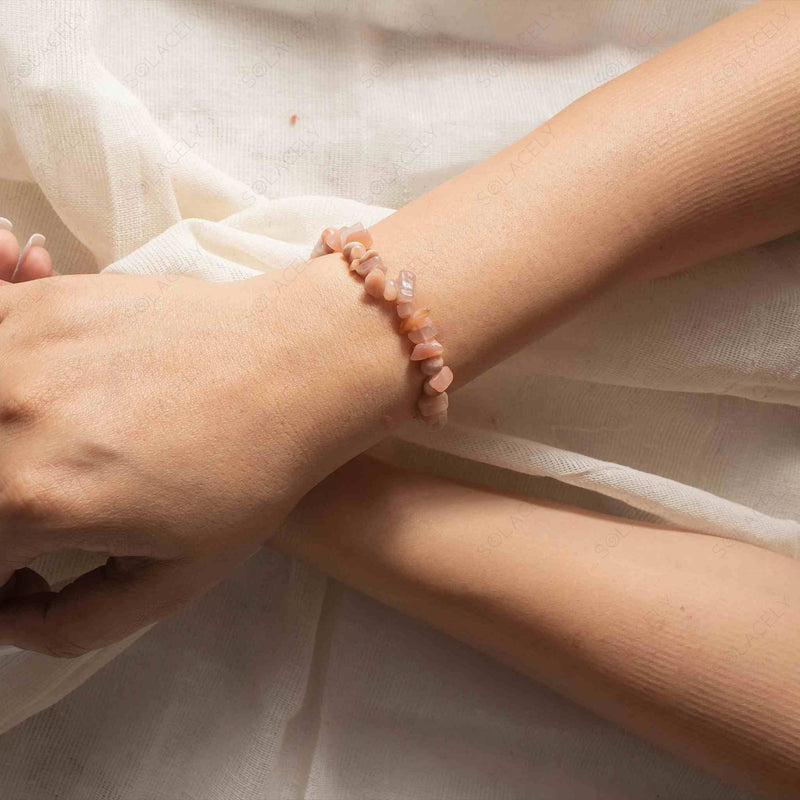
| Best format | Pendant or protected setting | Bracelet, where movement shows the flash |
Neither is a hard stone. Both will be scratched by quartz, which covers most of a typical crystal collection, so store them separately and check anything new against the Mohs hardness scale before putting it in the same box.
Buying sunstone without getting caught
Sunstone is one of the more commonly imitated stones, mostly because the effect is easy to fake. Goldstone, a manufactured glass with copper flecks suspended in it, is sold as sunstone constantly. It is a perfectly pleasant material but it is glass, and it should cost a fraction of the real thing.
The tell is the pattern of the flash. Real sunstone's aventurescence is uneven, with the sparkle concentrated in some areas and absent in others, because the platelets are not evenly distributed. Goldstone's glitter is uniform across the whole piece, and under magnification the flecks are all the same size and shape.
Geology.com notes that feldspars are the most abundant mineral group in the Earth's crust, so genuine sunstone is not scarce material and there is no reason to overpay. If a seller cannot say whether a piece is feldspar or glass, that is your answer.
How to wear the pair
Sunstone belongs on the wrist and peridot belongs somewhere protected. That single rule solves most of the durability problem with this combination.
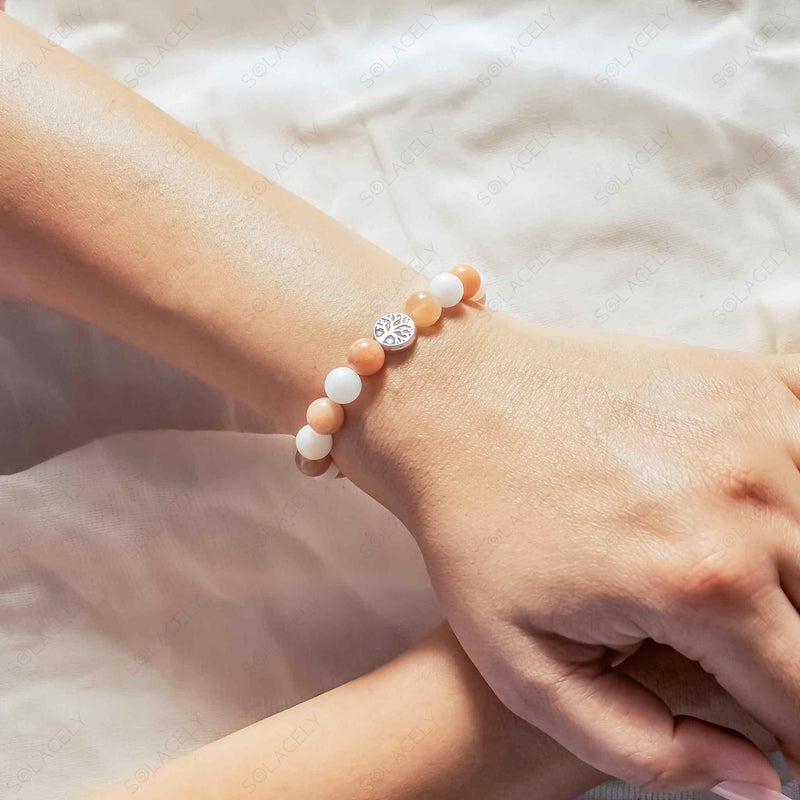
- Bracelets. Sunstone beads with peridot accents. Avoid a bracelet that is mostly peridot, which will get knocked.
- Pendants. Peridot as the drop, since a chain keeps it away from surfaces.
- Rings. Neither is ideal. If you must, choose sunstone in a bezel setting that shields the edges.
- At home. Both suit a windowsill for the look, but move them out of direct afternoon sun, which is hard on peridot's polish.
If you want the warm effect without peridot's fragility, peridot and citrine swaps in a harder quartz partner, and sunstone for positivity covers the sunstone half on its own.
Care and cleansing
Peridot is the more demanding stone. It reacts badly to acids, so keep perfume, hairspray and cosmetics off it and put jewellery on last. It also dislikes sudden temperature change, which rules out steam cleaning and hot-to-cold rinses. Warm soapy water, a soft cloth, and a full dry is all it needs.
Sunstone takes the same gentle treatment, with the addition that its cleavage makes it vulnerable to knocks rather than to chemicals. Do not tumble it in a jewellery box with harder beads, and never use an ultrasonic cleaner on a feldspar.
For energetic cleansing, moonlight or sound suit both. Sunlight is the traditional match for sunstone and short sessions are fine, but prolonged sun is not good for peridot, so if you cleanse them together do it by moonlight instead. If August is your birth month, the August birthstone guide covers what else sits alongside peridot.
Who this pairing suits
The clearest fit is somebody at the tail end of a dull period rather than in the middle of a crisis. Coming back from a long illness, restarting after a career gap, or the stretch after a move when the admin is done and nothing feels like yours yet. That is the specific gap these two stones are traditionally pointed at.
It fits badly for anyone whose difficulty is overload. A set with no grounding element in it gives you nothing to push against, and people in that state usually report the stones feeling irrelevant rather than unhelpful. Add hematite or black tourmaline if that describes you, or choose a different pairing entirely.
It also suits people who want jewellery they will genuinely wear. Both stones are attractive in ordinary daylight rather than only under a shop's display lighting, and the green and warm orange combination reads as considered rather than as a wellness accessory.
A note on peridot's history
Peridot has been mined for well over three thousand years, with the earliest known source the island of Zabargad in the Red Sea, which supplied Egyptian workshops. Much of what was described in antiquity as topaz appears to have been peridot from that source, which is a long standing confusion in the historical record rather than a modern marketing invention.
That deep history is part of why the stone carries associations with light and renewal in so many traditions at once. Material formed in the mantle, carried up by volcanoes, occasionally arriving inside meteorites, and mined continuously for millennia is a genuinely good story, and unlike most crystal lore it is documented rather than invented.
The properties described here reflect traditional and cultural belief around crystals. They are not medical claims and are not a substitute for professional healthcare. If you are experiencing persistent low mood or fatigue, speak to a GP or a qualified practitioner rather than relying on a crystal practice.
Sources
Written by Chetena Sharma. Reviewed by the Solacely editorial team.
Frequently asked questions
About the author


Written by Chetna Sharma, crystal healing practitioner and co-founder of Solacely. Chetna has worked with healing crystals for over a decade and curates Solacely's protective stone collection.