Sunstone and lepidolite are paired for the wired and tired state, where energy is needed but more stimulation would make things worse. Sunstone is traditionally kept for warmth and drive, lepidolite for taking the edge off, and the two do genuinely different jobs.
Key takeaways
- Sunstone drives, lepidolite softens. The pairing suits needing to start without becoming more agitated.
- Sunstone is a feldspar whose flash comes from tiny copper or hematite inclusions.
- Lepidolite is a lithium-bearing mica and a genuine commercial lithium ore.
- Lepidolite is very soft at 2.5 to 3 on the Mohs scale, so keep it off jewellery.
- Never soak lepidolite; water works into its layered structure and causes flaking.
Why the pairing works
Wired and tired is a specific state and most crystal sets handle it badly. Reaching for an energising stone makes the agitation worse; reaching for a calming one makes it harder to do anything at all. Neither is the answer on its own.
Sunstone supplies the warmth. It is traditionally kept for vitality and for coming back into things, and its character is genuinely sunny rather than sharp, which matters when somebody is already running hot.
Lepidolite takes the edge off without flattening. It is the softening stone of the pair, associated with settling rather than with sleep, and that distinction is why the combination holds together rather than pulling in two directions.
What sunstone actually is
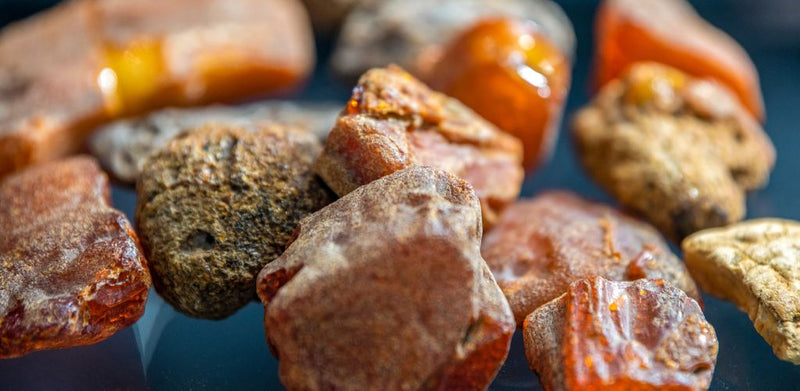
Sunstone is a feldspar, which puts it in the most abundant mineral group in the Earth's crust. Its defining feature is not the orange body colour but the flash that moves across it when the stone is turned.
That flash has a name, aventurescence, and it comes from tiny plate-like inclusions of copper or hematite suspended within the feldspar, catching light as the piece moves. Geology.com describes it as the optical effect that gives the stone its name, and it is the single thing to look for when choosing a piece.
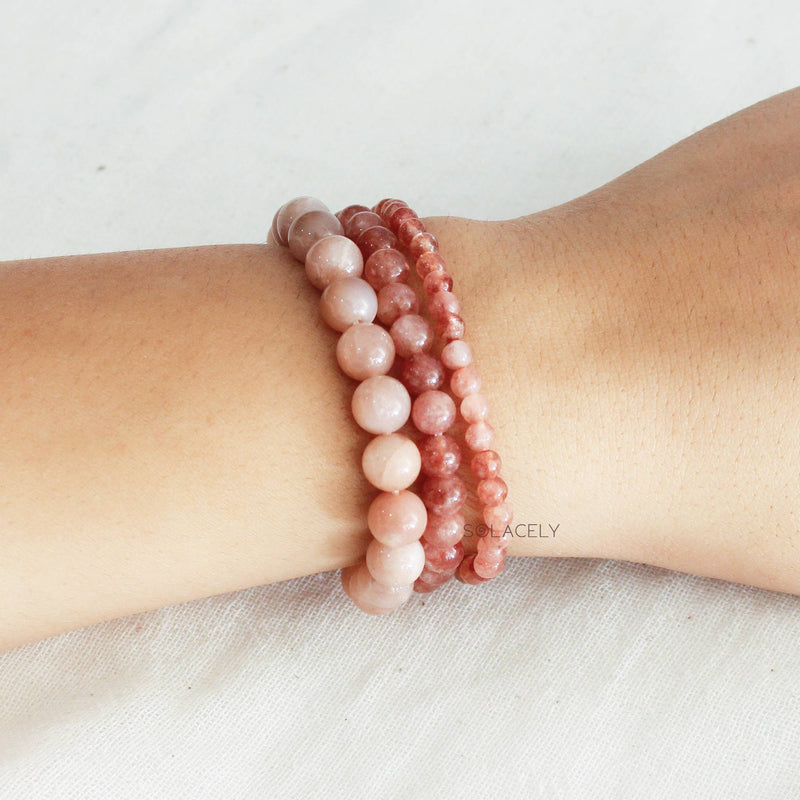
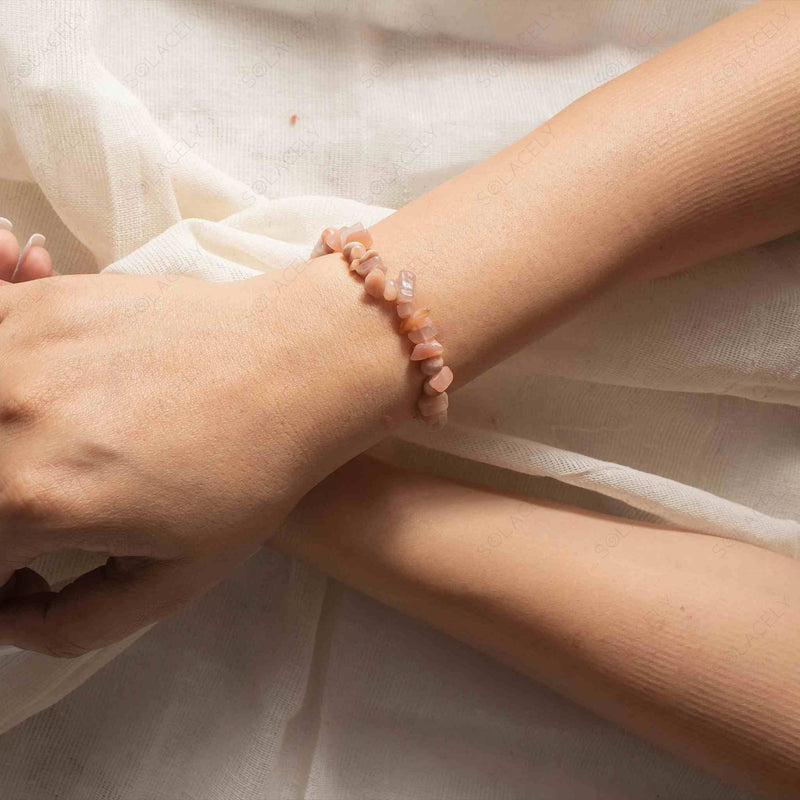
Practically it sits around 6 to 6.5 on the Mohs scale, which is softer than quartz and does have cleavage. It is fine as a pendant or a bracelet and less well suited to a ring worn every day. The sunstone guide covers the varieties in full.
What lepidolite actually is
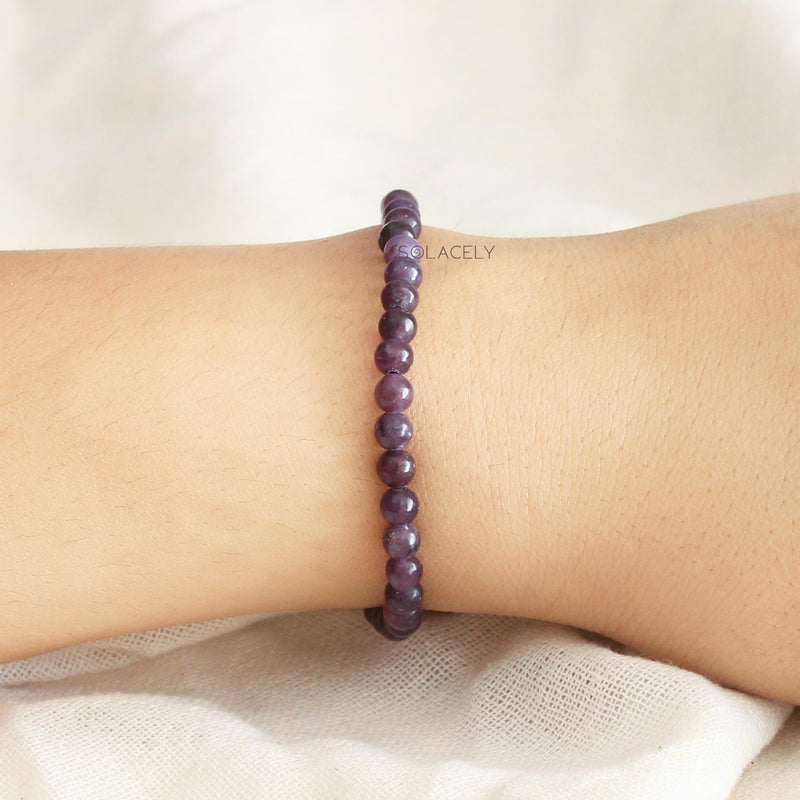
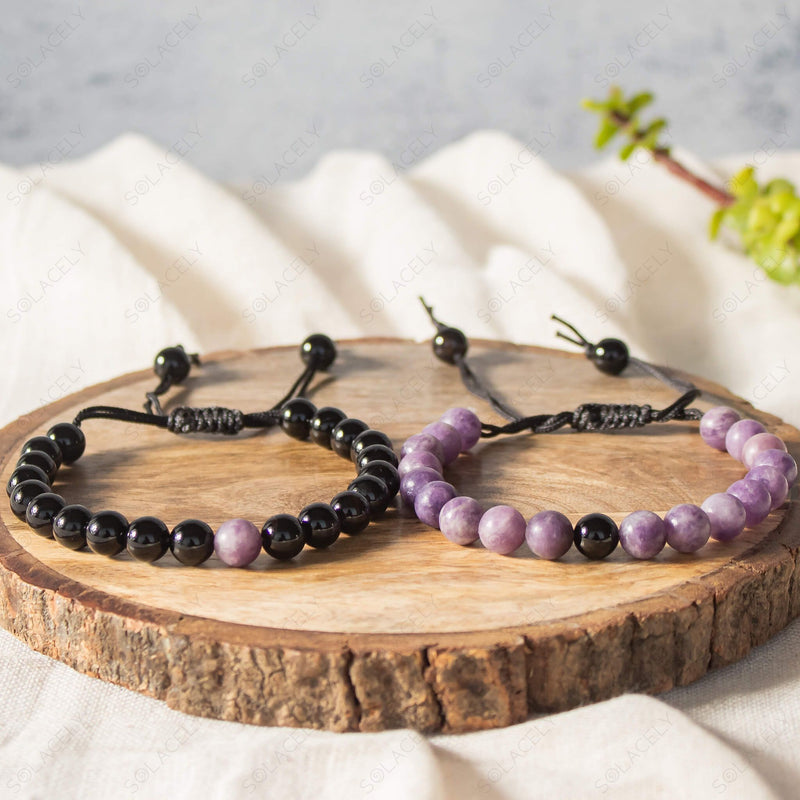
Lepidolite is a lithium-bearing mica, lilac to soft purple, and usually sold as a shelf or pocket piece rather than as jewellery. The reason for that is straightforward once you have held one.
It is very soft, around 2.5 to 3 on the Mohs scale, which means a fingernail will mark it. It also has perfect basal cleavage, the mica property of splitting into thin sheets, so a knock in the wrong place takes a layer off rather than chipping an edge.
The lithium is real and is part of the mineral structure. Lepidolite is a genuine commercial lithium ore, which is a good piece of geological trivia and nothing more than that. The lithium is chemically locked into the crystal and does absolutely nothing when the stone is handled, so it is not a health claim of any kind.
Comparing the two
| Sunstone | Lepidolite | |
|---|---|---|
| Mineral group | Feldspar | Mica |
| Hardness | 6 to 6.5 Mohs | 2.5 to 3 Mohs, very soft |
| Traditionally kept for | Warmth, drive, vitality | Settling, taking the edge off |
| Best format | Pendant or bracelet | Shelf or pocket piece only |
| Water | Fine, dry fully | Never soak; wipe only |
| Storage | Away from quartz and garnet | Its own pouch, always |
The hardness gap is unusually wide for a pairing, which is why these two should never share a pouch. Sunstone will mark lepidolite simply by sitting next to it.
How the pair is used
Because the formats differ so much, the placements more or less choose themselves.
- Sunstone worn. A pendant or bracelet, since its job is out in the day with you.
- Lepidolite kept still. A desk, a shelf, or a bedside, where nothing knocks it.
- Sunstone in the morning. Attached to starting, which is the harder half for most people.
- Lepidolite in the evening. Held for a few slow breaths as the day closes down.
Splitting them across the day rather than carrying both at once is what people who keep this pairing tend to settle on. Two stones attached to two distinct moments works considerably better than two stones in one pocket meaning nothing in particular.
Care and cleansing
Sunstone is easy. Warm water, mild soap, a soft brush and a full dry, with the only caution being prolonged strong sunlight, which can affect the body colour over a long period.
Lepidolite is the opposite and the rules are worth following exactly. Wipe it with a dry or barely damp cloth and nothing more. Do not soak it, do not put it in salt water, and never use an ultrasonic or steam cleaner. Water works its way between the mica layers and the piece flakes.
Store it alone in a soft pouch, well away from everything else you own, since at 2.5 to 3 on the Mohs scale essentially every other stone in a collection will scratch it. For energetic cleansing, moonlight or sound suit both stones and neither involves water.
Choosing the two
With sunstone, tilt the piece under a light and watch for the flash. Body colour ranges from a pale peach to a deep red orange, and a strong even shimmer matters more to how the stone looks day to day than the depth of the colour does.
With lepidolite, look at the sheen and the intactness. Good material has a soft pearly lustre across the surface and clean unflaked edges. Because the stone is so soft, damage in transit is common, so it is worth inspecting a piece properly rather than accepting whatever arrives.
Size is worth thinking about too. Lepidolite reads well as a larger palm piece precisely because it is not going to be worn, and a bigger stone that lives permanently on a desk is a more sensible buy than a small one that gets moved around and damaged.
Who this pairing suits
It suits people who are busy and running slightly hot. Anyone who recognises being too tired to work and too restless to stop is the person this combination is assembled for, and that is a genuinely common state.
It suits less well anyone who simply wants more energy, since lepidolite is doing the opposite of that, or anyone who wants a matched set to wear together. The hardness gap makes that impractical.
What it can honestly offer is two reminders pointed at two different halves of one difficult day. If the agitation is the dominant part rather than the tiredness, crystals for anxiety and stress covers a set built for that, and crystals for emotional healing covers the longer stretch afterwards.
The properties described here reflect traditional and cultural belief around crystals. They are offered for reflection and wellbeing and are not medical advice, a diagnosis, or a treatment for any condition. The lithium in lepidolite is locked into the mineral structure and has no effect when the stone is handled; always keep taking any medication exactly as prescribed. If stress, restlessness or persistent tiredness is affecting your daily life, please speak with a GP. Keep small stones away from young children, and never place crystals in drinking water.
Sources
Written by Chetena Sharma. Reviewed by the Solacely editorial team.
Frequently asked questions
About the author


Written by Chetna Sharma, crystal healing practitioner and co-founder of Solacely. Chetna has worked with healing crystals for over a decade and curates Solacely's protective stone collection.