Crystal Protection Necklaces: A Buyer's Guide


Nickel allergy affects an estimated 17% of women and 3% of men in dermatology research, and is one of the most common contact-dermatitis triggers in jewelry (Mayo Clinic). Most "best crystals for protection" guides skip the jewelry-specific decisions entirely — chain length, clasp type, daily-wear hardness, skin contact safety — even though those are the questions that actually decide whether a crystal necklace gets worn or sits in a drawer. This is the buyer's guide. The metaphysical content lives one click away on our protective-crystal pillar; this page is about the piece on your neck.
- Mohs 7+ is the daily-wear cutoff. Quartz family, Black Tourmaline, Tiger's Eye, Jade. Skip Selenite, Malachite, Calcite, Lapis for daily pieces.
- 18 inches is the standard chain length for adult pendants — sits just below the collarbone. 20 to 22 inches puts the stone at the heart position.
- Breakaway clasps are essential for kids' necklaces and recommended for active wearers (athletes, healthcare, climbing, parents of small children).
- Skip Malachite, Cinnabar, Galena, raw turquoise for skin contact (toxicity per IGS). The metal matters as much as the stone.
- Specify sterling silver (.925), 14k+ gold, gold-fill, or surgical stainless for the chain. "Gold-plated" or unmarked alloys often contain nickel.

- Pendant vs. beaded — which format suits the wearer
- Mohs hardness and what survives daily wear
- The 6 best stones for protection pendants (jewelry view)
- Chain length and body position
- Clasps, breakaway hardware, and safety
- Skin contact, toxicity, and nickel allergy
- Layering rules
- Care for worn crystals (different from loose stones)
Pendant vs. Beaded — Which Format Suits the Wearer
The first decision in any protection-necklace purchase. The two formats serve different daily practices, and the choice usually depends less on the stone than on how the wearer plans to use the piece.
| Format | Best for | Daily-wear feel | Watch out for |
|---|---|---|---|
| Pendant (single stone on a chain) | Focused daily-ritual practice; people who like to swap stones; layering | One stone at one body position; fixed point of attention | Heavy stones pull thin chains; size the chain to the pendant weight |
| Beaded (multiple stones strung together) | Ambient, all-day contact practice; people who don't want to think about it once it's on | Stones distributed across the throat and chest; no focal point | Locks in one stone choice; harder to layer; thread or wire can fail at one bead and dump the lot |
Pendants dominate the protection category for two reasons. They are easier to maintain (one stone to cleanse, one chain to clean), and they swap with the practice — Black Tourmaline today, Amethyst before sleep — without requiring a new piece. Beaded necklaces are popular as gifts and as one-and-done daily wear, but they don't fit as cleanly into a swappable practice.
Mohs Hardness and Daily-Wear Durability
The single most useful number when buying a crystal necklace is the stone's Mohs hardness. The Mohs Scale rates mineral hardness from 1 (talc, soft enough to scratch with a fingernail) to 10 (diamond). The relevant cutoff for daily-wear jewelry is Mohs 7 — at or above this, the stone tolerates the friction of daily contact with skin, fabric, and other accessories without surface damage; below it, the stone scuffs, dulls, or chips under everyday wear.
| Stone | Mohs | Daily wear? | Note |
|---|---|---|---|
| Selenite | 2 | No | Crumbles. Display only. |
| Calcite | 3 | No | Scratches under a fingernail. |
| Malachite | 3.5–4 | No | Also toxic for prolonged skin contact. |
| Apatite | 5 | No | Borderline; will scuff. |
| Lapis Lazuli | 5–5.5 | Occasional | Special-occasion piece, not a daily wear. |
| Hematite | 5.5–6.5 | Borderline | Holds up but oxidizes; wipe dry. |
| Labradorite | 6–6.5 | Borderline | Will scratch over years of daily wear. |
| Jade (nephrite/jadeite) | 6.5–7 | Yes | Excellent. Centuries of daily-wear tradition. |
| Quartz family (Amethyst, Citrine, Smoky Quartz, Clear Quartz, Tiger's Eye) | 7 | Yes | The default daily-wear category. |
| Black Tourmaline | 7–7.5 | Yes | Ideal protection-pendant stone. |
| Topaz | 8 | Yes | Rare in protection jewelry but very durable. |
The 6 Best Stones for Protection Pendants
Each of these passes the Mohs 7 daily-wear bar and has a defensible place in the protection tradition. For the metaphysical case for each stone, see our protective-crystal pillar guide; this section covers each as a piece of jewelry.
1. Black Tourmaline — The Default Protection Pendant
Mohs 7 to 7.5. Tumbled or wire-wrapped raw forms are both common. Tumbled is more comfortable against skin; raw forms have a stronger visual presence but can catch on clothing. Black Tourmaline is the most-cited daily-wear protection stone, and the durability supports the role. Pair with sterling silver or oxidized silver — the dark stone reads better against cool metals than warm gold.
2. Amethyst — The Most-Wearable Protection Pendant
Mohs 7. Purple and visually softer than Black Tourmaline; suits daily-office and gift-giving contexts where a dark stone reads heavy. The colour does fade with prolonged sun exposure, so an Amethyst pendant should not be left lying on a sunny bedside table for weeks at a time. Pairs equally well with silver or rose gold.
3. Labradorite — The Empath's Pendant (with caveat)
Mohs 6 to 6.5. Below the daily-wear cutoff, technically; will scratch over years of daily wear. The reason it earns a place anyway: the iridescent flash that makes Labradorite the empath's stone in the tradition (covered in our psychic protection guide) is also what makes it the most visually striking pendant in this category. Acceptable as a primary piece if the wearer accepts surface wear over time, or as an occasional-wear pendant alongside a more durable daily piece.
4. Smoky Quartz — Subtle Daily-Wear Protection
Mohs 7. Brown-to-charcoal quartz; the most discreet protection pendant. The colour reads as "neutral pendant" rather than "crystal", which makes it the standard recommendation for professional contexts where a more obvious stone would feel out of place.
5. Hematite — Grounding (Non-Magnetic Only)
Mohs 5.5 to 6.5. Borderline durability; pairs naturally with grounding-focused practice. The critical buyer warning: many products marketed as "magnetic hematite" are not hematite at all — they are a synthetic ceramic ferrite material containing rare-earth (neodymium) magnets. Swallowed magnets can attract through intestinal walls and cause perforations and fatalities (U.S. CPSC, 2022).
6. Clear Quartz — The Versatile Layering Piece
Mohs 7. The all-purpose pendant; works as a primary protection piece or as the layering complement to a darker stone. Faceted Clear Quartz pendants read closer to fine jewelry than tumbled stones do, which suits buyers who want the ritual practice without an obvious "crystal" aesthetic.
Chain Length and Body Position
Chain length is the most under-discussed aspect of crystal-pendant buying. The wrong length turns an otherwise good pendant into a piece the wearer fidgets with, tucks under collars, or quietly stops wearing.
| Length | Where it sits | Best for |
|---|---|---|
| 14 inches (collar) | Tight at the base of the throat | Skip for crystal pendants — the stone weight pulls uncomfortably |
| 16 inches (princess, short) | Just at or above the collarbone | Small pendants, layering on top, kids' necklaces |
| 18 inches (standard) | Just below the collarbone | Most adult crystal pendants; the default size |
| 20 inches | Below the collarbone, above the bust | Larger pendants; heart-position practice |
| 22 inches | At the sternum | Heavy pendants; classical heart-chakra placement |
| 24+ inches (matinee) | Below the bust, lower body | Statement pendants; layering as the bottom piece |
Clasps, Breakaway Hardware, and Safety
The clasp choice is a small detail that decides daily-wear viability. Three categories matter:
- Standard clasps — lobster, spring-ring, hook. Hold reliably under normal wear. Default choice for office and adult daily wear.
- Magnetic clasps — pop apart with a strong tug. Convenient for arthritic hands and one-handed use. Less reliable in active settings (gym, sport, climbing).
- Breakaway clasps — designed to release under sudden tension. Essential for any necklace worn by a child, by an athlete during sport, by a healthcare worker (where a patient could grab the chain), or by anyone whose work or play puts the chain at catch-risk.
The U.S. Consumer Product Safety Commission (CPSC) regulates jewelry safety primarily through lead content limits (16 CFR 1500.91), but the practical safety risks for crystal necklaces are mostly clasp-and-cord failures: a chain that doesn't release when caught, or a string of beads where one bead detaches and the rest follow as a swallowing hazard for an under-3.
Skin Contact, Toxicity, and Nickel Allergy
Two categories of skin-contact concerns: the stone, and the metal.
The stone
Most tumbled, fully-finished stones are safe for prolonged skin contact. The category's hard skips, per the International Gem Society's Gemstone Toxicity Table:
- Malachite — copper carbonate; copper leaches with moisture and skin oils. Skip for any pendant worn against skin.
- Cinnabar — mercury sulphide. High toxicity. Skip entirely.
- Galena — lead sulphide. High toxicity. Skip entirely.
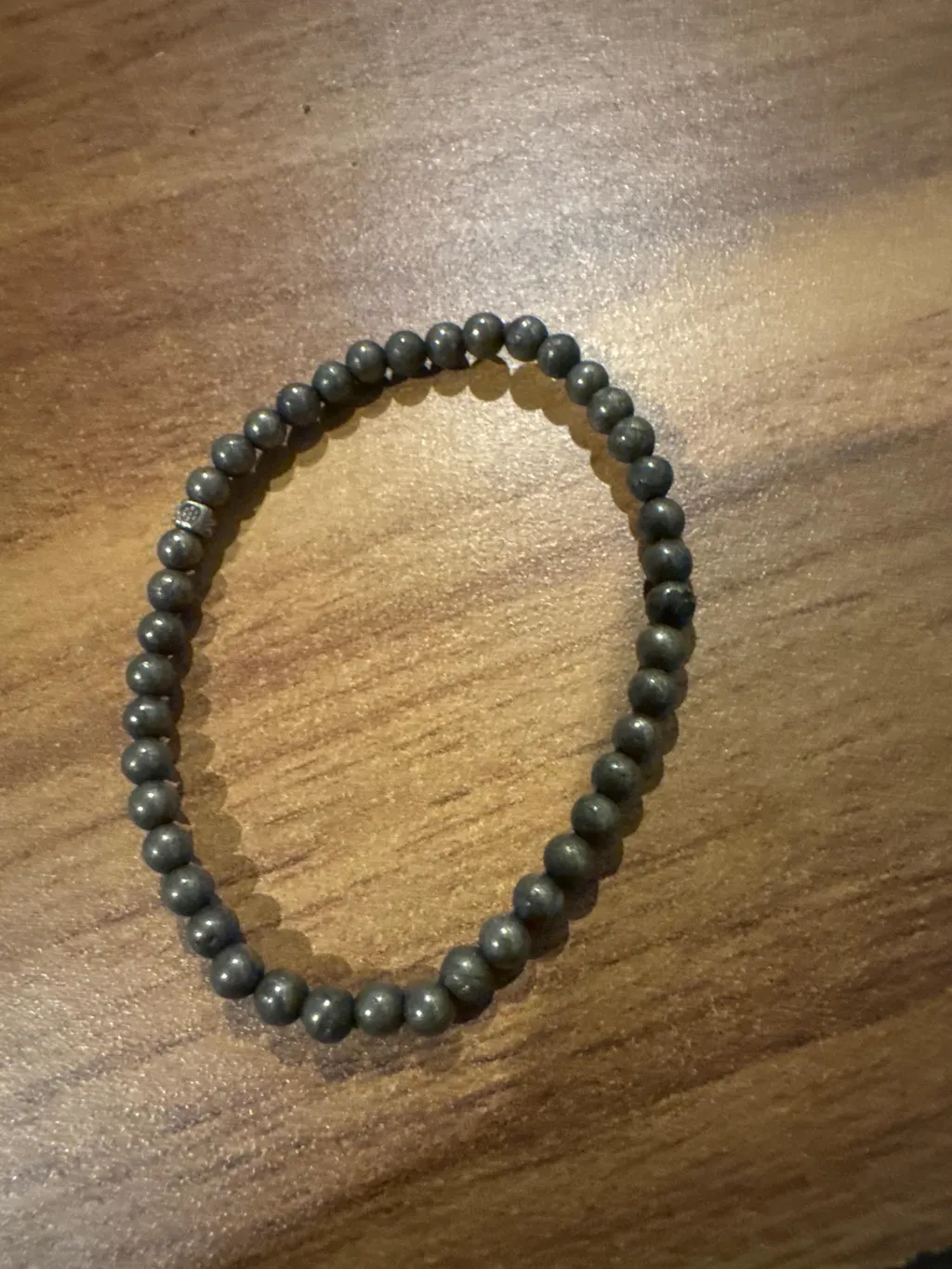
- Pyrite — iron sulphide. Reacts with sweat to form sulphuric residue. Skip for pendants.
- Raw or unstabilized Turquoise — porous, absorbs body oils and sweat, then degrades.
The metal
Nickel allergy is the dominant skin-contact concern in jewelry. An estimated 17% of women and 3% of men have nickel sensitivity (Mayo Clinic), and the reaction (red, itchy, sometimes blistering skin where the chain touches) develops over repeated exposure. The European Union's nickel restriction (REACH Annex XVII Entry 27) limits nickel release in jewelry sold in the EU; U.S. jewelry has no equivalent federal limit, so the buyer carries the responsibility.
| Metal | Nickel risk | Daily wear | Cost |
|---|---|---|---|
| Sterling silver (.925) | Low (some alloys add a trace) | Excellent | $$ |
| 14k+ solid gold | Very low (white gold may have nickel; ask) | Excellent | $$$$ |
| Gold-fill (14/20 or 12/20) | Low | Good (years of wear before wear-through) | $$ |
| Surgical stainless steel (316L) | Low (some sensitivity reports) | Excellent | $ |
| Plated brass / "fashion gold" | High (plating wears off, exposes nickel base) | Poor | $ |
| Unmarked alloys / "white metal" | Unknown — assume high | Avoid | $ |
Layering Rules
If layering more than one crystal necklace, the practical rules are about visual proportion and physical comfort, not about energetic compatibility.
- Different lengths. Stack at 16, 18, and 20 inches (or wider gaps). Same-length chains fight each other and tangle.
- One focal piece. One pendant is the visual centre; smaller stones layer above or below. Two equal-weight pendants compete and look busy.
- Same metal family. All-silver or all-gold layers cleanly. Mixing silver and gold can work but only deliberately — three silver pieces with one rose gold piece reads accidental.
- Watch the clasps. Multiple chains tangle at the back of the neck. Use a clasp-keeper or layering necklace separator if all three are worn together for hours.
The metaphysical layering rule worth knowing: the tradition does not treat protection stones as cumulative. Wearing three protective pendants is not three times as protective; it usually reads as anxious. One primary plus one neutral layering piece (Clear Quartz works) is the most-cited daily setup.
Care for Worn Crystals
Crystals worn on the body need a different care rhythm than stones in fixed placements. Body oils, sweat, and the friction of daily contact accelerate wear.
| What to do | How often |
|---|---|
| Wipe stone with soft microfibre cloth | Daily, when removing |
| Clean chain with mild soap and rinse | Monthly |
| Cleanse stone (moonlight, sound, Selenite plate) | Weekly |
| Inspect setting and clasp | Monthly — bezels loosen, clasps wear |
| Polish silver chain | Quarterly or as needed |
| Take off before showering, swimming, sleeping | Every time |
Where the Practice Stops
A crystal necklace is jewelry with a meaningful object attached. It does not provide physical security, replace medical or psychiatric care, deflect EMF, or interact with any of the actual systems by which the world causes problems. Anyone selling crystal pendants on those promises is overstating the case.
What the practice does, reliably, is anchor a small daily attention practice — putting on the necklace in the morning, removing it at night, occasionally touching it during the day — to a physical object the wearer has chosen with care. That structure of attention has a modest, real value, and the right necklace (durable stone, compatible metal, comfortable length, appropriate clasp) makes the practice sustainable for years rather than a few weeks. The metaphysical claim and the practical jewelry choice are doing two different jobs; both matter.
Frequently Asked Questions
What chain length is best for a protection pendant?
18 inches is the standard length for adult crystal pendants — it sits just below the collarbone, where most pendant designs are sized to look balanced. 20 to 22 inches places the stone at the sternum, near the traditional heart-chakra position the metaphysical tradition associates with pendant protection. Skip 14 to 16 inch chokers for crystal pendants; the stone weight pulls them tight and uncomfortable. For pendants over half an ounce, use 20 inches or longer to let the weight hang naturally.
Which crystals are durable enough to wear every day?
Stones at Mohs hardness 7 or above tolerate daily wear without surface damage. That includes the quartz family (Clear Quartz, Amethyst, Citrine, Smoky Quartz, Tiger's Eye), Black Tourmaline (7 to 7.5), and Jade (6.5 to 7). Skip Selenite (Mohs 2 — crumbles), Malachite (3.5 to 4 and toxic), Calcite (3), and Lapis Lazuli (5 to 5.5) for daily-wear necklaces. Labradorite at 6 to 6.5 is borderline; fine for occasional wear, will scratch over time as a daily piece.
Are crystal necklaces safe for skin contact?
Most tumbled, fully-finished stones are safe for skin contact. Skip Malachite (copper toxicity), Cinnabar (mercury), Galena (lead), and any raw or unstabilized turquoise — all are rated moderate-to-high toxicity by the International Gem Society. The bigger daily-wear issue is the metal: nickel allergy affects an estimated 17 percent of women and 3 percent of men, per dermatology research. Look for sterling silver (.925), 14k+ gold, gold-fill, or surgical-grade stainless steel chains rather than nickel-plated alloys.
Should I buy a pendant or a beaded necklace?
Pendant — single stone on a chain — is the most common protection necklace format. The stone sits at one fixed body position (collarbone, sternum, or heart) and is the focus of the daily ritual cue. Beaded necklaces (multiple smaller stones strung together) distribute the practice differently: less focal, more about ambient daily contact. Pendants are easier to swap stones between (one chain, several pendants); beaded pieces lock in one stone choice. Pendants also handle layering better.
What are breakaway clasps and do I need one?
Breakaway clasps are designed to release under sudden tension — usually magnetic or low-strength snap closures that pop open if the necklace is pulled hard. They are strongly recommended for children's necklaces and for adults whose work or sport puts them at risk of catching the chain (climbers, healthcare workers, athletes, parents of small children). For everyday office wear, a standard lobster or spring-ring clasp is fine. Match the clasp choice to the wearer's daily risk profile.
Can I shower or sleep in a crystal necklace?
Skip showers for any necklace; soap residue dulls polish on most stones, and shampoo and conditioner contain ingredients that interact poorly with sterling silver chains. Sleeping in a pendant is fine for stones at Mohs 7+ but the chain is the issue: it can tangle, snap, or press into skin overnight. The traditional practice removes the necklace at night and places it on a Selenite plate or bedside dish, which doubles as the daily cleansing rhythm.
How do I clean a crystal necklace without damaging it?
Wipe the stone with a soft microfibre cloth daily. Once a week, place the whole necklace on a Selenite plate or expose to moonlight overnight to recharge per the metaphysical tradition. For physical cleaning of the chain (separately from the cleansing practice), use a mild soap solution and rinse thoroughly. Skip ultrasonic cleaners and steam — many crystals have internal fractures that fail under those stresses. Skip salt water entirely; it pits sterling silver chains and reacts with several common stones (Pyrite, Hematite).
About the author