The stones most often reached for when anger flares are amethyst, blue lace agate, howlite, lepidolite, rose quartz, blue calcite and black tourmaline, with carnelian used when anger is really blocked frustration. Each is traditionally kept for calm, patience or grounding. In the moment, people hold one, feel its weight and temperature, and slow their breathing before they speak.
Key takeaways
- The stones traditionally named for anger are amethyst, blue lace agate, howlite, lepidolite, rose quartz, blue calcite and black tourmaline, plus carnelian when anger masks blocked frustration.
- Tradition splits them by type: cool blue and purple stones for hot, reactive flare ups, pink and heart linked stones for slow burning resentment.
- Amethyst is a variety of quartz sitting at 7 on the Mohs scale, hard enough to live loose in a pocket all day.
- Most people use them as a physical reminder. A tumble in your hand or a bracelet on your wrist is a cue to pause and breathe before you speak.
- Anger that damages relationships or feels unsafe deserves a qualified professional, with your stone kept alongside that rather than in place of it.
Which crystals are traditionally used for anger?
Eight stones come up repeatedly: amethyst, blue lace agate, howlite, lepidolite, rose quartz, blue calcite and black tourmaline, with carnelian added when the anger is frustration with nowhere to go. Each carries a long association with calm, patience or grounding, and each is used a little differently.
These associations come from crystal lore, colour symbolism and a few centuries of jewellery habit. Which one suits you usually comes down to what you are drawn to and what you will actually remember to pick up, so most people start with a single stone and add from there.
| Stone | Traditional association | How it is used |
|---|---|---|
| Amethyst | Calm, clear thinking, self control | Tumble in a pocket, or a bedside cluster |
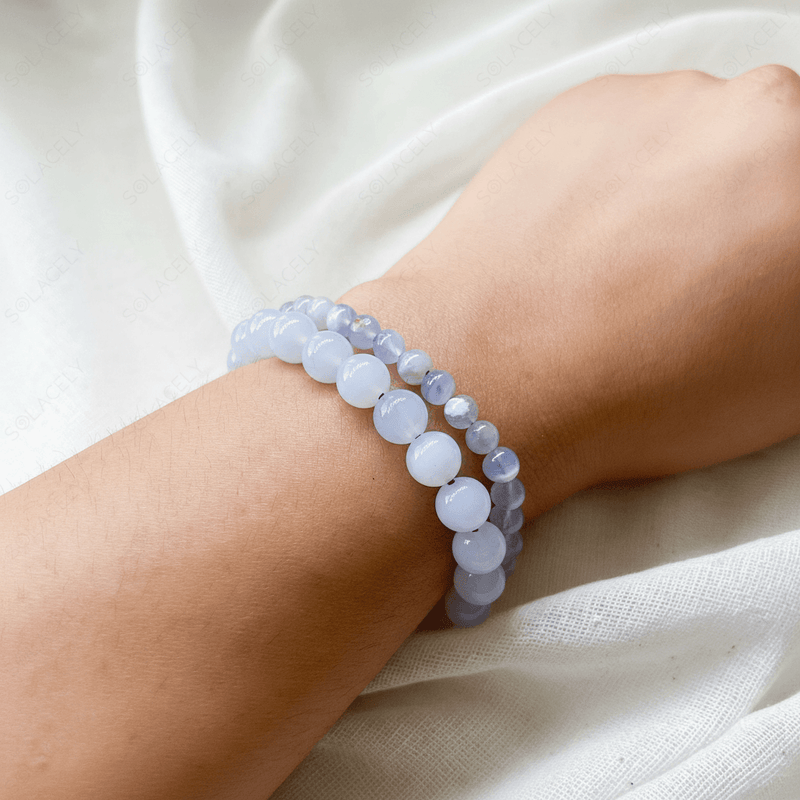
| Blue lace agate | Gentle speech, cooling a sharp tongue | Bracelet worn on days you expect friction |
| Howlite | Patience, quieting a racing head | Held in the hand while breathing slowly |
| Lepidolite | Emotional steadiness, letting go | Kept on a desk or bedside table |
| Rose quartz | Softness, forgiveness, self compassion | Worn or placed where arguments happen |
| Blue calcite | Cooling, easing tension after conflict | Placed in a room for wind down |
| Black tourmaline | Grounding, boundary setting | Carried or kept by the front door |
| Carnelian | Motivation, moving stuck frustration | Worn when anger comes from feeling blocked |
You do not need all eight. Most people who work this way settle on one or two, usually whichever stone they actually remember to pick up. A wider list of options sits in our crystals for calming guide.
Why are these the traditional picks?
Colour does most of the work. Cool blues and purples have been tied to calm and measured speech across many cultures, while pink belongs to the heart in almost every crystal tradition. The mineral facts underneath are ordinary geology. It is the colour, and the ritual built around it, that carries the meaning.
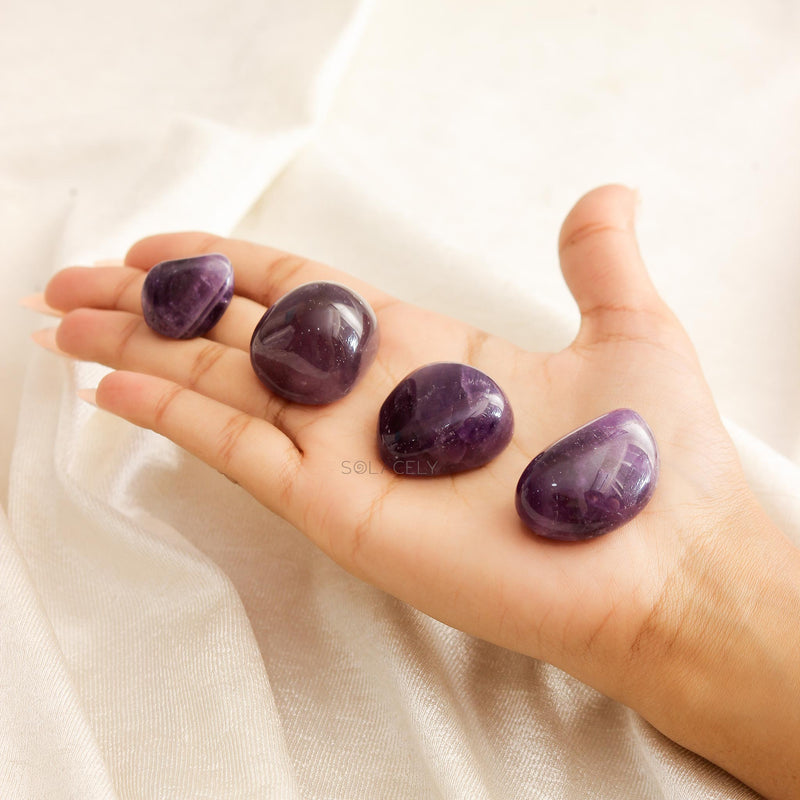
Amethyst is the oldest of the calm associations, going back to Greek and Roman drinking cups. It is the purple variety of quartz, the February birthstone, and it sits at 7 on the Mohs hardness scale. That hardness is why an amethyst tumble survives months of being fished out of a coat pocket.
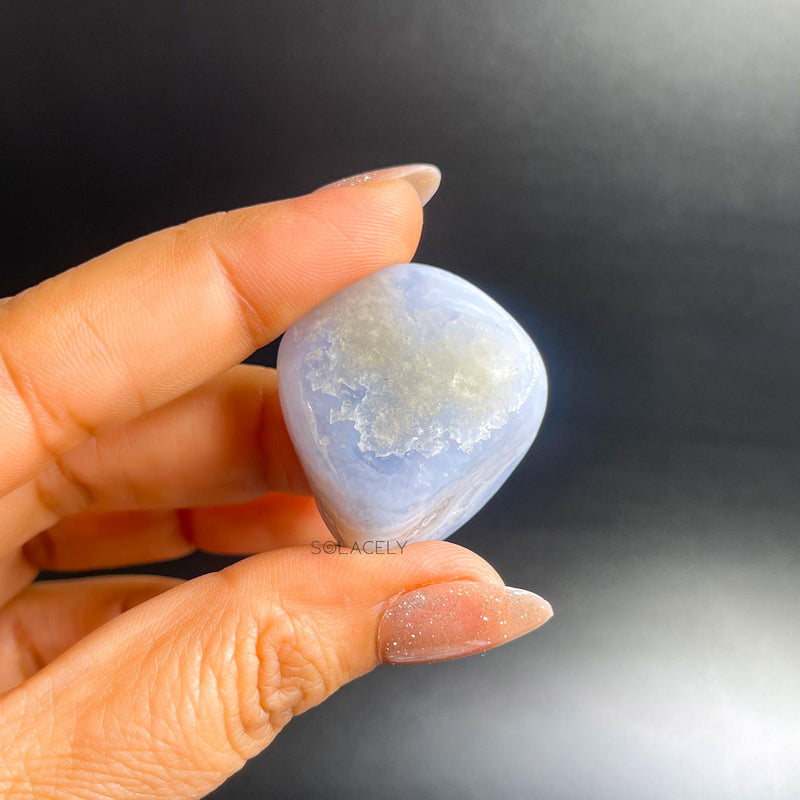
Blue lace agate is banded chalcedony. Agate is a banded form of microcrystalline quartz that forms in cavities in volcanic and some sedimentary rock, with the banding created as silica rich fluids fill the space in layers. The pale blue and white ripple is the reason it picked up its gentle, softly spoken reputation.
Black tourmaline is the grounding half of the set. Tourmaline is a group of boron silicate minerals occurring in a wider colour range than almost any other gem family, and the opaque black variety, schorl, is by far the most common. Its weight and darkness are what people respond to.
Hot anger or slow burn: which stones does tradition point to?
Tradition separates the two clearly. For hot, fast, reactive anger, the usual picks are the cool stones: blue lace agate, howlite, blue calcite and amethyst. For slow burning resentment that has been building for months, practitioners reach instead for rose quartz, lepidolite and rhodonite, all linked with the heart and with letting go.
The distinction is more useful than it first looks. Flash anger is a timing problem. It arrives in seconds and leaves a mess behind, so anything that adds a few seconds of delay is the point of the exercise. That is why the cool stones are carried loose, in a pocket or on a wrist, rather than sitting on a shelf at home.
Slow burn resentment is different. Nothing about it is urgent, so a stone in your pocket has no moment to interrupt. Here the traditional approach is placement and repetition: the same stone on the bedside table, picked up at the same point each evening while you think through what is actually bothering you. Our crystals for forgiveness piece covers that side in more depth.
Then there is carnelian, which looks out of place on a list of calming stones. It is there for a specific case: anger that is really frustration, the kind that shows up when you feel blocked, overlooked or stuck in a job you cannot leave. Tradition treats that anger as energy with no outlet, and carnelian is the stone of movement rather than the stone of quiet.
How do you actually use a crystal in the moment?
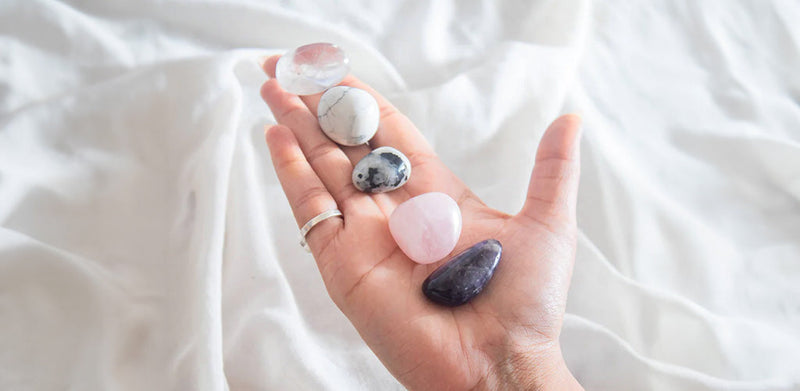
You hold it and slow your breathing. That is the whole method, and it is deliberately simple enough to do mid argument. A cool tumble in a closed hand gives you something to notice, and noticing buys the few seconds most people need before they say something they regret.
- Hold a tumble and lengthen the exhale. Close your hand around it, feel the temperature and the weight, and make each breath out longer than each breath in. Count if it helps. Ten slow breaths is a reasonable target before you respond to anything.
- Bedside placement. Amethyst, lepidolite or blue calcite on the nightstand, used as the marker for a two minute wind down. The stone is doing the job a habit cue does: it tells you which part of the evening you are in.
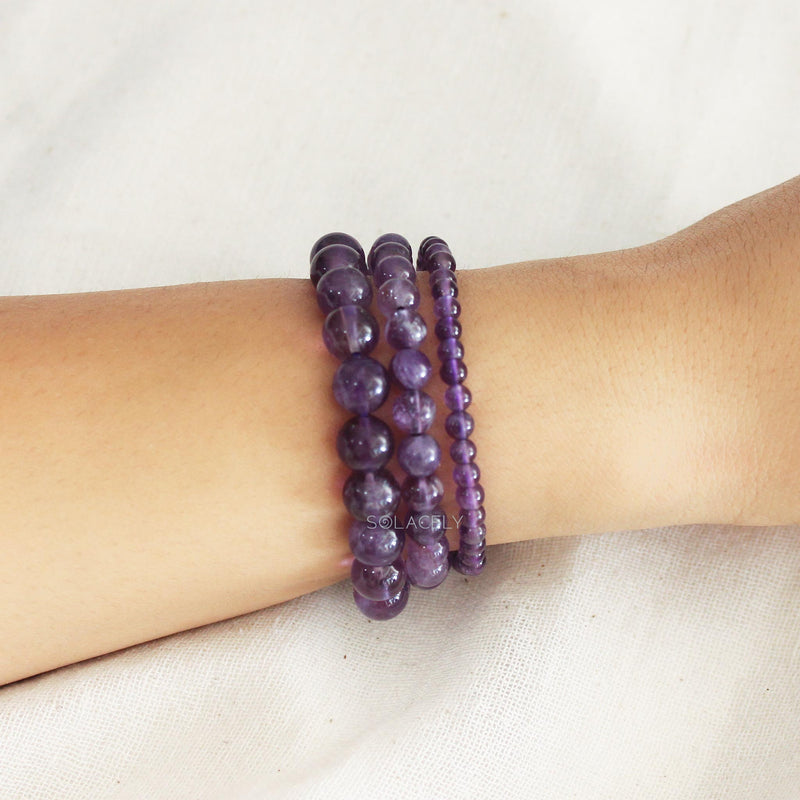
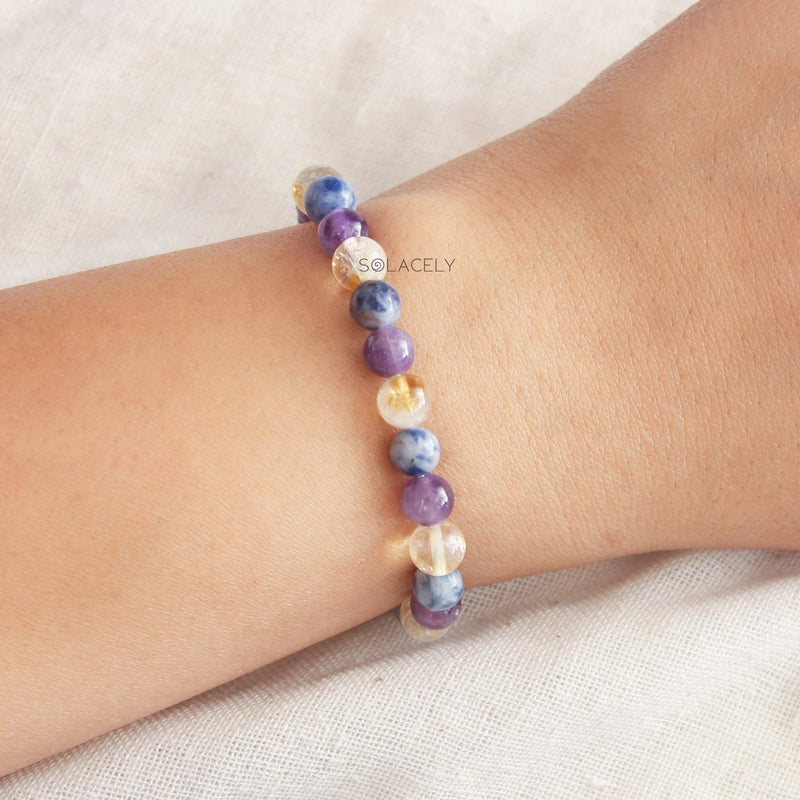
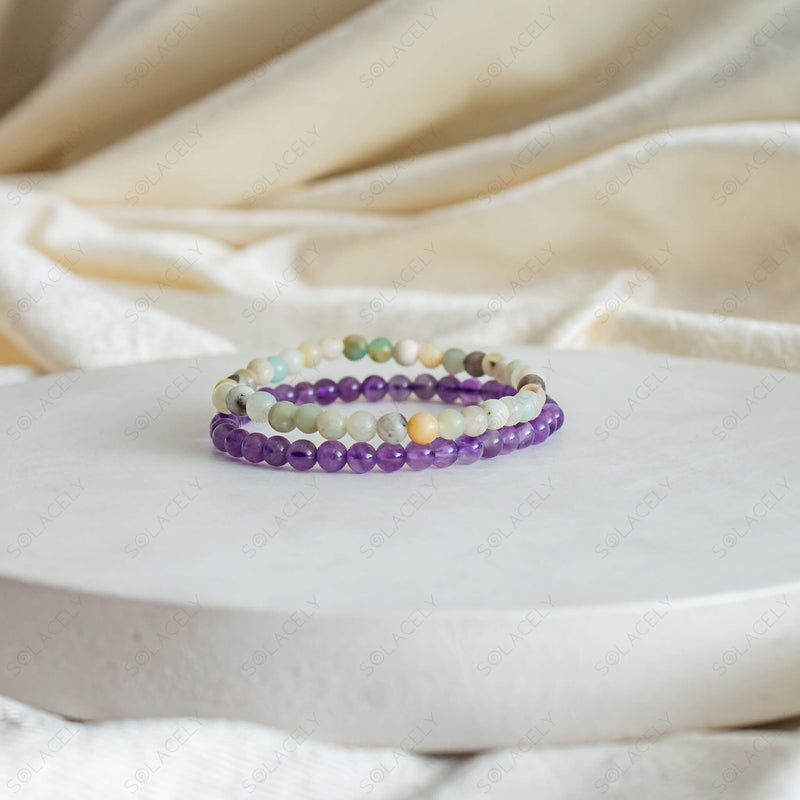
- A bracelet as a physical reminder. Turning a bracelet on your wrist is a small, private action nobody in the room notices. Plenty of wearers use it exactly that way, as a signal to pause mid conversation.
Notice what all three have in common. The stone keeps the intention in view, and the pause, the breath and the repetition follow from it. Many people find that the effect builds slowly, over weeks of small repetitions rather than in a single dramatic moment.
In our experience the stones that get used are the ones within reach. A tumble living in a coat pocket earns its keep. A beautiful cluster on a high shelf mostly gets admired. If you already know which situations set you off, the school run, a standing Monday meeting, one particular relative, put the stone where that situation happens rather than where it looks best.
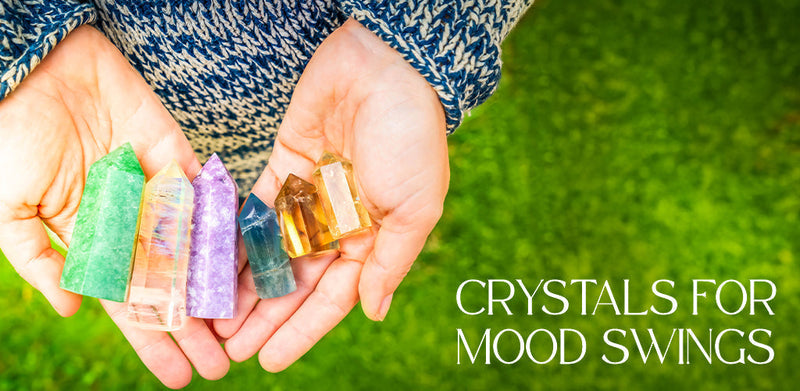
If you want the same idea applied to shifting moods across a week, our crystals for mood swings guide is the closest companion piece.
How do you pair and care for these stones?
The standard pairing logic is one cooling stone plus one grounding stone: blue lace agate with black tourmaline, or amethyst with howlite. Care matters more than people expect, because howlite and lepidolite are both soft. Checking where a stone sits on the Mohs hardness scale tells you most of what it will tolerate.
Amethyst and the agates are quartz family stones at around 7 on that scale, so they handle daily wear, a quick rinse and a soft cloth without complaint. Keep amethyst out of long, direct sunlight, since prolonged exposure can fade purple quartz over time. Black tourmaline is durable too, though it can be brittle along its length and dislikes hard knocks.
Howlite is the delicate one. It is a soft borate mineral, chalky white with grey veining, so it scratches easily and is happiest in a pouch of its own. Lepidolite is a lithium bearing mica and splits into flakes if you are rough with it, so keep it away from harder beads in a shared bag. Our howlite guide goes further on both points.
For cleansing, moonlight, sound or a short rest on selenite suits every stone on this list. Skip salt water for the softer pieces. If you like the amethyst and lepidolite combination specifically, amethyst and lepidolite covers how the two are usually worn together.
When is anger a sign to speak to a professional?
When it is frequent, out of proportion, or frightening to the people around you. Anger that leads to threats, intimidation, physical harm or broken property is a safety matter and needs professional support, not a stone. The same applies when anger sits alongside low mood, poor sleep or heavier drinking.
A GP is the usual starting point, and they can refer you into talking therapy or a structured anger management programme. That is the route that treats it, and your stone sits alongside as company for the routine rather than in place of the care. If someone is in immediate danger, contact emergency services rather than working on it alone.
A stone works best as a small ritual attached to a habit you have chosen. Keep it in that role. Hold the tumble, breathe out slowly, and get proper support for the part that needs proper support.
The properties described here reflect traditional and cultural belief around crystals. They are not medical claims and are not a substitute for professional healthcare. If you are managing a health concern, speak to a qualified practitioner.
Sources
Written by Chetena Sharma. Reviewed by the Solacely editorial team.
Frequently asked questions
About the author


Written by Chetna Sharma, crystal healing practitioner and co-founder of Solacely. Chetna has worked with healing crystals for over a decade and curates Solacely's protective stone collection.