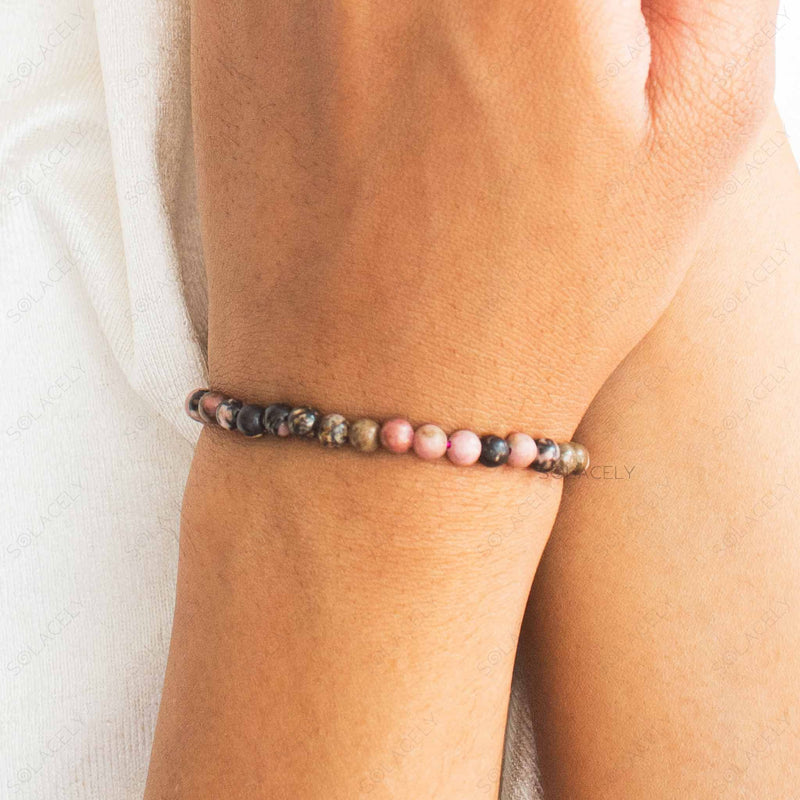
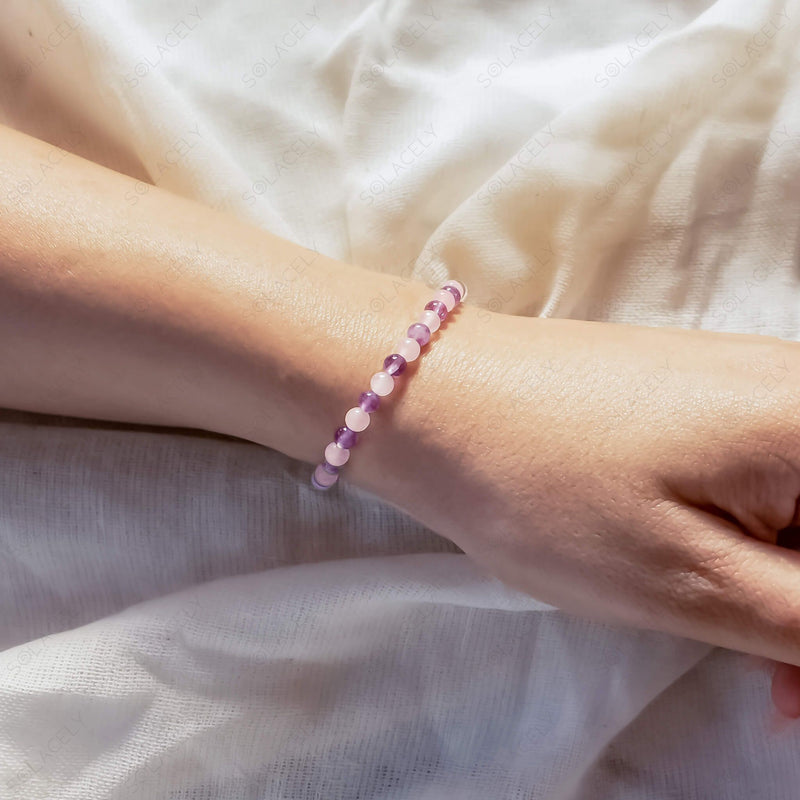
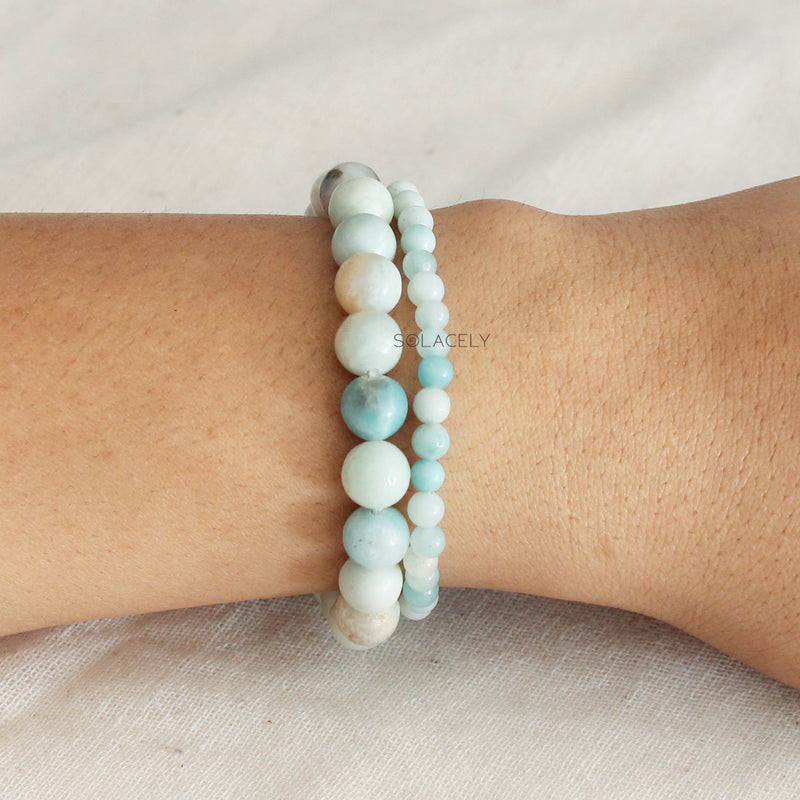
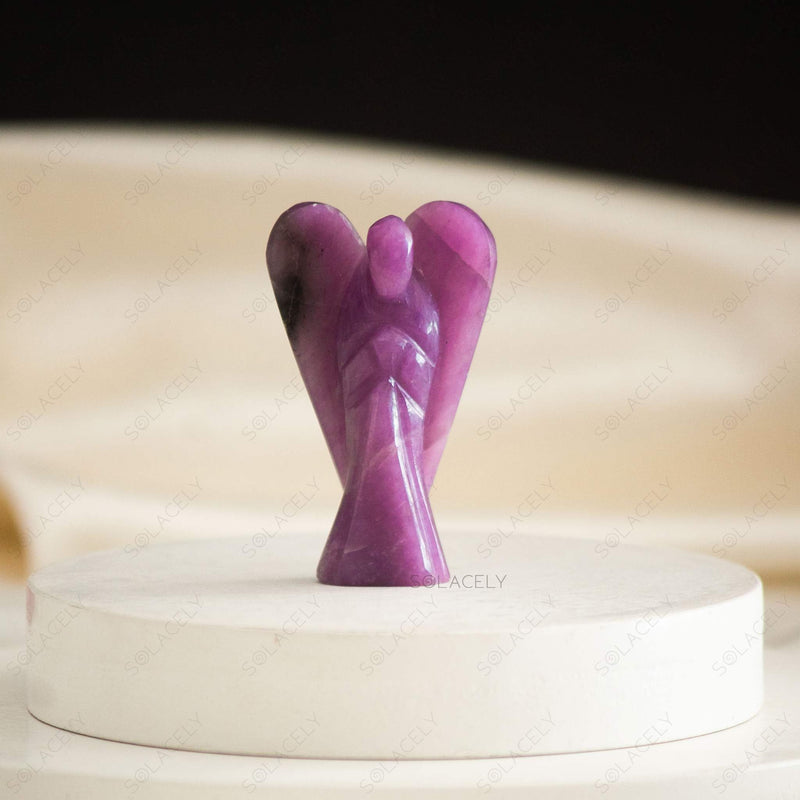
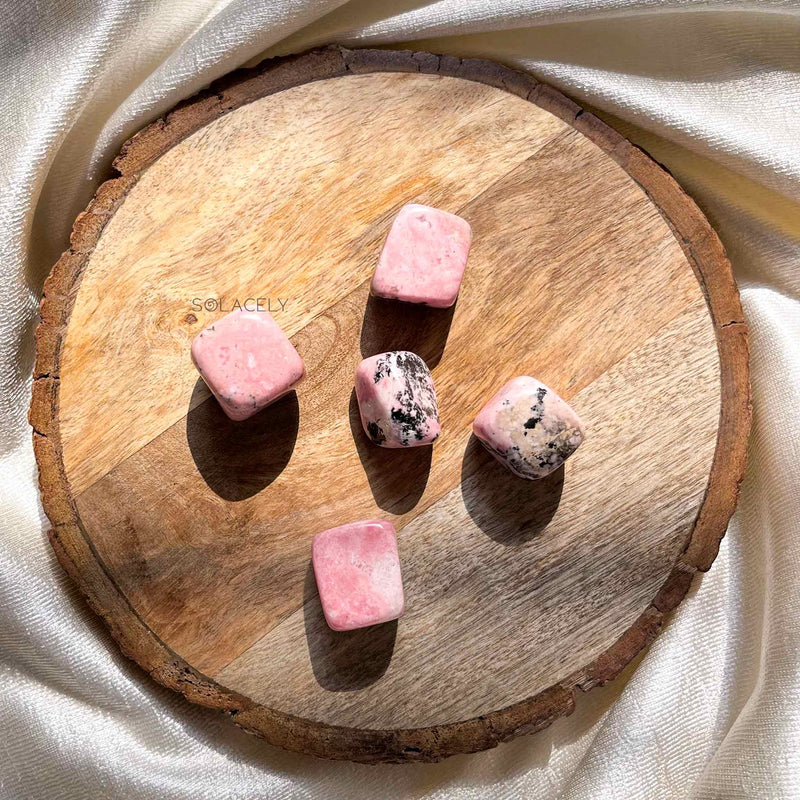
Rhodonite, rose quartz, amazonite, lepidolite and black obsidian are the stones kept for forgiveness. Rhodonite is the specific one, associated with repair rather than romance. Rose quartz softens, amazonite helps you say it, lepidolite settles, and black obsidian is for looking at what happened.
Key takeaways
- Five stones: rhodonite, rose quartz, amazonite, lepidolite, black obsidian.
- Rhodonite is the forgiveness stone. Rose quartz is the one for forgiving yourself.
- Keep it somewhere you pass, not somewhere you display.
- Forgiving is not the same as reconciling. You can do one without the other.
- Lepidolite is very soft at Mohs 2.5 to 3. Never in water. Smoke or moonlight only.
- Nothing here runs to a schedule. A stone can wait with you.
The five stones
| Stone | Traditionally kept for | Mohs |
|---|---|---|
| Rhodonite | Repair, coming back to something | 5.5 to 6.5 |
| Rose quartz | Softening, and forgiving yourself | 7 |
| Amazonite | Saying the difficult thing out loud | 6 to 6.5 |
| Lepidolite | Settling a mind that keeps replaying it | 2.5 to 3 |
| Black obsidian | Looking directly at what happened | 5 to 5.5 |
Two of these are enough for most people. Rhodonite for the thing itself, and whichever of the other four matches the part you are stuck on.
Forgiving someone else, and forgiving yourself
These are different tasks and the tradition treats them differently, which is worth knowing before you choose a stone.
Forgiving another person is usually about deciding to stop carrying something. Rhodonite is the stone for that, and black obsidian sits beside it for the part where you have to look squarely at what actually happened rather than the version you have smoothed over.
Forgiving yourself is generally the harder of the two, and it wants the gentler stone. Rose quartz is the traditional choice here, turned inward. People who find self forgiveness impossible often find they are trying to do it with a decisive stone when what is needed is a kind one.
Our guide to rose quartz for forgiveness goes deeper on that side specifically, and crystals for emotional healing covers the wider ground this sits inside.
A practice you will actually keep
Elaborate rituals get abandoned. This one takes four minutes and survives contact with a normal week.
- Hold the stone in a closed hand. Sitting, somewhere you will not be interrupted.
- Name the one thing plainly. Not the whole history. One sentence, to yourself.
- Breathe out longer than you breathe in. Four counts in, six or eight out, for two minutes. Slow breathing of this kind is well supported for settling stress.
- Put the stone down and stop. The ending matters as much as the beginning.
Do it once, not daily. Forgiveness practised every morning tends to turn into rehearsing the grievance every morning, which is the opposite of the point. Come back to the stone when the thing comes back to you.
Forgiving is not the same as reconciling
Worth separating, because a lot of people stall here and think the stone is not working.
You can decide to stop carrying something and still not want that person in your house. Those are two decisions, and the tradition only asks you for the first. Amazonite is the stone kept for the boundary side of it, for saying the difficult thing kindly and then holding the line you have already chosen.
Black obsidian is the other half of the same idea. It is kept for clear sight, and clear sight sometimes means concluding that the relationship does not resume. That is a legitimate outcome and not a failure of the practice. Where the ending is romantic, crystals for moving on from heartbreak takes it further.
When the other person is your partner
Ongoing relationships need a slightly different approach, because the repair has to happen while you are still in the room together.
Rhodonite is again the one, and the timing is the whole trick. Not during, not immediately after, but in the settled hour that follows, when neither of you wants to be the first to speak. Hold it, choose the one sentence, say that sentence. Crystals for couples sets out the fuller arrangement, including which stones belong in which room.
Handling these five
Lepidolite needs real care. At 2.5 to 3 on the Mohs scale it is softer than a fingernail is hard, and it will flake and dull if it gets wet. Keep it dry, keep it out of a bag with anything harder, and cleanse it with smoke or a night of moonlight rather than water.
Black obsidian is volcanic glass. It is reasonably hard but it chips into sharp edges when dropped on a tiled floor, so it is a shelf stone rather than a pocket stone. Rhodonite and amazonite in the middle of the scale are fine with gentle handling. Rose quartz at 7 needs nothing beyond keeping it off a sunny windowsill, where quartz slowly pales.
The uses described here reflect traditional and cultural crystal practice. They are not medical or psychological claims. Lepidolite is a mineral kept for its calming associations and is not an alternative to prescribed medication, including lithium. If something you are carrying is affecting your sleep, your work or your safety, please speak to a doctor or a qualified therapist.
Sources
Written by Chetena Sharma. Reviewed by the Solacely editorial team.
Frequently asked questions
About the author


Written by Chetna Sharma, crystal healing practitioner and co-founder of Solacely. Chetna has worked with healing crystals for over a decade and curates Solacely's protective stone collection.