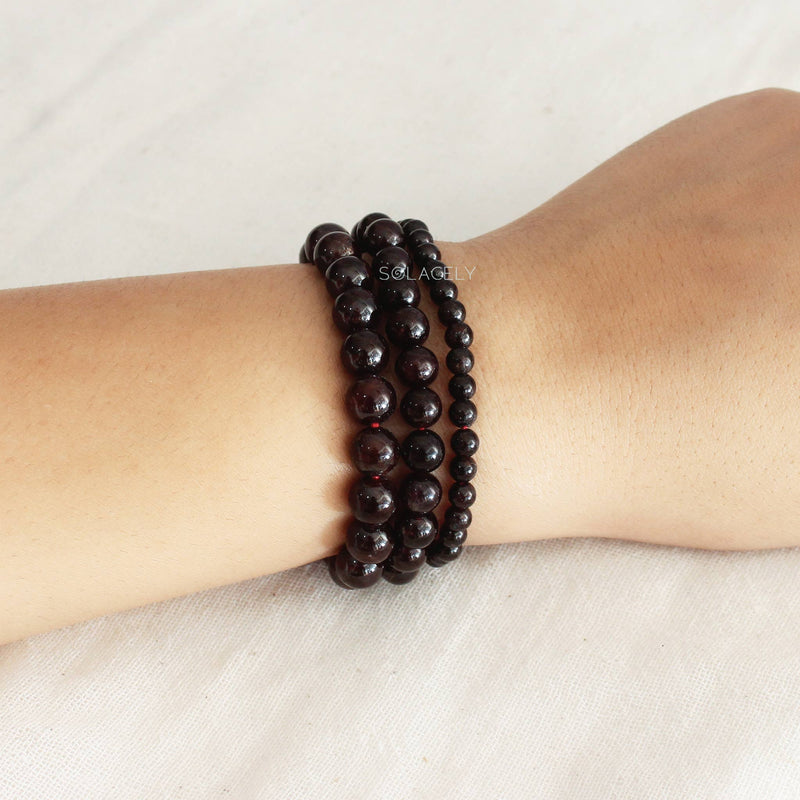
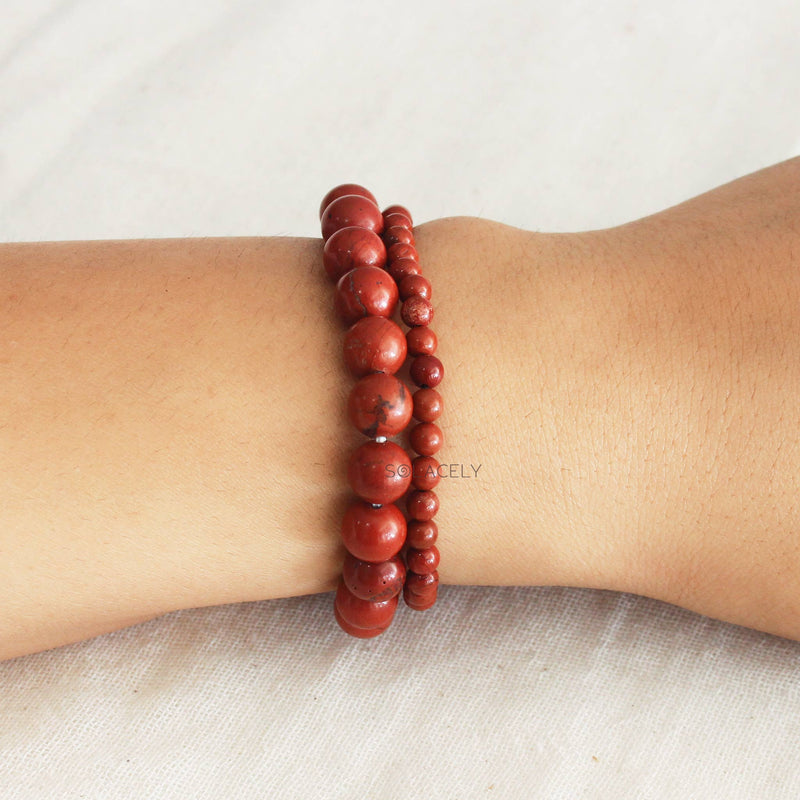
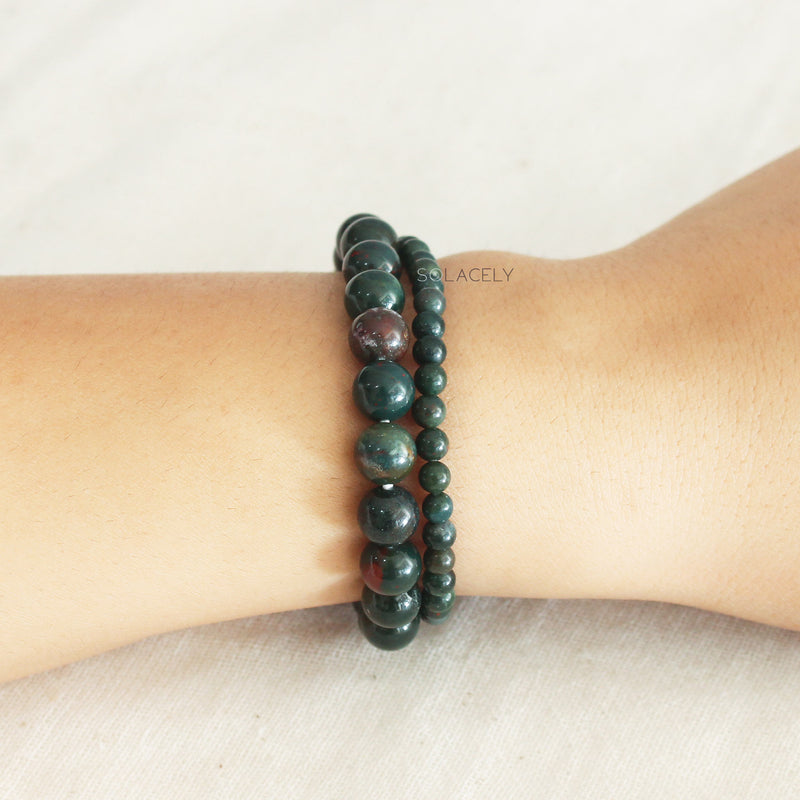
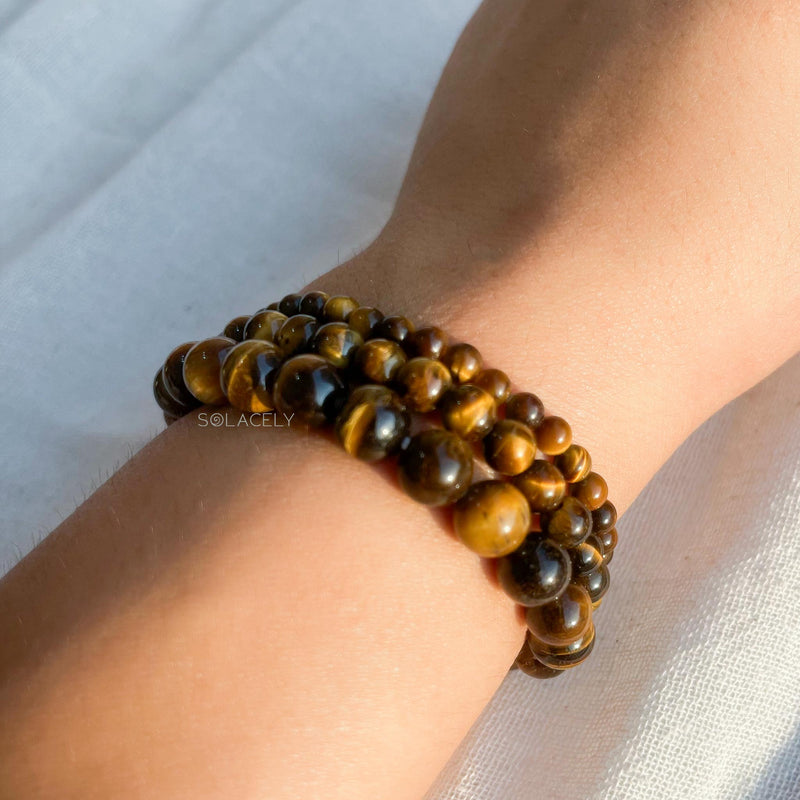
Red coral, known as moonga, is the classical gemstone for Mars in Vedic astrology. Red garnet, red jasper, carnelian and bloodstone are the widely used substitutes, all chosen for the same warm red that ties them to the planet. Mars is read as the planet of courage, drive and the willingness to act.
Key takeaways
- Mangal, or Mars, is associated with energy, courage, initiative and physical vitality.
- Classical stone: red coral (moonga), traditionally worn on a Tuesday.
- Common substitutes: red garnet, red jasper, carnelian, bloodstone.
- Classical planetary gemstones are prescribed against a birth chart, not in general.
- Grounding stones are often added, since Mars periods are described as high energy.
What Mars represents
In Vedic astrology Mars is Mangal or Kuja, one of the nine grahas, and it is read as the planet of action. Its traditional domain is courage, initiative, physical strength, competitiveness and the willingness to push directly toward what you want rather than waiting to be offered it.
Where Jupiter is expansion and Saturn is discipline through restriction, Mars is force. That gives it a double character in traditional reading: the same quality that produces decisiveness and bravery also produces impatience and temper when it runs unchecked. Practitioners describe a strong Mars as someone who acts, and an unbalanced one as someone who acts too fast.
Mars also governs Tuesday, which is why remedial practice for it centres on that day. Our guides to crystals for Rahu and crystals for Ketu cover the lunar nodes, which are usually studied alongside the planets.
Red coral, the classical stone
Vedic gemmology assigns a stone to each graha, and Mars receives red coral. Coral is unusual among gemstones in being organic rather than mineral: it is the skeletal material built by marine coral polyps, and it has been used ornamentally across the Mediterranean and South Asia for thousands of years.
Two things are worth knowing before considering one. Classical practice holds that planetary gemstones should be prescribed by a qualified astrologer working from a specific birth chart, since strengthening a badly placed planet is traditionally understood to make matters worse rather than better. And coral is organic and soft, which makes it more demanding to care for than any mineral on this page.
The substitute stones
| Stone | Traditionally kept for |
|---|---|
| Red garnet | Warmth and drive together; the closest in colour to coral |
| Red jasper | Steady endurance rather than a burst |
| Carnelian | Starting things; the anti-procrastination stone |
| Bloodstone | Stamina and physical courage; the athlete's stone |
| Hematite | Added underneath, to steady the rest |
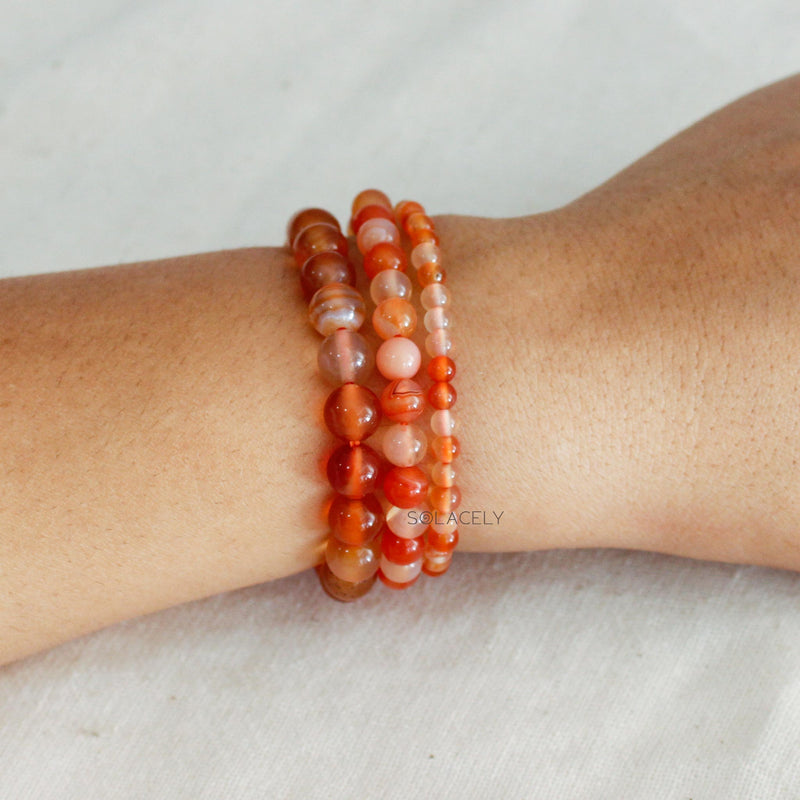
Red jasper is the most commonly chosen of the four, largely because it is inexpensive, durable and easy to find in every format. Garnet is the closest to coral in colour and carries its own long association with courage, having been set into Roman signet rings and carried by medieval travellers.
Substitute stones worn as personal reminders rather than as prescribed remedial gems carry none of the classical requirements, and none of the cautions either. That distinction matters and is worth holding onto.
How Mars stones are traditionally worn
- Day. Tuesday, the day associated with Mars, is when wearing traditionally begins.
- Finger. The ring finger of the right hand is the conventional placement for coral.
- Metal. Copper, silver or gold; copper is the metal most associated with Mars.
- Weight. Classical prescriptions are given in ratti and depend on the chart rather than preference.
- Substitutes. Worn however you like, on either hand, any day.
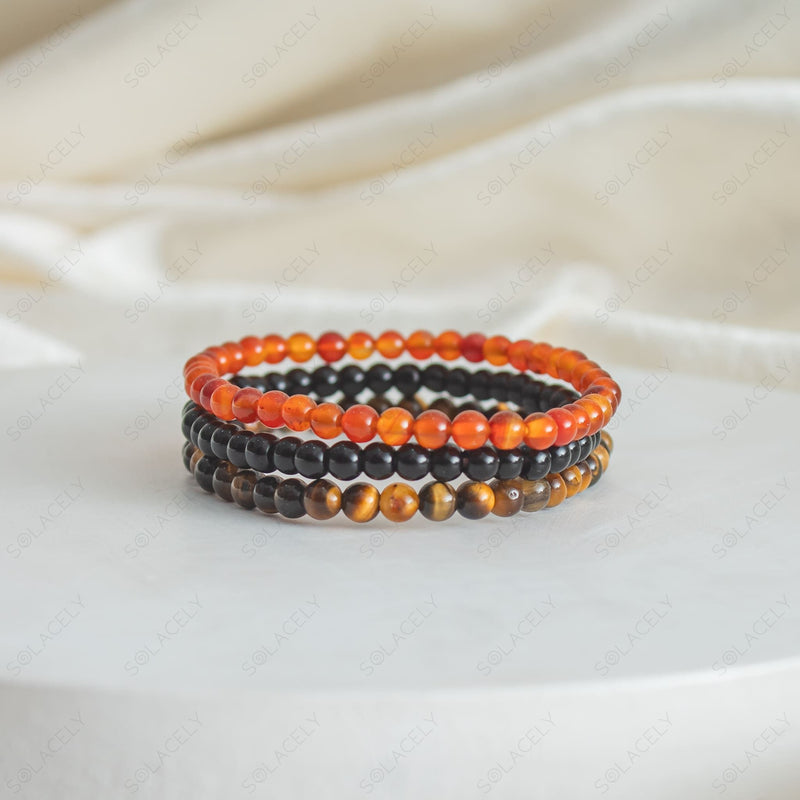
Practically, most people arriving at this topic are looking for the courage and drive rather than a formal remedial gem. For that use, a red jasper or carnelian bracelet worn daily is the straightforward answer and asks nothing of an astrologer.
Balancing the energy
Traditional practice around Mars is as much about tempering as strengthening, since the planet's difficulty in reading is usually excess rather than absence: impatience, a short fuse, acting before thinking.
Where that is the concern, practitioners add grounding and calming stones rather than more red. Hematite and black tourmaline are the usual additions for steadiness, and amethyst for a cooler head. A red stone worn on its own suits someone who needs to push; a red stone paired with hematite suits someone who pushes plenty and needs to aim better.
Our crystals for strength guide covers the endurance side, and crystals for confidence covers nerve specifically. For the protective additions, see crystals for protection.
Traditional practices alongside the stone
Remedial practice for Mars extends well beyond gemstones, and in classical sources the stone is usually the smallest part of it. Tuesday observances, charity, physical discipline and mantra recitation all feature, and the emphasis falls on directing the energy rather than adding to it.
That framing suits the modern reader too. A red stone on the wrist paired with a daily run does considerably more than the stone alone, and it fits the character of the planet better than anything passive would.
Caring for red stones
The mineral substitutes are all straightforward. Red jasper, carnelian and bloodstone are quartz family stones at around 7 on the Mohs scale and take warm water, a soft cloth and a full dry. Garnet at 6.5 to 7.5 is equally easy, though it should be stored away from harder gems.
Red coral is the exception and needs real care. It is organic and soft, it dislikes acids, perfume, hairspray and household cleaners, and it should never be soaked or put in an ultrasonic cleaner. Wipe it with a barely damp cloth and put jewellery on after cosmetics rather than before.
For energetic cleansing, sound, smoke or moonlight suit the whole group and avoid the water question entirely.
Vedic astrology and gemstone remedies are traditional cultural and spiritual practices. They are offered here for reflection and are not medical, financial or psychological advice. Classical planetary gemstone prescriptions should come from a qualified astrologer working from your birth chart.
Sources
Written by Chetena Sharma. Reviewed by the Solacely editorial team.
Frequently asked questions
About the author


Written by Chetna Sharma, crystal healing practitioner and co-founder of Solacely. Chetna has worked with healing crystals for over a decade and curates Solacely's protective stone collection.