Kunzite is the pink to lilac variety of spodumene, coloured by traces of manganese, sitting at 6.5 to 7 on the Mohs scale. In crystal tradition it is a heart stone, kept for self compassion after emotional strain. It is also one of the more delicate stones you can own, and worth understanding before you buy.
Key takeaways
- Kunzite is spodumene, coloured pink to lilac by manganese.
- Mohs 6.5 to 7, but perfect cleavage in two directions, so it splits rather than scratches.
- Traditionally kept for self compassion and heart repair.
- Notably light sensitive, which is why it is sometimes called an evening stone.
- Best as a pendant or earrings. A ring needs a protective setting.
- Named after gemmologist George Kunz, who first described it in 1902.
What kunzite is
Kunzite is spodumene, a lithium bearing mineral, and the pink comes from traces of manganese in the crystal structure. The same species produces green hiddenite and colourless material, so kunzite is one variety among several rather than a mineral in its own right.
It was first described in 1902 by George Frederick Kunz, the gemmologist who spent much of his career at Tiffany, and the stone carries his name. That makes it a relatively recent addition to the crystal cabinet compared with stones worked since antiquity.
| Mineral | Spodumene |
|---|---|
| Colour | Pale pink to lilac, sometimes near violet |
| Colour cause | Traces of manganese |
| Mohs hardness | 6.5 to 7 |
| Cleavage | Perfect, two directions |
| Main sources | Afghanistan, Brazil, Madagascar, USA |
| Care | Keep out of direct light. No ultrasonic, no steam. |
Why hardness is misleading here
At 6.5 to 7 kunzite looks durable on paper, sitting close to quartz. In practice it is one of the more delicate stones in common use, and the reason is cleavage.
A mineral with perfect cleavage has planes of weakness built into its structure. A knock along the wrong axis does not scratch the surface, it splits the stone cleanly. Kunzite has two such planes, which is why cutters treat it with care and why it is far more common as a pendant than as a ring.
This is the single most useful thing to know before buying kunzite, and it is the reason a beautiful stone sometimes arrives with an unhappy story attached.
Kunzite meaning
Kunzite belongs to the heart group, and within it occupies a specific corner: softening toward yourself rather than toward other people.
Where rose quartz is often reached for in the context of a relationship, kunzite is traditionally kept for the private work of being less harsh with yourself after a difficult period. It appears in practice alongside self forgiveness and emotional repair rather than alongside romance.
Its lilac tone is part of why some practitioners bridge it to the crown as well as the heart, treating it as the stone for a gentler kind of clarity. That reading is less consistent across sources than the self compassion one.
The light sensitivity
Kunzite's colour fades more readily than almost any stone in regular use. Sustained daylight will pale it, and strong direct sun will do so quickly.
That is why it is sometimes called an evening stone, and why antique kunzite jewellery is often paler than it began. It is not a flaw so much as a handling requirement: keep it in a pouch or a closed box, wear it in the evening or indoors, and it will hold its colour for a very long time.
If you want a pink heart stone you can leave on a sunny shelf without thinking about it, rose quartz is the more forgiving choice, and our guide to rose quartz meaning and properties covers it.
How to wear it
- Pendant. The best format. Sits out of harm's way and shows the colour well.
- Earrings. Also low risk, and the pale lilac reads beautifully at the face.
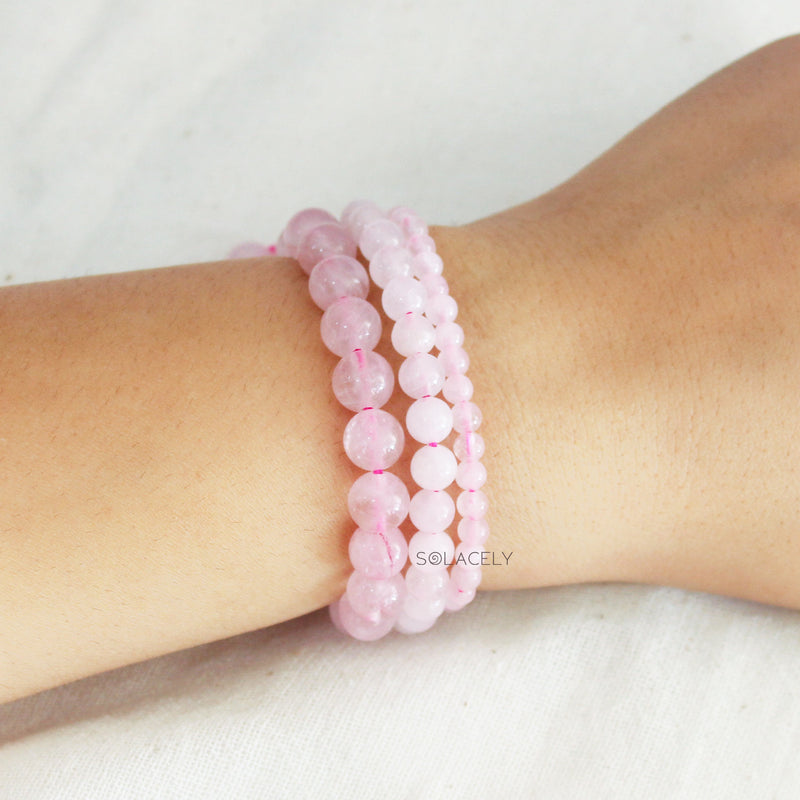
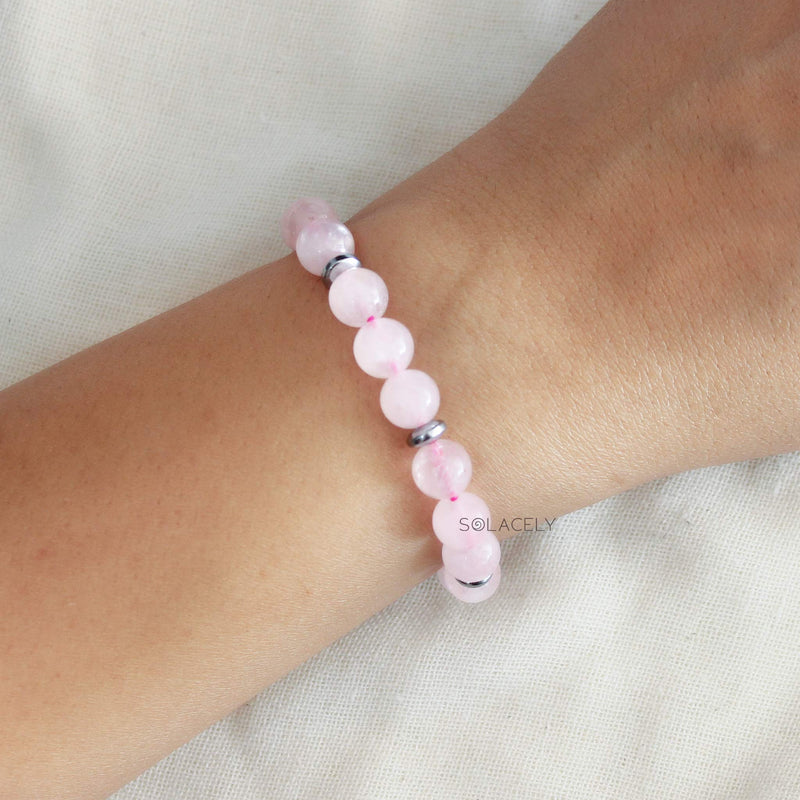
- Bracelet. Workable in beads, though it will meet more knocks than it likes.
- Ring. Only in a protective bezel, and even then treat it as occasional wear.
For pairings, rose quartz reinforces the heart theme and is harder, so it takes the knocks. Amethyst suits it when the difficulty is keeping you awake at night. Keep kunzite where harder beads will not rub against it on a shared strand.
Caring for kunzite
Warm soapy water and a soft cloth. Never ultrasonic and never steam, because vibration and heat both find cleavage planes and kunzite has two sets of them.
Store it in a pouch away from light and away from harder stones. Handle it by the setting rather than the stone where you can. Treated that way it lasts indefinitely, and the care it asks for is a small price for a colour very few stones can match.
Who kunzite suits
It suits someone coming out of a hard emotional stretch who wants something gentle rather than fortifying, and someone who will genuinely enjoy looking after a delicate piece.
It suits less well anyone who wants a stone they can wear without thinking. For that, the quartz family is more forgiving. Our guide to crystals for emotional healing sets kunzite against the alternatives.
The uses described here reflect traditional and cultural crystal practice. They are not medical claims and are not a substitute for professional healthcare or advice.
Sources
Written by Chetena Sharma. Reviewed by the Solacely editorial team.
Frequently asked questions
About the author


Written by Chetna Sharma, crystal healing practitioner and co-founder of Solacely. Chetna has worked with healing crystals for over a decade and curates Solacely's protective stone collection.