Sunstone is associated primarily with the sacral chakra and the solar plexus chakra, and some practitioners extend it to the root for grounding warmth. The sacral centre governs creativity, pleasure and emotional flow. The solar plexus governs will, confidence and personal power. Sunstone's warm orange glitter suits all three.
Key takeaways
- Sunstone belongs first to the sacral chakra, a couple of finger widths below the navel, and to the solar plexus chakra, between the navel and the base of the ribs.
- Deeper red orange pieces are also taken to the root chakra, at the base of the spine, when the intention is grounding warmth.
- Sunstone is a feldspar, the same broad family as moonstone and labradorite, and sits at roughly 6 to 6.5 on the Mohs scale.
- Its glitter has a name: aventurescence, caused by tiny reflective platelets of hematite, goethite or copper inside the crystal.
- Sacral work is traditionally about creativity and emotional flow. Solar plexus work is about confidence and nerve.
- For daily use, wear it low: a long pendant near the navel for sacral intentions, a bracelet on your leading hand for solar plexus ones.
Which chakras is sunstone associated with?
Sunstone is associated with two centres above all: the sacral chakra, which sits a couple of finger widths below the navel, and the solar plexus chakra, which sits between the navel and the base of the ribs. Its colour is the reason, since both centres answer to the warm end of the spectrum.
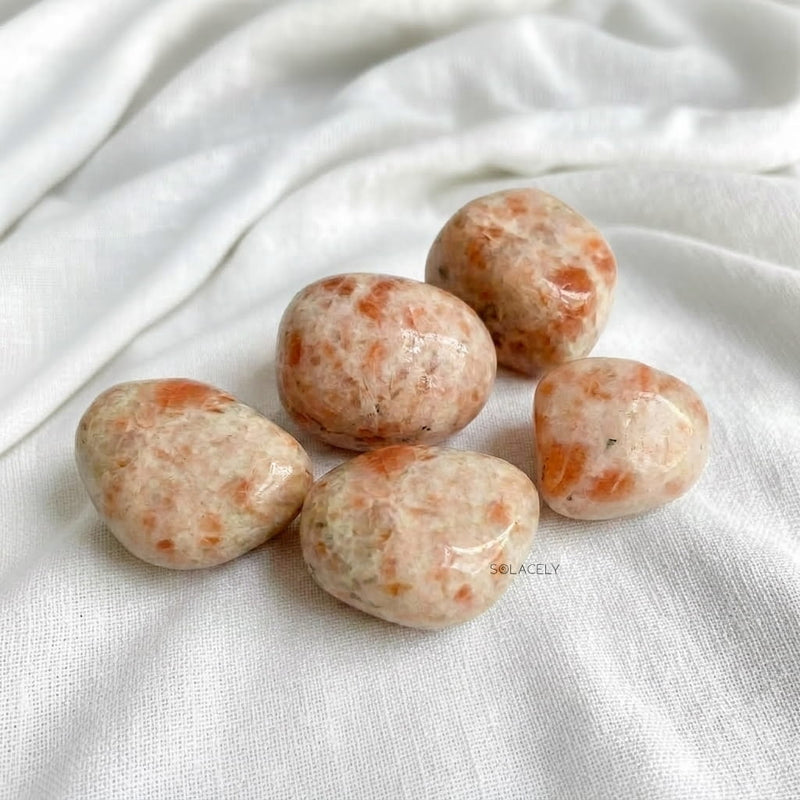
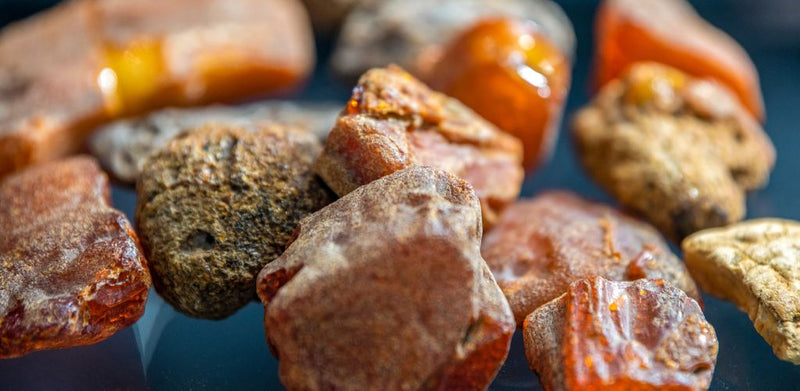
In crystal tradition, colour is the first sort. Sunstone runs from pale champagne through peach and apricot to a deep orange red, usually with a metallic spark moving through it. That range covers the orange of the sacral centre and the gold of the solar plexus without much argument. Practitioners who work with grounding take the darkest, coppery pieces lower still, to the root.
| Chakra | Where it sits | Traditionally governs | How sunstone is used there |
|---|---|---|---|
| Sacral (svadhisthana) | Two finger widths below the navel | Creativity, pleasure, emotional flow | Palm stone on the lower belly, long pendant, tumble in a front pocket |
| Solar plexus (manipura) | Between the navel and the base of the ribs | Will, confidence, personal power | Bracelet on the leading hand, ring, short pendant at the sternum |
| Root (muladhara) | Base of the spine | Safety, belonging, feeling settled | Held in both hands seated, or rested between the feet in a layout |
Can one stone belong to several centres? It can, and plenty do. Sunstone is one of the clearest examples, since its colour range covers so much of the lower body's palette. Our guide to sunstone meaning, properties and benefits sets out its wider traditional uses.
What does the sacral chakra govern, and how is sunstone used there?
The sacral chakra is traditionally linked with creativity, pleasure, emotional flow and the plain appetite for life. It sits low in the belly. Sunstone is reached for there when that flow has stalled: a creative project that will not start, a stretch of weeks that has gone flat, a general lack of want.
The habits people build around it are ordinary ones. A flat tumble in a front trouser pocket sits at roughly the right height all day. A long pendant hangs near the navel. A palm stone rests on the lower belly for a few quiet minutes in the evening. For the full stone list, our guide to crystals for the sacral chakra covers carnelian and orange calcite alongside sunstone.
Sacral practice tends to be gentle rather than forceful. Many people find that ten slow minutes with a stone on the belly does more for them than an hour of trying to feel inspired on command. The stone keeps the intention in view while you do the easier thing, which is rest.
What does the solar plexus chakra govern, and how is sunstone used there?
The solar plexus chakra is traditionally linked with will, confidence, personal power and the nerve to speak up. It sits where you feel a knot before something difficult. Sunstone is kept there for warmth and steadiness ahead of meetings, interviews, first dates and the conversations you have been putting off.
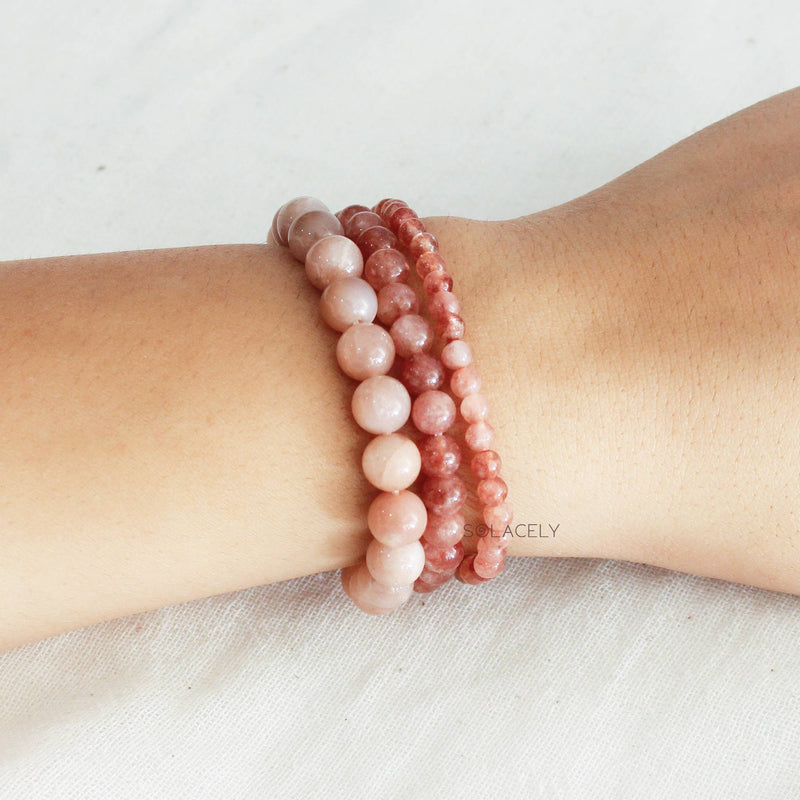
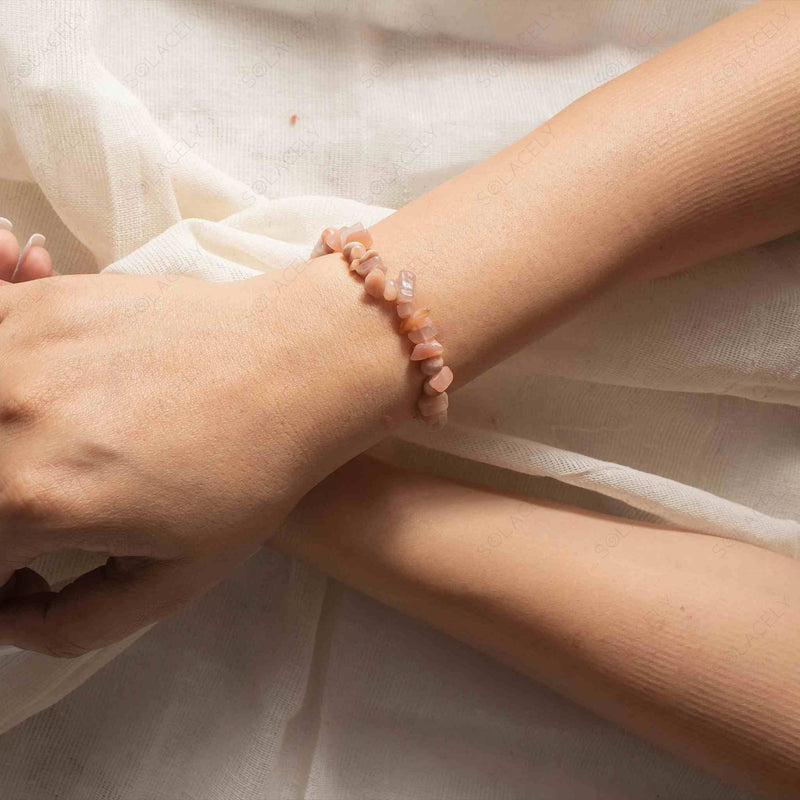
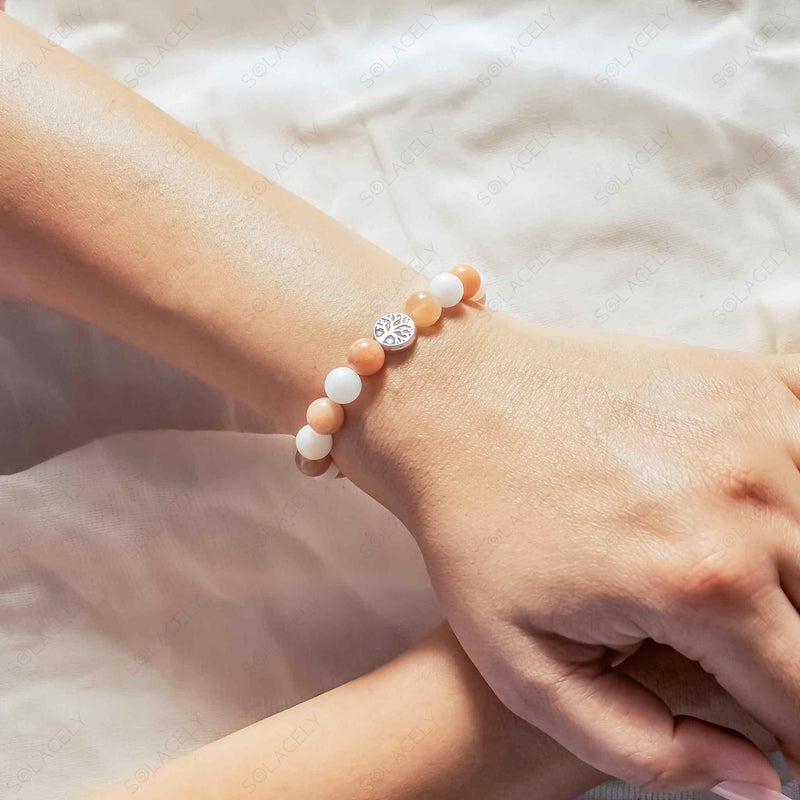
Placement moves higher for this one. A bracelet on the hand you lead with is the version most people stay consistent with, since you glance at it every time you reach for a door handle. A ring does the same job. A pendant on a shorter chain sits near the sternum, and a tumble in an inside jacket pocket lands at about rib height.
What does that look like on a normal Tuesday? Usually one small pause. You turn the bead around your wrist once before you walk into the room, and you remember what you came to say. Our guide to crystals for the solar plexus chakra compares sunstone with citrine, tiger's eye and pyrite for exactly this kind of use.
Why do some practitioners extend sunstone to the root chakra?
Some practitioners take sunstone down to the root chakra, at the base of the spine, and the reason is warmth rather than strict colour matching. The root is traditionally about safety, belonging and feeling settled in your own life. The deepest red orange sunstones, particularly those with a strong copper spark, get used this way.
In practice that means holding a piece in both hands while seated, resting one between the feet during a layout, or keeping a larger specimen by the front door. Red and brown stones dominate this centre, so a dark sunstone slots in beside red jasper and smoky quartz without looking out of place. Our guide to crystals for the root chakra covers the traditional line up in full.
How do you place sunstone in a lying down chakra layout?
For a lying down session, rest one sunstone below the navel and a second between the navel and the base of the ribs, then leave them alone for ten to twenty minutes. Two stones is enough. Flat tumbles or palm stones stay put far better than rounded ones once you start breathing deeply.
- Lie on your back on the floor or a firm bed, knees bent, feet flat, so the belly is level.
- Place the first sunstone two finger widths below the navel, for the sacral centre.
- Place the second between the navel and the base of the ribs, for the solar plexus.
- If you want the root included, rest a third stone between your feet or in the crease of a hip.
- Set a timer for ten to twenty minutes so you are not checking the clock.
- Breathe into the lower belly rather than the chest, and let the stones rise and fall with it.
- Sit up slowly afterwards, and put the stones somewhere you will see them tomorrow.
Evening suits this well, since sacral work is unhurried by nature. If the two stone layout feels too warm on a restless night, drop to one stone at the sacral centre and add a cool stone at the forehead. Comfort matters more than symmetry here.
Which crystals pair well with sunstone?
Carnelian at the sacral centre, citrine at the solar plexus, and moonstone as a counterweight across the whole layout: those three are the classic partners. Carnelian shares sunstone's orange register and deepens it. Citrine carries the golden end upward. Moonstone brings the cool, quiet note that stops a warm layout feeling one sided.
Carnelian is the natural sacral pairing, since the two read as the same family from across a room even though carnelian is a chalcedony. Citrine is the natural solar plexus pairing, and at Mohs 7 it is the harder of the two, so it copes well with the knocks a bracelet takes.
Sunstone and moonstone together are the best known combination of the lot: warm and cool, day and night, two feldspars with entirely different characters. Our guide to the sunstone and moonstone combination goes into how people balance the pair. For grounding, black tourmaline or red jasper below the sunstone gives the layout a floor.
What is sunstone made of, and how do you care for it?
Sunstone is a feldspar, the same broad mineral family as moonstone and labradorite, and it sits at roughly 6 to 6.5 on the Mohs scale. Its glitter is called aventurescence, produced by tiny reflective platelets of hematite, goethite or copper suspended inside the crystal, which catch the light as the stone tilts.
Gemmological reference works describe the copper bearing material from Oregon as the type most prized for that effect, since the platelets can be large enough to see individually. Body colour there runs from champagne to a rich orange red. Cabochons and tumbles show the spark best under a single light source, while faceted stones show more colour and less shimmer.
Everyday care
At 6 to 6.5 sunstone sits just below quartz, which means ordinary household dust can eventually dull a polished face. Clean it with lukewarm water, a drop of mild soap and a soft cloth, then dry it properly. Keep it out of ultrasonic and steam cleaners. Feldspars have cleavage in two directions, so a sharp knock matters more than a scratch does.
Store it in its own pouch rather than loose with harder stones, and keep it out of prolonged strong sunlight. Check bracelet elastic every few months, since a strand that lets go over a tiled floor is how most tumbles get chipped.
Two practical safety notes stay with every stone. Do not place crystals in water you intend to drink, and keep small tumbles and beads well away from young children and pets, since they are a choking risk.
Crystals are traditional and spiritual objects, not medical devices. Nothing here is medical advice, and no crystal treats, cures or prevents any condition. If you have a health concern, please speak to a qualified doctor or healthcare professional, and never delay or stop treatment on the strength of a stone. Keep small stones and beads away from young children and pets, as they present a choking risk, and do not place crystals in water you intend to drink.
Sources
Written by Chetena Sharma. Reviewed by the Solacely editorial team.
Frequently asked questions
About the author


Written by Chetna Sharma, crystal healing practitioner and co-founder of Solacely. Chetna has worked with healing crystals for over a decade and curates Solacely's protective stone collection.