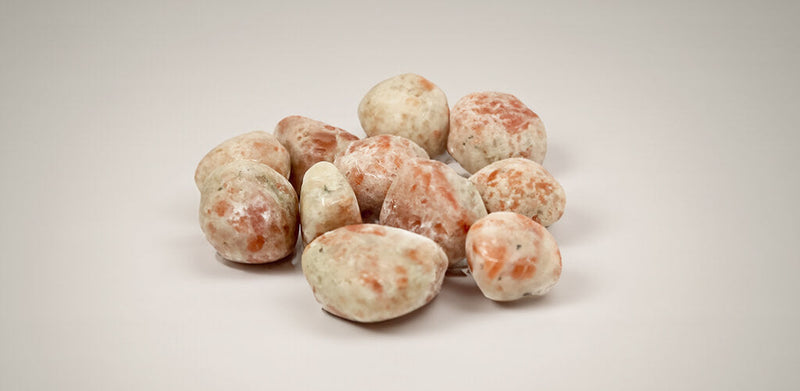
Sunstone is a plagioclase feldspar, usually oligoclase or labradorite, that glitters because thin reflective platelets of hematite, goethite or copper sit inside the crystal. It rates 6 to 6.5 on the Mohs scale, forms in the triclinic system, and ranges from honey orange to deep red, with green and blue-green found only in Oregon material.
Key takeaways
- Sunstone is a feldspar, not a quartz. Most gem material belongs to the plagioclase series, as oligoclase or labradorite.
- The sparkle is called aventurescence, or schiller, and comes from platelets of hematite, goethite or copper reflecting light.
- Hardness is 6 to 6.5 on the Mohs scale, with two directions of perfect cleavage, so a knock is riskier than a scratch.
- Oregon sunstone is the copper-bearing variety and the state gemstone of Oregon. India, Tanzania and Norway supply hematite-included stones.
- Choose by the flash. Tilt the stone and watch how much of the face lights up, and at what angle. Bold hematite glitter and soft copper shimmer are different pleasures.
What is sunstone made of?
Sunstone is a variety of feldspar, the most abundant mineral group in the Earth's crust. Feldspars are aluminium silicates carrying sodium, potassium or calcium, and the plagioclase series runs from albite at the sodium end to anorthite at the calcium end. Gem sunstone almost always sits somewhere inside that series.
The name describes an optical effect rather than a single mineral species. Any feldspar with enough reflective inclusions to throw a metallic glitter gets called sunstone, which is why two stones sold under the same label can differ in chemistry, density and country of origin. Gemmological reference works place it in the same family as moonstone, labradorite and amazonite.
That family relationship explains a lot about how the stone behaves in the hand. Moonstone shows a floating blue sheen produced by layers within the feldspar itself. Sunstone shows glitter produced by solid inclusions suspended inside it. Same family, two different tricks with light.
Why does sunstone sparkle?
The sparkle is aventurescence, a glittery flash created when light bounces off tiny plate-shaped inclusions. Sunstone is feldspar carrying reflective platelets of hematite, goethite or copper, arranged along parallel planes inside the crystal. Jewellers often call the same effect schiller, and both words describe the same behaviour.
Orientation matters more than most buyers expect. Because the platelets lie on parallel planes, the flash only fires when the stone is tilted so those planes face the light. Cutters work out that direction before shaping a cabochon, and a well judged cut puts the flash where your eye naturally falls. Tilt any sunstone bead slowly and you will see the glitter switch on and off.
Platelet size changes the character of the shimmer too. Coarse hematite plates give the chunky orange glitter typical of Indian material. Fine copper platelets in Oregon stones produce a softer, more even shine. Some Oregon crystals hold so little copper that they show no schiller at all and are cut as clean transparent gems instead.
What varieties of sunstone exist, and where is it mined?
Sunstone comes from several countries and spans more than one feldspar species. Oregon is the source of the copper-bearing material, while India, Tanzania, Norway, Russia and Canada produce stones coloured and lit by hematite inclusions. Inclusion type, transparency and colour all shift from deposit to deposit.
Oregon sunstone
Oregon sunstone is a labradorite feldspar carrying elemental copper, and Oregon adopted it as the official state gemstone. It comes from basalt flows in the south east of the state, mainly in Lake and Harney counties. Colours run from pale straw and champagne through pink and red into scarce green and blue-green, with bicolour stones showing two zones in one crystal.
Much of this material is transparent enough to facet, which sets it apart from the rest of the world's supply. Faceted red and green Oregon stones are collector items, and the copper schiller variety is the one most people picture when they hear the name.
Indian and Tanzanian sunstone
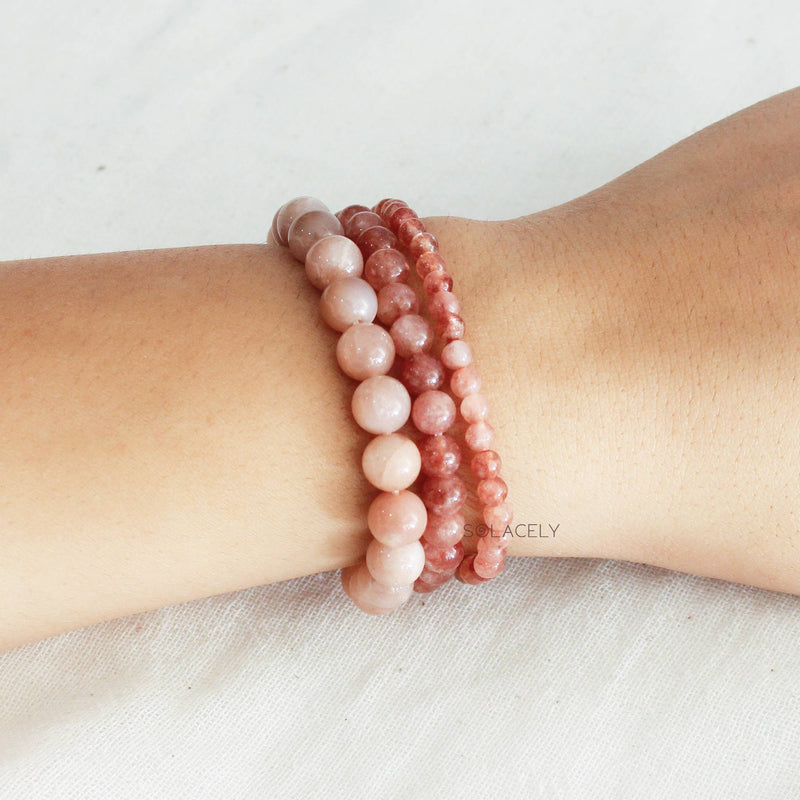
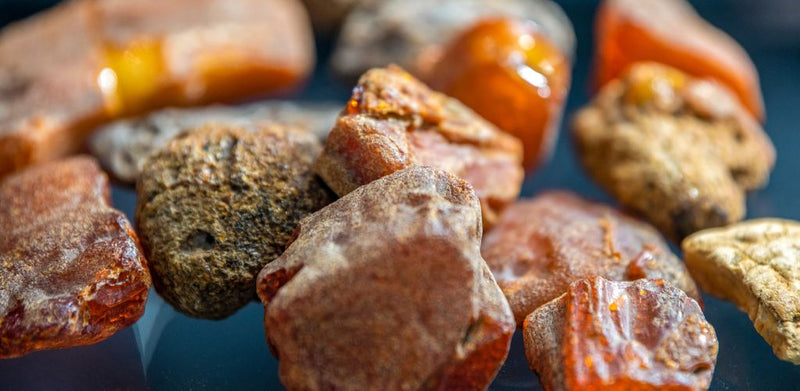
Nearly all everyday sunstone beads, tumbles and cabochons come from these deposits. Dense hematite platelets colour the feldspar a warm red-brown to burnt orange and produce the strong, obvious glitter that suits polished rounds. The stone is translucent to opaque rather than transparent, so it is cut en cabochon or tumbled rather than faceted.
Norway's oligoclase sunstone from the Tvedestrand area is a classic collector locality, and Russia, Canada and Mexico all yield further material. For a bead bracelet, though, the practical question is less the country of origin than how lively the glitter looks across the whole strand when you turn it.
How durable is sunstone in everyday jewellery?
Sunstone sits at 6 to 6.5 on the Mohs scale, which places it just below quartz at 7. Because household dust carries fine quartz particles, sunstone slowly loses polish through ordinary handling and wiping. It suits pendants, earrings and bracelets better than a ring worn every single day.
Cleavage is the bigger issue, and it rarely gets mentioned in product listings. Feldspars break cleanly along two directions that meet at close to a right angle, so a sharp knock on a corner can split a stone that its hardness alone would survive. Hardness resists scratching. Cleavage governs what happens when something hits it.
| Property | Sunstone |
|---|---|
| Mineral group | Feldspar, plagioclase series |
| Usual species | Oligoclase or labradorite |
| Chemistry | Sodium calcium aluminium silicate |
| Crystal system | Triclinic |
| Mohs hardness | 6 to 6.5 |
| Specific gravity | About 2.62 to 2.67 |
| Refractive index | About 1.53 to 1.57 |
| Cleavage | Perfect in two directions |
| Lustre | Vitreous |
| Transparency | Transparent to opaque |
| Optical effect | Aventurescence, also called schiller |
| Typical colours | Orange, red-brown, honey, colourless, green |
If you want sunstone in a ring, a bezel setting protects the girdle far better than claws, and a slightly domed cabochon takes knocks better than a sharp-edged faceted stone. On a bracelet, the beads mostly rub against each other, which is survivable, and against desk edges, which is not.
How do you choose a sunstone piece you will enjoy?
Start with the flash, because that is the thing you will actually look at every day. Aventurescence varies a great deal between stones cut from the same rough, and the difference shows in seconds. Tilt the piece under a lamp, watch how much of the surface lights up, and notice how far you have to turn it before the glitter fires.
Direction is the part most buyers skip. Since the platelets sit on parallel planes, every sunstone has a sweet spot, an angle where the face flares gold all at once. On a well oriented cabochon that angle sits close to face-up, so the stone sparkles while you are simply wearing it. Hold the piece the way you would wear it, then move it gently. If the glitter arrives at a natural viewing angle, the cutter has already done the work for you.
Strength of flash is a matter of taste rather than a ranking. Dense hematite platelets give a bold, busy orange sparkle that reads well across a room and photographs beautifully. Sparser copper platelets give a quieter shimmer that comes and goes as you move, which suits people who want a stone noticed up close rather than announced. Decide which one you want to live with.
Which format suits which use?
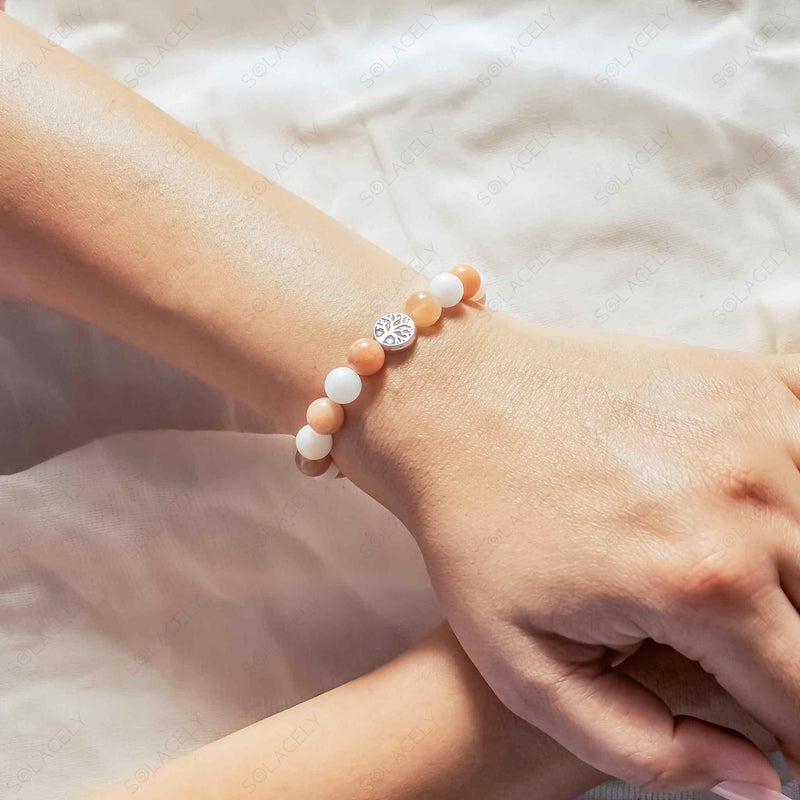
- Bead bracelets. The most forgiving format. Rounds catch light from many angles at once, so a few beads are always flashing whatever your wrist is doing. Best for daily wear and for carrying an intention with you.
- Pendants and earrings. A single larger cabochon shows orientation at its best, and hanging clear of hard surfaces suits a stone with cleavage. Best for pieces you want people to look at.
- Faceted Oregon stones. Transparent material cut with facets trades glitter for clarity and colour, especially in the red and green shades. Best for collectors and for occasion jewellery.
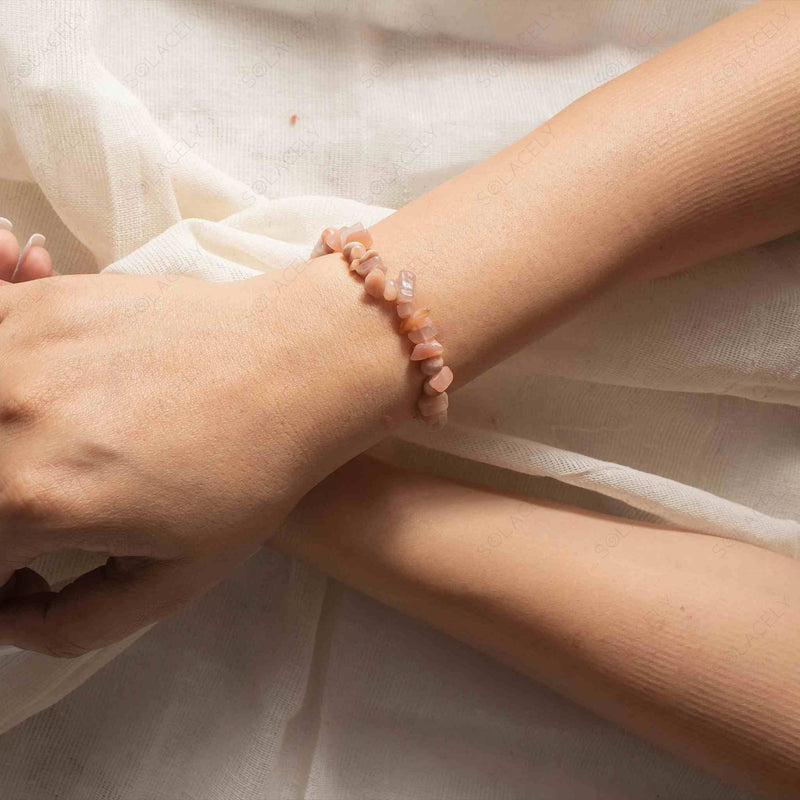
- Tumbles and palm stones. Bigger surfaces show the banding and schiller patches clearly, and they are pleasant to hold. Best for a desk, a pocket, or a grid at home.
- Rings. Choose a bezel and a domed cabochon, and keep them for occasions rather than gardening and washing up.
One last practical note. Look at a strand or a parcel in daylight as well as under shop lighting, since warm bulbs flatter orange stones and can make two very different strands look identical. Daylight tells you what you will see on a Tuesday morning.
What does sunstone traditionally symbolise?
Sunstone's traditional meanings follow its appearance: sunlight, warmth, vitality and leadership. Historic lapidary texts grouped bright, fiery stones with the sun and with good fortune, and modern crystal practice has kept that thread, reaching for sunstone when the intention is optimism or personal drive rather than calm.
The name has always travelled with the sparkle rather than with any single deposit, which is part of why the associations stay so consistent from place to place. Any feldspar bright enough to throw a metallic flash tends to collect the same cluster of meanings. People reach for it at the start of something: a new job, a move, a stretch of work that needs momentum.
Because this guide sticks to the geology, the working side of the stone is covered elsewhere: mood and outlook in sunstone for positivity, ambition and goal-setting in sunstone for success. Sunstone is the traditional zodiac stone for Leo and appears on many alternative birthstone lists, which the sunstone birthstone guide sets out in full.
How should you clean and store sunstone?
Warm water, a mild soap and a soft brush are all sunstone needs. Standard gemmological care guidance is consistent on feldspar: skip ultrasonic and steam cleaners, because cleavage planes and internal platelets make the stone vulnerable to vibration and sudden heat. Rinse it, then dry with a soft cloth.
Storage matters as much as cleaning. Keep sunstone away from harder stones such as quartz, topaz and garnet, which will scratch it inside a shared pouch. A soft-lined box or an individual fabric bag is enough. Take pieces off before the gym, gardening, cleaning or swimming, since chlorine, salt water and household chemicals all dull the polish.
Sunstone's colour is generally stable in daylight, so a short sunlit cleansing ritual will not fade it. What it does not tolerate is thermal shock, so avoid moving it from hot water to cold, and keep perfume and hairspray off the surface by putting jewellery on last.
The properties described here reflect traditional and cultural belief around crystals. They are not medical claims and are not a substitute for professional healthcare. If you are managing a health concern, speak to a qualified practitioner.
Sources
Written by Chetena Sharma. Reviewed by the Solacely editorial team.
Frequently asked questions
About the author


Written by Chetna Sharma, crystal healing practitioner and co-founder of Solacely. Chetna has worked with healing crystals for over a decade and curates Solacely's protective stone collection.