Who should not wear black tourmaline? Nobody is forbidden from it. Black tourmaline is a grounding, steadying stone, though, and grounding is not what every season needs. If you are reaching for lift, lightness or movement rather than an anchor, this may simply not be the stone for right now. That is a question of timing, not a rule.
What follows is a practitioner's view of when to wear it, when to rest it, and what to reach for in the meantime, along with the few practical notes worth knowing about the bracelet itself.
Key takeaways
- There is no group of people who must not wear black tourmaline. The question is timing, not permission.
- Black tourmaline is a grounding Root chakra stone, kept for steadiness, protection and feeling anchored.
- If what you want is lift rather than anchor, a brighter or gentler stone may suit the season better.
- If wearing it every day starts to feel like more weight than you need, wear it for occasions or rest it for a few weeks.
- Practical notes: the plain bracelet has no metal, do not soak strung beads, keep loose beads away from small children and pets, and never put stones in drinking water.
- Stones are not a one time decision. What does not suit you in March may be right in September.
What black tourmaline is actually for
Black tourmaline belongs to the Root chakra, the centre tradition places at the base of the spine and associates with safety, stability and the feeling of having your feet on the ground. Our guide to Root chakra crystals covers that centre in full.
In practice it is kept for steadiness. It is the stone people reach for before a crowded week, on a commute that leaves them scattered, or in a home that has felt unsettled. It is long associated with protection and with holding a boundary: the sense of staying in your own space when the room around you is loud.
An anchor is the useful metaphor. Invaluable when the water is choppy and you want to stay put. A great deal less useful on the days you are trying to set sail.
When black tourmaline may not be the one for now
Black tourmaline may not be the right companion when what you want is movement rather than stillness, or when wearing it every day has started to feel like more anchor than you need. Neither is a problem with you or with the stone. It is simply a matter of matching the stone to the season you are in.
If you are looking for lift rather than anchor
There are seasons for holding steady and seasons for moving: a new creative project, a move to a new city, a stretch where you want to feel open, curious and a little lighter on your feet. A stone kept for grounding is quietly pulling in the other direction.
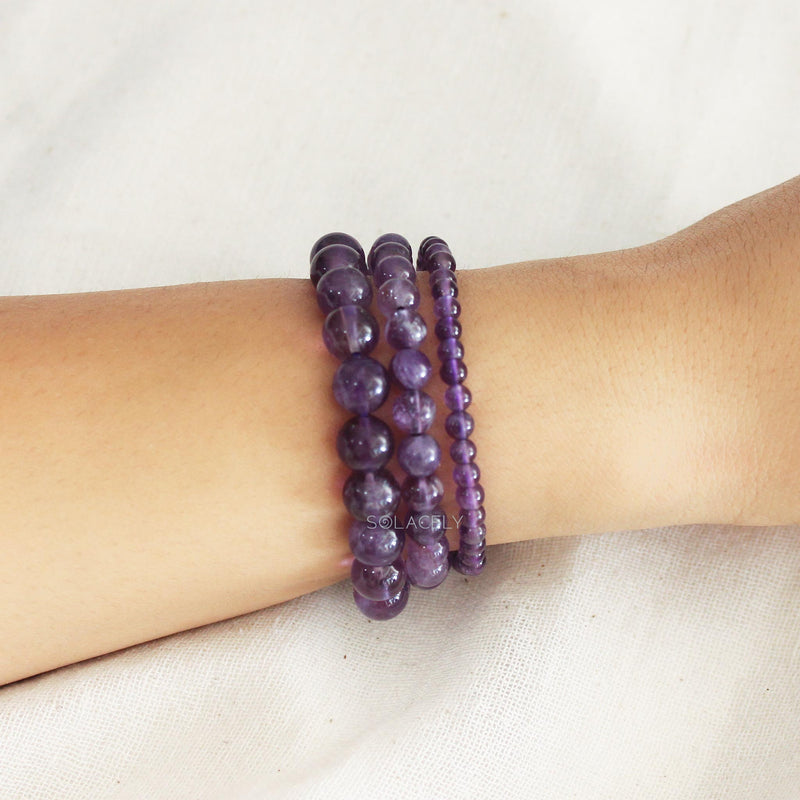
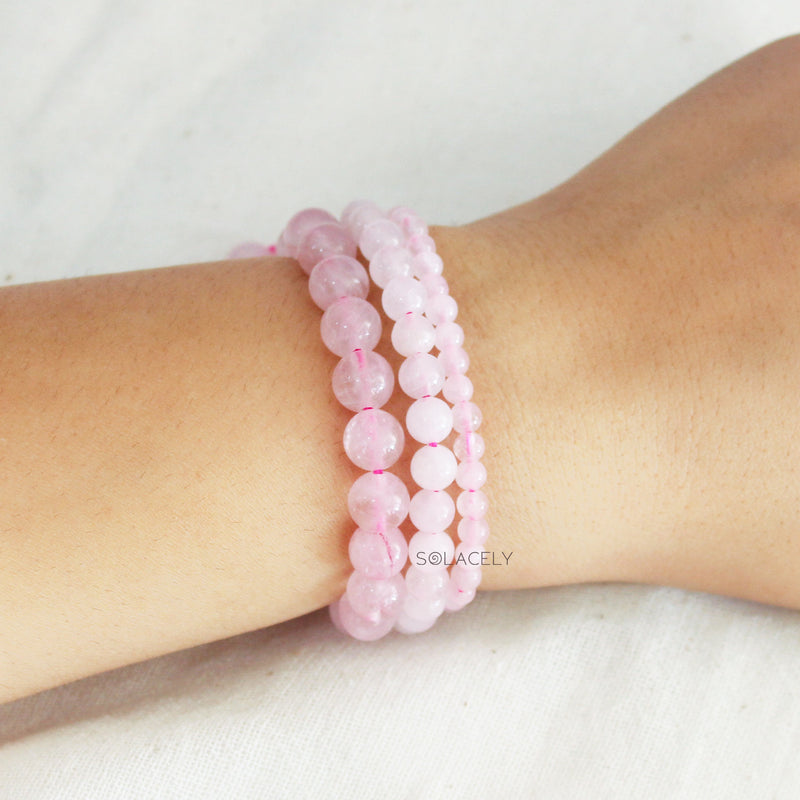
If this is a season of expansion, rose quartz is the stone people keep for warmth and openness, and clear quartz is long associated with clarity and a brighter, lighter feel. Amethyst sits well if what you want is quiet space to think before the next step. Our peace and spirituality collection gathers the gentler end of the catalogue.
If you have been wearing it and feel flat
Some people find that wearing black tourmaline continuously, day after day, starts to feel heavy. Not uncomfortable, just more weight than the day is asking for, the way a thick winter coat feels in the first warm week of spring.
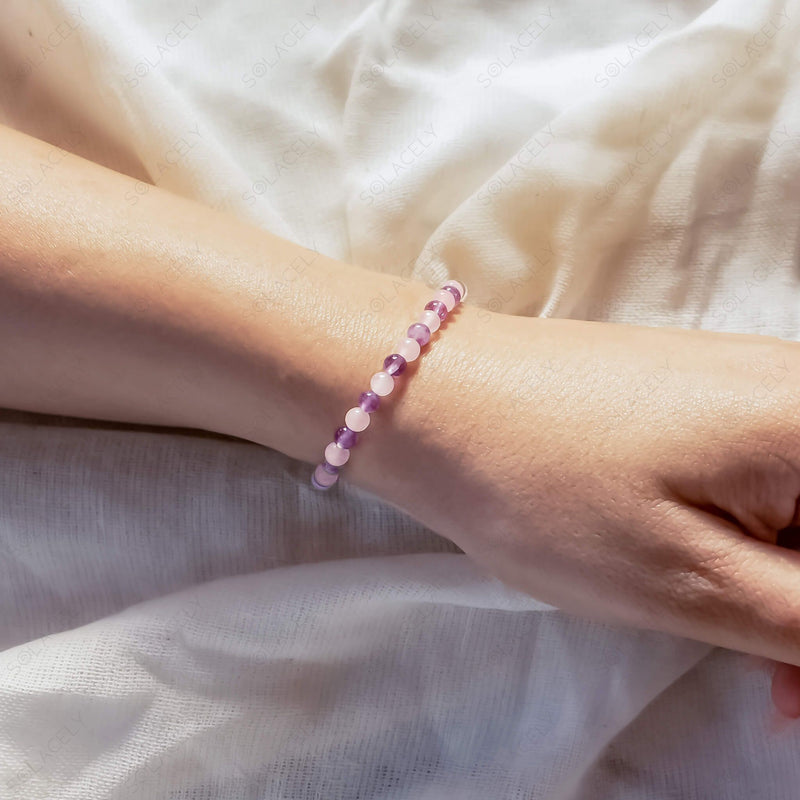
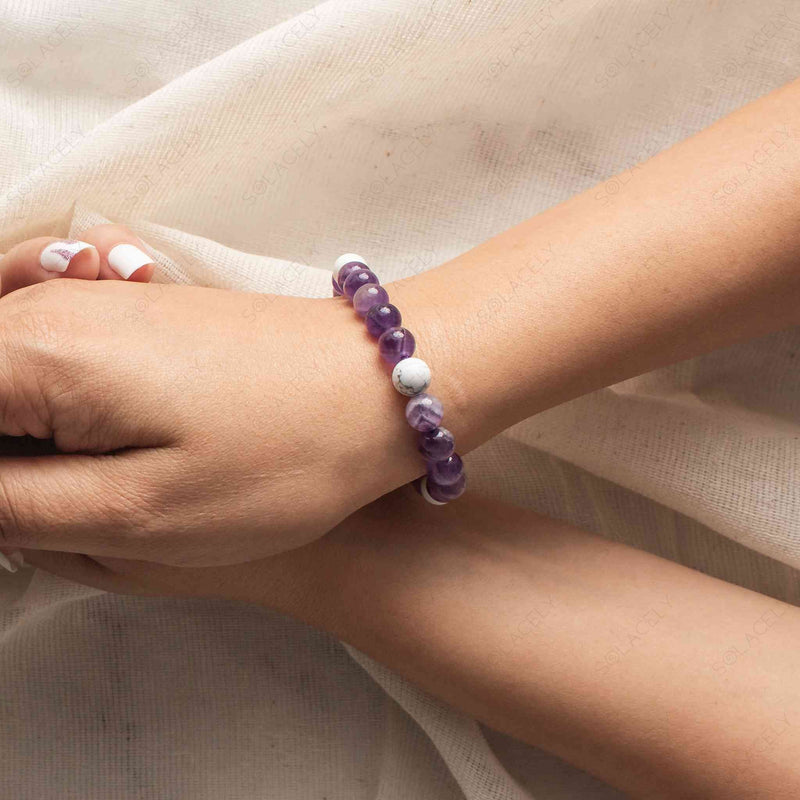
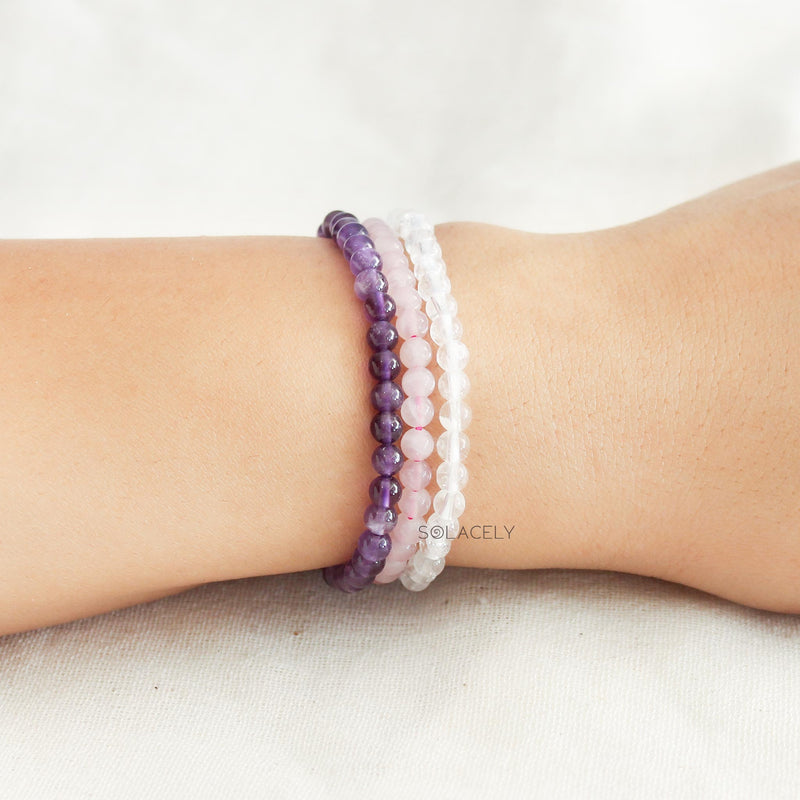
If that sounds familiar, you have two easy options. Wear it for specific occasions rather than daily, so it marks the days that genuinely call for an anchor: a difficult meeting, a long travel day, a crowded family gathering. Or rest it in its pouch for a few weeks and come back when the pace changes. Many people also find a pairing sits more lightly on the wrist, which is why black tourmaline is so often strung alongside amethyst or selenite.
If you are wearing it and feeling nothing
You are not doing it wrong. Sometimes a stone simply does not match what you are carrying this month, and that is fine: put it somewhere safe, and it keeps.
On sleeping in it
Whether to sleep in black tourmaline is a comfort choice rather than a rule. Some people take the bracelet off at night and let the day end there. Others like to keep the stone close, resting on the bedside table rather than on the wrist, so it still marks the close of the day without anything worn while they sleep.
There is a practical case for a night off, too. Elastic cord lasts longer when it is not stretched around the clock, and a bracelet slept in gets pressed and pulled in ways a day at a desk never asks of it. If you simply sleep more comfortably with a bare wrist, that is reason enough.
The practical notes
Short, factual, and none of it dramatic. Black tourmaline is schorl, a hard and chemically stable member of the tourmaline family that sits at 7 to 7.5 on the Mohs scale. It does not dissolve in water and polished beads leave no dust, so wearing and handling it day to day is simple.
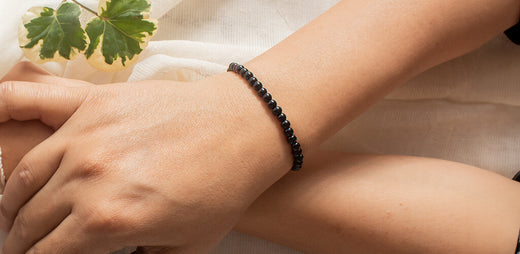
- The plain bracelet has no metal. It is stretchable with no clasp, just natural beads on elastic cord. Only the Cube charm (4mm) and Buddha charm (8mm) versions carry metal findings, so if you are sensitive to metals, choose the plain one.
- Do not soak a strung bracelet. The stone itself is untroubled by water, but soaking tires the elastic. Take it off for swimming and long baths, and wipe it with a soft dry cloth.
- Check the cord every few weeks. Retire an elastic that has started to look thin before it gives way.
- Not a toy. Loose or broken beads are a choking hazard, so keep them away from small children and pets. If a child wears a bracelet, it comes off for sleep and unsupervised play, as our guide to crystals for kids explains.
- Never make crystal elixirs or put stones in drinking water. This one is absolute.
For which wrist to wear it on and how to care for it over the years, our guide to the black tourmaline bracelet covers the rest.
If it is not the season for black tourmaline
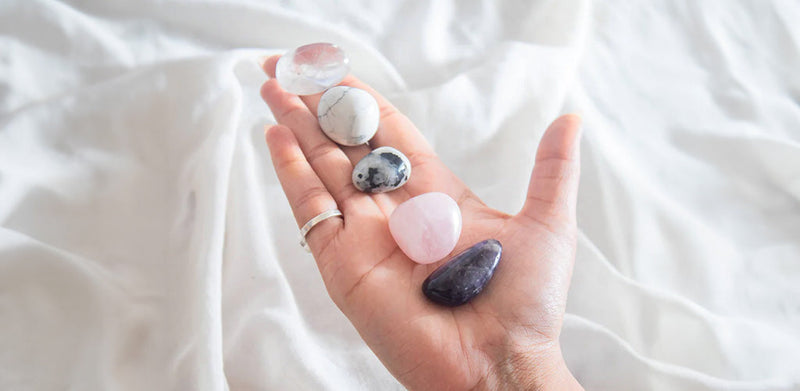
If an anchor is not what you need right now, three gentler stones sit more easily through a season of change. Each is traditionally kept for something softer than steadiness, and any of them can be worn every day without much thought.
| Stone | Traditionally kept for |
|---|---|
| Rose quartz | Warmth, openness, and kindness toward yourself |
| Amethyst | Quiet, rest, and room to think clearly |
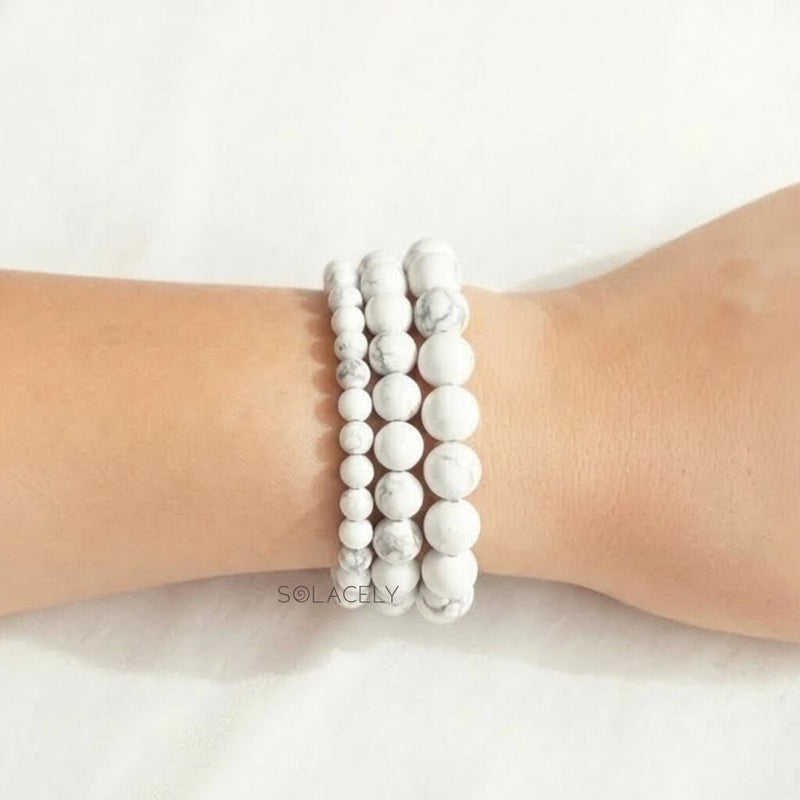
| Howlite | Stillness, and slowing an overactive evening |
Rose quartz suits a season of opening up, amethyst a season of reflection, and howlite a stretch when the evenings run too fast. Our well being collection is the place to start, and our guide to crystals for calming goes further into the quieter stones.
Coming back to it later
Stones are not a one time decision, and nothing is wasted if black tourmaline is not right for you this month. Put it in its pouch, somewhere you will see it now and then, and let it wait for the season that calls for it.
Plenty of people put a bracelet away for half a year and pick it up again when something changes: a new job in a busy office, a house move, a stretch of travel, a family season that asks you to hold your ground. What did not suit you in March can be exactly right in September, and the stone does not mind the wait.
When you do return to it, many people like a small reset first: a few minutes in incense smoke or under moonlight, and a quiet word with yourself about why you are wearing it again.
The kindest thing a stone can do
The kindest thing a stone can do is meet you where you actually are, rather than where you think you should be by now. Black tourmaline is a wonderful anchor, and it will still be one on the day you want to stay put.
If today calls for something lighter, choose the lighter thing. The anchor will still be here, in its pouch, on the morning you need to hold steady.
The uses described here reflect traditional and cultural crystal practice. They are not medical claims, they do not treat, prevent or relieve any condition, and they are not a substitute for professional healthcare. If you are going through a difficult time, physically or emotionally, please speak to a doctor or a qualified professional. Keep loose beads away from small children and pets, and never place crystals in drinking water.
Sources
Frequently asked questions
About the author


Written by Chetna Sharma, crystal healing practitioner and co-founder of Solacely. Chetna has worked with healing crystals for over a decade and curates Solacely's protective stone collection.