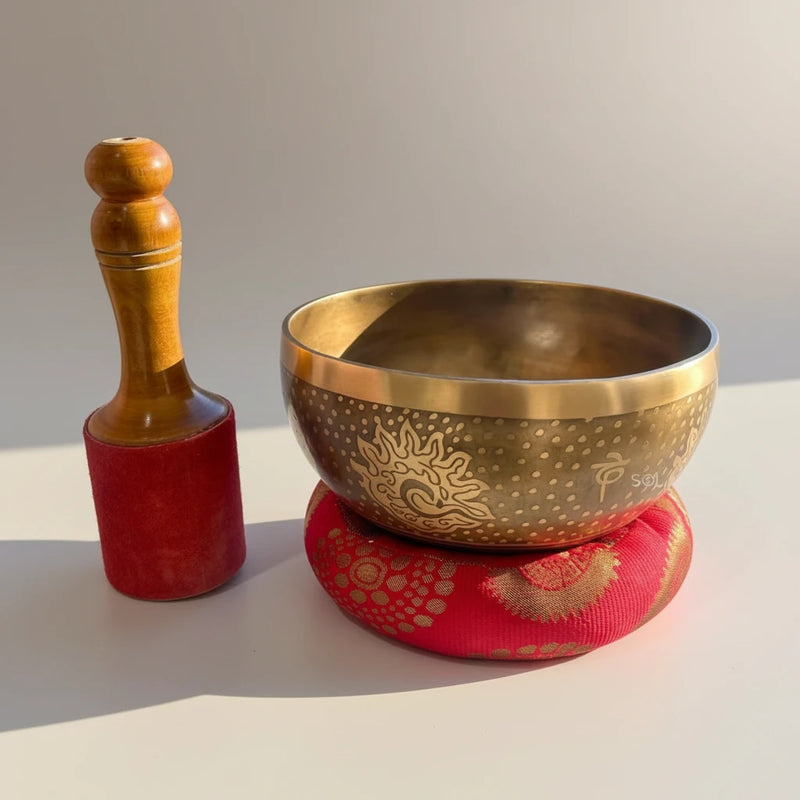
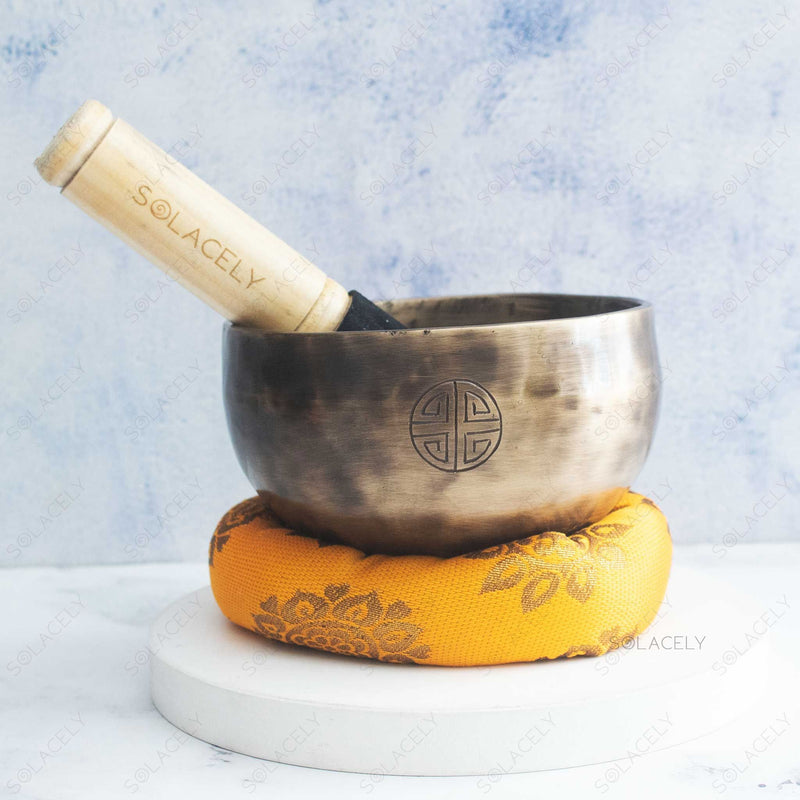
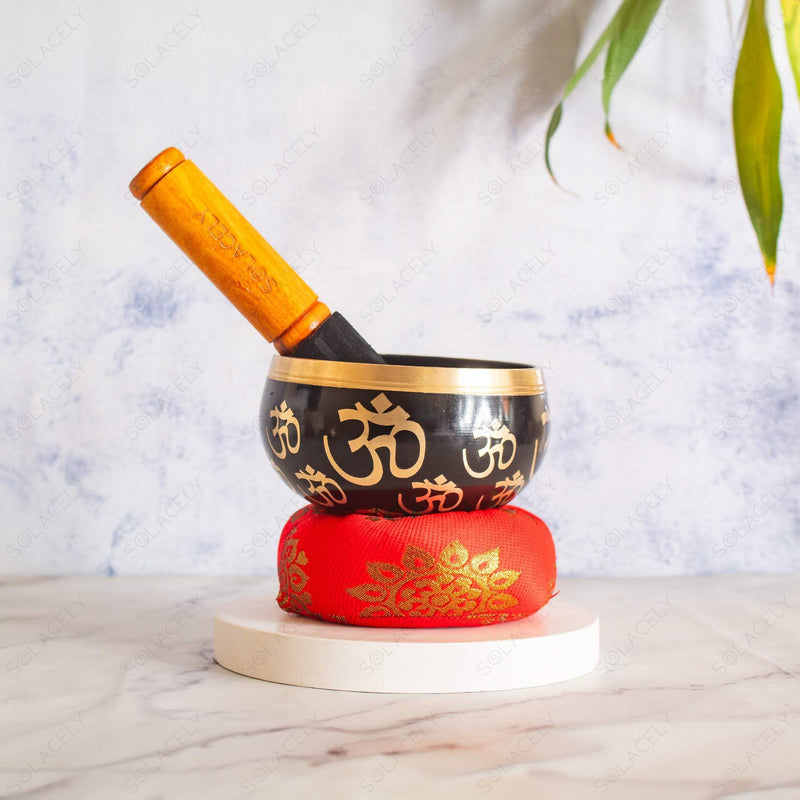
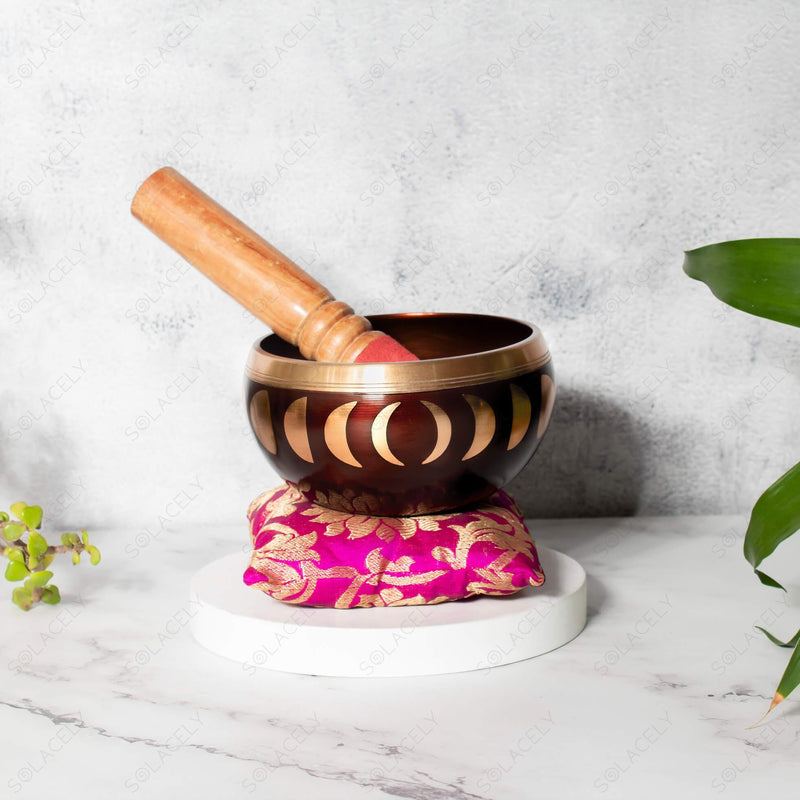
Singing bowls are bowl-shaped bells, traditionally cast from bronze, that ring with a long, sustained tone when struck or when a mallet is rubbed around the rim. Their real history is older and messier than the marketing suggests. The popular claim that they are 2,000 to 2,500 year old Tibetan ritual objects is contested, and scholars find little evidence bowls were ever 'sung' in ancient Tibet.
Key Takeaways
- The '2,000 to 2,500 year old Tibetan singing bowl' story is not backed by textual or archaeological evidence. Historians treat it as a modern claim, not a documented fact.
- Bowl-shaped standing bells are genuinely ancient as struck instruments. Early Chinese bronze forms date to the Bronze Age, but that is different from bowls made to be 'sung.'
- Most bowls are bronze, an alloy of copper and tin. A 1996 metallurgical analysis found no gold or mercury, which undercuts the romantic 'seven sacred metals' story.
- Crystal (quartz) singing bowls are a late 20th-century arrival. They began as industrial quartz crucibles from the semiconductor industry in the 1980s.
- Hand-hammered Himalayan metal bowls span an entry-level to premium range, with larger antique-style and crystal bowls going higher still.
What is a singing bowl?
A singing bowl is an inverted bell that rests rim-up and produces a sustained note when struck or when a mallet is rotated around its edge. According to the reference literature on standing bells, a bowl that can hold a musical tone this way is what most people now call a singing bowl or Tibetan singing bowl. The older, wider family is simply the standing bell.
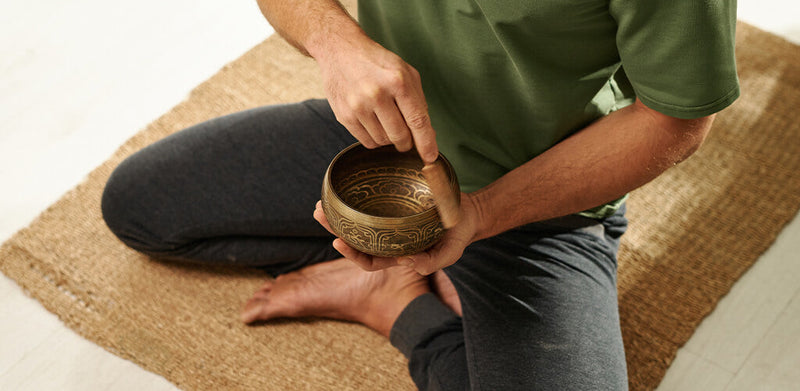
Two things make it 'sing.' Struck once, it rings like any bell. Run a suede or wooden mallet steadily around the outer rim, and friction keeps the metal vibrating, so the tone sustains and swells. That rim-rubbing technique is the part people find magical, and, as we'll see, it's also the part with the shortest documented history.
It helps to separate two ideas from the start. Bowl-shaped bells that you strike are old and well documented in Buddhist ritual. Bowls made and sold specifically to be 'sung' for sound healing are a much more recent story. Keeping those apart is the key to reading the history honestly. For a practical primer, see our guide on what a Tibetan singing bowl is and how to use it.
The origins debate: what scholars actually say
Here's the honest position. There is no reliable historical or textual evidence that metal bowls were used as 'singing bowls' in ancient Tibet, and researchers describe their use as sound-healing instruments as largely a 20th-century phenomenon. The familiar '2,000 to 2,500 years old' figure is repeated widely, but no scholarly source pins it down.
The gaps are telling. Reference works on standing bells note that although people sometimes trace singing bowls to a pre-Buddhist, shamanic Bon-Po tradition, the manufacture and use of bowls specifically for singing is believed to be modern. Historical accounts of Tibetan music are silent on them. Perceval Landon, who visited Tibet in 1903 and 1904 and wrote on its music, never mentions singing bowls, and neither do the missionaries and travellers who catalogued other ritual sounds.
Buddhist and academic writers have made the same point more bluntly. In an essay for the Buddhist magazine Tricycle, religious-studies scholar Samuel Grimes argues there's no hard evidence the bowls are ancient, and even less that they're Tibetan. He traces the first written appearance of 'singing bowls' in the West to a 1972 record, Tibetan Bells by Henry Wolff and Nancy Hennings. The modern concept, in other words, is barely 50 years old. Monks who grew up in Tibet have said they never saw bowls being spun and rubbed at all.
None of this makes the bowls fake or worthless. It just means the object is real and lovely, while a lot of the ancient backstory is invented. Present the antiquity as a story, not a fact, and you're on solid ground.
Bronze Age metallurgy: the real material
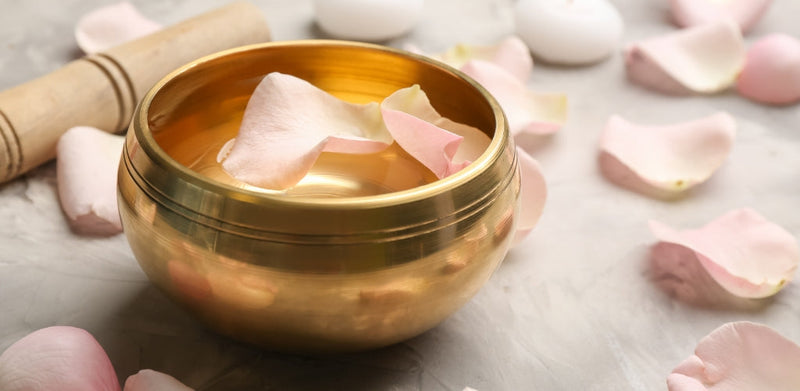
Most metal singing bowls are made of bronze, an alloy of copper and tin. According to Encyclopaedia Britannica, bronze is one of the earliest alloys humans worked, and its arrival defined the Bronze Age, which began in parts of the ancient world around 3300 BCE. So the material is genuinely ancient, even if the 'singing' use of it is not.
Bell metal is a specific high-tin bronze prized for its ring. The more tin in the mix, up to a point, the brighter and longer the sustain, which is exactly what a bell or a bowl wants. This is why the same alloy shows up in temple bells, gongs, and cymbals across Asia. The physics rewards the recipe.
That deep metallurgical lineage is probably where some of the confusion comes from. People see an old craft, bronze casting, and assume the singing bowl itself is equally old. The alloy is ancient. The idea of buying a bronze bowl to rub for sound therapy is not. Both things can be true at once.
The seven-metals folklore vs reality
You'll often read that authentic bowls are forged from seven sacred metals, each tied to a celestial body: gold for the sun, silver for the moon, mercury, copper for Venus, iron for Mars, tin for Jupiter, and lead for Saturn. It's a beautiful story. The metallurgy mostly doesn't support it.
When bowls have actually been tested, the results are plainer. A metallurgical analysis cited in the reference literature on standing bells (reported as a 1996 study at Concordia University) found antique bowls to be essentially bell metal, copper and tin, with only small traces of other metals, and crucially no gold and no mercury at all. Peer-reviewed work on singing-bowl alloys points the same way, describing them as high-tin bronze around 22 to 23 percent tin. That pulls the rug from under the 'seven planetary metals' recipe as a literal formula.
The honest read is that the seven-metals idea is folklore and, more recently, a selling point, rather than a documented manufacturing standard. Some bowls may carry stray traces of iron or other metals from the ore or the workshop. That's very different from a deliberate seven-metal, seven-planet blend.
| The seven-metals claim | What testing actually shows |
|---|---|
| Gold, silver, mercury, copper, iron, tin, lead in one bowl | Essentially copper and tin (bell metal); no gold or mercury found in the tested bowls |
| Each metal chosen for a planet | Tin and copper chosen for tone and castability, like other bells |
| Marks a bowl as 'authentic' and ancient | Functions mainly as folklore and marketing |
If a bowl sounds good and you love it, that's reason enough to buy it. Just don't pay a premium purely for the seven-metals legend. To hear how alloy and shape change the actual note, our singing bowl frequencies chart lays out the tones side by side.
Standing bells in Buddhist practice
Strip away the sound-healing layer, and there is a real, documented history here: the bowl-shaped bell as a struck ritual instrument. Early Chinese standing bells called nao, hollow-stemmed goblet forms mounted rim-up and struck with a mallet, are among the oldest bronze objects found in China, dating to the Shang dynasty and the Bronze Age.
From China, bowl and bell forms spread with Buddhism across East Asia. In Japan, the bowl-shaped rin (also called keisu) is used in temple and household worship to mark the start and end of meditation and chanting, usually paired with a small hand bell. These are struck, not rubbed, and their role is to signal and to focus attention, not to deliver a therapy.
Across the Himalaya, Nepal, India, Bhutan, metalworkers made and traded bowls of many kinds, including plain serving and offering bowls. Some certainly ended up in monasteries and homes. What the record does not show is a distinct, named tradition of 'singing' bowls used for healing before the modern era. The struck bell is old. The sung healing bowl is the newcomer. If you want to work with a bowl in a meditation context today, our guide to Tibetan singing bowl meditation walks through a simple practice.
Crystal and quartz bowls: a 20th-century Western arrival
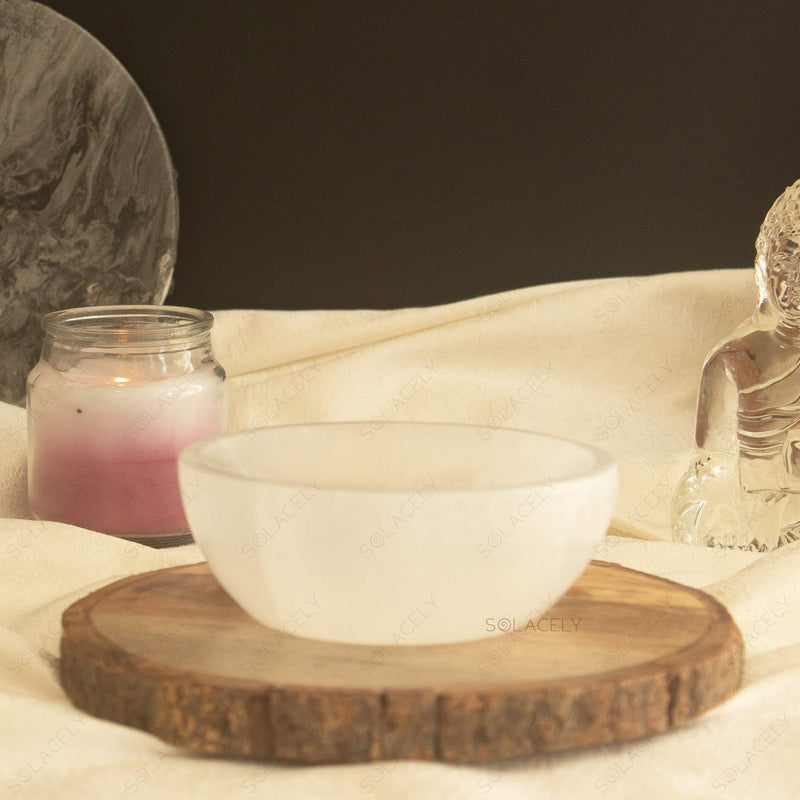
Crystal singing bowls have the most surprising and best-documented origin of all, and it's recent. They emerged in the 1980s as a byproduct of the semiconductor industry. Fused quartz crucibles, used to grow the ultra-pure silicon crystals that become computer chips, turned out to 'sing' with a clear, pure tone when tapped.
The story goes that rejected or surplus crucibles, essentially large frosted quartz bowls, found a second life once sound practitioners noticed their sustained ring. From there, makers began producing quartz bowls specifically for meditation and sound work. Modern crystal bowls are typically made from high-purity silica, spun and fused at extreme heat into that familiar frosted shape.
So crystal bowls are not an ancient Himalayan artifact at all. They're a Western, late-20th-century invention with roots in Silicon Valley-era manufacturing, later marketed with the same spiritual language as their metal cousins. They sound distinctly different too: purer, glassier, and more single-toned than a complex bronze bowl. We compare the two families in our overview of the crystal singing bowl.
Himalayan and Indian craft today
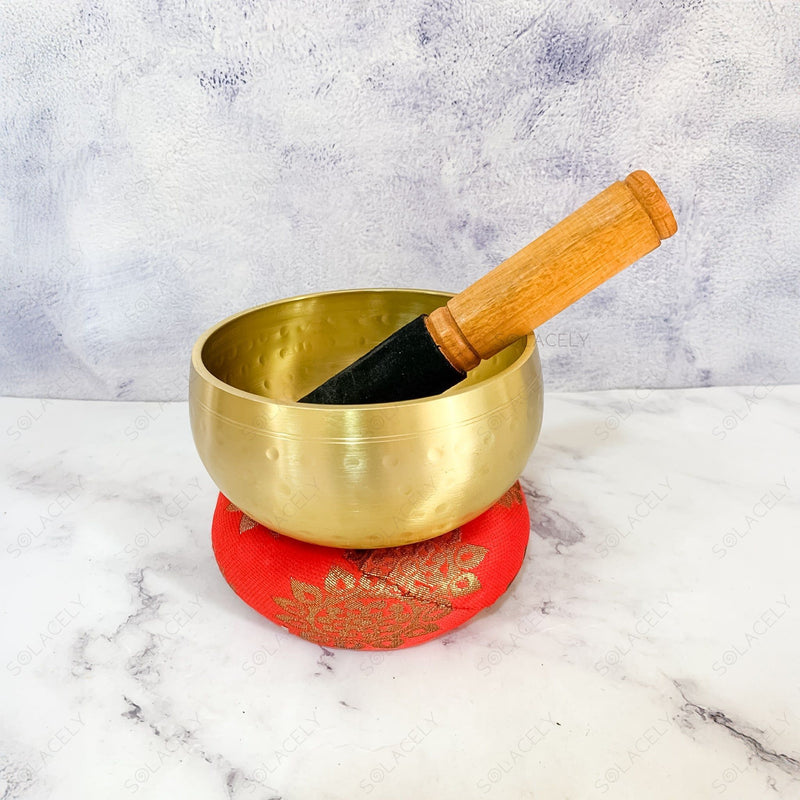
Today, most metal singing bowls sold worldwide are made in Nepal and India, in and around the Himalayan belt, either hand-hammered by artisans or machine-cast in factories. Hand-hammered bowls carry uneven, layered tones and visible hammer marks; cast and machine-finished bowls are cheaper, more uniform, and usually cleaner-looking.
The craft itself is genuine and worth supporting, even where the ancient marketing is not. A team of metalworkers heats a bronze disc and hammers it, sometimes over hundreds of strikes, into a bowl that holds a long, warm note. That skill is real, and a well-made hand-hammered bowl is a lovely object with quiet intention behind it, whatever its true age.
Prices reflect the method and the size. Small machine-made bowls start low, while larger hand-hammered pieces and older, antique-style bowls command considerably more.
| Type of bowl | Typical price tier | What you're paying for |
|---|---|---|
| Small machine-made metal bowl | Entry level | Uniform tone, everyday practice, gifting |
| Hand-hammered Himalayan bowl | Mid range to premium | Artisan craft, layered tone, character |
| Large or antique-style bowl | Collector tier | Size, age, deep sustain, collectibility |
| Crystal / quartz bowl | Usually higher again | Pure single tone, fragile, statement piece |
A hand-hammered bowl makes a thoughtful housewarming (griha pravesh) or Diwali gift, and it doubles as decor. For a closer look at artisan pieces, see our notes on the handmade singing bowl. If you're drawn to the ritual side, our piece on the magic of singing bowls covers how people use them intentionally today.
A rough timeline of singing bowls
Put the pieces in order and the picture gets clearer. The material and the struck bell are ancient. The 'sung' healing bowl and the crystal bowl are modern. Here's an honest, qualified timeline. Treat the early dates as broad context for the craft, not proof of singing bowls as we market them now.
| Rough period | What we can reasonably say |
|---|---|
| From ~3300 BCE | The Bronze Age brings copper-tin alloy metalwork across the ancient world (Britannica). |
| Shang dynasty (c. 16th–11th c. BCE) | Bowl-shaped bronze bells (nao) appear in China, among its oldest bronze objects. |
| First millennium CE onward | Struck standing bells spread with Buddhism to Nepal, India, Tibet, China and Japan. |
| Early 1900s | Visitors like Perceval Landon document Tibetan music but record no 'singing bowls.' |
| 1972 | Tibetan Bells, a record by Wolff and Hennings, is the first Western appearance of 'singing bowls.' |
| 1970s onward | The modern 'Tibetan singing bowl' concept takes shape via sellers, buyers and New Age culture. |
| 1980s | Crystal quartz bowls emerge from semiconductor-industry crucibles in the West. |
| 2000s–2020s | Sound-bath culture spreads globally; small studies begin testing effects. |
Read top to bottom, the honest conclusion is simple. Bowls are old; the healing 'singing bowl' is a young tradition wearing an old costume. That's not a criticism, just accuracy. For the broader picture of how bowls are used in wellness, see our overview of sound healing and the hub, our complete singing bowl guide.
What science says about singing bowls
The research is early and thin, so the honest word is 'promising, not proven.' A 2025 systematic review in the journal Healthcare pooled 14 quantitative studies of Tibetan singing bowl interventions and found possible benefits for anxiety, mood and heart-rate variability, while stressing small samples and low-to-moderate certainty of evidence.
The reviewers were explicit that it's too early for firm clinical claims. That fits the wider view from bodies like the U.S. National Center for Complementary and Integrative Health, which notes that meditation and relaxation practices may help with stress and well-being, though the strength of evidence varies. A sound bath can be genuinely calming. That calm comes from the pause, the breathing and the tone, not from any proven planetary metal or ancient magic.
Sources
- Encyclopaedia Britannica, 'Bronze'
- Samuel Grimes, 'Tibetan Singing Bowls: Where Did They Really Come From?,' Tricycle
- 'Thermal and structural analysis of high-tin bronze corresponding to the composition of the singing bowl,' Journal of Thermal Analysis and Calorimetry (2019)
- Lin, Yang & Wang, 'Effects of Tibetan Singing Bowl Intervention on Psychological and Physiological Health in Adults: A Systematic Review,' Healthcare (2025)
- National Center for Complementary and Integrative Health (NIH), 'Meditation and Mindfulness'
Frequently asked questions
About the author


Written by Chetna Sharma, crystal healing practitioner and co-founder of Solacely. Chetna has worked with healing crystals for over a decade and curates Solacely's protective stone collection.