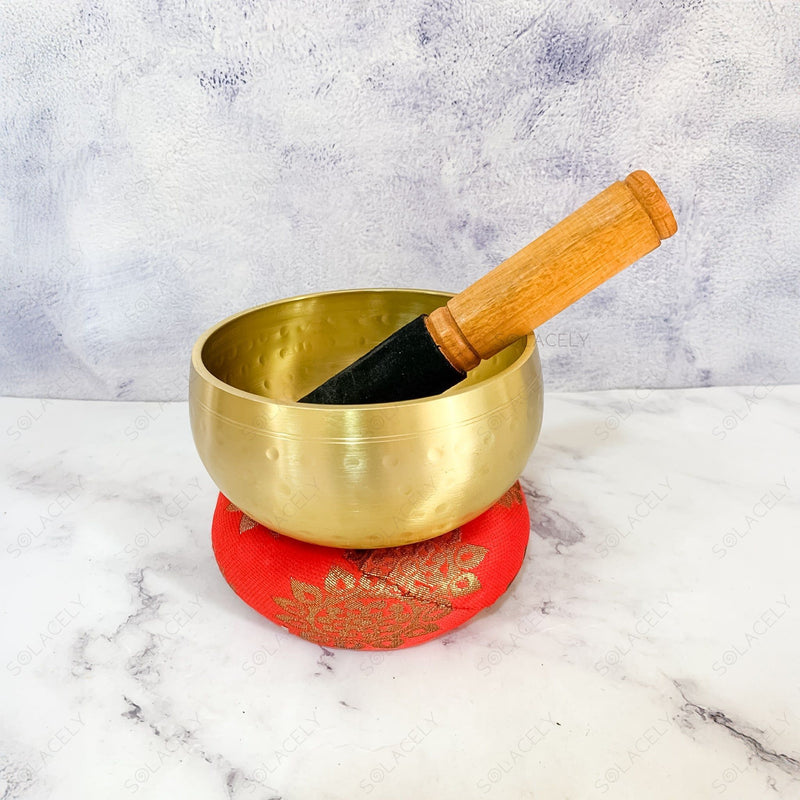
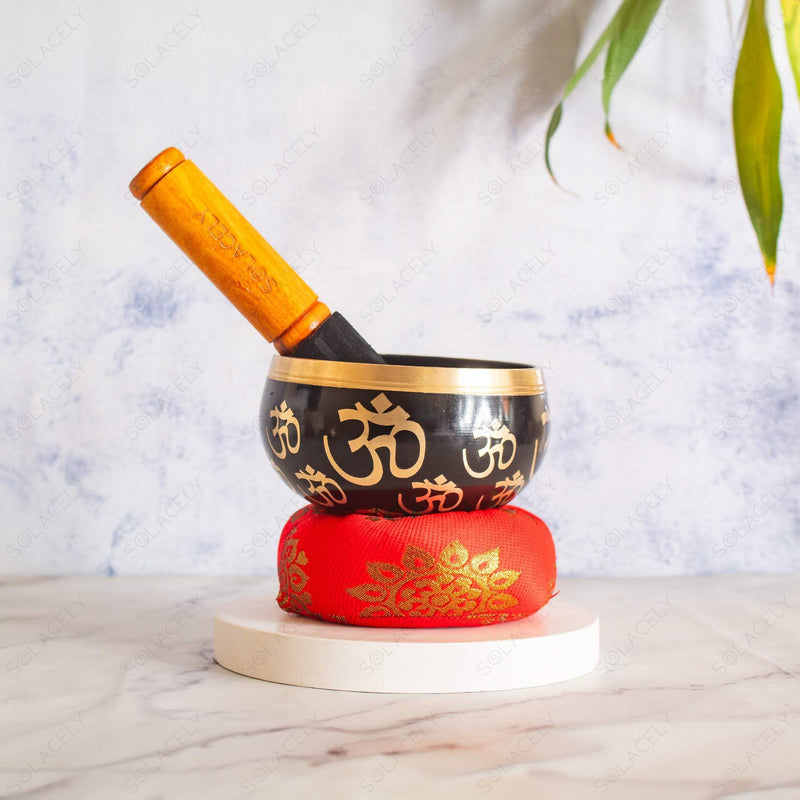
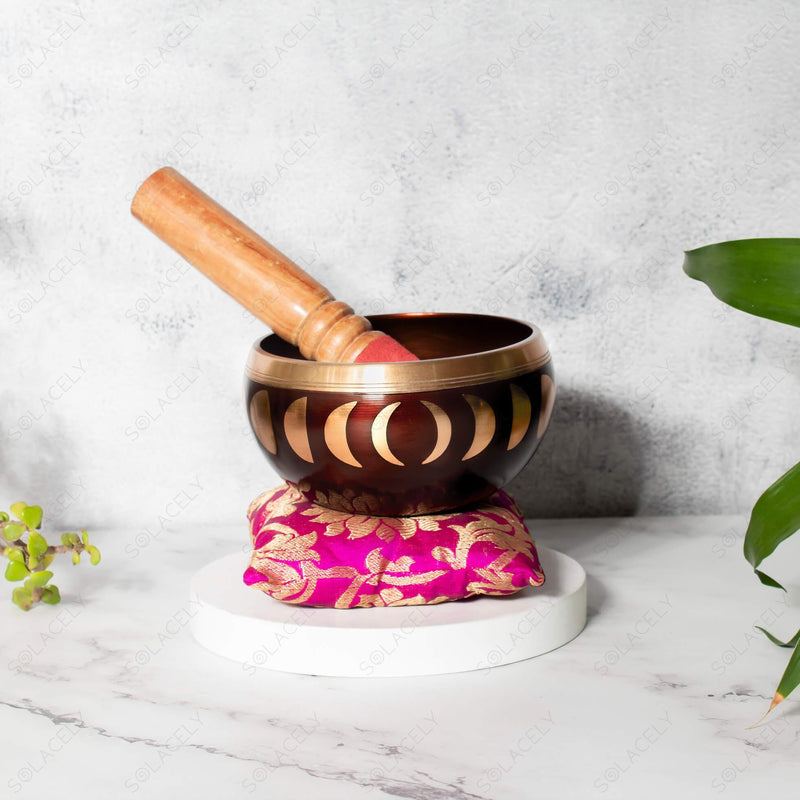
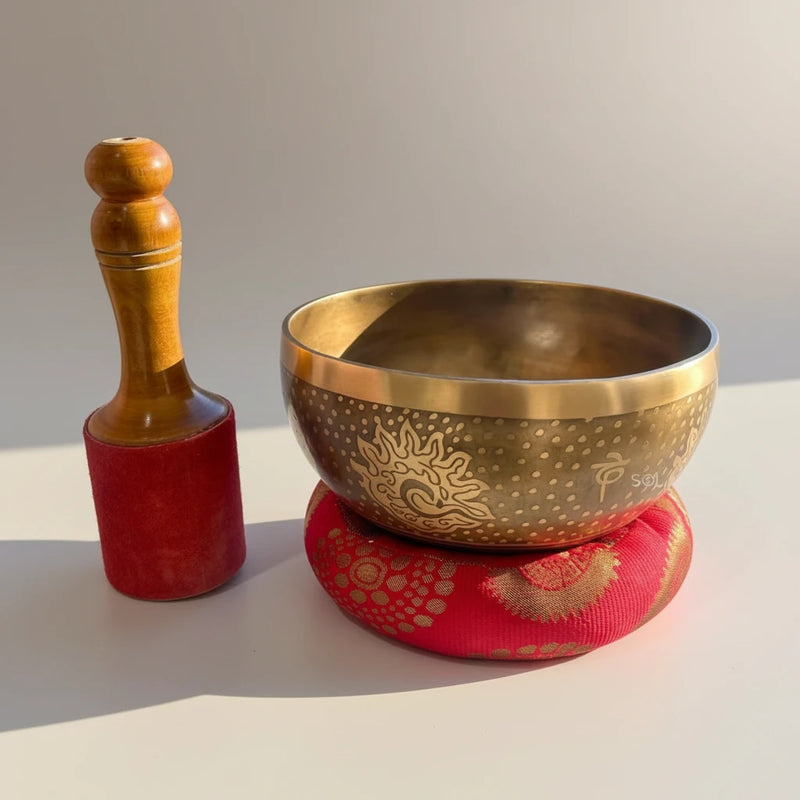
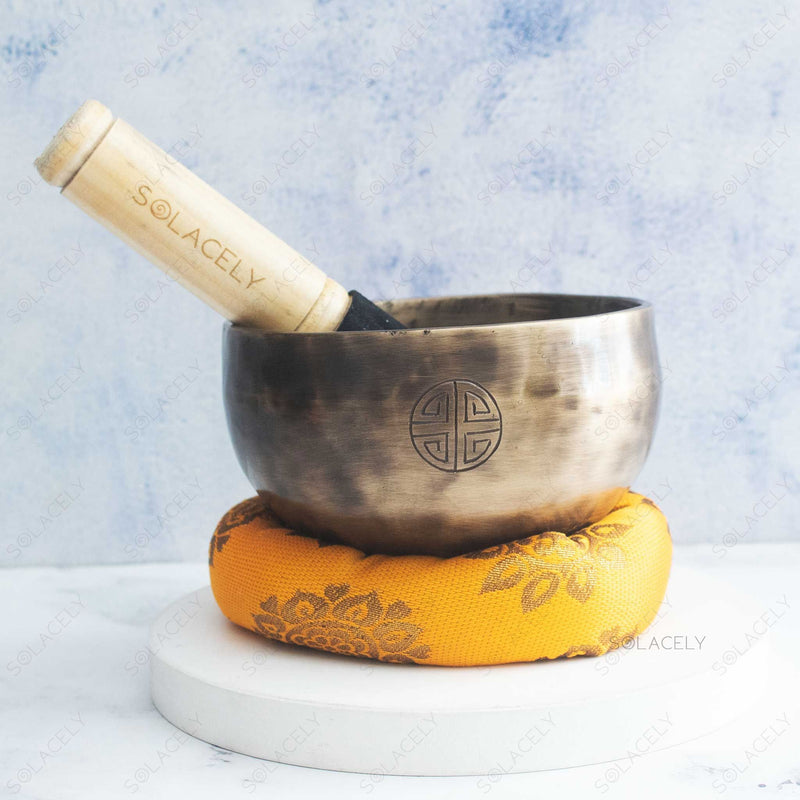
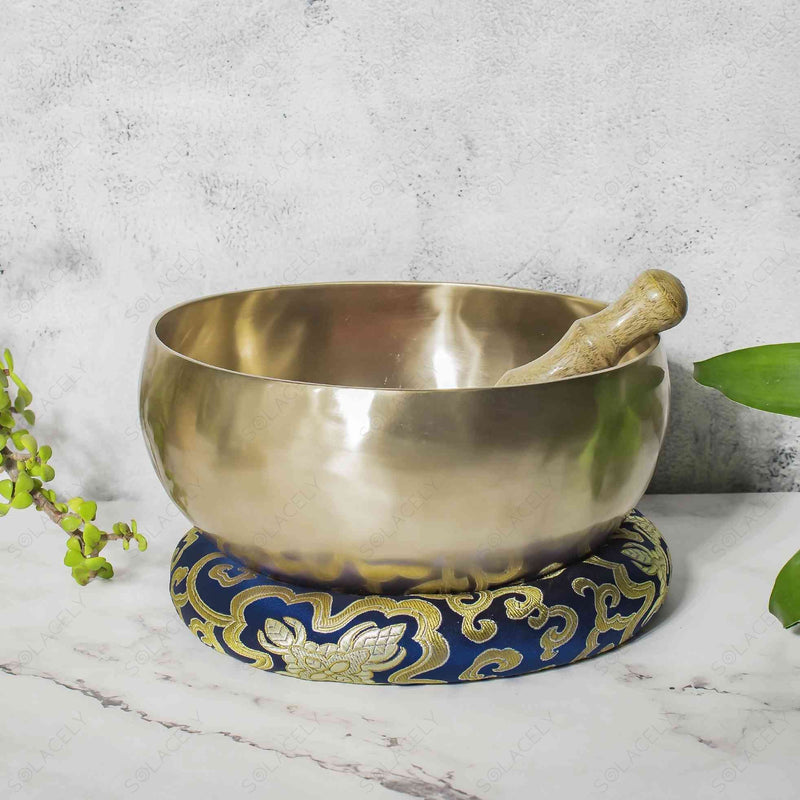
There are two ways to play a singing bowl. You strike it once with a mallet for a single clear tone, or you rub the mallet steadily around the outside rim until the bowl builds into a long, humming note. That second sound, the one that seems to come from nowhere and fill the room, is what people call the 'magic.' It's really resonance, and once you understand it, the bowl stops being mysterious and starts being useful.
Key Takeaways
- You play a singing bowl two ways: striking the side for a single bell-like tone, or rimming (rubbing the mallet round the outer rim) for a sustained hum.
- Rest the bowl flat on a soft cushion or hold it open on your flat palm. Never grip it with fingers over the rim, that mutes the sound.
- A wooden mallet gives a brighter, faster ring; a suede-wrapped mallet gives a softer, deeper sustain and is easier for beginners.
- The 'resonance' is a standing wave: the metal rim vibrates at its natural frequency, and stick-slip friction from the mallet keeps feeding that vibration, exactly like running a wet finger round a wine glass.
- A good starter Himalayan-style bowl is an entry-level buy; hand-hammered and larger bowls step up into the mid-range and premium bands.
What actually happens when a singing bowl 'sings'?
The sound is resonance, not magic. When you strike or rub the bowl, the metal rim starts to flex in and out in a fixed pattern called a standing wave, vibrating at its own natural frequency. According to Encyclopaedia Britannica, a standing wave forms when vibration is trapped in a body so that fixed points (nodes) stay still while others swing widely, which is exactly what a bowl's rim does.
Here's the part people find surprising. Rubbing the rim works the same way as running a wet finger around a wine glass. The mallet grips the metal, slips, grips again, hundreds of times a second. That 'stick-slip' friction pushes the rim in perfect time with its own vibration, so the tone doesn't fade, it grows. Physicists call this driving a system at resonance.
The bowl isn't adding energy from the universe. It's storing and releasing the energy your hand puts in, very efficiently, because bronze is a fine acoustic material. Knowing this takes nothing away from the experience. If anything it makes the practice easier, because now you know your job is simply to feed the vibration smoothly. For the wider family of instruments that work this way, see our overview of sound bowls and how they differ.
The two ways to play: striking vs. singing the rim
A singing bowl has exactly two techniques, and most sessions use both. Striking means tapping the outside wall once with a padded mallet to release a single clean tone, like a bell. Singing the rim means pressing the mallet against the outer edge and moving it in a steady circle until a continuous hum builds and holds.
Start every session with a strike. It's foolproof and it teaches your ear the bowl's note. Hold the mallet loosely, tap the bowl about two-thirds of the way up the wall, then let it ring out fully before you do anything else. That single tone is a complete practice on its own for meditation or the end of a yoga class.
Singing the rim takes a little patience. Rest the mallet against the outside of the rim, apply light, even pressure, and move it around the circle at a slow walking pace. For the first second or two you'll hear a rattle. Keep going at the same speed and pressure, and the rattle smooths into a pure tone. If it squeals, you're going too fast. If it dies, you're pressing too lightly or lifting off the edge.
| Striking | Singing the rim | |
|---|---|---|
| Motion | One tap, then let ring | Steady circular rub |
| Sound | Single bell-like tone that fades | Continuous building hum |
| Difficulty | Very easy | Needs practice |
| Best for | Marking start/end, chakra tones | Sustained meditation, sound baths |
| Common error | Hitting too hard (clanks) | Going too fast (squeals) |
How to hold the bowl (holding position matters)
Holding position decides whether the bowl sings or stays silent. The rule is simple: the rim must be free to vibrate. For small and medium bowls, rest the bowl flat on your open, flat palm, fingers straight and together, not curled up around the sides. For larger bowls, leave it on a flat cushion on the floor or table.
Curled fingers are the single most common reason a bowl won't sing. If your fingertips or thumb touch the upper wall or rim, you damp the standing wave and the tone chokes. Think of holding a full cup of tea on a flat saucer: the bowl sits on your hand, your hand doesn't hug the bowl.
Sitting comfortably helps more than people expect. Keep your wrist relaxed and your forearm steady so the bowl doesn't wobble as you circle the rim. If you're using the bowl during floor practice, place it on a cushion beside your mat rather than balancing it on your hand. For pairing bowls with a movement practice, our guide to using a singing bowl in yoga walks through timing and placement.
Choosing a mallet: wood vs. suede
The mallet changes the sound as much as the bowl does. Most bowls come with a wooden striker, and many teachers add a suede or leather-wrapped one. A bare wooden mallet gives a brighter, quicker, higher ring and starts the rim singing fast. A suede-wrapped mallet gives a softer attack, a deeper tone, and a longer, smoother sustain.
For beginners, reach for the suede or padded side first. The soft surface grips the metal more forgivingly, so the rim sings sooner and squeals less. Wood is better once your hand is steady and you want a crisper, more present tone, or when you're striking rather than rubbing.
| Mallet type | Tone | Sustain | Best use | Beginner-friendly |
|---|---|---|---|---|
| Bare wood | Brighter, higher | Shorter | Striking, quick rim start | Moderate |
| Suede / leather-wrapped | Softer, deeper | Longer | Rimming, sound baths | Yes |
| Felt / padded | Warm, mellow | Long | Gentle strikes, sleep practice | Yes |
Match the mallet to the bowl's size too. A small bowl needs a slim mallet; a big bowl needs a heavier one with more surface to grip the wider rim. If you buy a matched singing bowl set, the mallet and cushion are already sized to the bowl, which saves a lot of trial and error.
Playing a water bowl
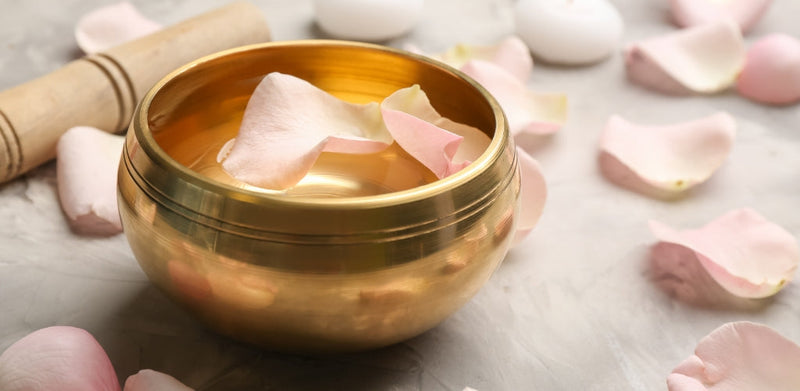
Adding water turns a singing bowl into a visible physics demonstration. Fill the bowl about halfway, play the rim gently, and the standing wave in the metal transfers into the water. You'll see fine ripples form, then tiny droplets leap off the surface as the tone strengthens. It's the same energy, made visible.
This isn't folklore, it's measurable. A 2011 study by physicists Denis Terwagne and John Bush at MIT, published in the journal Nonlinearity, examined exactly how a Tibetan singing bowl drives waves and ejects droplets from the water inside it. The dancing water is the standing wave you can hear, showing up as motion you can see.
A word of care for water bowls. Play more softly than you would dry, empty the bowl after each session, and dry it fully so the metal doesn't stain or corrode. Water bowls are wonderful for teaching children how sound moves, and for a slower, more meditative session where you watch as much as you listen. Keep the volume low; a water bowl overdriven just splashes.
Common beginner mistakes
Almost every beginner problem comes down to speed, pressure, or grip. The good news is each one has a quick fix, and none of them mean the bowl is faulty. Nine times out of ten the bowl is fine and the technique just needs a small adjustment.
- Gripping the bowl. Fingers on the rim mute the tone. Keep the palm flat and open.
- Rubbing too fast. Speed makes it squeal or screech. Slow to a gentle walking pace.
- Pressing too hard, or too soft. Too hard chatters, too soft dies. Aim for firm, even contact.
- Lifting the mallet off the rim. Any gap breaks the tone. Stay glued to the edge all the way round.
- Giving up in the first two seconds. The rattle before the tone is normal. Keep circling at the same speed and it smooths out.
- Striking too hard. A hard hit clanks instead of ringing. A light tap two-thirds up the wall is plenty.
If the tone keeps breaking, stop, reset your hand, and start with a single strike to hear the note before you try to sing it again. Patience does more here than force. Most people get a clean sustained hum within a week of short daily tries.
A simple 10-minute singing bowl practice
A good starter routine is one bowl, ten minutes, done the same way each day. You don't need a set, incense, or a script. Consistency matters far more than equipment. Here's a sequence that works for meditation, winding down at night, or closing a yoga session.
- Settle (1 minute). Sit comfortably, bowl on a cushion or flat palm. Take a few slow breaths and let your shoulders drop.
- Open with a strike (1 minute). Tap the bowl once, close your eyes, and follow the tone all the way until it fades to silence. Notice the quiet after.
- Sing the rim (4 minutes). Slowly circle the outer rim, building a steady hum. Let the sound fill the room. If it breaks, reset and start again without frustration.
- Rest in the sound (2 minutes). Strike once more and simply breathe, resting your attention on the vibration and your own slow breath.
- Close (2 minutes). Sit in silence for a couple of breaths, then gently open your eyes. Wipe the bowl with a soft cloth and put it away.
Do this daily and the practice becomes a small anchor in the day rather than a performance. For a fuller Himalayan-style session with breath and mantra, see our guide to Tibetan singing bowl meditation, and for the note-and-chakra pairings, our singing bowl frequencies chart.
What the evidence really says, and what to buy
Be honest about the research: it's early and small. A widely cited 2017 observational study by Goldsby and colleagues, published in the Journal of Evidence-Based Complementary and Alternative Medicine, followed 62 people through a singing bowl sound meditation and reported lower tension, anger, and fatigue afterward. It's promising, but it had no control group and a small sample, so treat it as a gentle pointer, not proof.
That fits the wider picture. The U.S. National Center for Complementary and Integrative Health notes that meditation and relaxation practices can help with stress and general well-being, while the strength of evidence varies. The realistic benefit of a singing bowl is that it gives your attention something clear and pleasant to rest on, which is genuinely calming. What draws people back is that focus, plus the plain fact that the sound is beautiful. For the practices people find most useful, our roundup of singing bowl benefits goes deeper.
On buying, you don't need an expensive bowl to start. A decent Himalayan-style beginner bowl with a mallet and cushion sits at the entry level. Hand-hammered, larger, or antique bowls cost several times more, and they hold a longer, richer tone. Bowls also make a thoughtful housewarming (griha pravesh) or Diwali gift, calming, useful, and free of clutter. If you're choosing your first, pick the one whose note you like when you strike it. The tone you enjoy is the one you'll actually use. For everything from history to care, our complete singing bowl guide is the hub to start from.
Sources
- Encyclopaedia Britannica, 'Standing wave (physics)'
- Terwagne, D. & Bush, J. W. M. (2011), 'Tibetan singing bowls,' Nonlinearity 24, R51 (IOP Publishing)
- Goldsby, T. L. et al. (2017), 'Effects of Singing Bowl Sound Meditation on Mood, Tension, and Well-being: An Observational Study,' Journal of Evidence-Based Complementary & Alternative Medicine
- National Center for Complementary and Integrative Health (NIH), 'Meditation and Mindfulness: What You Need To Know'
Frequently asked questions
About the author


Written by Chetna Sharma, crystal healing practitioner and co-founder of Solacely. Chetna has worked with healing crystals for over a decade and curates Solacely's protective stone collection.