Tibetan singing bowl meditation is a simple practice where you sit quietly, strike or rim a metal singing bowl, and rest your attention on the tone until it fades. The long, humming note gives your busy mind one calm thing to hold, so the breath slows and the shoulders drop on their own. You don't need experience, a teacher, or a fancy setup. One bowl, ten quiet minutes, and a steady ear are enough to begin.
Key Takeaways
- Tibetan singing bowl meditation means resting your attention on a bowl's sustained tone. Strike the rim, listen to the note decay fully, breathe with it, then strike again. That single-pointed focus is the whole method.
- The two ways to play are striking (tap the rim for a clear bell-like note) and rimming (circle the mallet around the outside edge to draw out a continuous 'singing' hum). Beginners should master striking first.
- Start with 5 to 10 minutes, sitting tall with the bowl on your flat palm or a cushion. Work up to 20 minutes as it feels natural. Short and regular beats long and rare.
- The practice grows out of the Himalayan Buddhist meditation lineage and the older yogic tradition of sound as a spiritual tool (nada yoga, mantra, Om). A metal bowl is a portable version of that.
- Evidence is early. The most cited study, Goldsby et al. 2017 (62 people, no control group), found less tension and anxiety after a session, but it stays preliminary. A good beginner bowl is an entry-level to mid-range buy. Treat this as calming self-care, not medical treatment.
What Tibetan singing bowl meditation actually is
Tibetan singing bowl meditation is a form of focused meditation that uses the sustained tone of a metal bowl as the anchor for your attention. You play the bowl, listen to the note rise and slowly fade, and keep gently returning your mind to the sound. Instead of watching your breath or repeating a mantra, you rest on vibration. That's the entire idea.
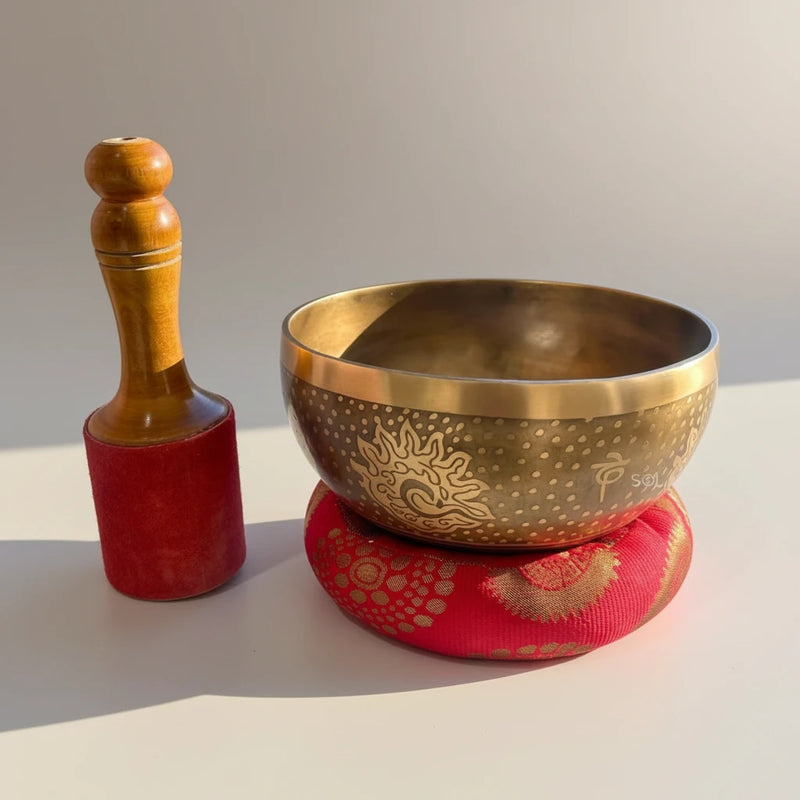
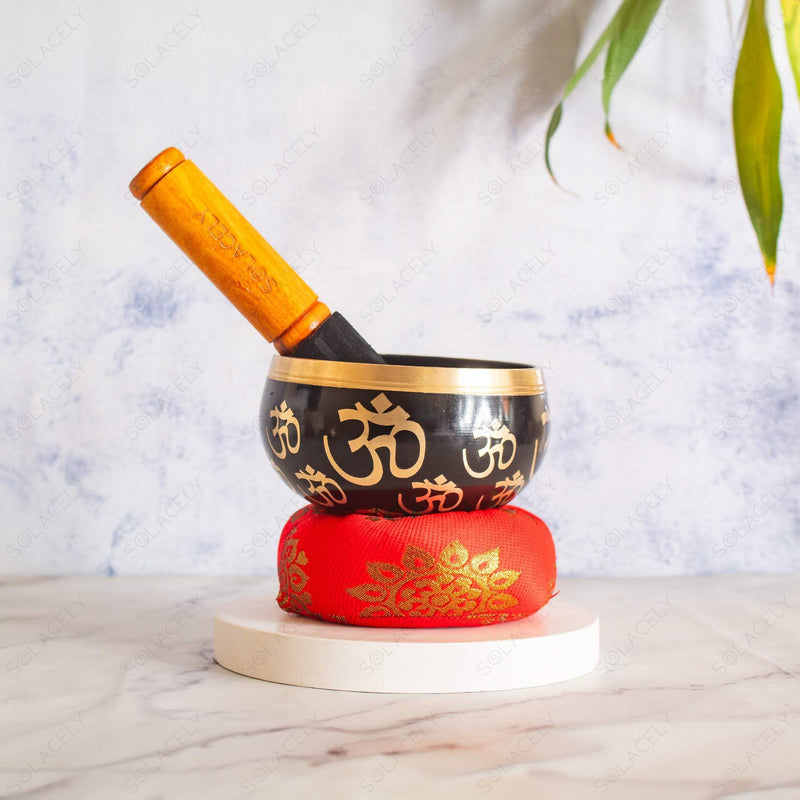
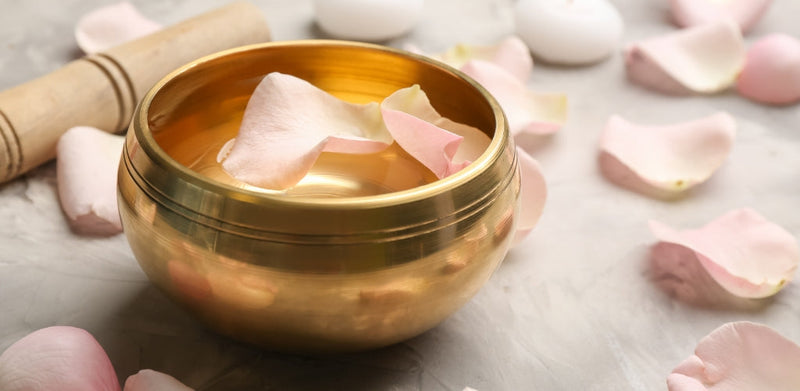
The bowl itself is a thick, hand-hammered metal bowl, traditionally an alloy of several metals, that rings for a long time when struck or rubbed. What makes it special for meditation is the decay. A struck bowl doesn't just go 'ding' and stop. The note blooms, wavers with soft overtones, and takes many seconds to disappear. Following that fade all the way to silence is a natural attention exercise. Your mind wanders, you notice the tone is still there, and you come back. Each strike is a fresh chance to settle.
People sometimes confuse this with a full sound bath, where a practitioner plays many instruments over you while you lie down. That's related but bigger. Bowl meditation, in the sense most beginners mean, is a solo practice with one bowl that you play yourself. For the wider practice with gongs, forks, and group sessions, our guide to sound healing covers the whole family honestly. Here, we're staying close and personal: you and one bowl.
Where the practice comes from: the Himalayan and Buddhist lineage
Tibetan singing bowl meditation sits inside the broader Himalayan Buddhist meditation tradition and a much older relationship with sacred sound. Metal bowls have been made across the Himalayas, Nepal, Tibet, and northern India for centuries, and the wider culture treats sound and vibration as a path to inner stillness rather than just music.
It's worth being honest about history, because there's a lot of romantic myth around these bowls. The popular story that ancient Tibetan monks used singing bowls for meditation in some unbroken secret lineage isn't well documented. What we can say is more grounded and, to my mind, more interesting. Metal bowls are genuinely old craft objects from the region, and the modern meditative use grew out of both the Himalayan Buddhist world and the Vedic and yogic tradition of sound. For a fuller, myth-free look at where these bowls really come from, see our history of singing bowls.
None of this is new. Nada yoga, the 'yoga of sound,' treats sound as a route to meditation. Mantra repetition and the chanting of Om use the voice the same way a bowl uses its tone: a single steady vibration to focus the mind. The temple bell struck at the threshold of a shrine does the same job in a second, clearing the head as you step inside. A Tibetan singing bowl simply gives you a portable, repeatable version of that ringing note at home. If you want the cultural and symbolic side in more depth, the magic of the singing bowl explores the belief and ritual around it.
Striking vs rimming: the two ways to play
There are two ways to make a bowl sound, and they feel completely different. Striking means tapping the outside rim once with the mallet to get a clean, bell-like note that swells and fades. Rimming (also called rubbing or 'playing the rim') means circling the mallet steadily around the outside edge to build a continuous, singing hum that keeps going as long as you keep moving.
For meditation, striking is the beginner's friend and honestly the one I'd recommend for the first few weeks. It asks nothing of your hands. You tap, you listen, the tone does the work, and the long silence between strikes is where the calm lives. There's no technique to get wrong.
Rimming takes practice. You hold the mallet like a pen, press the wooden side firmly against the outer rim, and move it around at a slow, even speed, the same way a wet finger sings a wine glass. Go too fast and it screeches. Too light and it fizzles out. When it works, the bowl seems to sing on its own, and it's genuinely lovely, but a wobbly first attempt can be more frustrating than soothing. Learn to strike first, get comfortable resting in the decay, then add rimming once you want a continuous drone. The overtones and pitch shift depending on the bowl, and if you're curious about the actual notes bowls produce, our singing bowl frequencies chart lays them out without the mysticism.
| Technique | How you do it | Sound it makes | Best for |
|---|---|---|---|
| Striking | Tap the outer rim once with the padded mallet | Clear, bell-like note that swells then slowly fades | Beginners; single-pointed focus on the decay |
| Rimming | Press and circle the mallet around the outer rim | Continuous, building 'singing' hum | A sustained drone; deeper sessions once you've practised |
A step-by-step Tibetan singing bowl meditation
A basic session is short and forgiving: sit tall, settle your breath, strike the bowl, and follow the tone to silence before striking again. Do that for five to ten minutes and you've meditated. Here's the full sequence, the way I'd teach a friend at their kitchen table.
- Set up your space. Find a quiet spot where you won't be interrupted for ten minutes. Switch your phone to silent. Sit on a cushion, a chair, or the floor, with your back tall but not stiff. Rest the bowl on your open, flat palm, or on a small cushion in front of you. Holding it on flat fingers lets it ring freely; gripping the sides deadens the tone.
- Settle first. Before you touch the mallet, take three slow breaths. Let the exhale be longer than the inhale. Feel your weight drop into the seat. You're arriving, the same pause you feel when a temple bell rings before you enter.
- Strike gently. Hold the mallet loosely and tap the outside rim once, a little below the top edge. You want a soft, round 'boonnng,' not a hard clang. Let it ring. Don't touch the bowl again yet.
- Follow the tone all the way down. This is the actual meditation. Listen to the note as it swells, wavers, and slowly fades. Keep your attention on it until it fully disappears into silence. When your mind drifts, and it will, just notice and come back to the sound. The fading tail is where the mind quietens.
- Breathe with the strikes. Once you've a rhythm, let each strike ride a slow inhale, and let the long decay carry a slow exhale. Roughly one strike every 20 to 40 seconds is plenty. There's no rush. The silence between notes is not empty time; it's the point.
- Optional: add the rim. If you've practised rimming, circle the mallet slowly around the outer rim to draw out a continuous hum for a stretch, then return to striking. Keep it smooth and quiet.
- Close in silence. After several rounds, set the mallet down and sit still for a minute with no sound at all. Notice how the room feels. That contrast between the last fading tone and the quiet is often the calmest moment of the whole practice.
The whole thing can run five minutes or twenty. What matters is the quality of attention, not the length. If you catch yourself striking fast to fill the silence, slow down. The bowl is teaching you to wait.
Breath, posture, and session length
Good Tibetan singing bowl meditation rests on three simple supports: an upright, relaxed posture, a slow breath with a longer exhale, and a session length you can actually keep up. Get those right and the bowl does the rest. Over-thinking any of them is the main way beginners talk themselves out of the practice.
Posture. Sit however you can hold a tall spine comfortably, cross-legged on a cushion, kneeling, or upright in a chair with feet flat. The goal is alert and relaxed, not rigid. Let the shoulders soften and the hands rest easy. If sitting hurts, sit in a chair. A sore back is a bigger distraction than any technique flaw.
Breath. You don't need special breathing. Just let it slow and lengthen the exhale, which is a well-known way to nudge the nervous system toward calm. Syncing the breath loosely to the strikes, inhale on the tap, exhale down the decay, gives the mind a gentle rhythm without turning it into a task.
Session length. Start with 5 to 10 minutes. That's not a beginner's consolation prize; it's genuinely enough to feel a shift. As the practice becomes familiar, stretch to 15 or 20 minutes if you want. Beyond that you're into longer sit territory, which is lovely but not necessary. Far better to do a real ten minutes most days than a heroic hour once a fortnight. If you'd like to fold the bowl into a broader movement practice, see singing bowls for yoga, where the bowl marks the start and close of a session.
Beginner tips that actually help
The most useful beginner habit is to slow everything down and let the silence stretch. New meditators tend to strike too often, too hard, and quit too soon. Fix those three and the practice gets easy fast. Here are the tips I find myself repeating most.
- Let the tone finish. The single most common mistake is striking again before the last note has died. Wait for full silence, then a breath more. The pauses are where the calm settles.
- Strike softer than you think. A gentle tap produces a rounder, longer tone than a hard whack. Loud is not better.
- Rest the bowl on flat fingers or a cushion. Cupping or gripping the sides muffles the ring. Let it sit free.
- Don't chase a 'perfect' experience. Some days feel deep and still. Some days your mind races the whole time. Both are normal and both count. You're not failing.
- Learn striking before rimming. Continuous rim play is satisfying but fiddly. Build confidence with simple strikes first.
- Keep it short and regular. Five honest minutes daily beats an occasional marathon. Consistency is what changes how you feel week to week.
- Pick a decent bowl. Very cheap bowls sound thin and fade in a second, which defeats the whole purpose. You don't need to overspend, but a bowl with a long, warm decay makes the practice far easier.
At-home practice vs group sound sessions
At-home bowl meditation is a short, self-led solo practice with one bowl, while a group sound session (or sound bath) is a longer, guided experience where a facilitator plays many instruments over a roomful of people lying down. Both are worthwhile. They just do slightly different jobs, and most people end up enjoying a mix.
Practising at home is the backbone. It's free after the bowl, it fits into a real day, and it builds the steady habit that actually shifts your baseline stress. You control the length, the timing, and the quiet. The downside is that it takes a little self-discipline, and you're playing the bowl yourself rather than being carried by the sound.
A group session is a different pleasure. You lie down, do nothing, and let a practitioner layer bowls, gongs, and chimes around the room for 45 to 75 minutes. Many people reach a deeper, more surrendered state in a group than they can alone, partly because they're not 'doing' anything. It's also a nice occasion, and sound baths tend to run out of yoga studios and wellness spaces, sometimes tied to a full moon or a festival evening. The trade-off is cost and scheduling. If sleep is what you're chasing, a short home routine often works better than an occasional group session, and our guide to singing bowls for sleep walks through a simple bedtime wind-down.
| At-home practice | Group sound session | |
|---|---|---|
| Length | 5 to 20 minutes, your call | 45 to 75 minutes, set by the facilitator |
| Cost | One-off bowl purchase, then free forever | Per-session fee, varies by studio |
| You do | Play the bowl and hold attention | Lie down and receive the sound |
| Best for | Building a steady daily habit | A deep, guided reset now and then |
| Instruments | Usually one bowl | Bowls, gongs, chimes, forks layered |
Honest benefits: what to expect and what the research shows
Most people report feeling calmer, less tense, and mentally quieter after Tibetan singing bowl meditation, with easier sleep and a pleasant emotional release for some. Those are real and consistent with what focused meditation and relaxation generally do. What the practice does not do, despite plenty of marketing, is cure illness or 'retune your cells.' Keeping those apart matters.
Here's the evidence, told straight. The most cited study is Goldsby et al. (2017), published in the Journal of Evidence-Based Complementary & Alternative Medicine. In it, 62 adults reported significantly less tension, anger, fatigue, depressed mood, and anxiety, plus more spiritual wellbeing, after a single 60-minute singing bowl meditation. Encouraging, and the numbers were strong. But read the design before you get carried away: it was an observational study with no control group and a single session. Everyone knew they were at a relaxing sound event, and there was nothing to compare against, so you can't separate the bowls from simply lying quietly for an hour. The authors say as much and call for more rigorous work.
Wider reviews land in the same place. A handful of small studies point toward reduced stress, lower tension, and better mood, but samples are tiny and proper randomized controlled trials are largely missing. The National Center for Complementary and Integrative Health takes a similarly cautious line on meditation and relaxation broadly: helpful for stress and wellbeing for many people, not a substitute for medical treatment. So the fair summary is this. Bowl meditation is a pleasant, low-risk way to relax, early data leans positive, and nobody has shown it treats or cures any medical condition. For a grounded look at the mental side specifically, our guide to singing bowl benefits for the mind stays on the same honest footing.
| Reasonable to expect | Overclaimed, treat with caution |
|---|---|
| A calmer, more focused, meditative state | 'Cures anxiety, depression, or disease' |
| Lower felt stress and physical tension | 'Retunes your cells to a healing frequency' |
| A quieter mind and easier sleep that night | 'Detoxifies the body through vibration' |
| A gentle emotional release | 'A specific Hz number treats a specific illness' |
Choosing and caring for a beginner bowl
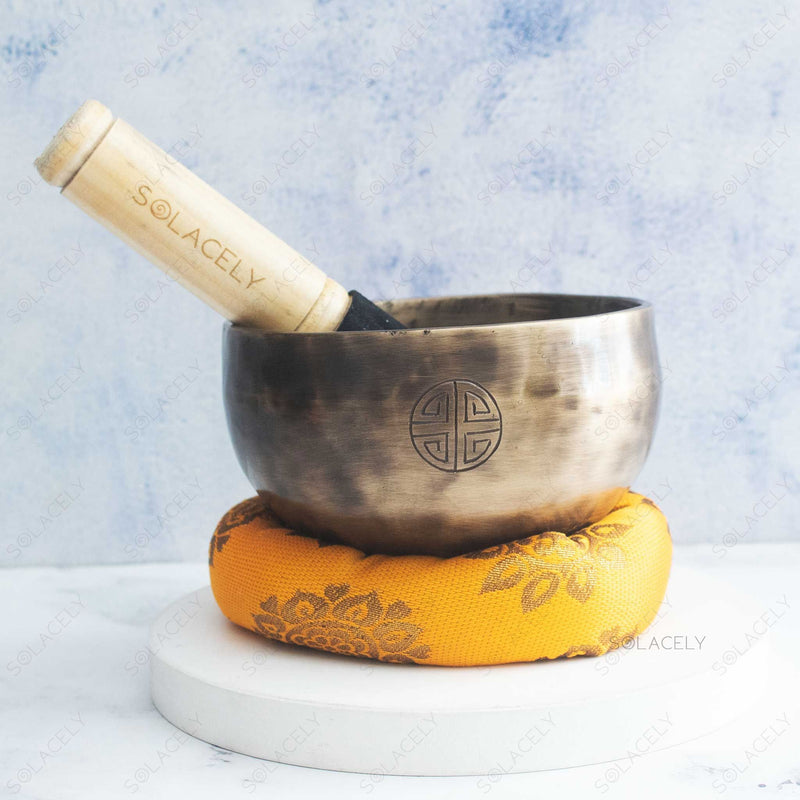
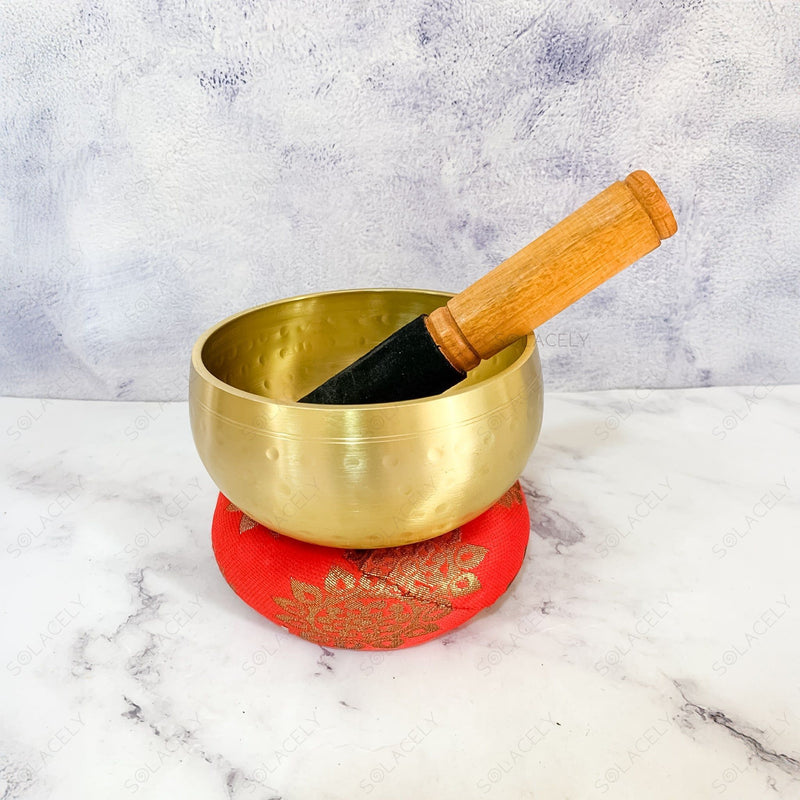
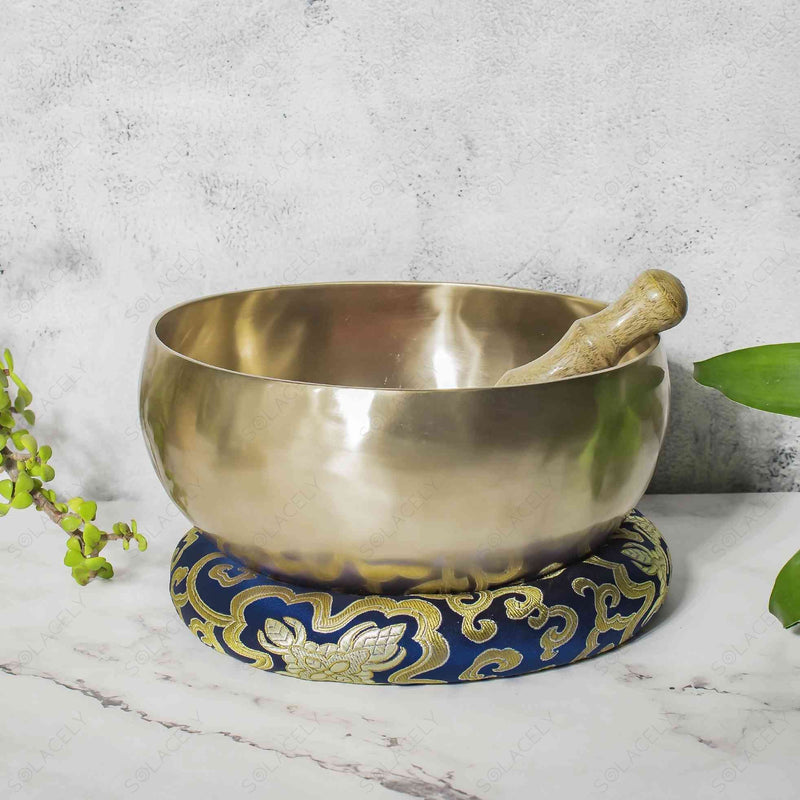
A good beginner Tibetan singing bowl is an entry-level to mid-range buy, which gets you a warm, long-lasting tone that makes the practice genuinely easier. You don't need to spend more to start. What you're paying for is decay: a bowl that rings cleanly for many seconds rather than thudding and stopping.
A few honest pointers. The very cheapest bowls often sound thin and fade fast, which quietly undermines the whole practice, since the fading tone is your anchor. Before buying, if you can, strike the bowl and listen: you want a clear note with a long, smooth tail and no harsh buzz. A palm-sized bowl (roughly 4 to 5 inches) suits most beginners and travels well. Look after it simply. Wipe it with a soft dry cloth, keep it dry to avoid tarnish, and store the mallet where it won't roll off and dent the rim. A bowl this well-made will outlast you, which is part of why they make such meaningful gifts for a housewarming or griha pravesh.
Sources
- Goldsby TL, Goldsby ME, McWalters M, Mills PJ. Effects of Singing Bowl Sound Meditation on Mood, Tension, and Well-being: An Observational Study. Journal of Evidence-Based Complementary & Alternative Medicine, 2017
- PubMed record for the Goldsby et al. singing bowl study (PMID 27694559)
- National Center for Complementary and Integrative Health (NIH) — Meditation and Mindfulness: What You Need To Know
Frequently asked questions
About the author


Written by Chetna Sharma, crystal healing practitioner and co-founder of Solacely. Chetna has worked with healing crystals for over a decade and curates Solacely's protective stone collection.