Buying a home is a long stretch of waiting, paperwork and decisions made in other people's living rooms. The crystals people carry through it are small anchors for exactly that: one stone in a pocket at a viewing, one on the desk through the quiet weeks, and one set down at the new front door on the day the keys arrive.
Key takeaways
- Six stones are traditionally carried through a house purchase: clear quartz, tiger's eye, amethyst, citrine, pyrite and black tourmaline.
- Carry one at a time rather than the whole set. A single pocket tumble is the way almost everyone actually does this.
- Viewings suit clear quartz, the waiting weeks suit amethyst, and completion day suits black tourmaline at the new threshold.
- This is a ritual you keep to yourself. Nothing needs to be visible, said out loud or explained to an estate agent.
- Pyrite is never salt or water cleansed, because it can rust. Keep it dry, keep it whole and wipe it with a dry cloth.
- The stones you carry now move straight into the new house afterwards, which is part of why people choose them.
Six stones people carry while buying a home
Clear quartz, tiger's eye, amethyst, citrine, pyrite and black tourmaline are the six that come up again and again. Each one is long associated with a different part of the process: seeing a place clearly, holding your nerve, sleeping through the waiting, speaking up in a hard conversation, and feeling steady on the day itself.
| Stone | Long associated with | When people reach for it |
|---|---|---|
| Clear quartz | Clarity and a clear head | Viewings and second viewings |
| Tiger's eye | Nerve and steadiness | Offer day and awkward phone calls |
| Amethyst | Calm and quiet evenings | The sleepless weeks in the middle |
| Citrine | Confidence and warmth | Conversations where you have to ask for something |
| Pyrite | Abundance and resolve | Kept on the desk beside the paperwork |
| Black tourmaline | Grounding and a settled space | Completion day and the new threshold |
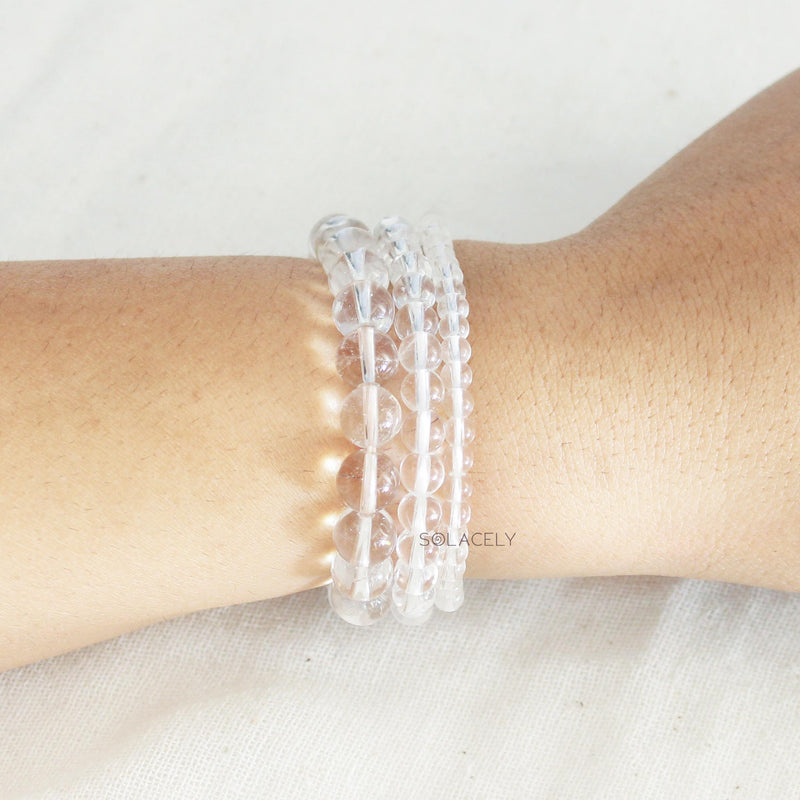
Clear quartz is the lead stone of the buying phase because it is traditionally kept for a clear head. Held for a moment before you walk into a house, it works as a cue to notice what is actually in front of you: the light, the layout, the noise from the road, rather than the coffee someone has left brewing in the kitchen.
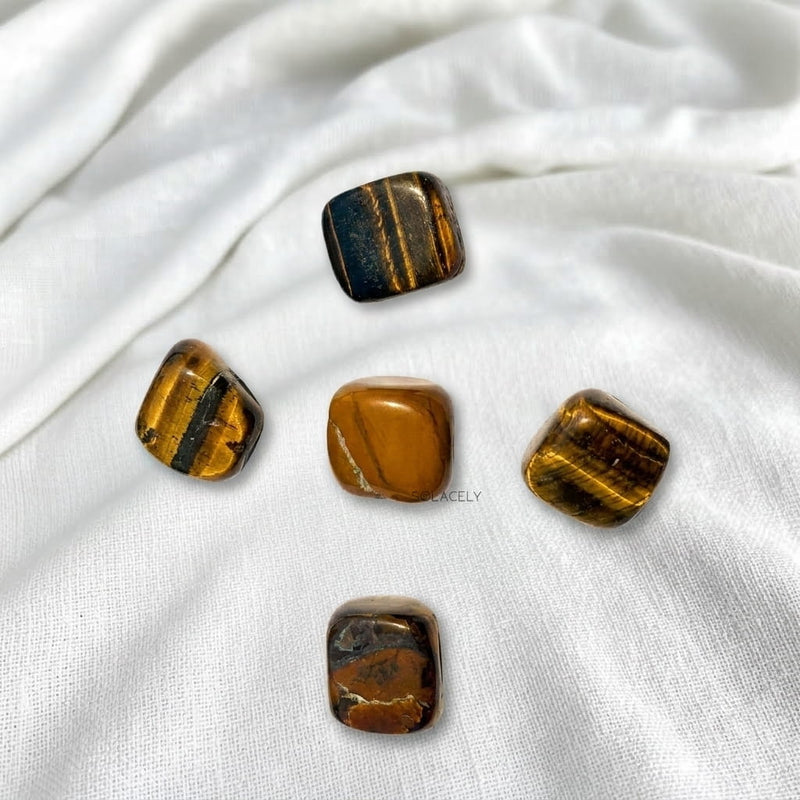
Tiger's eye has been carried for centuries as a stone of nerve. People reach for it in the moments that ask for some: making an offer that stretches, walking away from a place they had already decorated in their head, or asking the agent the question they feel awkward asking.
Amethyst is the one that ends up on the bedside table. House buying has a way of collecting itself into the hour before sleep, when the spreadsheet is closed but still running somewhere behind your eyes. A tumble within reach is a small, ordinary thing to hold on to at that hour.
Citrine is long associated with warmth and confident speech, which is why people keep it on the desk during the back and forth stretches. Its yellow is genuinely cheering to look at on a grey afternoon, and that alone earns it a place beside a laptop full of documents.
Pyrite is the abundance stone of the tradition, with a metallic gold shine that has been prized for as long as people have picked it out of rock. It is an unusually satisfying object to have on a desk. A cube or a small polished piece sits beside the folder of paperwork and gives the whole undertaking a bit of weight.
Black tourmaline is the grounding stone people save for the end. It is the natural pocket companion for completion day, and it is also the stone that carries straight over into life in the new house, where it is traditionally set near the front door.
What to take to a viewing
One small tumble in a pocket, and nothing else. Clear quartz is the usual choice, with tiger's eye as the alternative when you already know the viewing is going to be a difficult one. Hold it briefly at the gate, put it away, and leave it there for the whole visit.
Keep it invisible. This is a private ritual, not a performance, and there is no version of it that involves setting stones out on someone else's windowsill or holding a crystal up in their hallway. The stone stays in a coat pocket where your hand can find it while you are looking at a damp patch and trying to think straight.
If you are viewing several places in one afternoon, hold the stone again briefly between houses. Most people find the third viewing of a Saturday blurs into the second one, and a small physical pause at the car door is a useful way to mark where one house ends and the next begins.
The weeks of waiting
The middle of a purchase is mostly waiting: for a call back, for a date, for someone you have never met to reply to someone else you have never met. Amethyst on the bedside and pyrite on the desk are the two placements people describe most often through that stretch, because both are things you can look at rather than do.
Evenings are where this tradition earns its keep. A stone in your hand for the length of three slow breaths before you put the laptop away is a small closing ritual, and it gives the day an ending that is not the last email you read. Plenty of people keep a second piece in a bag or a coat through this period too, so that it is already with them when a call comes without warning.
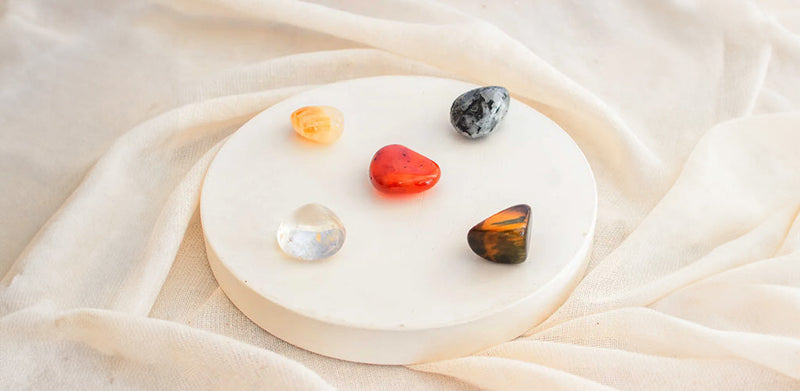
Some buyers set the whole group of six out together on a shelf or a tray for the duration, and take only one out at a time. It is a tidy way to keep the practice going without carrying everything everywhere, and the tray becomes a quiet marker of a stage in your life that you will remember for a long time.
Completion day and the new threshold
Black tourmaline in a pocket on completion day is the classic. It goes with you for the signing, the final walk through and the key handover, and then it comes straight out of your pocket and goes down just inside the new front door as the first thing you put anywhere in the house.
That threshold placement is the oldest part of this practice and the part people remember. A stone set down at the door before the boxes come in gives you something to do in the first strange, echoing minute of standing in an empty house that is somehow yours. Many buyers add clear quartz beside it, then move both to a hallway shelf once the furniture arrives.
Keep the gesture small and keep it yours. There is no correct wording and nothing you have to say. Setting the stone down, taking a breath and looking around the room is the whole thing, and it takes less time than finding the kettle.
A ninety second doorstep ritual
This is the one people use most, done in the car or at the gate before a viewing. It takes about ninety seconds and needs nothing except the stone in your pocket and a moment of standing still before you press the bell.
- Hold the stone in whichever hand feels natural, and let it warm up.
- Three slow breaths. In for four counts, out for six.
- One sentence to yourself: "I want to see what is actually here."
- Stone into the pocket. Then knock.
The same shape works for the other big days with the sentence swapped. On the morning of an offer it might be "I know what my number is." On completion day it might simply be "we are here." The ritual is the same ninety seconds either way, which is what makes it easy to keep up across months.
Looking after stones you carry every day
Pocket stones pick up more wear than shelf pieces, so keep the routine simple: a soft dry cloth, a lined pouch so tumbles are not knocking against keys, and a proper look at them whenever the process moves into a new stage. Two of the six also have care notes worth knowing before you carry them.
Pyrite is the one to be careful with. Never cleanse it with salt or water, and never leave it anywhere damp, because it can rust and the surface will dull and flake. Keep pieces whole and polished rather than crumbling, wipe them with a dry cloth only, and wash your hands after handling raw material. Do not sand, file or breathe near pyrite dust. Everything else in the tradition, including a night on a windowsill under the moon, sound, or simply setting it down somewhere you like, suits it perfectly well.
Amethyst and citrine both fade in prolonged strong sun, so a bright south-facing sill is the one place not to leave them for months at a time. Clear quartz, tiger's eye and black tourmaline are all hard-wearing enough for daily pocket carry. None of these stones, and no stone at all, should ever go into drinking water, and small tumbles and chips need keeping away from children and pets.
When the move is over, the same six carry on. Most people cleanse them once as a way of marking the change, then place them around the new house rather than putting them away, which is where the buying phase quietly hands over to living there.
Crystals are decorative keepsakes kept for comfort and tradition. Nothing on this page is financial, legal, mortgage, conveyancing, property or survey advice, and nothing here should be used in place of professional guidance on an offer, a valuation, a survey, a mortgage or a completion date. For those parts of buying a home, speak to your solicitor or conveyancer, a qualified mortgage adviser and a chartered surveyor. Pyrite should be kept dry and handled as whole polished pieces, never sanded or crumbled. Never place any stone in drinking water, and keep small tumbles and chips away from children and pets.
Sources
Written by Chetena Sharma. Reviewed by the Solacely editorial team.
Frequently asked questions
About the author


Written by Chetna Sharma, crystal healing practitioner and co-founder of Solacely. Chetna has worked with healing crystals for over a decade and curates Solacely's protective stone collection.