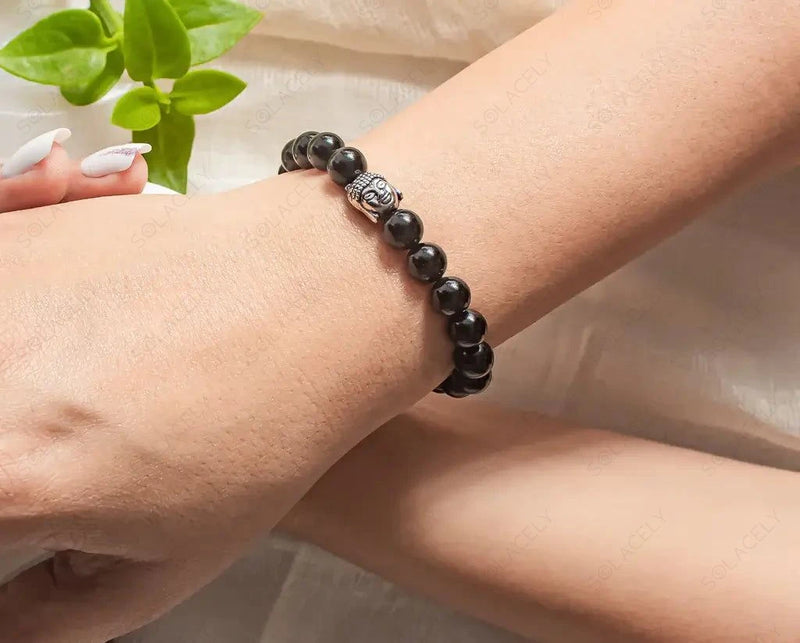
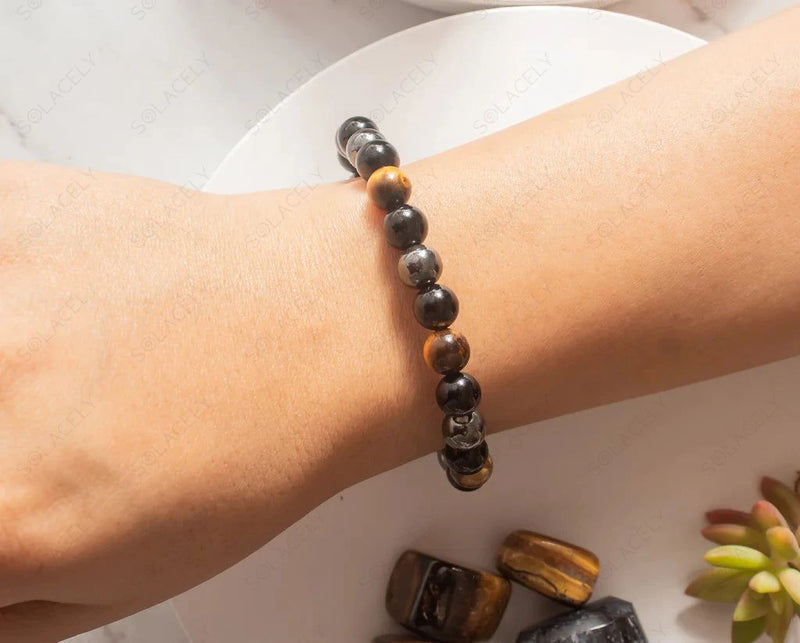
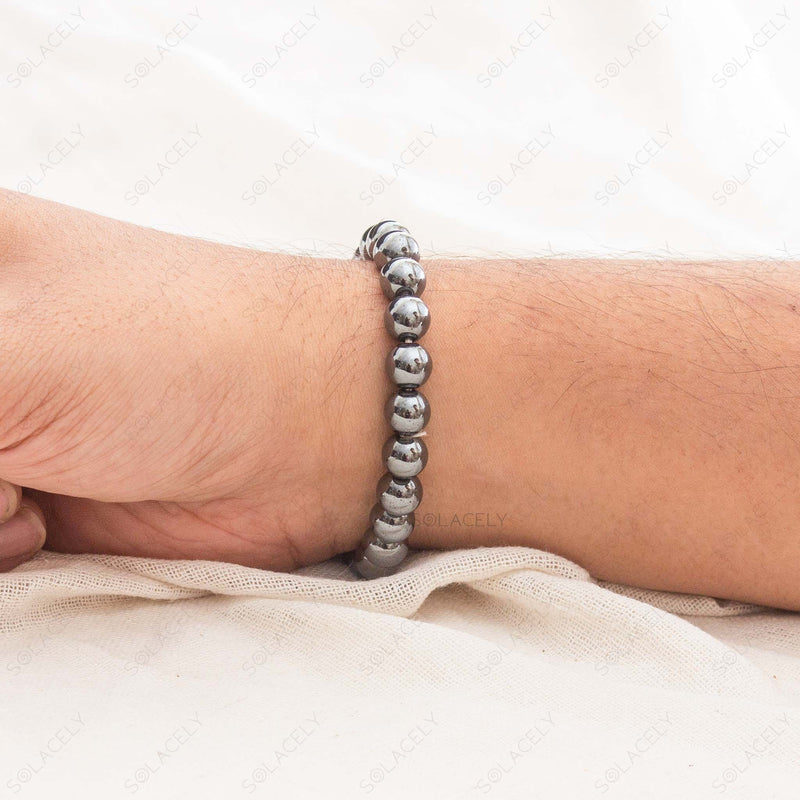
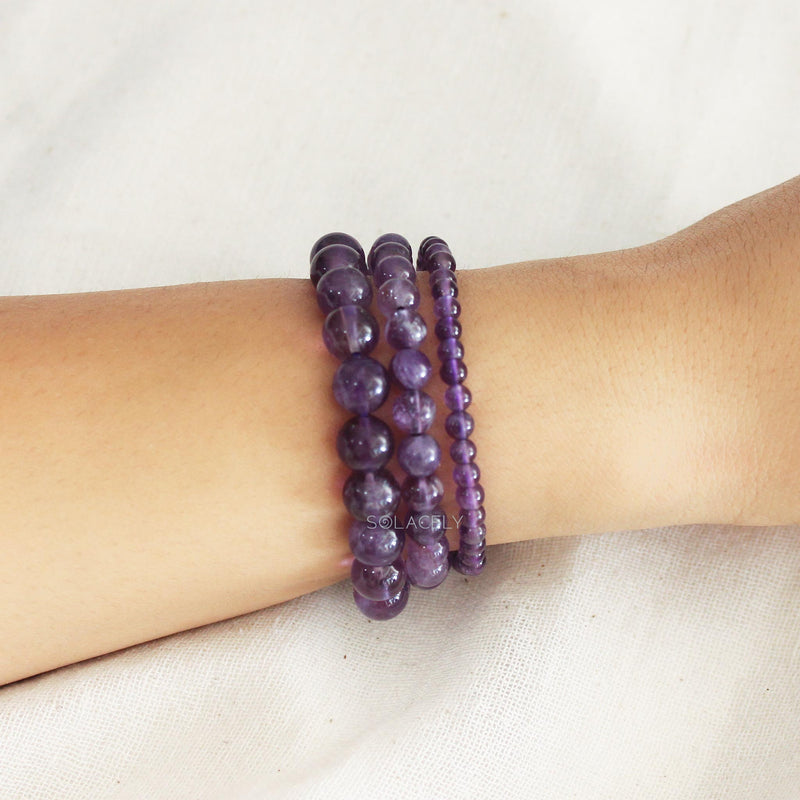
In Vedic astrology, Saturn, Shani, is the planet of discipline, structure, patience and slow lessons, and the stones kept for it are dark and cool in colour. Blue sapphire is the classical Shani gemstone. Amethyst, lapis lazuli, sodalite, black tourmaline, hematite and Sulemani Hakik are the widely used companions.
Key takeaways
- Blue sapphire, neelam, is the classical Shani gemstone. It is corundum, 9 on the Mohs scale, the hardest gem material after diamond.
- Amethyst is the most widely worn companion stone, with lapis lazuli, sodalite, blue spinel, black tourmaline, hematite and iron completing Saturn's palette.
- Saturn takes about 29.5 years to circle the zodiac and roughly 2.5 years to cross a single sign.
- Sade Sati is the 7.5 year passage of Saturn around the natal Moon, in three phases of about 30 months each. Shani Dhaiya is the 2.5 year transit of the fourth or eighth house from the Moon.
- Saturn's day is Saturday, its metals are iron, panchdhatu and silver, and the Saturn finger is the middle finger.
- Tradition itself asks for a short trial period and a word with an astrologer before a blue sapphire is worn long term.
What does Saturn, Shani, stand for in Vedic astrology?
Saturn is the planet of time, discipline and structure. In Vedic astrology Shani governs work, patience, boundaries, old age and the slow accumulation of anything worth having. His reputation is strict rather than unkind. Saturn asks for effort first and hands out the result afterwards, on his own schedule.
Everything about Shani is slow and heavy. He is the slowest of the classical grahas, spending roughly two and a half years in each sign and about twenty nine and a half years on a full circuit of the zodiac. That pace is the character of the planet. Saturn transits get counted in years, so the remedies kept for Saturn are habits rather than gestures.
His colours are dark blue, indigo and black. His metal is iron, his day is Saturday, and he rules Capricorn and Aquarius. The stones kept for Shani follow that palette exactly, and several of them carry iron in their chemistry.
Saturn rarely gets read on its own. Anyone working through a demanding stretch of chart usually looks at the lunar nodes in the same sitting, and our guide to crystals for Rahu covers the stones kept for that side of the picture. For the expansive counterweight to Saturn's restraint, crystals for Jupiter is the companion piece.
Which crystals are traditionally linked to Saturn?
Blue sapphire, neelam, is the classical Saturn gemstone. Around it sits a family of dark, cool stones: amethyst, lapis lazuli, sodalite, blue spinel, black tourmaline, hematite and iron itself. The shared thread is colour and weight, deep blue through to black, in materials that feel dense in the hand.
| Stone | Family | Mohs | Traditionally kept for |
|---|---|---|---|
| Blue sapphire (neelam) | Corundum | 9 | The classical Shani gemstone |
| Amethyst | Quartz | 7 | The most widely worn companion stone |
| Blue spinel (neeli) | Spinel | 8 | A traditional stand-in for neelam |
| Lapis lazuli | Rock, mainly lazurite | 5 to 6 | Deep blue, study and steady thought |
| Sodalite | Sodalite group | 5.5 to 6 | Order and clear thinking |
| Black tourmaline | Tourmaline group | 7 to 7.5 | Grounding and firm boundaries |
| Hematite | Iron oxide | 5 to 6.5 | Weight, steadiness, Saturn's iron |
| Sulemani Hakik (black agate) | Agate, a chalcedony quartz | 6.5 to 7 | Steadiness worn close through a Saturn period |
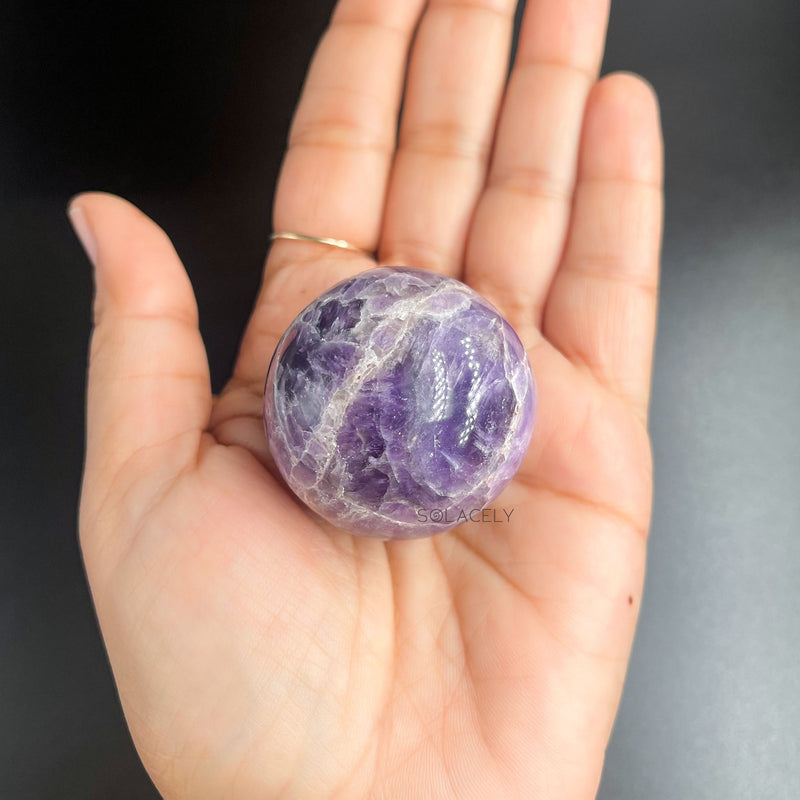
Amethyst is the stone most people meet first. It appears in the traditional lists of accepted stand-ins for neelam, and it is far easier to wear day to day. Gemmological references describe amethyst as the purple variety of quartz, coloured by traces of iron in the crystal structure, which is a neat fit for a planet whose metal is iron. Our amethyst meaning guide goes further into its colour range and history.
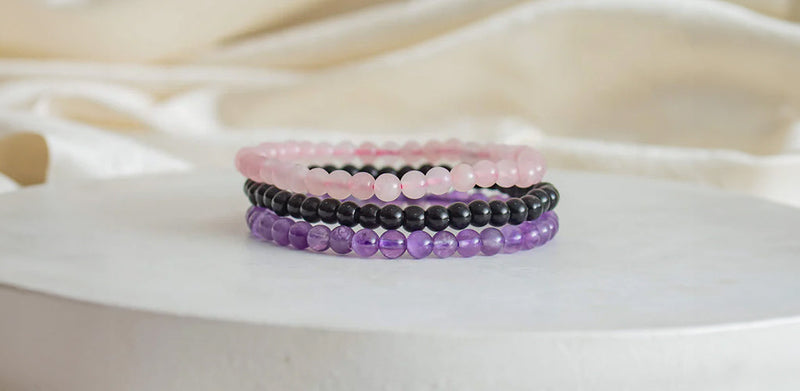
Black tourmaline and hematite carry the other half of Saturn's palette. Tourmaline is a large borosilicate group, and the black member, schorl, is the most abundant of them at 7 to 7.5 on the Mohs scale. Hematite is iron oxide, heavy for its size, with a distinctive reddish streak. People reach for both when they want something plain and grounding on the wrist, which is very much Saturn's mood. Our black tourmaline guide has the detail.
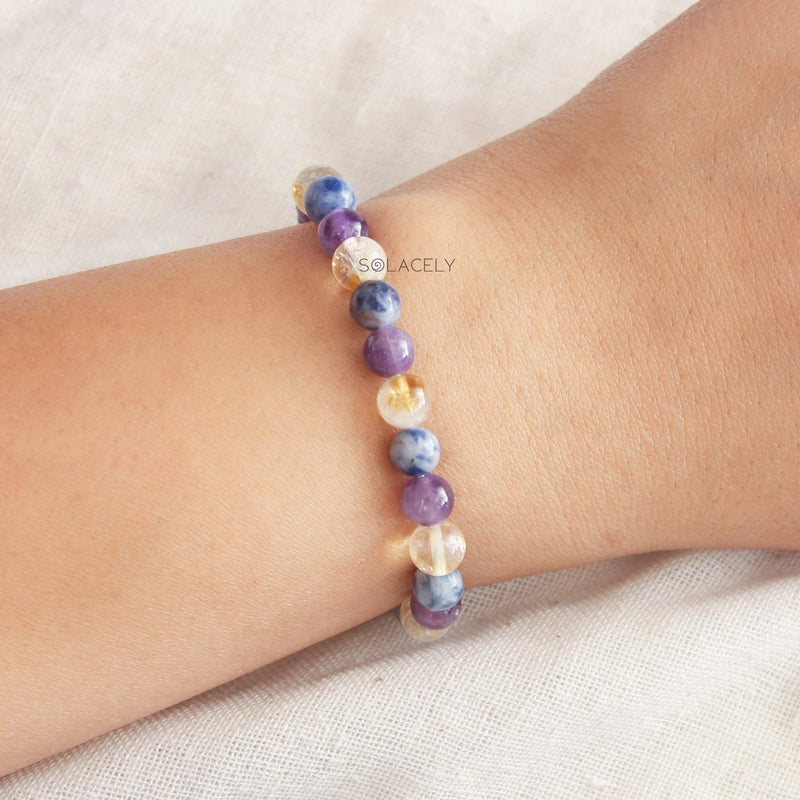
Lapis lazuli and sodalite fill the blue middle ground. Lapis is a rock rather than a single mineral, built mainly from lazurite with veins of white calcite and flecks of golden pyrite. Sodalite is a mineral in its own right, usually a more even royal blue with white marbling. Both sit around 5 to 6 on the Mohs scale, so they want gentler handling than quartz.
Sulemani Hakik (black agate)
Sulemani Hakik is banded black agate, a chalcedony quartz with fine tea-brown lines running through a deep black body. It has been worn in India for generations as a stone of protection and steadiness, and in Vedic tradition it is associated with Shani. Where blue sapphire is the formal Saturn gem, Sulemani Hakik is the everyday one.
Agate is cryptocrystalline quartz, built from crystals too small to see individually, and gemmological references put it at 6.5 to 7 on the Mohs scale. That is hard enough to hold a polish through years of daily wear, and the stone is chemically inert, so skin and sweat leave it unchanged. The banding is natural and never repeats, so no two beads match, which the tradition reads as the mark of the genuine stone rather than a flaw.
Its place in Saturn's palette comes from its colour, its weight and its reputation. Deep black is Shani's colour, the beads are dense and cool in the hand, and the stone's long association is with holding steady through a stretch that asks for patience. That is why it is one of the stones people reach for to feel steady and composed through a Saturn period: worn rather than consulted, a reminder on the wrist that the work is slow and ongoing.
The contrast with blue sapphire is one of register. Neelam is the classical, formal Shani gem, matched to a chart by an astrologer, set in silver or panchdhatu and worn on the middle finger after a trial. Sulemani Hakik asks for none of that. It is strung as a bracelet or a strand of beads, needs no trial period, and sits comfortably alongside a neelam ring or on its own. Many people wear it through a Sade Sati precisely because it is undemanding.
Next to black tourmaline, the difference is quieter still. Tourmaline is the boundary stone, kept beside a desk or by a door as much as on the body. Sulemani Hakik is a stone worn close, against the skin, through the ordinary day, and its tradition is specifically South Asian. A Sulemani Hakik bracelet in 8mm beads is the usual form. For the stone's name, its history and its care, our guide to Sulemani Hakik's full meaning and properties goes further.
What are Sade Sati and Shani Dhaiya?
Sade Sati is the seven and a half year period when Saturn transits the twelfth, first and second houses counted from a person's natal Moon. Shani Dhaiya is the shorter phase, about two and a half years, when Saturn moves through the fourth or eighth house from that same Moon.
Because Saturn spends roughly two and a half years per sign, Sade Sati breaks into three clean phases. The rising phase, arohini, begins as Saturn enters the twelfth house from the Moon. The peak, madhya, runs while Saturn sits on the Moon itself. The setting phase, avarohini, plays out in the second house. The whole cycle returns about once every three decades, so most people meet it two or three times.
Tradition describes Sade Sati as a period of pruning and consolidation. Responsibilities land, shortcuts stop working, and anything built carelessly asks to be rebuilt. It is read as a teaching transit. Shani Dhaiya, called Kantak Shani in the fourth house and Ashtama Shani in the eighth, falls between Sade Sati cycles and carries a similar flavour on a smaller scale.
Where do the stones come in? Traditional Saturn remedies are cumulative: service, charity on Saturdays, oil offerings and the Shani mantra. A stone gets worn as a daily reminder that the work is ongoing rather than as a shortcut, which suits Saturn better than any quick gesture would.
How are Saturn stones traditionally worn?
Saturn stones are set in iron, panchdhatu or silver, worn on the middle finger, and first put on during the waxing fortnight on a Saturday. The setting is usually open at the back so the stone touches the skin. Beyond rings, dark bracelets and pendants follow the same timing.
Metal and day
Iron is Saturn's metal, and traditional settings use iron, silver or panchdhatu, the five metal alloy. Gold tends to be avoided for Shani stones, since gold belongs to Jupiter and the two are not read as comfortable companions in one piece. Saturday is Saturn's day. Many practitioners specify Saturday evening, or the Shani hora on a Saturday, during the waxing fortnight.
Which finger
The middle finger is the Saturn finger in traditional gem practice, so that is where a Shani ring goes. Most guidance puts it on the right hand for men and the left for women, though plenty of astrologers work simply with the dominant hand. A bracelet follows the usual rule for receiving stones and tends to sit on the left wrist.
Preparing the piece
Before a Saturn stone is worn for the first time it is normally cleansed. The common method is to leave it overnight in raw milk, honey or Ganga jal, rinse it, then hold it while reciting the Shani mantra a set number of times. Water-sensitive stones such as lapis lazuli are given a dry version of the same ritual instead.
What does tradition say about wearing blue sapphire?
The Vedic tradition treats neelam with unusual respect. It is described as the fastest acting of the nine gemstones, and the standard guidance is to wear it on trial for about three days first, and to have the chart read by an astrologer before committing to it long term.
That guidance comes from inside the practice. Blue sapphire is held to be the most powerful of the navaratna, and the classical texts are consistent that a stone this strong is matched to a chart rather than picked off a shelf. Saturn's placement, the ascendant and the running dasha all feed into whether neelam is recommended at all.
The trial itself is simple. The stone is worn, often tied in cloth to the arm or set in a temporary ring, and the wearer pays attention to how the piece sits with them over those first days. An astrologer will usually also specify the weight, commonly quoted in ratti, and the metal it should be set in.
If you would rather start gently, amethyst is the traditional route. It is an accepted companion stone for Shani, it needs no trial period, and at 7 on the Mohs scale it takes daily wear well. Many people keep it alongside a solar stone for balance, which our guide to crystals for the Sun covers.
How do you care for Saturn stones?
Hardness varies hugely across this group, from sapphire at 9 down to lapis lazuli at around 5. Store the softer blues separately, keep hematite and lapis away from water, and keep amethyst out of long spells of direct sunlight, which can pale its purple over time.
Blue sapphire and black tourmaline are the easy ones. Warm water, mild soap and a soft brush suit both. Tourmaline is brittle along its length, so it dislikes knocks against hard surfaces, and neither stone belongs in an ultrasonic cleaner if it has visible fractures.
Lapis lazuli and sodalite want a lighter touch. Both are porous, both are soft enough to scuff against a quartz bead sharing the same drawer, and both are often finished with wax or resin that steam and solvents will strip. Wipe them with a barely damp cloth and dry them straight away. Perfume and hairspray are the usual culprits behind a dulled surface.
Hematite is iron oxide, so keep it dry. Long contact with water or sweat can leave dull patches on a polished bead, and an iron or panchdhatu setting behaves the same way. Take a Saturn ring off before you shower or wash up. Amethyst is durable at 7, but strong sunlight can fade its colour, so charge it in moonlight rather than on a windowsill.
Crystals and crystal jewellery are offered for personal, spiritual and decorative use. Nothing here is medical advice, and crystals are not a treatment for any physical or mental health condition. Please speak to a qualified healthcare professional about any health concern, and never delay or replace medical care. Keep small stones and beads away from young children and pets, as they are a choking hazard, and never place stones in drinking water.
Sources
- GIA: Amethyst Description and Quality Factors
- Geology.com: Tourmaline Mineral Properties and Varieties
Written by Chetena Sharma. Reviewed by the Solacely editorial team.
Frequently asked questions
About the author


Written by Chetna Sharma, crystal healing practitioner and co-founder of Solacely. Chetna has worked with healing crystals for over a decade and curates Solacely's protective stone collection.