In Vedic astrology Jupiter's stone is yellow sapphire, known as pukhraj, with citrine and yellow topaz as the common substitutes. It is traditionally set in gold and worn on the index finger of the right hand, begun on a Thursday. These are cultural prescriptions rather than verified effects.
Key takeaways
- Jupiter's primary stone is yellow sapphire (pukhraj). Citrine and yellow topaz are the usual affordable substitutes.
- Yellow sapphire is corundum, rated 9 on the Mohs scale, the same mineral as ruby and blue sapphire.
- Tradition sets it in gold, worn on the index finger of the right hand, first put on during a Thursday morning.
- Jupiter, or Brihaspati, is associated in this system with knowledge, teachers, growth and good judgement.
- Astrological gemstone practice is traditional belief. It is not medical, legal, or financial advice.
Which crystals are associated with Jupiter?
Yellow sapphire leads without much competition. Vedic astrology assigns each of the nine grahas a primary gemstone, and Jupiter's is pukhraj. Where the cost is prohibitive, practitioners substitute citrine or yellow topaz, and modern crystal practice has added yellow calcite and golden tiger's eye for the same associations.
The shared logic across all of them is colour. Jupiter is the yellow and gold planet in this system, linked to Brihaspati, the teacher of the gods. That maps onto knowledge, mentorship, expansion, ethics and sound judgement, which is why the stone is so often recommended to students, teachers and anyone taking on responsibility.
The rest of the planetary set follows the same structure. Its neighbours are covered in crystals for the Sun and crystals for Saturn, which sits opposite Jupiter in temperament.
Yellow sapphire: what it actually is
Yellow sapphire is corundum, an aluminium oxide, coloured yellow by trace iron. The Gemological Institute of America notes that sapphire occurs in a wide range of colours beyond blue, including yellow, green, pink and colourless, and that every non-red corundum is called sapphire. Red corundum is ruby.
Geology.com describes corundum as an extremely hard mineral rated 9 on the Mohs scale, second only to diamond. That durability is the practical argument for a ring: a yellow sapphire worn daily for decades will still look sharp.
Be realistic about the market. Yellow sapphire is very commonly heat treated, which is standard, accepted and permanent, and it should be disclosed. Untreated stones with good colour cost substantially more. For anything expensive, ask for an independent laboratory report rather than a verbal assurance.
Citrine and yellow topaz as substitutes
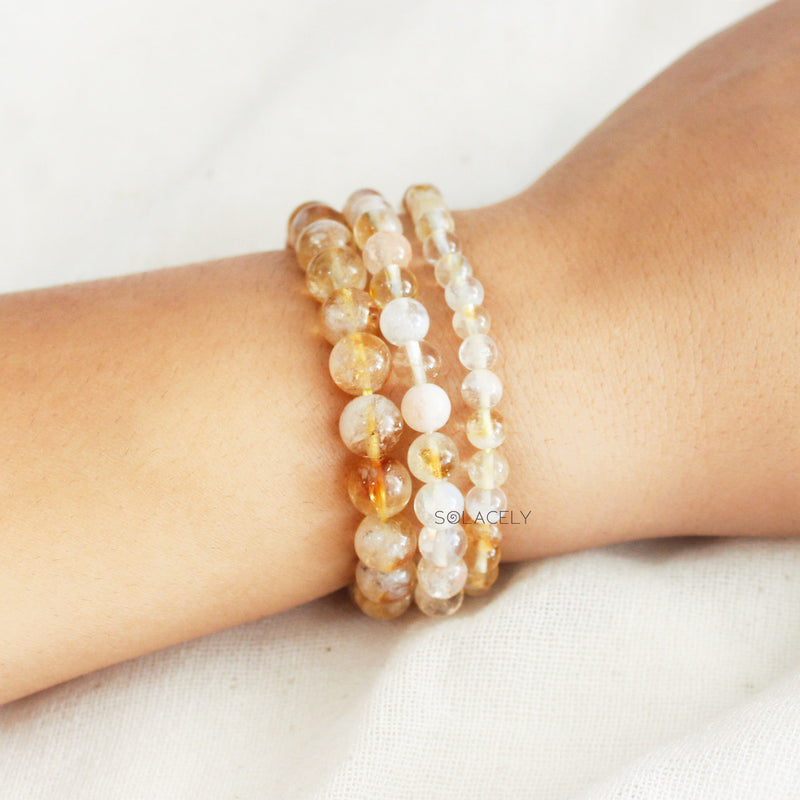
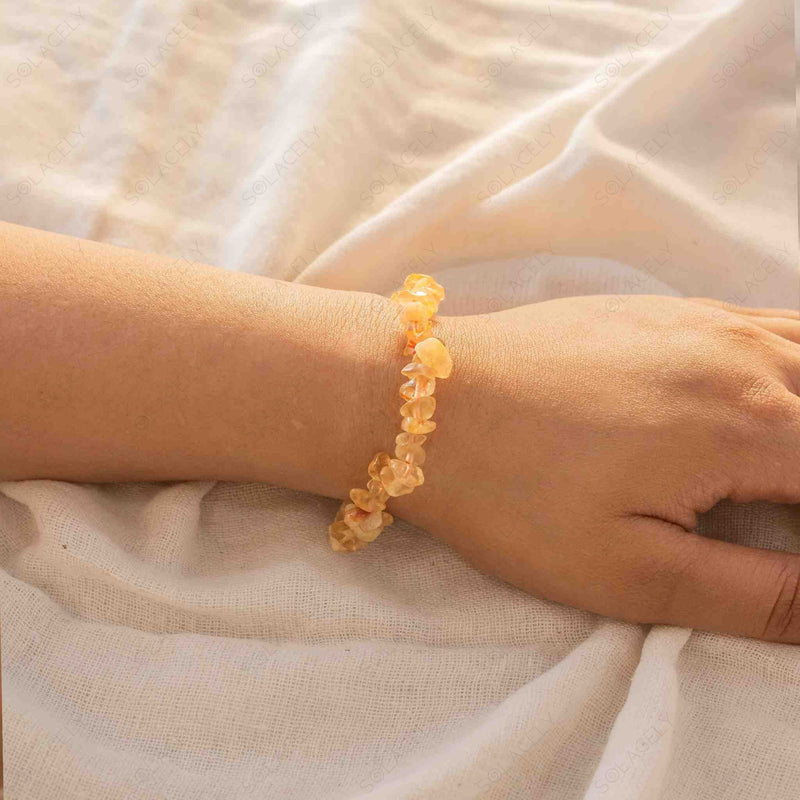
Citrine is what most people actually wear, because the price difference is enormous and the colour association is the same. According to the GIA, citrine is the yellow to orange variety of quartz, and warming amethyst to bring out that golden tone is a long established practice in the trade.
That is worth knowing before paying a premium for natural citrine, though it makes no difference to the traditional use. At 7 on the Mohs scale it takes daily wear well, and it is by far the most accessible entry point into the practice. Our citrine meaning and properties guide covers it fully.
Yellow topaz is the other classic substitute, harder than citrine at 8 on the Mohs scale but with perfect cleavage in one direction, so it can split under a sharp knock or an ultrasonic cleaner. It sits between citrine and sapphire in price and, for many practitioners, in preference.
How Jupiter's stone is traditionally worn
| Element | Traditional prescription | Practical note |
|---|---|---|
| Primary stone | Yellow sapphire (pukhraj) | Expensive; insist on treatment disclosure |
| Substitutes | Citrine, yellow topaz, yellow calcite | Citrine is the usual real-world choice |
| Metal | Gold | Open-backed setting so the stone meets skin |
| Finger | Index finger, right hand | The finger associated with Jupiter in this system |
| Day to begin | Thursday morning | Thursday is Jupiter's day, Guruvar |
| Hardness | Sapphire 9, topaz 8, citrine 7 | All three are durable enough for rings |
Weight recommendations vary widely between practitioners, which tells you how much of this is convention rather than fixed rule. The consistent elements across sources are the metal, the finger and the day.
What the tradition actually claims
Jupiter is treated in Vedic astrology as the most benefic of the grahas, associated with expansion, teaching, ethics, and the good judgement to know when enough is enough. Its stone is therefore recommended most often to people at points of growth or responsibility rather than people in crisis.
Students beginning long courses, anyone stepping into a teaching or mentoring role, and people making decisions with consequences for others are the recurring profiles. That is a coherent tradition and it is worth reporting accurately, without inflating it into a promise about outcomes.
The honest caveat is the same as for every planetary stone. Vedic gemstone practice traditionally follows a birth chart reading, and practitioners generally advise against wearing a strong planetary stone chosen from an article. If you take the system seriously, get the chart read. If you are treating it as symbolism, wear what appeals and skip the anxiety. The comparable guides for Mercury and the Moon follow the same conventions.
Buying without getting caught out
Yellow sapphire attracts more misrepresentation than most stones, largely because the astrological market is motivated and not always well informed. Three checks cover most of the risk.
- Ask for the treatment in writing. Heat is fine and normal. Diffusion and glass filling are different things and should be priced accordingly.
- Ask for an independent report. Not the seller's own certificate. A recognised laboratory, for anything above a modest sum.
- Be wary of synthetics. Lab grown corundum is chemically identical, perfectly legitimate, and worth a small fraction of natural material. It must be disclosed.
- Watch for glass and treated quartz. A large clean yellow stone at a bracelet price is not sapphire.
A seller who answers all of these plainly is worth paying more to deal with. One who deflects to the stone's spiritual potency instead of its paperwork is telling you something useful.
Care
Yellow sapphire is genuinely low maintenance. Warm soapy water and a soft brush is all it needs, and at 9 on the Mohs scale it tolerates handling that would damage almost anything else. Rinse and dry it properly, since soap film is the usual cause of dullness.
Avoid ultrasonic and steam cleaners on any stone described as fracture filled, and on topaz generally, since its cleavage makes it vulnerable to vibration. Citrine takes ordinary washing well but should be kept out of prolonged direct sunlight, as heat treated material can fade.
Store the harder stones separately. Sapphire will scratch nearly everything else in a jewellery box, so check anything new against the Mohs hardness scale before letting the pieces share a pouch.
The properties described here reflect traditional Vedic and cultural belief around gemstones. They are not medical claims, financial guidance, or a substitute for professional advice. Astrological gemstone recommendations vary between practitioners and are not verifiable by scientific method. Consult a qualified professional for any health, legal, educational, or financial decision.
Sources
- Gemological Institute of America, Sapphire Description
- Gemological Institute of America, Citrine Description
Written by Chetena Sharma. Reviewed by the Solacely editorial team.
Frequently asked questions
About the author


Written by Chetna Sharma, crystal healing practitioner and co-founder of Solacely. Chetna has worked with healing crystals for over a decade and curates Solacely's protective stone collection.