Chakras are the seven energy centres described in Indian yogic and tantric tradition, running up the spine from its base to the crown of the head. Each is linked to a Sanskrit name, a colour, an element, and a theme, from grounding at the root to spiritual awareness at the crown. This guide is the hub that ties all seven together.
Key Takeaways
- The word 'chakra' comes from Sanskrit and means 'wheel' or 'disc,' describing spinning energy centres along the spine in yogic and tantric belief.
- There are seven main chakras: root, sacral, solar plexus, heart, throat, third eye, and crown, each with its own Sanskrit name, colour, and element.
- The system is a spiritual and cultural framework, not a medical diagnosis. Chakras have not been located by anatomy or measured by science.
- Colours run in rainbow order from red at the root to violet or white at the crown, which is why chakra jewellery often uses seven stones.
- Each centre has its own dedicated guide, linked from the sections below, so you can go as deep as you like on any one of the seven.
What are chakras?
Chakras are energy centres from Indian yogic and tantric tradition, imagined as spinning wheels of prana (life force) positioned along the spine. There are seven main ones. According to Encyclopaedia Britannica, the Sanskrit word chakra means 'wheel' or 'circle,' and the centres are described in Hindu and later tantric and yogic texts as points where subtle energy channels meet.
The idea is old. Early references appear in the Vedas and Upanishads, and the seven-chakra model most people know today was shaped by later Hatha yoga and tantric texts. Energy is said to travel through channels called nadis, with three main ones, the ida, pingala, and sushumna, converging at these centres.
It helps to be clear about what this is. The chakra system is a spiritual and philosophical map of the self, not a description of physical anatomy. You will not find a chakra on an X-ray. Think of it the way you might think of a metaphor for how you feel, grounded, open-hearted, clear-headed, rather than an organ.
Where do chakras come from?
The chakra concept originates in ancient India, within Hindu religious philosophy and the tantric and yogic traditions that developed it. Britannica traces the term through Sanskrit texts, where chakras form part of a subtle-body model. The familiar seven-centre system was refined roughly between the 8th and 16th centuries in tantric and Hatha yoga writings.
Two ideas sit at the heart of the tradition. The first is prana, the vital life force that moves through the body. The second is kundalini, described as a coiled energy resting at the base of the spine, which practitioners aim to awaken and raise upward through each chakra in turn.
Every chakra carries a bija or 'seed' sound, such as Lam, Vam, or Ram, chanted in traditional practice. These details, the Sanskrit names, the colours, the elements, come from centuries of spiritual literature. They are cultural and devotional, and worth treating with respect rather than turned into health promises.
The seven chakras at a glance
The seven chakras run in a fixed order up the body, each with a Sanskrit name, a colour, and a classical element. The table below is the quick reference; the sections that follow explain each one and link to its full guide. Colours move through the rainbow, red at the base to violet at the crown.
| # | Chakra | Sanskrit | Location | Colour | Element | Core theme |
|---|---|---|---|---|---|---|
| 1 | Root | Muladhara | Base of spine | Red | Earth | Stability, safety, grounding |
| 2 | Sacral | Svadhisthana | Below the navel | Orange | Water | Creativity, emotion, pleasure |
| 3 | Solar plexus | Manipura | Upper abdomen | Yellow | Fire | Confidence, willpower, identity |
| 4 | Heart | Anahata | Centre of chest | Green | Air | Love, compassion, connection |
| 5 | Throat | Vishuddha | Throat | Blue | Ether (space) | Expression, truth, communication |
| 6 | Third eye | Ajna | Between the brows | Indigo | Light | Intuition, insight, perception |
| 7 | Crown | Sahasrara | Top of the head | Violet / white | Thought / cosmos | Awareness, spiritual connection |
Keep this order in mind. It is why chakra jewellery is strung red to violet, and why balancing practices usually work from the base upward.
The Root Chakra (Muladhara)
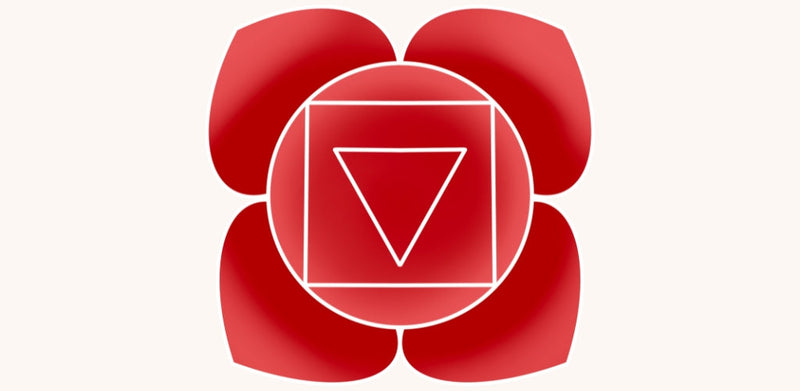
The root chakra, Muladhara, sits at the base of the spine and is the foundation of the system. Its colour is red, its element is earth, and its themes are safety, stability, and belonging. In tradition, a settled root is felt as being grounded and secure; when it feels shaky, people describe restlessness or anxiety about basics like money and home.
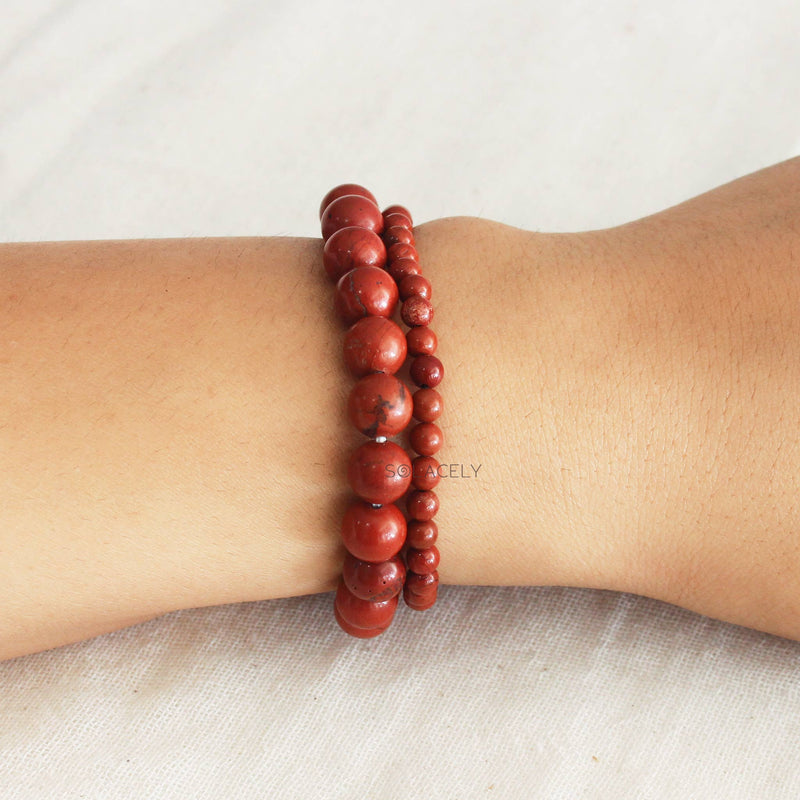
This is where the whole system rests, so most practitioners start here. Grounding practices, walking barefoot on the earth, steady standing yoga poses, and warm, root-vegetable foods, are the classic associations. Red and black stones like red jasper and black tourmaline are the traditional pairings.
For grounding practices, mudras, and stone suggestions, see the full guide on nurturing and healing the root chakra, or go straight to how to unblock the root chakra.
The Sacral Chakra (Svadhisthana)
The sacral chakra, Svadhisthana, sits just below the navel, carries the colour orange, and is tied to the water element. Its themes are creativity, emotion, sensuality, and the capacity for pleasure and change. A flowing sacral centre is associated in tradition with easy creativity and healthy emotional expression.
Water is the operative image here, movement, flow, and adaptability. Where the root is about standing still and feeling safe, the sacral is about letting things move. Carnelian and orange calcite are the stones most often linked to it.
The full breakdown of its symbolism, associations, and practices lives in the meaning of the sacral chakra.
The Solar Plexus Chakra (Manipura)
The solar plexus chakra, Manipura, sits in the upper abdomen, glows yellow, and belongs to the fire element. It governs personal power, confidence, willpower, and a clear sense of self. In tradition, a strong Manipura feels like quiet self-assurance and the drive to act; a weak one shows up as low confidence or people-pleasing.
Fire is transformation and heat. This is the centre of 'I can,' the will that turns intention into action. Citrine, tiger's eye, and pyrite, the confidence and abundance stones, are the classic companions.
Manipura connects the emotional lower chakras to the relational upper ones, which is why so many balancing routines pay it special attention before moving up to the heart. For practices, see how to unblock the solar plexus.
The Heart Chakra (Anahata)
The heart chakra, Anahata, sits at the centre of the chest, shows as green, and is linked to the air element. It is the bridge of the system, joining the three lower, more physical chakras to the three upper, more spiritual ones. Its themes are love, compassion, forgiveness, and connection, both to others and to yourself.
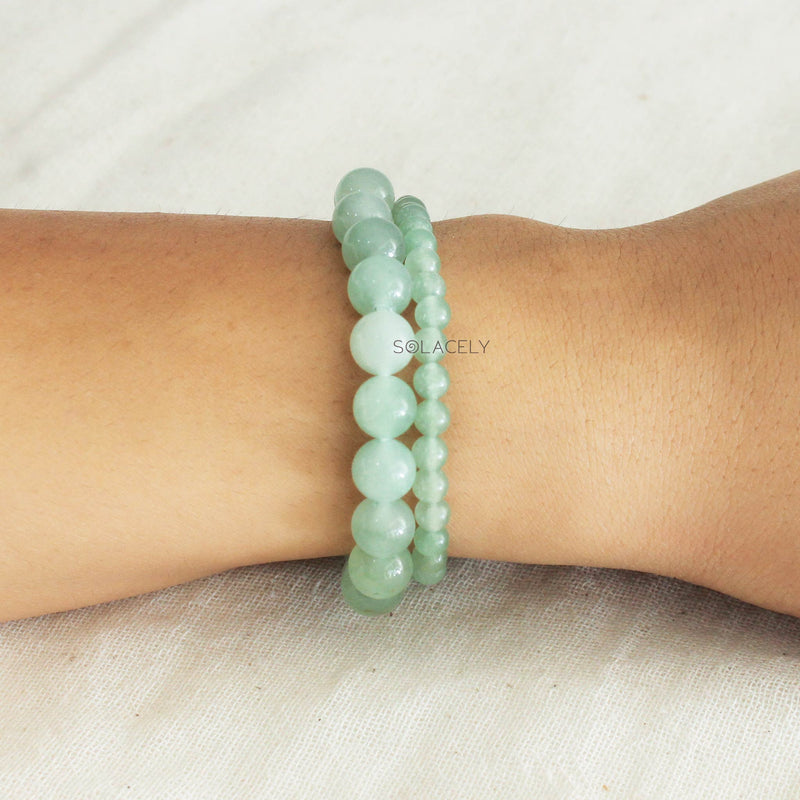
An open heart, in this tradition, is felt as warmth, empathy, and the ability to give and receive love freely. Rose quartz is the signature stone, along with green stones like aventurine and jade.
Because relationships live here, this chakra gets a lot of attention. Read more on opening the heart chakra for deeper relationships.
The Throat Chakra (Vishuddha)
The throat chakra, Vishuddha, sits at the throat, carries the colour blue, and is associated with ether, or space. It rules communication, self-expression, and speaking your truth. When it feels open, you find the right words easily and speak honestly; when blocked, tradition links it to feeling unheard or holding back what you want to say.
This is the first of the upper, more spiritual chakras. It takes the love of the heart and gives it a voice. Sound is its natural tool, which is why chanting and mantra work are so closely tied to it. Blue stones like sodalite, lapis lazuli, and aquamarine are the traditional matches.
For chanting practice, see throat chakra mantras to balance your expression.
The Third Eye Chakra (Ajna)
The third eye chakra, Ajna, sits between the eyebrows, shows as indigo, and is associated with light and inner vision. Its themes are intuition, insight, imagination, and perception, the sense of 'seeing clearly' beyond the obvious. A balanced Ajna is described in tradition as sharp intuition and mental clarity.
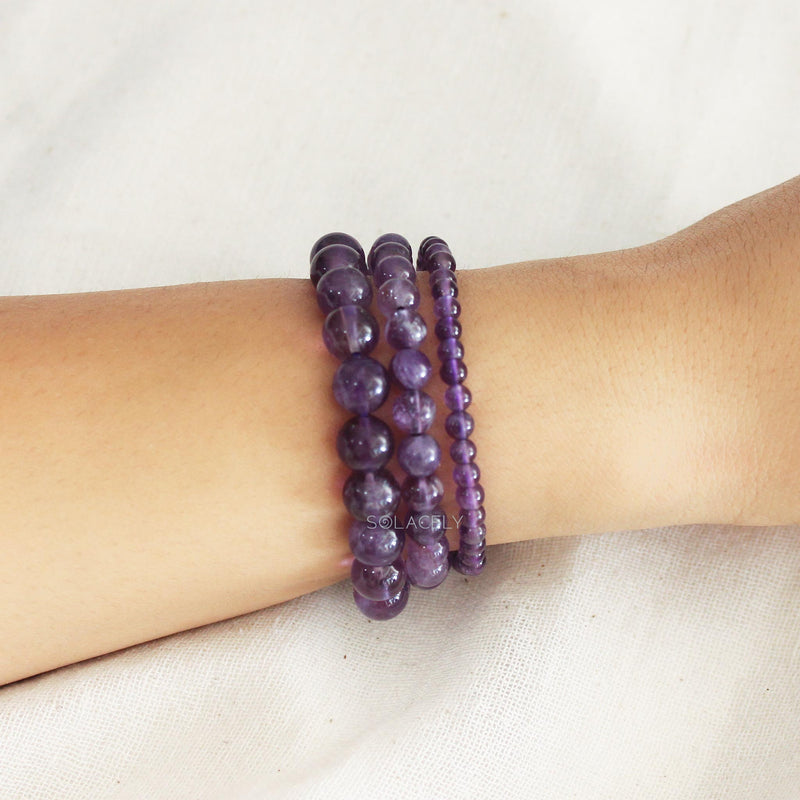
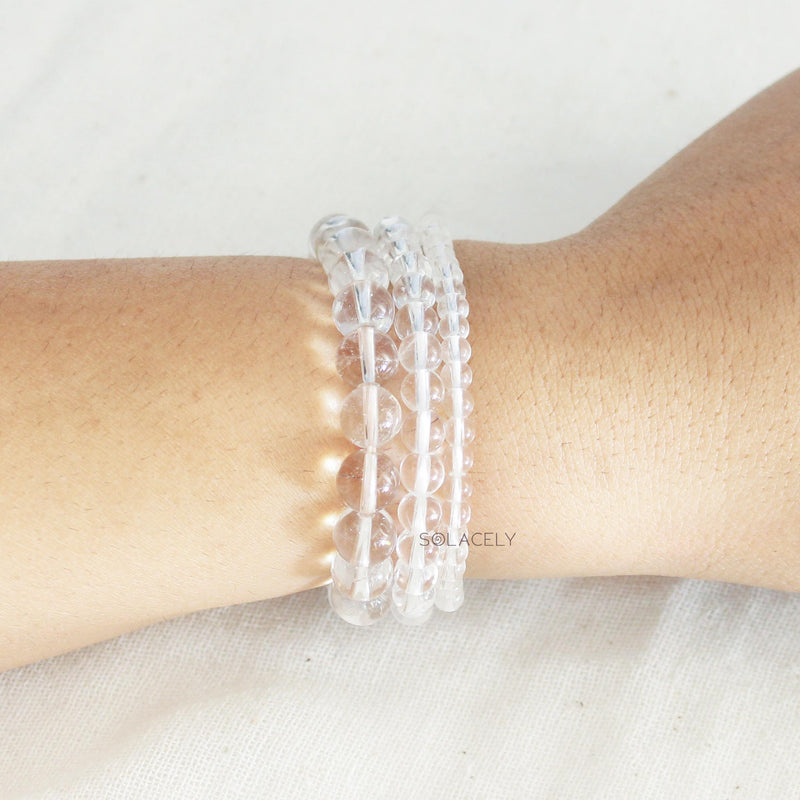
This is the centre of the mind's eye. Where the throat speaks, the third eye perceives. Amethyst is the stone most often paired with it, along with lapis lazuli and clear quartz.
If you want to work with this centre, start with how to unblock the third eye chakra.
The Crown Chakra (Sahasrara)
The crown chakra, Sahasrara, sits at the top of the head, appears as violet or pure white, and represents the peak of the system. Its themes are awareness, spiritual connection, and a sense of unity with something larger than the self. In tradition, this is where an awakened kundalini completes its journey up the spine.
Sahasrara means 'thousand-petalled,' an image of full opening. It is the most abstract of the seven, less about a bodily feeling and more about a quiet sense of connection and peace. Amethyst, clear quartz, and selenite are its classic stones.
Explore the symbolism in full at the crown chakra definition.
How the seven chakras work together
The chakras are treated as one connected system, not seven separate switches. Energy is said to rise from the root to the crown, so tradition holds that a lower centre affects those above it. This is why balancing usually starts at the base and works upward, steadying the root before opening the heart or crown.
A simple way to remember the groupings:
- Lower three (root, sacral, solar plexus): the physical, worldly self, safety, feeling, and personal power.
- Heart: the bridge, where the personal meets the spiritual.
- Upper three (throat, third eye, crown): the expressive and spiritual self, voice, insight, and awareness.
You do not need to memorise every detail to begin. Many people start with whichever theme feels most relevant, more grounded, more creative, more confident, and let the rest follow. For a structured routine covering all seven, see the essential chakra balancing techniques.
How people work with chakras today
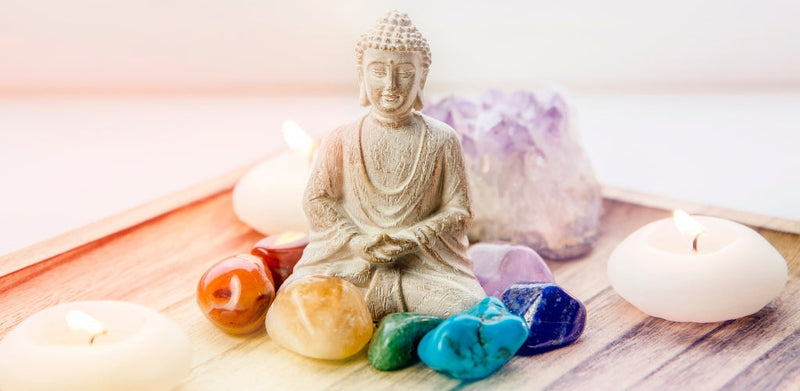
In modern practice, people work with chakras through meditation, yoga, breathwork (pranayama), mantra chanting, and crystals matched to each colour. None of these are medical treatments. They are contemplative and cultural practices, and the value most people report is calm, focus, and a sense of intention.
Meditation is the common thread, and it is one practice with genuine research behind it. According to the U.S. National Center for Complementary and Integrative Health (NCCIH), meditation and mindfulness may help with stress, anxiety, and general well-being, though evidence varies by condition. That benefit comes from the practice of sitting and breathing, not from any measurable movement of chakra energy.
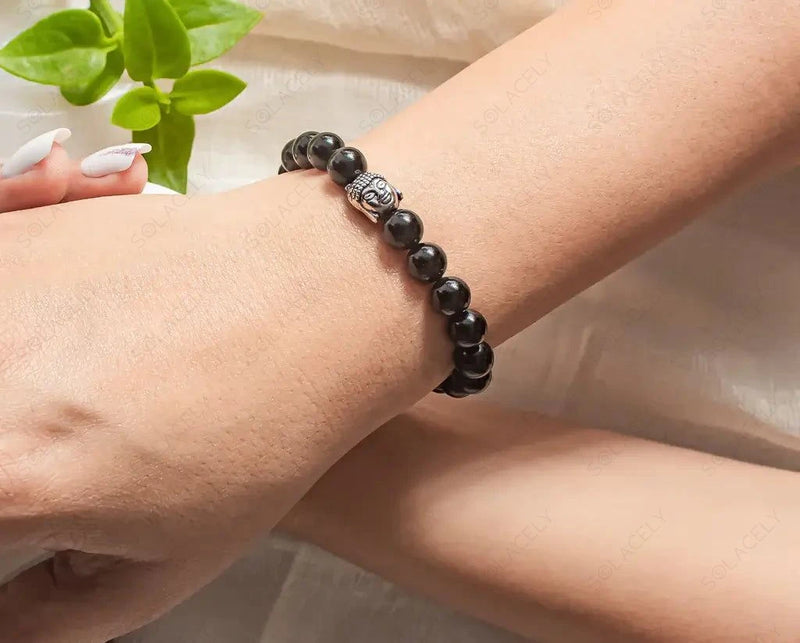
Crystals fit in as a focusing tool and a beautiful reminder of intention. A seven-stone chakra bracelet, strung red to violet, is a popular starting point. Wear it as a prompt to pause and breathe, not as a substitute for care when something is genuinely wrong.
Sources
- Encyclopaedia Britannica, "Chakra." britannica.com
- National Center for Complementary and Integrative Health (NIH), "Meditation and Mindfulness: What You Need To Know." nccih.nih.gov
Frequently asked questions
About the author


Written by Chetna Sharma, crystal healing practitioner and co-founder of Solacely. Chetna has worked with healing crystals for over a decade and curates Solacely's protective stone collection.