The crown chakra, called Sahasrara in Sanskrit, is the seventh and highest energy centre in the yogic chakra system, sitting at the very top of the head. In tradition it represents pure awareness, wisdom, and a sense of connection to something larger than yourself. Its name means 'thousand-petalled,' pictured as a lotus opening at the crown.
Key Takeaways
- The crown chakra, or Sahasrara, is the seventh chakra, located at the top of the head. In tradition it governs awareness, wisdom, and spiritual connection, not any measurable medical property.
- 'Sahasrara' is Sanskrit for 'thousand-petalled,' and the chakra is pictured as a thousand-petal lotus in violet or white, colours linked to purity and higher consciousness.
- A 'balanced' crown chakra is described in tradition as calm, open-minded, and clear; an 'imbalanced' one as disconnected, cynical, or spiritually restless. These are reflective descriptions, not diagnoses.
- Common practices to 'work with' it are gentle and low-cost: meditation, stillness, breathwork, and time in silence, habits research links to genuine stress relief.
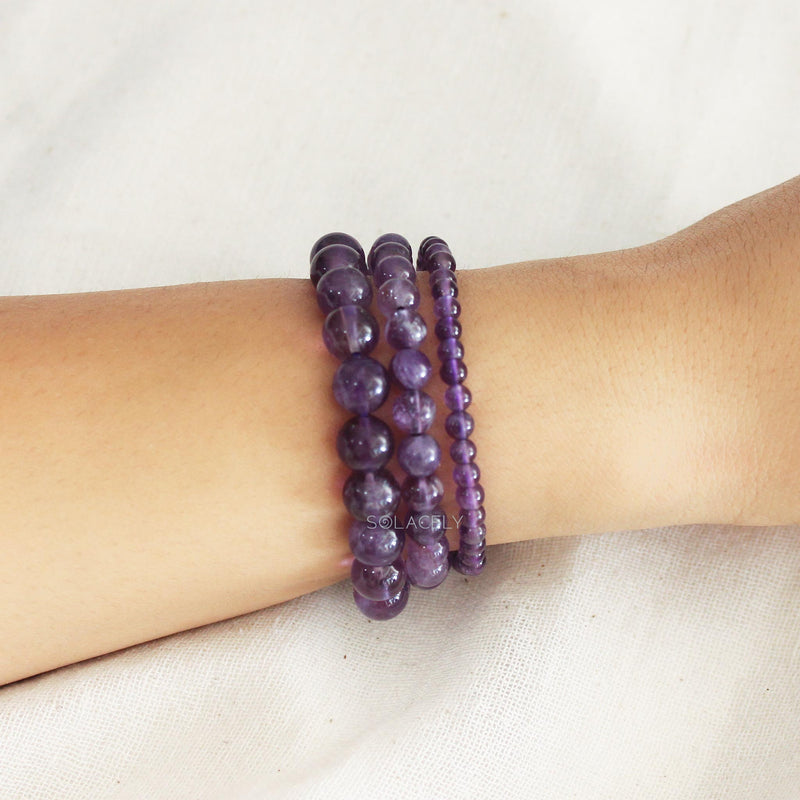
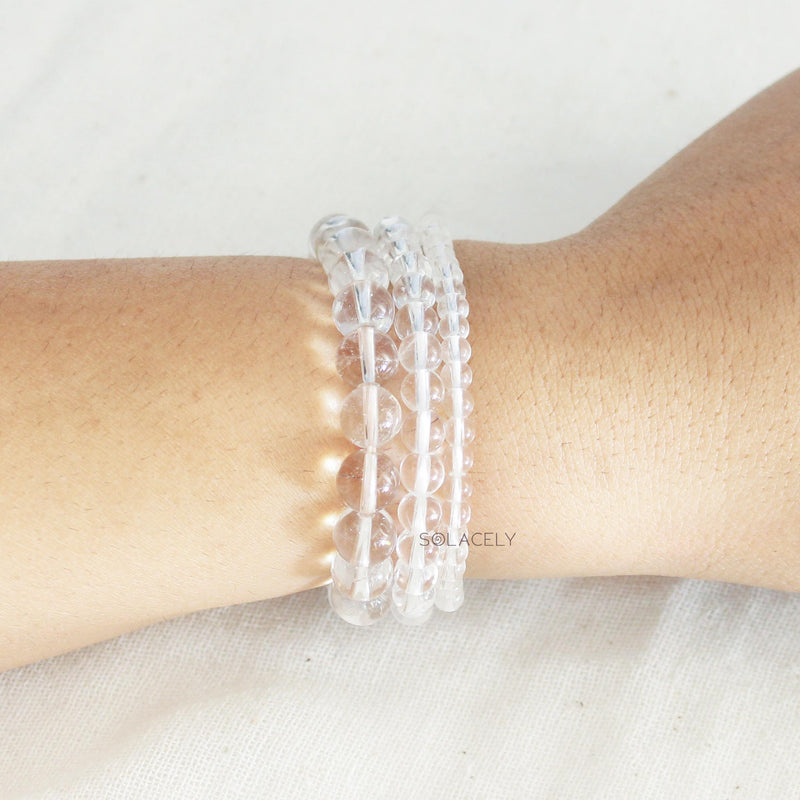
- Crystals traditionally paired with the crown chakra are amethyst and clear quartz, kept nearby as a focus for intention rather than as treatment.
What is the crown chakra? A clear definition
The crown chakra, Sahasrara, is the seventh and topmost chakra in the yogic system, said to sit at the crown of the head and to represent pure consciousness, wisdom, and the link between the individual and the universal. Where the lower six chakras are tied to the body and emotion, the crown is described as the point where personal awareness opens outward. It is the seat of insight, not appetite.
In the Indian tradition the word 'chakra' comes from Sanskrit for 'wheel' or 'disk,' describing a spinning point of subtle energy in the body. According to Encyclopaedia Britannica, chakras are centres of psychic energy in the subtle body used in yoga and tantric practice, visualised along the spine from the base to the crown. Sahasrara caps that column as the highest of the seven.
It helps to be plain about what this is. The crown chakra is a symbolic and meditative concept, a map of inner experience refined over centuries, not an organ or a measurable field. Reading about it is a way to think about attention, meaning, and calm. For the full picture of how all seven centres fit together, our complete guide to the chakras explained is the hub this article belongs to.
What does Sahasrara mean?
Sahasrara is Sanskrit for 'thousand-petalled,' and the crown chakra is pictured as a lotus of a thousand petals unfolding at the top of the head. Each petal is said to represent a facet of awareness, so the image stands for the vast, almost limitless quality tradition attaches to this centre. The number is symbolic, a way of saying 'beyond counting,' rather than literal.
The lotus is a deliberate choice. In Indian thought the lotus rises out of muddy water yet stays unstained, a familiar symbol for consciousness that stays clear above the noise of daily life. At the lower chakras the lotus has few petals; at the crown it opens fully, marking the end of the inward journey up the spine.
Sahasrara is usually shown in violet or white, sometimes gold. Violet sits at the far end of the visible spectrum, and aura and chakra tradition reads it as the colour of spirit and higher awareness, while white stands for purity and wholeness. Unlike the lower centres, the crown is not tied to a physical element like earth or water. It is linked instead to pure consciousness, thought itself.
Where is the crown chakra located?
The crown chakra is located at the very top of the head, at or just above the fontanelle, the soft spot on a newborn's skull, an area sometimes called brahmarandhra in Sanskrit. Some traditions place it slightly above the physical head to stress that it reaches beyond the body, acting as a bridge between the individual and the universal. It sits directly above the third-eye chakra.
That placement matters. The seven main chakras are mapped as a rising column, and the crown is the summit, the last centre before energy is said to leave the body and merge outward. In practice, when people meditate on Sahasrara they rest their attention lightly at the top of the head, or just above it.
Right below it sits Ajna, the third eye, the centre of intuition and inner sight. The two are closely linked in tradition: insight (third eye) opening into pure awareness (crown). If you want to understand that neighbour first, our guide on how to unblock the third eye chakra covers it in detail. Working up the column in order is the classic approach.
| Attribute | Crown chakra (Sahasrara) |
|---|---|
| Position in system | Seventh, the highest |
| Location | Top of the head / just above it |
| Sanskrit name | Sahasrara ('thousand-petalled') |
| Colour | Violet or white, sometimes gold |
| Symbol | Thousand-petalled lotus |
| Element | Pure consciousness (no physical element) |
| Governs (in tradition) | Awareness, wisdom, connection, meaning |
| Associated crystals | Amethyst, clear quartz, selenite |
Signs of a balanced crown chakra
In tradition, a 'balanced' or open crown chakra shows up as a calm, clear, open-minded state: a person who feels connected to life, holds a quiet sense of meaning, and moves through the day without clinging or cynicism. It is described less as a peak experience and more as a steady, grounded openness. Think ease rather than ecstasy.
The qualities chakra writing keeps returning to are recognisable in ordinary terms. A settled mind that isn't easily rattled. Curiosity without needing every answer. Gratitude that doesn't depend on things going your way. A comfort with silence and stillness. People often describe it simply as feeling clear and connected.
None of this is exotic. Much of what tradition calls a 'balanced crown' overlaps with plain mental steadiness, the calm that comes from rest, reflection, and not being permanently rushed. You do not need to believe in subtle energy to value that state. Read the description as a picture of well-being to move toward, not a test to pass.
Signs of crown chakra imbalance
A crown chakra is described as 'imbalanced' when a person feels disconnected, cynical, or adrift, either shut off from any sense of meaning, or, at the other extreme, so lost in spiritual ideas that daily life is neglected. Tradition frames both under-active and over-active states. These are reflective descriptions of mood and outlook, never a medical diagnosis.
The signs usually listed fall into a familiar cluster. Below is how chakra tradition frames them, alongside the everyday form each tends to take.
| Described sign | Everyday form |
|---|---|
| Disconnection | Feeling cut off, that nothing means much |
| Cynicism | Dismissing meaning, purpose, or wonder |
| Spiritual restlessness | Chasing practice after practice, never settling |
| Rigidity | Closed-minded, unable to hold uncertainty |
| Over-attachment to ego | Life reduced to status and possessions |
| Mental fog | Trouble focusing, feeling scattered |
An important caution here. Tradition also links crown imbalance to physical complaints like headaches or fatigue, but those have real medical causes and deserve real medical attention. Persistent headaches, exhaustion, low mood, or a lasting sense of emptiness are reasons to see a doctor or a mental-health professional, not a chakra to fix. Treat the chakra frame as a language for reflection only. If several centres feel 'off,' our overview of essential chakra balancing techniques is a gentle place to start.
How to work with the crown chakra
Working with the crown chakra, in tradition, means practices that quiet the mind and invite stillness: meditation, slow breathing (pranayama), time in silence, and reflection. The aim is not to 'activate' anything forcefully but to make space and settle attention at the top of the head. Most of it costs nothing and can be done at home. Start small and keep it regular.
Here is a simple, beginner-friendly way to begin:
1. Sit comfortably with a straight spine, in a quiet spot, phone away. 2. Close your eyes and take ten slow breaths, letting each exhale lengthen. 3. Rest your attention lightly at the crown of your head, or just above it. 4. If it helps, picture a soft violet or white light, or a lotus gently opening there. 5. When thoughts pull you away, notice it kindly and return to the breath. 6. Start with five minutes and build up over the weeks. Consistency beats length.
There is real value in these habits regardless of belief. According to the U.S. National Center for Complementary and Integrative Health (NCCIH), part of the National Institutes of Health, meditation and similar mind-body practices can help reduce stress, anxiety, and blood pressure for many people. So the calm you may feel is well documented, even if the mechanism is attention and rest rather than subtle energy. For a focused routine, our guide on how to unblock the crown chakra walks through it step by step.
Some people also add gentle yoga (headstand and lotus pose are the traditional crown poses, best learned with a teacher), spending time in nature, or simple gratitude journaling. Because the crown sits at the top of the column, many teachers suggest grounding at the base first, so you don't feel 'floaty.' Our guide to nurturing and healing the root chakra covers that grounding foundation.
Crown chakra crystals: amethyst and clear quartz
The two crystals most often paired with the crown chakra are amethyst and clear quartz, chosen for their violet and clear tones that match the chakra's colours. In this tradition, crystals are kept nearby during meditation or reflection as a focus for intention, not as a treatment. They are a prompt for attention, a beautiful object that reminds you to slow down.
Amethyst is a purple variety of quartz. According to the Gemological Institute of America (GIA), amethyst gets its violet colour from trace iron and natural irradiation within the quartz. That violet is exactly why chakra tradition ties it to the crown, and amethyst is also the stone associated with calm. Clear quartz, colourless and transparent, is treated as an all-purpose 'clarity' stone, its plainness read as openness and light.
| Crystal | Colour | Traditional crown association |
|---|---|---|
| Amethyst | Violet / purple | Calm, clarity, spiritual awareness |
| Clear quartz | Colourless, clear | Clarity, openness, amplifying intention |
| Selenite | White, translucent | Peace, stillness, 'cleansing' |
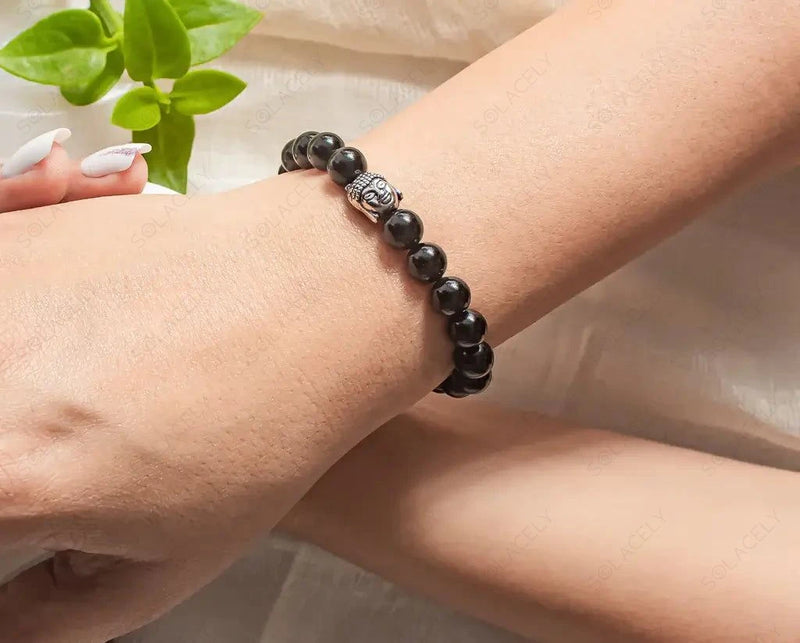
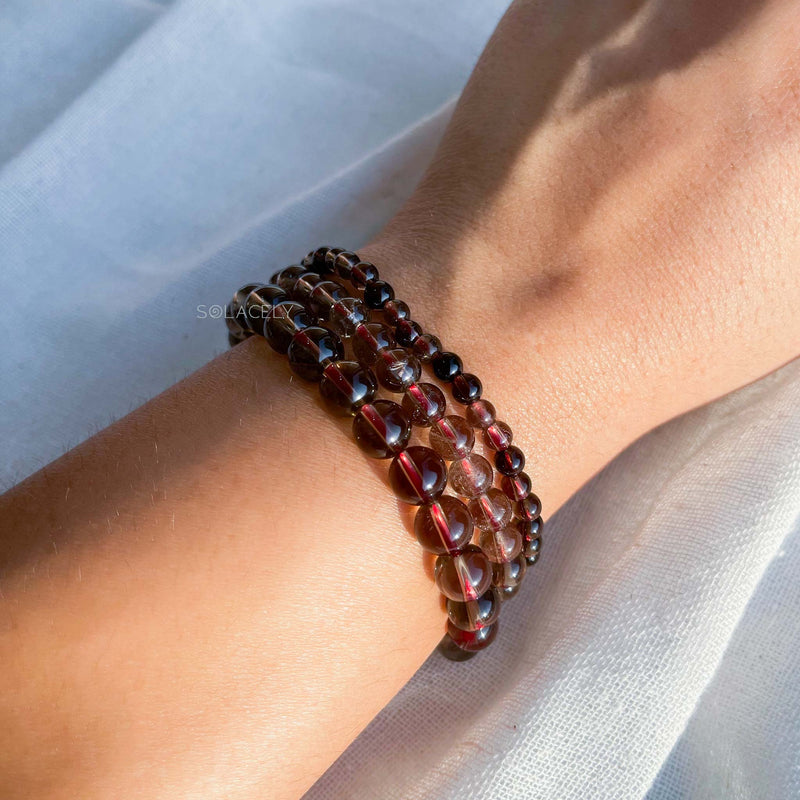
How people use them is simple: hold one during meditation, rest it near where you sit, or wear it as a bracelet through the day as a quiet reminder of your intention. Tumbles and beaded bracelets are the most accessible starting formats, with larger clusters and higher grades costing more. Keep expectations gentle: a stone is a lovely anchor for a habit, not a cure. If you're drawn to crystal work more broadly, our piece on crystals for the heart chakra shows how the same idea maps onto a different centre.
The crown chakra within the seven-chakra system
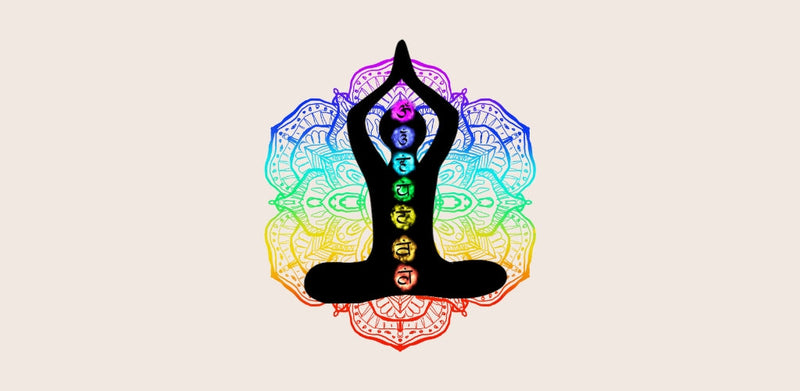
The crown chakra is best understood as the top of a whole system, not a standalone. The seven main chakras run from the root at the base of the spine to the crown at the top, and tradition treats them as interdependent: a settled root and open heart support a clear crown, while a 'floaty' crown with no grounding is considered out of balance. Working the whole column is the point.
This is why teachers rarely recommend fixating on Sahasrara alone. The classic sequence works upward, from grounding and safety at the root through the emotional and expressive centres to insight and awareness at the top. Each centre has its own colour, element, and theme, and the crown is where that journey opens out. Even the lower, more earthbound centres matter here; our guide to the meaning of the sacral chakra shows how emotion and creativity sit lower on the same column.
Held lightly, the crown chakra is a useful idea: a reminder to make room for stillness, perspective, and meaning in a crowded life. You don't have to accept every metaphysical claim to find that worthwhile. Read it as an invitation to pause, look up, and remember there's more to a day than the next task.
Sources
- Encyclopaedia Britannica, "Chakra," centres of psychic energy in the subtle body in yoga and tantra. britannica.com
- U.S. National Center for Complementary and Integrative Health (NIH/NCCIH), "Meditation and Mindfulness: What You Need To Know." nccih.nih.gov
- Gemological Institute of America, amethyst (purple quartz) colour and formation. gia.edu
Frequently asked questions
About the author


Written by Chetna Sharma, crystal healing practitioner and co-founder of Solacely. Chetna has worked with healing crystals for over a decade and curates Solacely's protective stone collection.